Belogradchik
Northwestern Bulgaria's red sandstone rock formations, a 3rd-century Roman fortress, and the Venetsa cave system.
From Sofia: Belogradchik Rocks & Venetsa Cave Full-Day Tour
Quick facts
- Distance from Sofia
- 190 km northwest (2.5 hr drive)
- Rock height
- Up to 200 m
- Fortress origin
- 3rd century AD (Roman)
- Venetsa Cave
- 12 km from Belogradchik, 1-hour guided tour
- UNESCO candidate
- Bulgarian proposal for World Heritage status
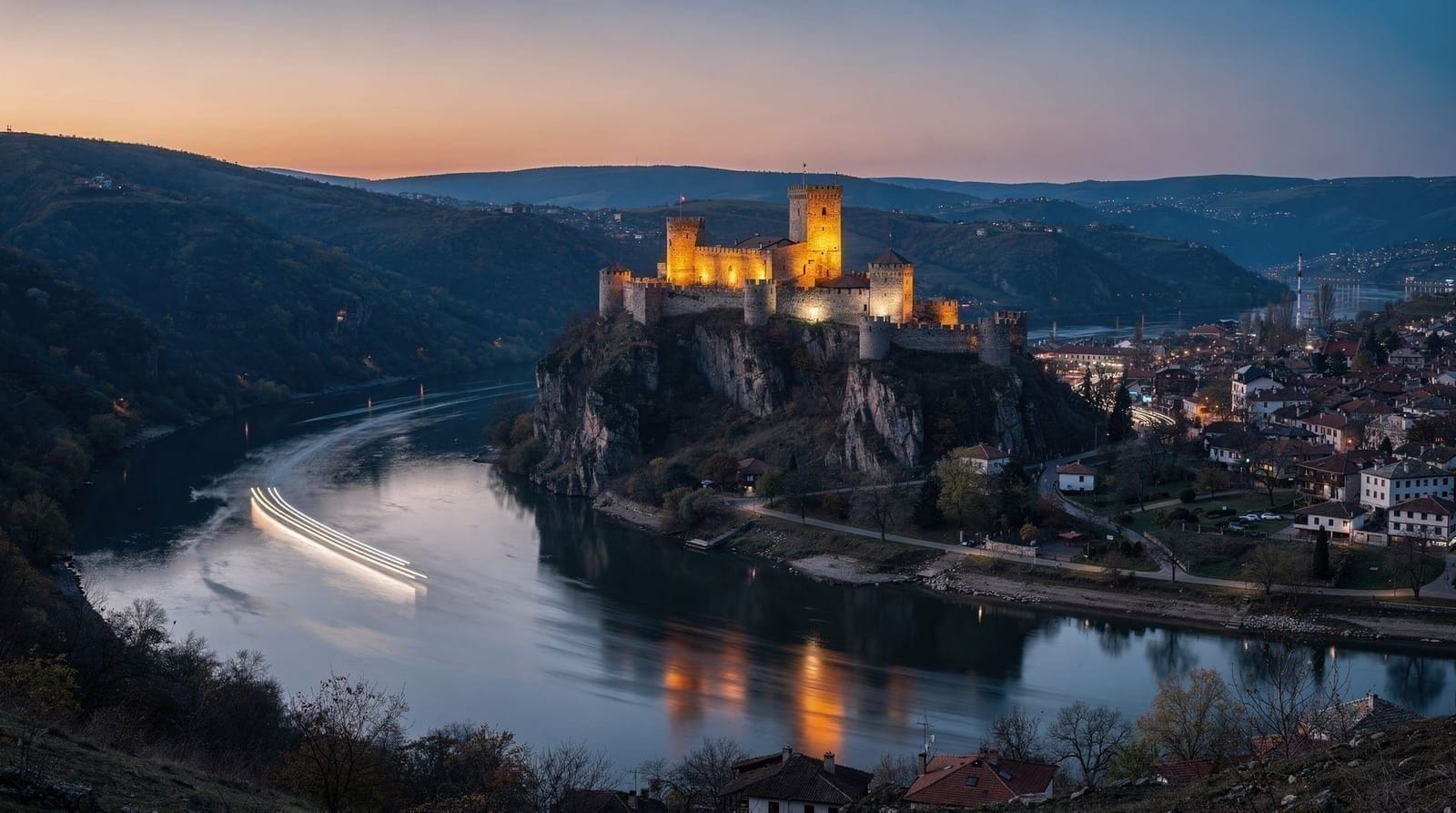
What is Belogradchik? A small town in northwestern Bulgaria surrounded by one of the most distinctive natural landscapes in the Balkans — eroded red sandstone formations rising 50–200 m, sculpted over 230 million years into shapes that local folklore named after people and animals. A Roman-built fortress integrated into the rocks, expanded in the Ottoman period, makes the site historically layered as well as geologically striking.
| Where | Northwestern Bulgaria, 190 km from Sofia |
| Cost | Fortress ~€3–4, Venetsa Cave ~€4–5, guided tours ~€30–45 |
| Time needed | Full day (5–6 hours on site plus travel) |
| Getting there | 2.5 hr drive, guided tour, or infrequent bus |
| Best time | April–October; early morning or late afternoon for photography |
The Belogradchik Rocks
The rocks are the reason to come. Distributed across an area of approximately 30 km, they are a series of isolated conglomerate and sandstone formations, red-coloured from iron oxide, eroded by wind and water into dramatic pinnacles, arches, and towers. Bulgarian folk tradition gave them names — the Horseman, the Monks, the Schoolgirl, the Madame — which map recognisable shapes onto the stone.
The formations begin at the edge of the town and continue into the surrounding hills. A paved path runs through the main cluster, passing under arches and alongside walls of rock. The path to the fortress goes through and partly over some formations. Walking time from town to fortress: 20–30 minutes.
The scale is hard to convey from photographs — individual formations are the size of buildings, the largest tower over 100 m, and the total complex is not a single site but an extended landscape.
Best time of day for photography: early morning and late afternoon, when the reddish rock colour intensifies in low-angle light. Midday in summer is harsh and crowded.
Legends behind the names
The best-known formation is the Schoolgirl, a slender pinnacle said in local folklore to be a girl turned to stone. The Madame and the Monks cluster nearby, tied to a shared legend about a nun who broke her vows and the monks who tried to stop her — the whole group petrified together. None of the stories is historically documented, but the naming tradition is genuinely old and adds narrative to what is otherwise a purely geological walk. A guide who knows the folklore adds real value here.
Belogradchik Fortress
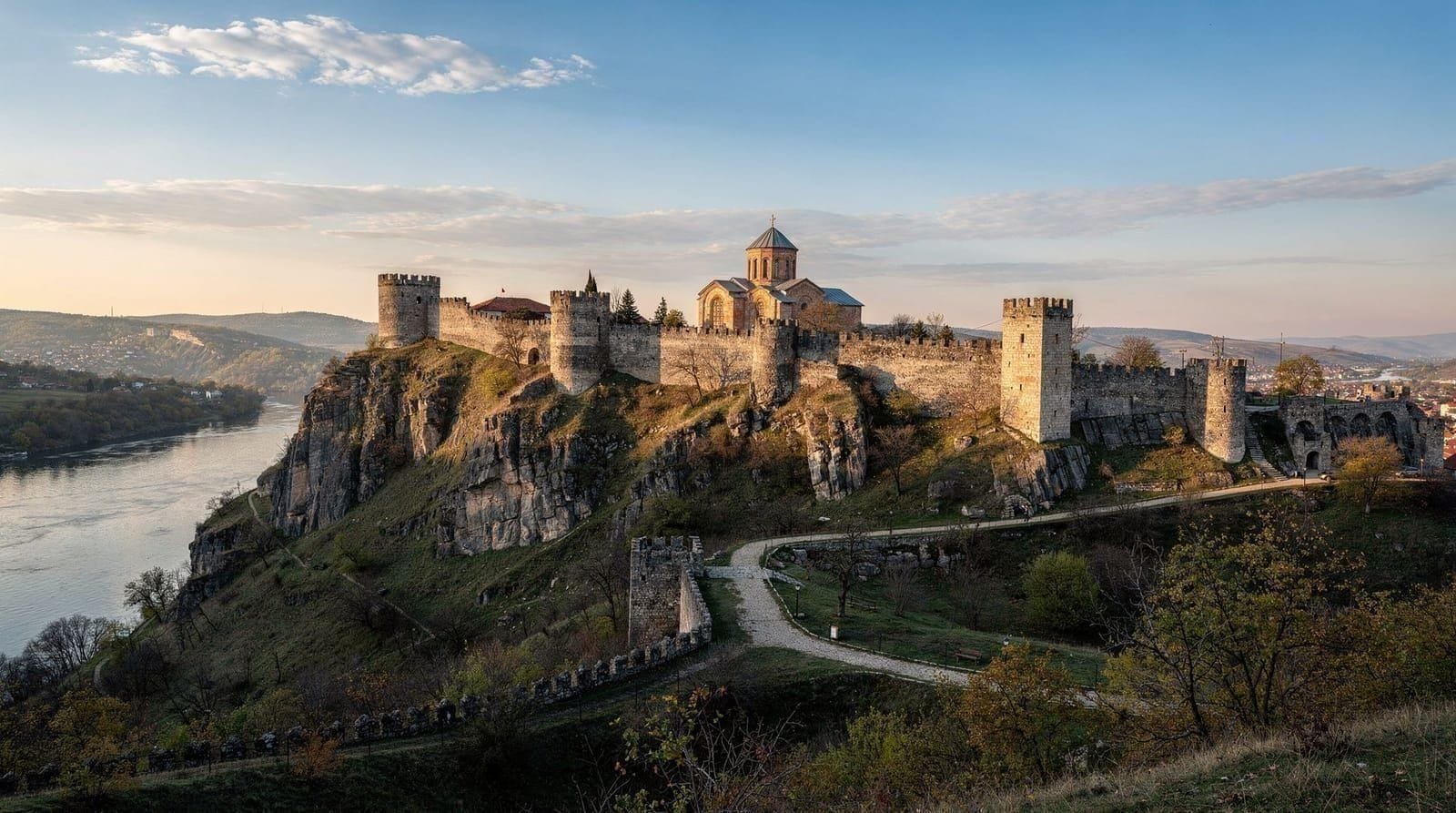
The fortress built into the rocks has origins in the Roman period (3rd century AD), when it served as a fortification on the road network of the Danube province. The Ottomans expanded it substantially in the 19th century — the walls, towers, and gate system visible today are mostly from 1805–1837 construction.
Entry approximately €3–4. The path through the fortress winds between rock formations and fortress walls in a way that makes it difficult to tell where the natural rock ends and the built structure begins — this integration is architecturally unusual.
Views from the upper ramparts look across the town and the surrounding rock landscape toward the Danube plain to the north and the Balkan Mountains to the south on clear days.
GetYourGuideFrom Sofia: Belogradchik Rocks & Venetsa Cave Full-Day TourCheck availability →Venetsa Cave
12 km from Belogradchik, Venetsa Cave is a stalactite-stalagmite cave with a 1-hour guided tour along a lit path approximately 350 m into the cave system. Formations include some unusually shaped stalagmites (the “Madonna with Child” is the most photographed).
Cave tours run throughout the day in summer, less frequently in winter. Entry approximately €4–5 including the guide. The cave temperature is 10–12°C year-round — a jacket is useful even in summer.
Venetsa is typically combined with Belogradchik in a single day trip from Sofia: rocks and fortress in the morning, cave in the afternoon (or vice versa), back to Sofia by evening.
GetYourGuideFrom Sofia: Day Trip to Belogradchik Rocks and Venetsa CaveCheck availability → GetYourGuideFrom Sofia: Bizarre Belogradchik Rocks & Fortress Day TripCheck availability →Planning your day on site
A day at Belogradchik works best when you decide the order before you arrive. Many visitors start with the rocks and fortress while the light is soft and the paths are quiet, then move on to the cave in the afternoon, where the temperature is the same whatever the weather outside. Others reverse the order on a hot day and use the cave as a cool break after the walk. Either way, keep the cave for a moment when you have energy to listen to the guide, and keep the fortress for when you are happy to climb.
Wear shoes with a real grip. The paths wind over and between the rock formations, and worn stone can be slippery after rain. A light layer is worth carrying for the cave, and water and a snack are sensible, since the town is small and the site itself is not set up like a large attraction. Take your time at the upper ramparts: the view over the rock landscape is the reward for the climb, and it rewards patience more than speed.
If you are coming from the capital and want to compare the logistics with other outings, the Sofia day trips guide and the ranked list in day trips from Sofia, ranked show how this journey stacks up against the alternatives. For the wider picture of getting around the capital before you set off, see getting around Sofia.
What to expect from the walk
The experience is closer to a long, varied walk than to a museum visit. You move from open paths among the pinnacles to narrow passages beside the fortress walls, and the character of the landscape changes every few minutes. Children and adults who enjoy scrambling will find it fun; people with limited mobility should know that the fortress paths include steps and uneven stone, and may prefer to enjoy the lower rock paths and the views from below.
The legends add a second layer. Reading the folklore beforehand, or hearing it from a guide, turns each pinnacle into a small character. It is worth pausing at the formations named in the stories and looking for the shapes the locals saw. Even sceptical visitors tend to find that the names stick, and the figures become easier to spot once someone has pointed them out.
Photography and light
The rock colour changes through the day, and that is the main reason photographers return. In low light the red deepens and the shadows between the pinnacles give depth; at midday the surfaces look flat. Bring a lens or phone setting that handles wide scenes, because the scale of the landscape is easy to lose in a tight frame. Include a person or a fortress wall in the shot to show size. Overcast days can also work well for the colour, with less contrast and fewer people on the paths.
Seasons and weather
The best months run from April to October, and the choice within that window depends on what you want. Spring brings fresh greenery against the red stone. Summer gives the longest days, which helps with a long trip from the capital, though the midday heat and tour groups make the early and late hours more pleasant. Autumn offers softer light and calmer paths. Outside the main season, some services run less often, so check ahead, especially if you plan to rely on the cave tours or public transport. If you are choosing your travel dates for the wider trip, the best time to visit Sofia guide helps you balance the seasons across the whole itinerary.
Where Belogradchik fits in a longer trip
For a short stay, Belogradchik is a stretch. For a week or more, it makes a good change of pace after the city and the more famous monasteries. The Bulgaria highlights in 7 days itinerary shows how a first visit to the country can be balanced, and the Sofia in 3 days plan helps you see what the capital offers before you leave it. If you are still deciding how long to spend in the city, how many days in Sofia gives a framework. Visitors who prefer mountain scenery to rock scenery might compare this trip with the Seven Rila Lakes or with Vitosha Mountain, which sits right beside the capital.
Combining with Veliko Tarnovo
Belogradchik sits roughly midway between Sofia and Bulgaria’s medieval capital region. Ambitious itineraries link the two: Veliko Tarnovo for the Tsarevets fortress and old town, then Belogradchik for the rocks and cave, as consecutive stops on a northern Bulgaria loop rather than two separate day trips from Sofia. The medieval Bulgaria loop itinerary sketches out how the route fits together over several days — worth reading before you commit to a single long day trip instead.
Getting there from Sofia
By car
190 km northwest on the E79 highway toward Vidin. Approximately 2.5 hours. The road quality is adequate; the final approach to Belogradchik is on secondary roads.
By guided tour
Sofia-based tour operators run Belogradchik day tours, some combining with Venetsa Cave. Group tours approximately €30–45. The driving distance makes a guided tour practical — you arrive without having navigated the route, and guides provide the geological and historical context.
By public transport
Buses from Sofia to Vidin stop at Belogradchik town (approximately 3.5 hours). Infrequent — check the schedule carefully and confirm the return bus timing before departure.
GetYourGuideBelogradchik Rocks and Fortress from SofiaCheck availability →Eating and staying nearby
The town offers a modest choice of guesthouses and restaurants, and the cooking is the straightforward Bulgarian kind. If you want to know what to order, the Bulgarian dishes to try guide covers the staples, and the Sofia food guide gives context for the wider cuisine. Staying a night turns the trip from a rushed day into a relaxed visit, and it lets you see the rocks at both ends of the day without the long drive in between. If you prefer a base with more choice, return to the capital, where Sofia has everything from budget stays to comfortable hotels.
Is the distance worth it?
Honestly: Belogradchik requires a full day from Sofia and is 190 km away. It is tertiary in the Bulgaria tourist circuit because the distance-to-reward ratio is less favourable than Plovdiv or Rila Monastery. But the landscape is genuinely unlike anything else in Bulgaria — the red rock formations have no close Bulgarian parallel. For visitors who have already covered the main attractions, Belogradchik adds something distinctive.
The town itself is small (population around 5,000), quiet, and not developed for tourism in the Bansko or Plovdiv sense. There are a handful of guesthouses and restaurants. The appeal is entirely the natural and historical site, not the town. For other options in a similar half-day-to-full-day bracket from the capital, the day trips from Sofia guide ranks them by distance and reward.
Belogradchik versus Bulgaria’s other rock landscapes
| Destination | Distance from Sofia | What makes it distinct |
|---|---|---|
| Belogradchik Rocks | 190 km (2.5 hr) | Red sandstone pinnacles integrated into a Roman-Ottoman fortress |
| Rila Monastery mountains | 120 km (2 hr) | Alpine peaks and glacial cirques, not rock formations |
| Melnik sandstone pyramids | 170 km (2.5 hr) | White-ochre erosion pyramids paired with wine tasting |
Belogradchik’s combination of geology and a walkable fortress has no real substitute among the closer options — Melnik is the nearest comparison in landscape type, but the two look and feel quite different in colour and scale.
Belogradchik fortress and Venetsa cave 12-hour day tourFrequently asked questions about Belogradchik
How far is Belogradchik from Sofia?
190 km northwest, approximately 2.5 hours by car.
Is Belogradchik a UNESCO World Heritage Site?
Not yet. Bulgaria has proposed the Belogradchik Rocks for UNESCO consideration, but as of 2026 the site remains a candidate rather than a designated site.
Can you combine Belogradchik and Venetsa Cave in one day?
Yes. The cave is 12 km from town. Most day tours include both. Allow 5–6 hours for rocks, fortress, and cave, plus travel.
What is the Belogradchik Fortress?
A fortification built on and into the rock formations, with origins in the Roman period and major expansion under Ottoman rule in the early 19th century.
Is Belogradchik worth visiting?
For visitors who enjoy natural landscapes and have already seen Plovdiv and Rila, yes. As a first or only day trip from Sofia, the distance is significant relative to closer destinations.
Can Belogradchik be combined with Veliko Tarnovo?
Yes, as part of a multi-day northern Bulgaria route rather than a single day trip — the two are roughly 3 hours apart by road. See the medieval Bulgaria loop itinerary for how they fit together.
Is a guided tour better than self-driving to Belogradchik?
For most visitors, yes. The distance and secondary-road final approach are more forgiving with a driver, and guides add the folklore and historical context that make the rocks and fortress more meaningful than a purely visual stop.
Top experiences
Bookable activities with verified prices and instant confirmation on GetYourGuide.

From Sofia: Belogradchik Rocks & Venetsa Cave Full-Day Tour

Belogradchik Rocks and Fortress from Sofia

From Sofia: Day Trip to Belogradchik Rocks and Venetsa Cave

Belogradchik Rocks & Venetsa Cave Day Trip from Sofia

Belogradchik Rocks Eco Tour from Sofia