Plovdiv
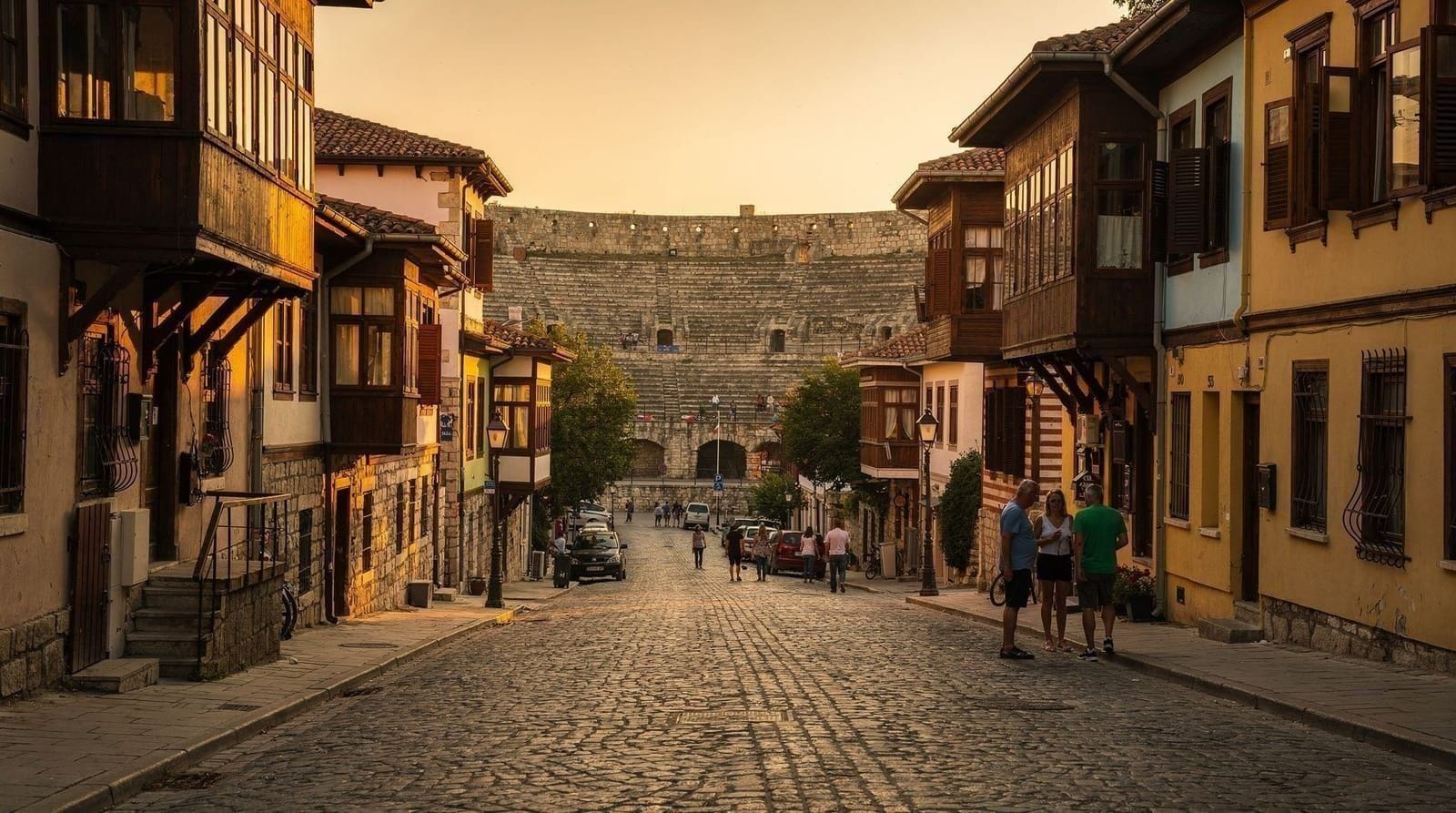
Bulgaria's second city and 2019 European Capital of Culture has a Roman amphitheatre, cobbled Revival-era Old Town, and a contemporary art scene worth two
From Sofia: Small Group Guided Tour of Plovdiv's Highlights
Quick facts
- Distance from Sofia
- 150 km east (1.5 hr by bus, 2.5 hr by train)
- Population
- ~345,000 (second-largest Bulgarian city)
- Founded
- Over 8,000 years of continuous habitation
- Capital of Culture
- European Capital of Culture 2019
- Seven Hills
- Built on 7 hills (now 6 visible)
- Currency
- Euro since January 2026
Is Plovdiv worth visiting from Sofia? Yes — Plovdiv is arguably the most visually rewarding city in Bulgaria for a day trip or short stay. The preserved Old Town contains more genuine National Revival period architecture per square metre than anywhere else in the country, and the Roman amphitheatre in the centre is one of the best-preserved in Southeast Europe. A day trip from Sofia is practical; two days allows you to explore more slowly and visit Bachkovo Monastery nearby.
| Where | Thracian Valley, 150 km east of Sofia |
| Cost | House-museums ~€2–3 each; meals €10–20 |
| Time needed | 1 day (highlights) to 2 days (with Bachkovo) |
| Getting there | 1.5 hr by bus/car, 2–2.5 hr by train |
| Best time | April–June and September–November |
Plovdiv’s layers: 8,000 years of habitation
Plovdiv holds the distinction of being one of the oldest continuously inhabited cities in Europe — archaeological evidence of settlement dates to around 6,000 BC. The city the Romans called Philippopolis (founded or reorganised by Philip II of Macedon in the 4th century BC) left its amphitheatre, forum, and stadium scattered through the modern urban fabric.
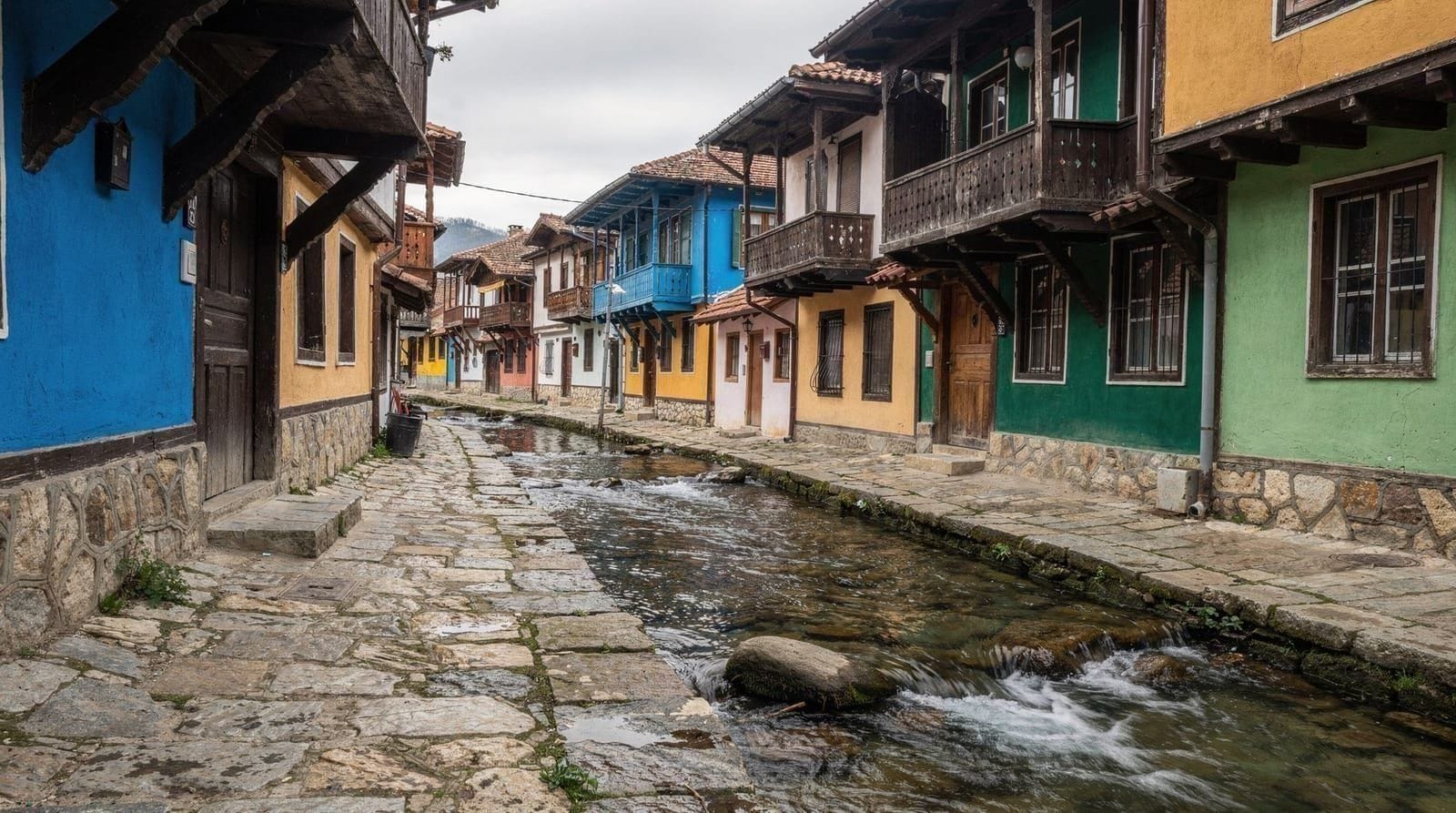
The Ottoman period (late 14th to 19th century) added mosques, covered markets, and the architectural tradition that underlies much of the Old Town’s character. The Bulgarian National Revival period (roughly 1750–1878) produced the colourful merchant houses with overhanging upper storeys that now define Plovdiv’s visual identity.
The 2019 European Capital of Culture designation accelerated arts infrastructure investment: galleries, street art installations, and cultural venues opened across the city, particularly in the Kapana (“the trap”) neighbourhood — a former craft quarter that has become the most concentrated restaurant and café district.
The Old Town (Stariyat Grad)
The Old Town occupies the slopes of three hills south and east of central Plovdiv. It is compact — you can walk from end to end in 20 minutes — but the density of sights means half a day minimum.
The Roman amphitheatre
The Philippopolis Roman amphitheatre, discovered in 1972 during road construction, seats approximately 7,000 and is still used for outdoor performances. Entry costs around €3–4. The theatre is visible from several points above and is best seen from the Dzhumaya Mosque area to the north. Opera, rock concerts, and folk events are held here throughout summer — check the programme if you are visiting June through August.
The National Revival houses
The mansions of the Bulgarian merchant class are the Old Town’s architectural core. Several are open as house-museums:
Hindliyan House (Artin Hindliyan, 1840s): perhaps the finest interior — painted walls depicting European and Middle Eastern cityscapes, Venetian glass mirrors, period furniture. Entry €2–3.
Kuyumdzhieva House (also called the Regional Ethnographic Museum): exhibits on traditional Bulgarian crafts, costumes, and rural life. The building itself — deep blue exterior — is as interesting as the collection.
Balabanov House: used for temporary art exhibitions; the courtyard is one of the most photographed in the Old Town.
Entry to all three is around €2–3 each; a combined ticket is sometimes available.
The streets themselves — Saborna, Artin Gidikov, Dragan Tsankov — are worth walking without a destination. The characteristic feature of the Revival house is the upper floor that projects further than the ground floor, supported on carved wooden beams, creating a tunnel effect above the cobbled lanes.
If the architecture is what draws you, the Bulgarian Revival architecture guide explains what to look for in the carved ceilings, the projecting upper floors and the painted façades, and the Bulgarian Revival trail places Plovdiv alongside the other towns where this tradition survives.
GetYourGuidePlovdiv: Guided Walking TourCheck availability → GetYourGuideFrom Sofia: Bachkovo Monastery and Plovdiv Day TripCheck availability →The Kapana neighbourhood
Directly below the Old Town, Kapana is a grid of narrow streets around Georgi Voinikov Street. The transformation from craft workshops to café district happened in stages from 2015 onward and is now complete — this is where Plovdiv’s independent coffee shops, wine bars, and small restaurants are concentrated.
Coffee shops: Ego Sum (espresso bar, small but technically proficient), Coffee Rocket (specialty coffee, popular with locals), several others in a two-block radius.
Bars and restaurants: the density makes it practical to walk and choose based on what looks active. Prices are uniformly reasonable — wine by the glass runs €2–4, craft beer €2–3, small plates €4–8. Thursday through Saturday evenings are busiest.
Ot Kade restaurant specialises in Bulgarian regional dishes. Kafedar is a good choice for a full meal with an emphasis on seasonal local produce.
Plovdiv’s Roman core beyond the amphitheatre
The amphitheatre gets the attention, but Plovdiv’s Roman layer runs deeper. The Roman Odeon, near the Archaeological Museum, was a smaller covered venue for council meetings and performances — less dramatic than the amphitheatre but a useful reminder that Philippopolis was a full administrative city, not just a theatre town. The Regional Archaeological Museum holds Thracian gold artefacts and Roman-era finds from across the wider region, complementing the site visits with proper context; entry is inexpensive and the collection rewards 45–60 minutes. For the wider Thracian civilisation that Philippopolis sat within, see the Thracian heritage guide.
Bachkovo Monastery and Asen’s Fortress
Plovdiv works well as a base for the southern Rhodope foothills. Two sites are particularly worth combining:
Bachkovo Monastery (30 km south of Plovdiv): Bulgaria’s second-largest monastery after Rila, founded in 1083 by Georgian brothers in the Byzantine imperial service. Less visited than Rila, more peaceful. The bone ossuary fresco cycle and the Church of the Holy Mother of God (11th-century refectory) are the highlights. Entry free; 1-hour visit minimum. If you have already seen Bulgaria’s largest monastery, the Rila Monastery guide makes a good comparison: Bachkovo is calmer and the visit feels more personal.
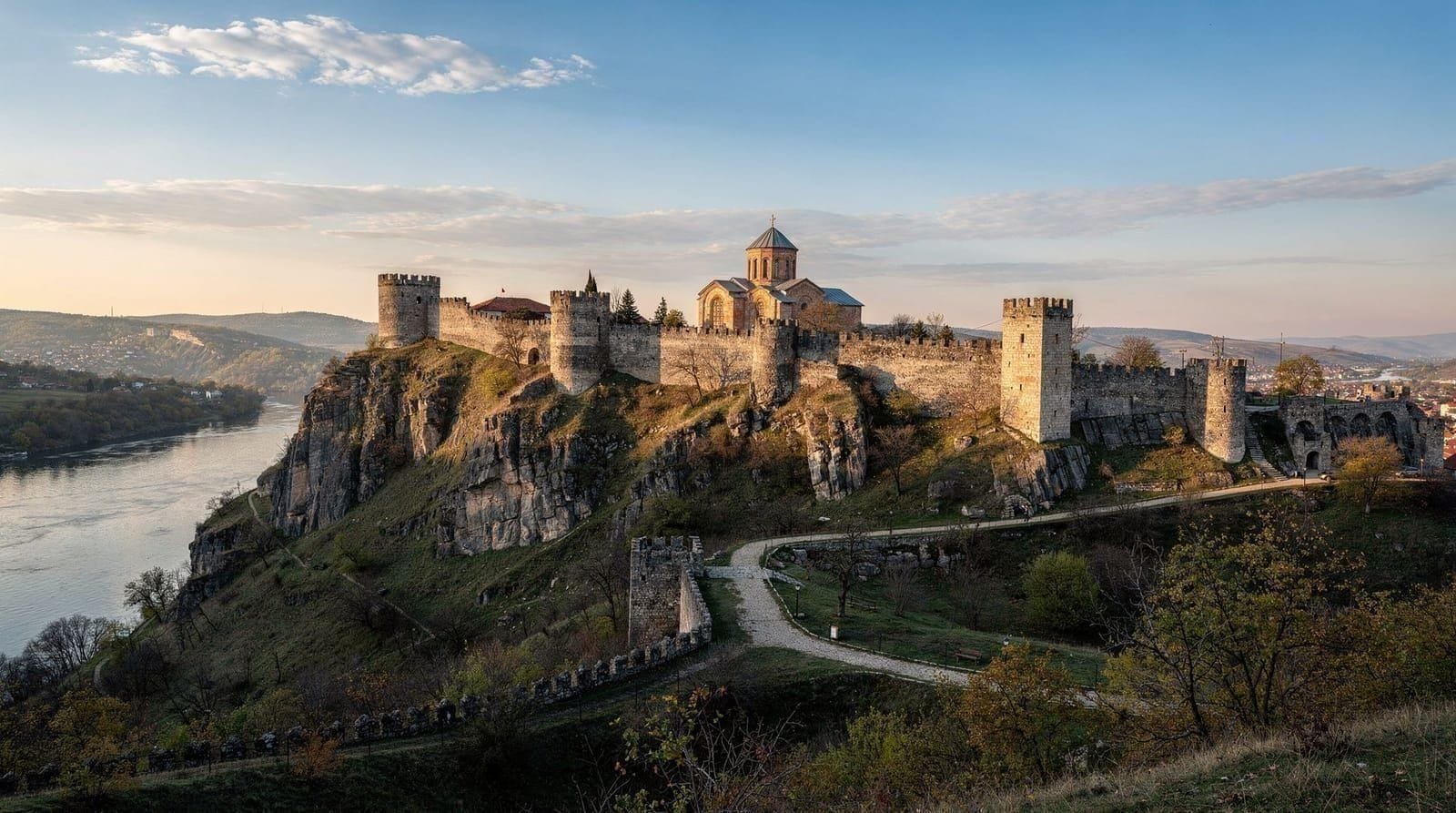
Asen’s Fortress: a medieval fortress ruins above the Asenitsa River gorge, 30–35 km south of Plovdiv. The ruined church of the Holy Mother of God inside the fortress still has fragments of 12th–14th century frescoes. The gorge walk from the road is 20 minutes uphill on a good path. No entry fee for the ruins.
GetYourGuideFrom Sofia: Plovdiv, Asen's Fortress and Bachkovo MonasteryCheck availability →Extending into the Rhodope Mountains
For visitors with more time, Plovdiv is also the practical gateway to the northern Rhodope Mountains — a multi-day extension beyond a standard day trip, taking in Bachkovo, Asen’s Fortress, and further villages and gorges deeper into the range.
Plovdiv and the best of the Rhodope Mountains, 3 daysGetting to Plovdiv from Sofia
By bus (recommended)
Bus from Sofia’s Serdika or Yug bus station to Plovdiv Central Bus Station: approximately 1.5–2 hours depending on traffic, buses every 30–60 minutes from early morning, tickets €5–8. The bus arrives near Plovdiv’s centre (15-minute walk to Old Town) or taxi for €3–4.
By train
Sofia Central Station to Plovdiv: approximately 2–2.5 hours, trains run hourly. The station is a 15-minute walk or short taxi from the Old Town. Cost: €5–7. Trains are slower than buses but more comfortable for a relaxed journey.
Guided day tour from Sofia
Tours run daily from Sofia, typically departing 08:00–09:00 and returning by 19:00–20:00. Some include Bachkovo Monastery or Bachkovo + Koprivshtitsa combinations. Cost: €25–45 for group tours.
GetYourGuideFrom Sofia: Small Group Guided Tour of Plovdiv's HighlightsCheck availability →By car
150 km on the Trakia motorway (A1), approximately 1.5 hours. Parking is available near the Old Town entrance. A car gives flexibility for Bachkovo and Asen’s Fortress, which are difficult to reach by public transport.
For a step-by-step plan of the day, including how to split your hours between the Old Town and Kapana, read the Plovdiv day trip guide. To weigh Plovdiv against the other excursions from the capital, see the day trips from Sofia guide and the ranked day trips from Sofia. Whichever way you travel, the Sofia getting-around guide helps with the start of the journey inside the capital.
Wine in the Thracian Valley
The Thracian Valley running east from Plovdiv is Bulgaria’s most established wine region. The main grape varieties: Mavrud (indigenous Bulgarian grape, dark and tannic), Rubin (Bulgarian hybrid, smoother), Merlot, and Cabernet Sauvignon widely planted since the 1990s.
Several wineries within 30–40 km of Plovdiv offer tastings and tours. Katarzyna Estate (near Harmanli) and Damianitza (near Melnik, further south) are the most internationally recognised. Local wine shops in Kapana stock regional producers at prices well below export markets — €5–10 for a solid bottle.
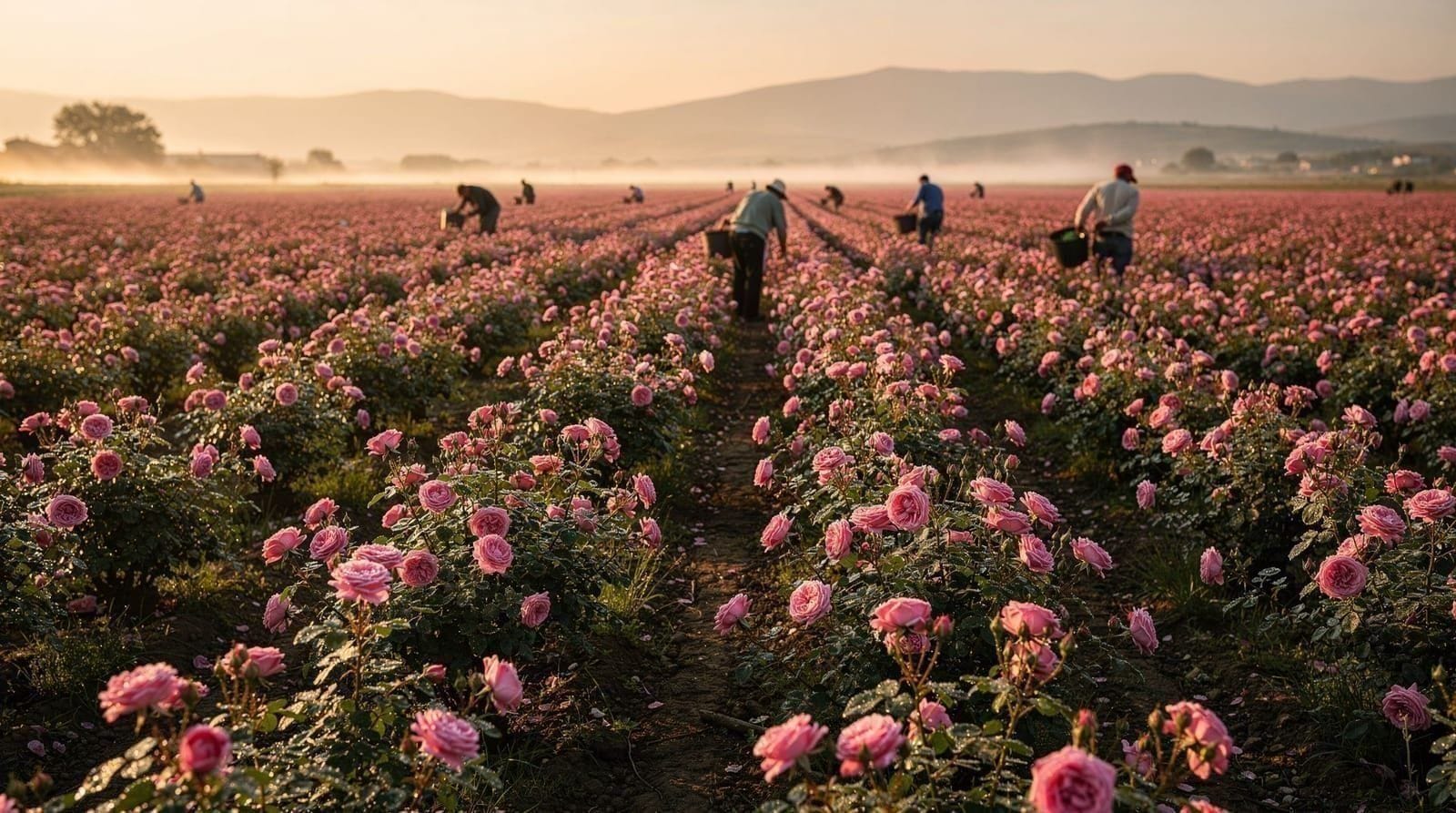
The Rose Valley to the north of Plovdiv (around Kazanlak) produces rose oil rather than wine, but the combined Rose Valley + Plovdiv day trip is a popular option in late May and early June. See Kazanlak Rose Valley guide.
For more on the grapes, the producers and how to taste Bulgarian wine, the Bulgarian wine guide covers the whole country, while the Melnik wine region guide goes deeper into the south-west. The Bulgarian wine day trips article suggests ways to build a tasting into a day out from the capital.
Plovdiv practical information
Language: Bulgarian (Cyrillic). In the Old Town and Kapana, English is widely spoken among service workers. Street signs in the Old Town are bilingual.
Getting around Plovdiv: the Old Town is pedestrian-only and entirely walkable from the central area. The main sight clusters are within 1–2 km of each other. Taxis (Bolt works in Plovdiv) for Old Town to Kapana costs €2–3.
Eating: budget €10–20 for a full meal with wine in Kapana; more in Old Town restaurants (prices are higher for ambience). The Dzhumaya area near the mosque has cheap cafeteria-style Bulgarian food.
When to avoid: July and August bring heat (35°C+) and more tourists, though Plovdiv handles crowds better than smaller sites. The Old Town narrow streets provide shade.
Where to base yourself if staying overnight
| Area | Character | Best for |
|---|---|---|
| Old Town | Cobbled, historic, quieter at night | Atmosphere, walking to the amphitheatre |
| Kapana | Café and bar district, central | Food, nightlife, easy access to everything |
| Central Plovdiv (near Dzhumaya) | Modern, practical, better value | Budget stays, transport links |
Old Town guesthouses in restored Revival houses are the most memorable option if you are staying two days; Kapana is more convenient if evenings out matter more than the setting.
What Plovdiv does not do well
The Roman stadium, beneath Dzhumaya Square, can only be seen through street-level windows — much of it remains under the square itself and is inaccessible. It is mildly interesting but not a significant sight unless you are specifically tracking Roman infrastructure.
The Roman forum is partially excavated in a pedestrian underpass — similarly limited viewing. Context without significant visual impact.
The Night of Museums and Galleries (annual, September) gives access to private collections that are otherwise closed — worth timing a visit around if possible.
Combining Plovdiv with Koprivshtitsa
A combined Sofia–Koprivshtitsa–Plovdiv day trip is possible — 110 km to Koprivshtitsa, then 90 km south to Plovdiv — but leaves only 2–3 hours in each place. Better for each destination to get half a day minimum. See Koprivshtitsa guide.
Sofia: Plovdiv and Koprivshtitsa full-day tourFor a multi-day circuit of the Thracian Valley, see the Bulgaria Highlights 7 Days itinerary, or for a route weighted toward medieval sites, the medieval Bulgaria loop itinerary. If you have a full long weekend based in the capital with Plovdiv as one stop among several, the Sofia long weekend 4-day itinerary shows how it fits.
Plovdiv is easiest to enjoy when you know how much time the capital deserves first. The Sofia destination page and the guide on how many days to spend in Sofia help you decide whether Plovdiv gets a day trip or a night of its own. For a wider look at the region, the Veliko Tarnovo guide is the natural next stop on a medieval-minded route.
Frequently asked questions about Plovdiv
Is Plovdiv better than Sofia to visit?
Different, not necessarily better. Plovdiv’s Old Town is more visually coherent — more concentrated Revival architecture, a better-preserved Roman theatre, a livelier café district. Sofia has more museum depth and the mountain proximity. Visit both if you have three or more days.
How many days do you need in Plovdiv?
One full day covers the Old Town, Roman theatre, and Kapana. Two days allows Bachkovo Monastery and slower exploration. Day trip from Sofia works if you arrive early and leave after dinner.
Is Plovdiv expensive?
No. Slightly more expensive than Sofia in the Old Town tourist zone, but Kapana’s restaurants and coffee shops are competitive. Budget €40–60/day all-in for accommodation + food + entry fees.
What is Plovdiv’s most important sight?
The Roman Philippopolis amphitheatre — structurally impressive and still functional as a performance venue. The Old Town as a whole comes second.
Can you visit Plovdiv without a car?
Yes. Bus and train connections from Sofia are frequent and straightforward. Within Plovdiv, the main sights are all walkable. A car helps for Bachkovo Monastery and Asen’s Fortress.
What happened to Plovdiv as European Capital of Culture?
The 2019 designation funded significant infrastructure: the renovated Plovdiv Regional Museum, new galleries, public art commissions, and venue upgrades. The programme ended but the cultural infrastructure remains active.
Where should I stay in Plovdiv for an overnight visit?
The Old Town for atmosphere and proximity to the amphitheatre; Kapana for food, drink, and a livelier evening; central Plovdiv near Dzhumaya Square for better value and easy transport links.
Can Plovdiv be combined with the Rhodope Mountains?
Yes — Plovdiv is the practical gateway to the northern Rhodope range, and multi-day extensions from the city cover Bachkovo, Asen’s Fortress, and villages deeper into the mountains.
Top experiences
Bookable activities with verified prices and instant confirmation on GetYourGuide.

From Sofia: Small Group Guided Tour of Plovdiv's Highlights

Plovdiv: Guided Walking Tour

From Sofia: Plovdiv, Asen's Fortress and Bachkovo Monastery

From Sofia: Plovdiv and Koprivshtitsa Full Day Tour

Plovdiv: 2-Hour Sightseeing Walking Tour