Medieval Bulgaria loop: 4 days from Sofia to Koprivshtitsa and Veliko Tarnovo
Sofia: Communist Walking Tour
This four-day loop covers two of Bulgaria’s most historically layered periods — the communist 20th century and the medieval and National Revival 18th–19th centuries — without requiring any backtracking through Sofia. You drive east to Koprivshtitsa on day two, then north to Veliko Tarnovo on day three, and return to Sofia along a different route on day four. A rental car is the only practical way to link these three points; public bus connections between Koprivshtitsa and Veliko Tarnovo are infrequent and slow.
Total driving: roughly 460 km over four days, all on roads in good condition. No mountain passes are involved unless you choose the scenic return via Troyan on day four.
| Route | Sofia → Koprivshtitsa → Veliko Tarnovo → Sofia |
| Total driving | Around 460 km over 4 days |
| Car needed | Yes — no direct public transport between Koprivshtitsa and Veliko Tarnovo |
| Best time | May, June, September, or October |
| Budget per person | Roughly €300–460, excluding flights |
| Overnights | 1 in Koprivshtitsa, 1–2 in Veliko Tarnovo |
What to expect on this route
This is not a physically demanding itinerary. Koprivshtitsa sits at 1,050 m altitude, which means pleasant summer temperatures, and the walking is entirely flat within the village. Tsarevets Fortress in Veliko Tarnovo involves a moderate uphill climb over cobblestones. Beyond that, most of the sightseeing happens on foot through old town streets and around well-maintained museum grounds.
Budget roughly €60–100 per person per day including accommodation, meals, fuel, and entry fees. Mid-range guesthouses in Koprivshtitsa cost €35–55 for a double room; Veliko Tarnovo has more options from €40–90 depending on whether you want a view of the fortress. Sofia accommodation is whatever you are already paying.
Day 1: Sofia — communist monuments and the Museum of Socialist Art
Use the first day to explore the layer of Sofia that most visitors rush past: the city’s communist-era architecture and its surprisingly candid approach to that heritage. The communist Sofia tour guide covers this terrain in detail; what follows is a self-guided version. Start in the morning at Largo Square, the Stalinist ensemble at the heart of the city centre built in the 1950s around the former Communist Party Headquarters. The adjacent Presidency and Council of Ministers buildings are still government offices, but the monumental scale of the complex — designed to dwarf the individual — reads clearly from the pavement.
Walk south along Vitosha Boulevard to the National Palace of Culture (NDK). The building was completed in 1981 to mark 1,300 years of Bulgarian statehood and remains the largest multi-functional events complex in Southeast Europe. The plaza around it functions as everyday urban space; the NDK itself hosts exhibitions year-round.
In the afternoon, take a taxi south to the Museum of Socialist Art (around €5–7 from the centre). This is one of the most distinctive museums in Eastern Europe: an outdoor sculpture garden of monumental Soviet-era statues removed from public spaces after 1989, combined with an indoor gallery of socialist realist painting. Entry costs approximately €3. The contrast between the heroic scale of the sculptures and the modest new context — a garden in a quiet suburb — is part of the point. Budget 90 minutes here.
GetYourGuideSofia: Communist Walking TourCheck availability →End the day at the National Historical Museum in Boyana if you have the energy; it is near the Museum of Socialist Art and holds the Panagyurishte Gold Treasure, among other significant archaeological finds. Entry is around €5–6. Alternatively, save Boyana for a morning visit before departure.
For dinner, return to the centre. Raketa Rakia Bar on Graf Ignatiev Street is a solid choice for trying Bulgarian spirits; the food in Sofia’s centre ranges from good pizza to reliably good Bulgarian traditional cooking in the mehanas around Vitosha Boulevard. Plan to spend €12–20 per person for dinner with drinks.
GetYourGuideSofia: Archaeology and History Museum Guided TourCheck availability → GetYourGuideSofia: Cave God's Eyes and Iskar-Panega Geopark TourCheck availability →Day 2: Koprivshtitsa — the April Uprising and the Bulgarian Revival village
Koprivshtitsa lies 114 km east of Sofia, roughly two hours by car on the E80 motorway to Ihtiman, then south on smaller roads through the Sredna Gora mountains. The drive is pleasant rather than dramatic, passing through agricultural valleys before the road climbs to the village.
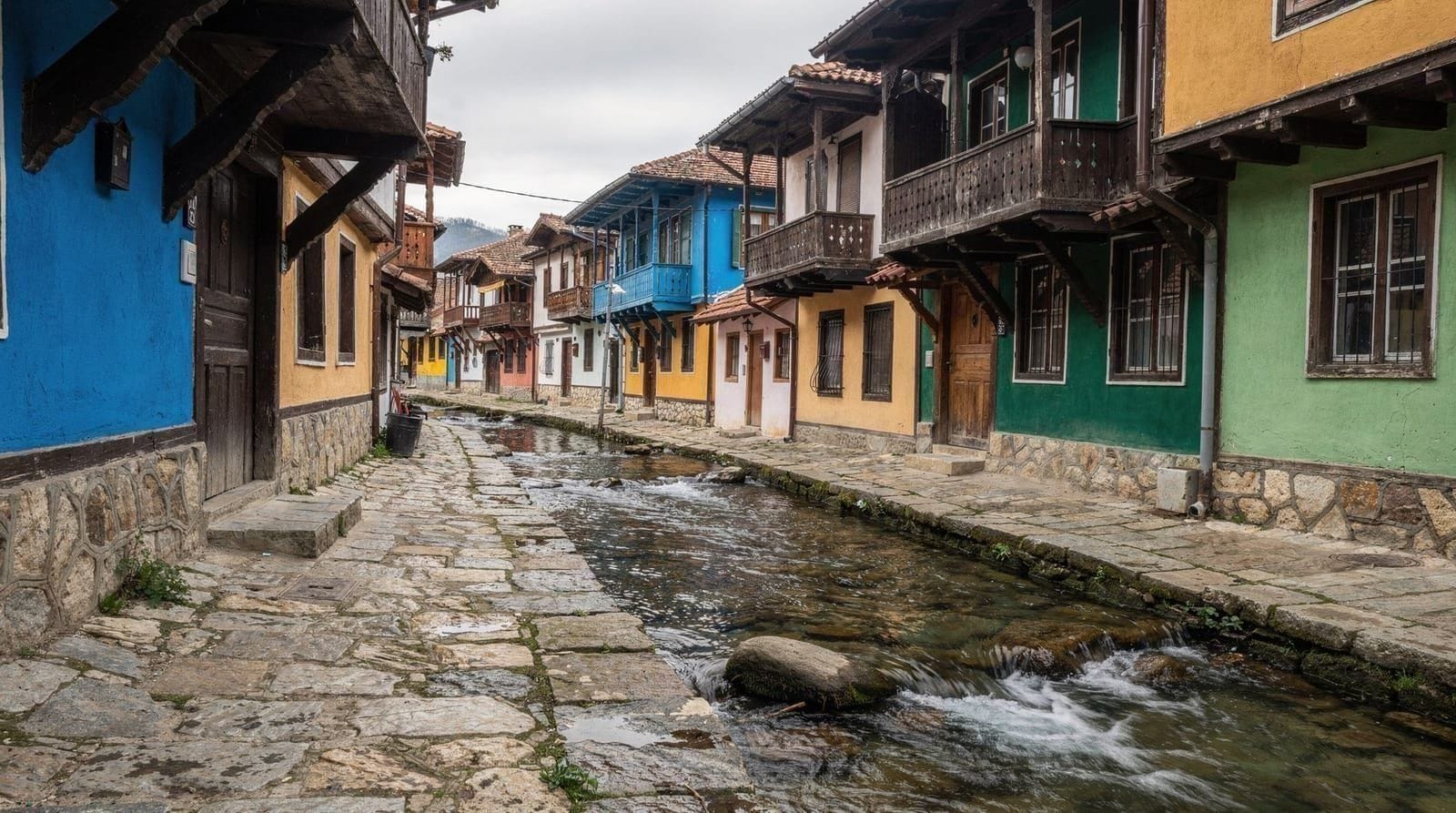
Koprivshtitsa is one of the best-preserved examples of Bulgarian National Revival architecture in the country. The village developed in the 18th and 19th centuries as a prosperous trading centre, and its merchants built the characteristic houses of the period — asymmetrical façades, overhanging upper storeys, carved wood interiors, enclosed stone-walled courtyards — that you now see preserved across the entire settlement. The village is small enough to walk across in twenty minutes, but the density of historic buildings repays a full day.
The village is famous above all for being the place where the April Uprising of 1876 was launched — the rebellion against Ottoman rule that, despite its military failure, prompted international attention and ultimately led to Bulgarian liberation in 1878. The history is present everywhere: in street names, monuments, and in the house museums.
Six houses in Koprivshtitsa are open as museums, each owned by a family connected to the uprising or to the wider Revival period. The Oslekov House is architecturally the most elaborate, a merchant’s residence with a strikingly asymmetrical façade and carved wooden ceilings inside. The Kableshkov House was home to Todor Kableshkov, who wrote the famous “letter written in blood” that signalled the start of the uprising on 20 April 1876. The Lyutov House represents the wealthier merchant class of the period — opulent by 19th-century village standards.
Entry to each house museum costs approximately €3–4. A combined ticket for all six museums is available at around €8 and represents good value if you plan to visit more than two or three houses. The Tourist Information Centre near the main square can provide the combined ticket and a map marking all six locations.
GetYourGuideKoprivshtitsa Full-Day Tour - Back to the 19th CenturyCheck availability →The bridge over the Topolnitsa river at the entrance to the village is a useful orientation point; the main square with its church and the largest cluster of museums is a short walk from it. The Church of the Assumption of the Holy Virgin (Sveta Bogoroditsa) in the square is the parish church where uprising leaders met before April 20, 1876.
Koprivshtitsa has a handful of guesthouses; stay overnight rather than returning to Sofia. The Bai Gencho Guest House and similar family-run accommodations charge €35–50 for a double room including breakfast. Dinner in the village is limited to two or three traditional restaurants, all serving Bulgarian grills, bean stew (bob chorba), and local wine.
Day 3: Drive north to Veliko Tarnovo — the medieval capital
The drive from Koprivshtitsa to Veliko Tarnovo covers approximately 175 km and takes around two and a half hours by the most direct route via Kazanlak and the Shipka Pass, or slightly longer on the motorway via Plovdiv. The Shipka Pass route is the more interesting drive: the road climbs through the Balkan Mountains to the Shipka Memorial Church (built to commemorate Russian and Bulgarian soldiers who died in the 1877–1878 war) before descending into the Valley of Roses around Kazanlak. If you are travelling in late May or early June, the rose fields in the valley are in bloom — an unexpected detour if the timing works.
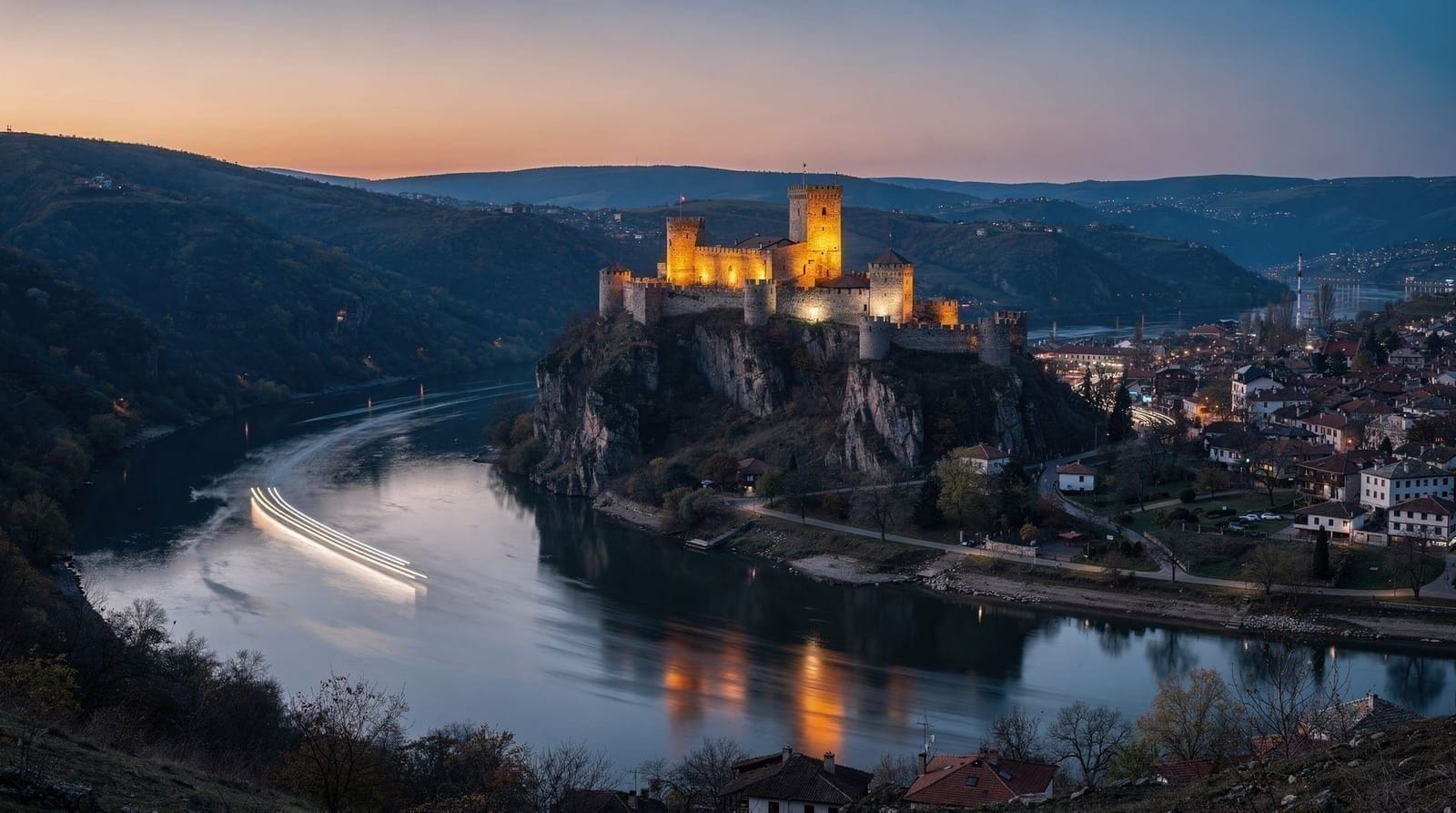
Veliko Tarnovo was the capital of the Second Bulgarian Empire from the late 12th to the late 14th century, when it fell to Ottoman forces. The city is built on three steep hills around a tight meander of the Yantra river, and the position explains why it held out as a capital for so long. Today it functions as a university town with a concentrated old town, lively café scene, and — perched on the most dramatic of the three hills — Tsarevets Fortress.
Tsarevets was the primary fortress and royal palace of the Second Bulgarian Empire. The current site is a partial reconstruction of the medieval walls, towers, and the Patriarchal Cathedral at the summit. Entry costs approximately €6. Allow ninety minutes to walk the perimeter walls, climb to the cathedral, and take in the views over the river below. The climb is moderate — cobbled paths rather than steps, but with some gradient — and manageable for any average fitness level.
GetYourGuideVeliko Tarnovo & Arbanasi Full Day TourCheck availability →The Sound and Light show at Tsarevets runs on summer evenings (typically May through October, starting after dark, roughly 21:00 in June). The fortress walls and towers are illuminated in sequence while a recorded narration tells the story of the Bulgarian Empire. Tickets cost approximately €5–8 and can be bought on the day at the fortress entrance or from local tour operators. It is worth building the evening around this if you are visiting in season — check locally for the current schedule, as it runs on specific evenings rather than every night.
Arbanasi, a village 4 km north of Veliko Tarnovo, is worth a morning visit on day four before departure. It sits on a plateau above the Yantra valley and contains a concentration of large merchant houses and churches from the 17th and 18th centuries. The Church of the Nativity (Rozhdestovo Hristovo) has some of the most elaborate interior frescoes in Bulgaria, covering every surface of walls and ceiling. Entry is approximately €3–4. Arbanasi is accessible by taxi from Veliko Tarnovo in about ten minutes.
Stay overnight in Veliko Tarnovo. The Hotel Gurko on Gurko Street is the most atmospheric mid-range option — old town location, fortress views from the better rooms, doubles from around €55–75. Cheaper options cluster around Stambolov Square.
Day 4: Return to Sofia — options and route choices
The direct return from Veliko Tarnovo to Sofia covers around 220 km via the Hemus motorway (E83) and takes approximately two hours and forty minutes. This is the fastest and simplest option if you need to catch a flight or have a fixed return time.
Two scenic alternatives add time but content:
The Troyan Monastery route (add about 50 km and one hour) takes you west through the central Balkan range, passing the Troyan Monastery — the third-largest monastery in Bulgaria, less visited than Rila and more authentic in atmosphere for it. The frescoes in the main church include the distinctive “Black Virgin” icon, one of the most venerated in Bulgaria.
The Kazanlak and Rose Valley route (if you took the direct motorway on day three) lets you make up the Shipka Pass drive on the return. In rose season this adds genuine value; outside of May–June, it is a pleasant mountain road rather than a destination in itself.
If you return via Kazanlak, consider stopping at the Thracian Tomb of Kazanlak, a UNESCO World Heritage Site with well-preserved Hellenistic frescoes from the 4th–3rd century BC. The original tomb is closed to visitors to protect the frescoes; an excellent replica next to it is open for €4–5 entry. See the day trips from Sofia guide for more context on building a return route.
Plan to be back in Sofia by late afternoon, which leaves time for a final dinner in the centre before any early departure the following morning.
The loop at a glance
| Day | Base | Focus |
|---|---|---|
| 1 | Sofia | Largo Square, NDK, Museum of Socialist Art, Boyana |
| 2 | Koprivshtitsa | Drive east, April Uprising house museums |
| 3 | Veliko Tarnovo | Drive north via Shipka Pass, Tsarevets Fortress |
| 4 | Sofia (return) | Arbanasi churches, direct or scenic drive back |
Two very different kinds of “historic” in four days
What makes this loop work as a single trip rather than two separate ones is the contrast between its layers. Day one in Sofia is 20th-century history — Stalinist architecture, socialist-realist sculpture, a capital rebuilding its identity after 1989. Koprivshtitsa and Veliko Tarnovo are the opposite register: 19th-century Revival merchant houses and a medieval royal fortress, both concerned with Bulgarian identity asserting itself against Ottoman rule centuries earlier.
Seeing them back to back sharpens both — the communist-era monuments read differently once you have stood inside a house built by a family that funded the 1876 uprising, and the medieval fortress at Tsarevets gains context once you understand how central that same uprising is to modern Bulgarian self-image. The Bulgarian Revival architecture guide and communist Sofia tour guide each go deeper into one half of this contrast if you want to prepare.
Alternative day one: skip the communist sites, go straight to the Old Town
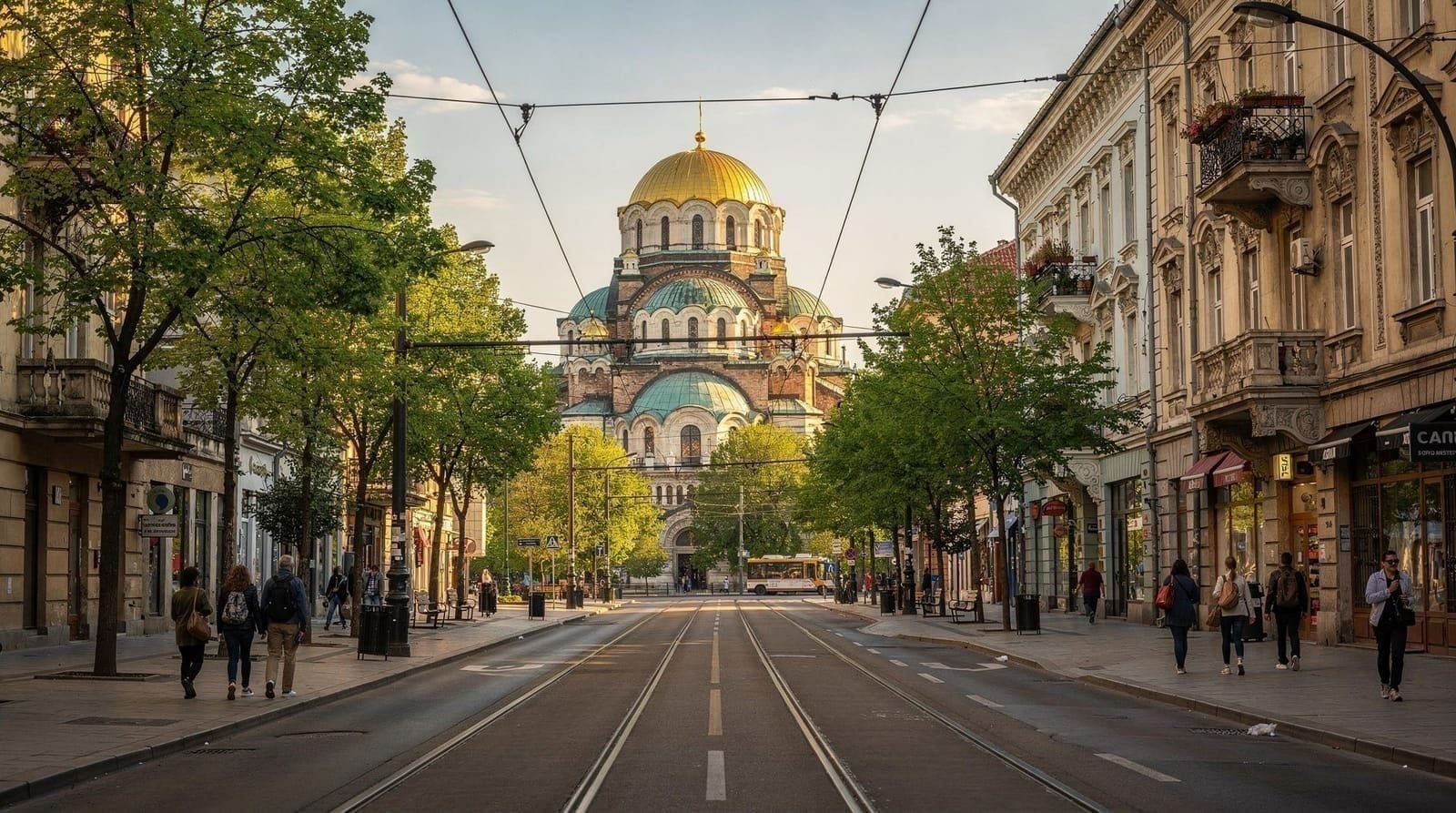
If Sofia’s communist-era sights don’t interest you as much as the medieval and Revival material, day one can pivot toward Alexander Nevsky Cathedral, the Serdica Roman ruins at the metro station, and a walk through the Sofia Old Town instead of Largo Square and the Museum of Socialist Art. This keeps the whole loop thematically consistent around pre-communist Bulgarian history, at the cost of skipping one of Sofia’s more unusual sights. Either version works; choose based on which period interests you more, since day one is the only day with real routing flexibility.
Cash and cards along the route
Sofia, Veliko Tarnovo, and Plovdiv (if you extend the loop) all take cards without issue at hotels and most restaurants. Koprivshtitsa is the exception: several of the house museums and the smaller family-run guesthouses prefer cash, and the village has only a couple of ATMs, both near the main square. Bulgaria joined the eurozone on 1 January 2026, so euros work everywhere; there is no separate currency to manage. Withdraw what you need before leaving Sofia or on arrival in the village, rather than assuming card payment will work everywhere — entry fees for the six house museums add up to €15–25 per person if you visit several, and paying that in small cash denominations is simpler than repeated card taps at unstaffed ticket windows.
Extending to five days with Plovdiv
The FAQ below covers the mechanics, but the case for it is straightforward: Plovdiv sits almost exactly between Sofia and the Koprivshtitsa turnoff, and its Old Town and Roman Amphitheatre are strong enough to justify the extra night on their own merits, not just as a convenient stopover. Travellers who have more flexibility than four days and are choosing between this loop and the fuller Bulgaria highlights 7-day itinerary should note that the seven-day version already includes Plovdiv, Rila Monastery, and Bansko — this loop is the right choice specifically when your time is limited to four or five days and your interest is history rather than mountains.
Practical notes for this loop
Rental car: Budget €35–55 per day for a small car from a major international rental agency at Sofia Airport. Local rental companies near the airport sometimes offer lower rates (€25–35) but with varying conditions. Book in advance in summer. Fuel costs approximately €1.60–1.80/litre; you will use around 30–35 litres total for this loop. See getting around Sofia for transport tips if you prefer to skip the car for the Sofia days.
Public transport: Koprivshtitsa is served by a few daily trains from Sofia (Koprivshtitsa station is 12 km from the village, with an infrequent shuttle bus to cover the gap) and by two or three direct buses. Between Koprivshtitsa and Veliko Tarnovo, there is no direct public transport connection; you would need to return to Sofia first. For this specific loop, a car is not optional unless you are willing to significantly modify the route.
Time of year: May, June, September, and October are the best months. July and August bring crowds and heat. The Sound and Light show at Tsarevets runs in the warmer months. Winter visits are quieter but Koprivshtitsa’s character is better appreciated when you can walk comfortably between houses; the museums close early in winter.
Accommodation in Koprivshtitsa: Book ahead for weekends — the village is popular with domestic tourists from Sofia and fills up on Friday and Saturday nights in summer.
Frequently asked questions about the Medieval Bulgaria loop
Can I do this loop without a car?
Technically possible as far as Koprivshtitsa (by train or bus from Sofia) and Veliko Tarnovo (by bus from Sofia separately), but there is no reasonable public transport link between Koprivshtitsa and Veliko Tarnovo. Attempting this loop without a car effectively means returning to Sofia between each destination, doubling your transit time. For this specific four-day format, a rental car is necessary. For a car-free Sofia itinerary, see Sofia in 3 days instead.
How much does the full four-day loop cost per person?
A reasonable mid-range estimate: accommodation €45–70 per night (€135–210 total for three nights), meals €20–35 per day (€80–140 total), museum entry fees approximately €35–45 for the whole trip, car rental and fuel €50–70 split between two people, and guided tour if desired (€15–30). Total per person sharing a car: roughly €300–460 for four days, not including flights.
Is Koprivshtitsa worth a full day or just a few hours?
A full day is appropriate. The six house museums collectively take three to four hours if you visit them properly rather than glancing through the doorways. Add time for the main square, the bridge, the church, and lunch, and the village fills a day comfortably. If you only have three hours, prioritise the Oslekov House and Kableshkov House.
What is the Sound and Light show at Tsarevets like?
The show runs for around 45 minutes and projects coloured lights, fire effects, and a recorded narration onto the fortress walls. It is a theatrical rather than educational experience — good for the spectacle, less useful as history. The best viewing positions are from the old town below the fortress or from the hillside opposite. Arrive 20–30 minutes early for a decent spot if attending in peak season.
Are the house museums in Koprivshtitsa open year-round?
Most museums open Tuesday to Sunday, 9:00–17:00 in winter and 9:00–17:30 in summer, closed Mondays. Some close for lunch 12:00–13:00. The combined ticket is available at the Tourist Information Centre near the main square. Verify current hours locally, as individual houses occasionally close for restoration.
Is there anything in Arbanasi beyond the Church of the Nativity?
Arbanasi has five churches open to visitors (most charge €2–3 entry) and several large merchant houses, two of which are open as ethnographic museums. The Konstantsalieva House gives a good picture of how a wealthy Arbanasi merchant family lived in the 17th and 18th centuries. The village is quiet and well-preserved; walking the main street takes about forty minutes.
Can I extend this loop to include Plovdiv?
Yes. Plovdiv is 100 km south of Sofia on the E80 motorway and fits naturally between Sofia (day one) and Koprivshtitsa (day two) if you adjust to a five-day loop. Alternatively, combine Plovdiv with the Kazanlak return on day four by driving south from Tarnovo to Plovdiv (~160 km) and back to Sofia (~130 km). This makes day four longer but eliminates an extra hotel night. See the Plovdiv day trip guide for what to prioritise if you only have a few hours there.
What should I eat in Koprivshtitsa and Veliko Tarnovo?
In Koprivshtitsa: bob chorba (bean soup), kavarma (slow-cooked pork or chicken with vegetables in a clay pot), and kebapche (grilled minced meat) are the staples. Local rakiya (grape brandy) is offered almost universally. In Veliko Tarnovo, the restaurant strip along Stambolov Street serves good grills and Bulgarian meze. The mehanas (taverns) in the old town are more atmospheric than those on the main road; look for spots with handwritten menus rather than laminated photo cards. The Sofia food guide covers the wider Bulgarian culinary context if you want background before the trip. This itinerary pairs well with the Bulgarian Revival architecture guide for understanding what you are looking at in Koprivshtitsa.
Top experiences
Bookable activities with verified prices and instant confirmation on GetYourGuide.