Melnik
Bulgaria's smallest town sits among sandstone pyramids in the Struma Valley. The indigenous Melnik grape produces age-worthy reds.
Melnik Wine Tour
Quick facts
- Distance from Sofia
- 170 km south (2.5 hr drive)
- Population
- ~200 (Bulgaria's smallest town)
- Melnik grape
- Indigenous variety, UNESCO-candidate cultivation area
- Rozhen Monastery
- 5 km from Melnik, 16th century
- Sandstone pyramids
- Distinctive geological formations, 100–200 m
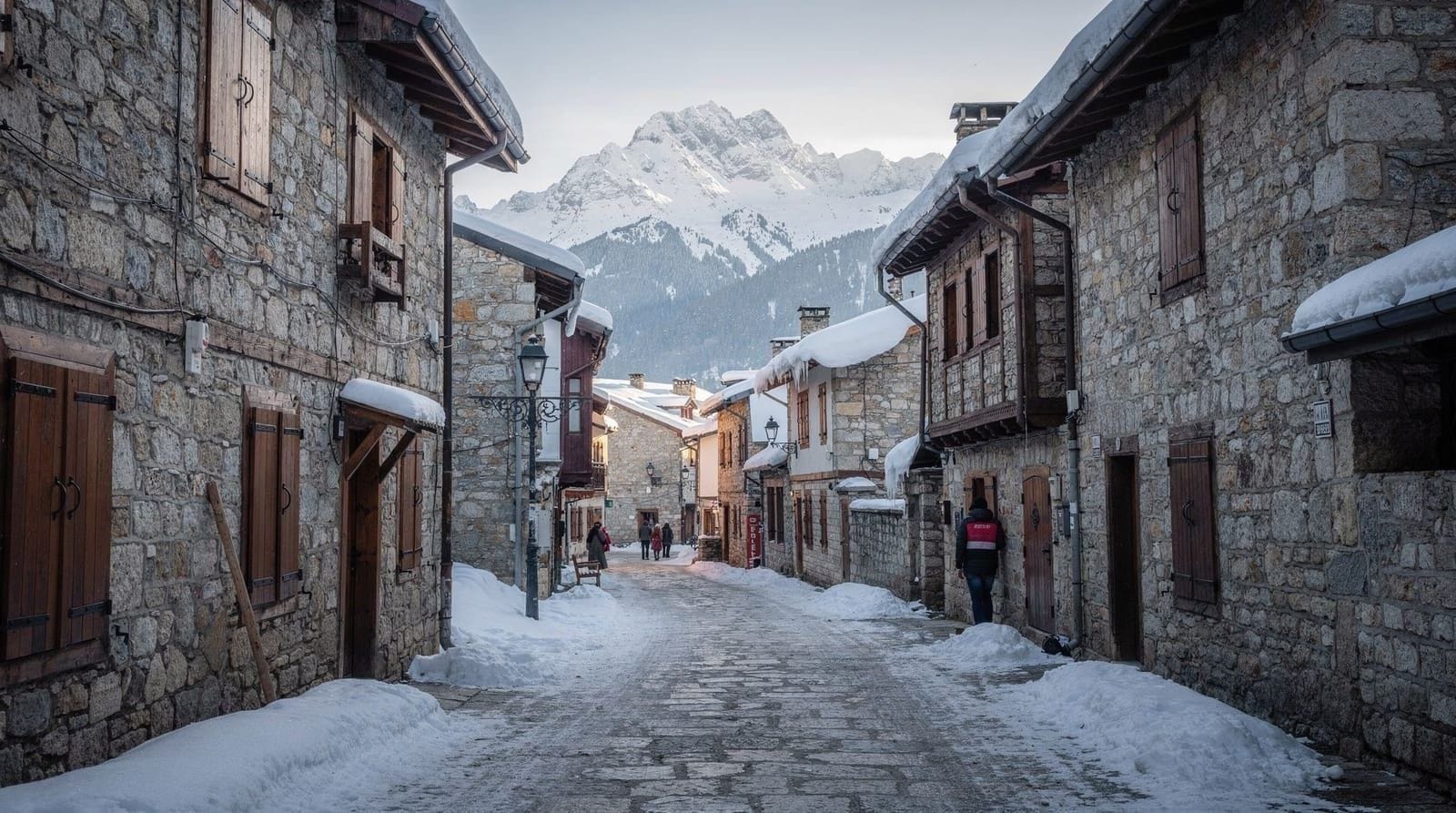
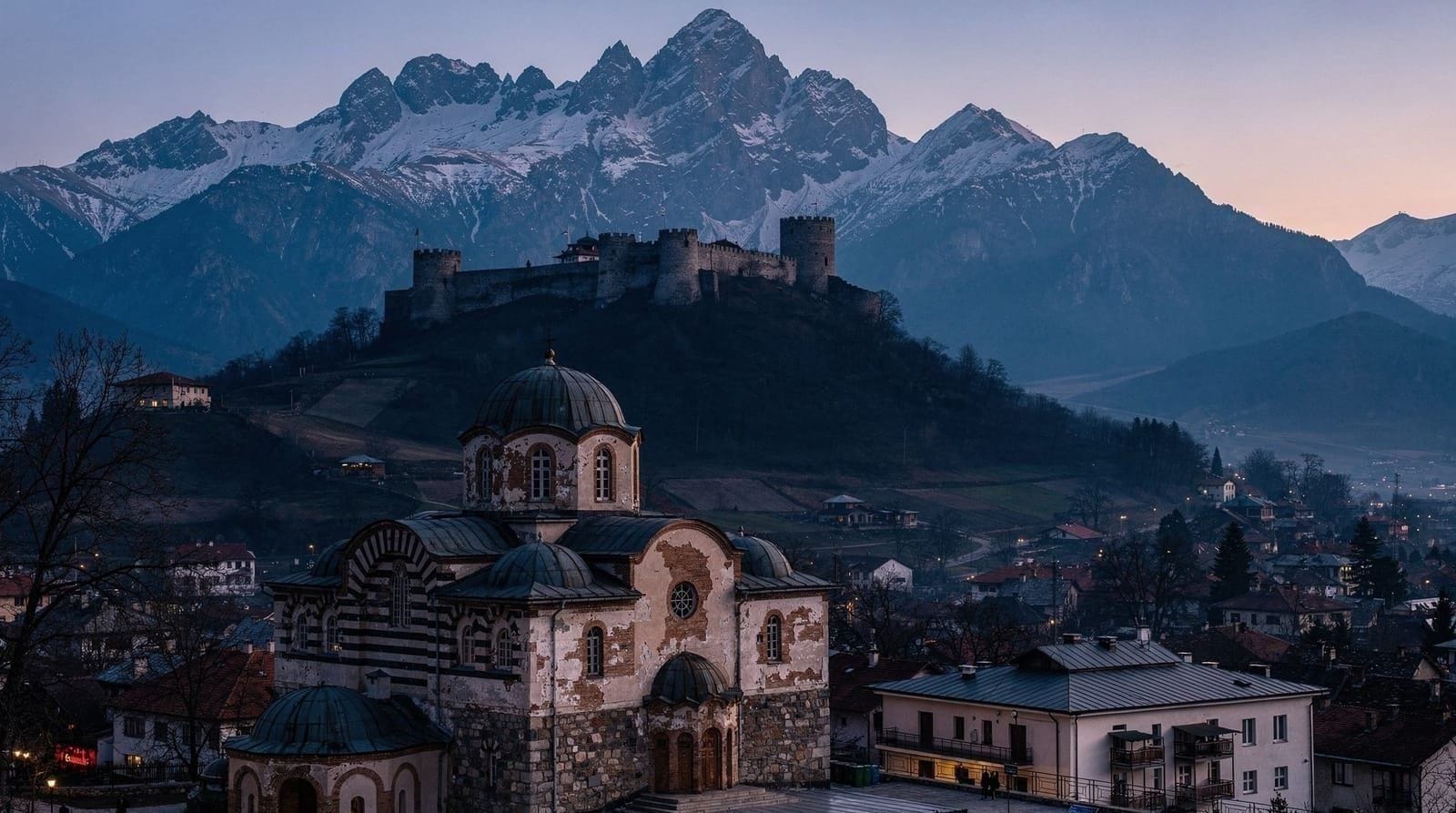
What is Melnik? Bulgaria’s smallest officially designated town, with a permanent population of around 200. Set in a narrow valley among dramatic white sandstone pyramids 170 km south of Sofia, Melnik is primarily known for two things: the indigenous Melnik grape variety that produces Bulgaria’s most structured red wines, and the sandstone formations that create one of the most visually distinctive landscapes in the country.
| Where | Struma Valley, 170 km south of Sofia |
| Cost | Wine tastings ~€5–15; guesthouses €30–55/night |
| Time needed | Full day, or overnight for a quieter experience |
| Getting there | 2.5 hr drive, bus + taxi, or guided tour |
| Best time | April–June and September–October |
Why Melnik is in its own category
Melnik functions unlike any other Bulgarian destination. It is not a historic town with a museum layer on top — the town itself, such as it is, consists of about 100 inhabited houses spread along a valley floor between sandstone cliffs. Wine cellars are dug into the cliffs. The Rozhen Monastery is a 5 km walk or short drive up the valley.
The appeal is a particular combination: wine, quiet, and geology that looks like nothing else in Bulgaria. The drawback is distance and limited infrastructure — Melnik has a handful of guesthouses and restaurants, and not much else.
For visitors who want genuine regional character and are interested in wine or unusual landscapes, it is well worth the 2.5-hour drive. For visitors primarily interested in history and culture, the Rila Monastery or Plovdiv deliver more per kilometre.
The Melnik grape and wine tasting
The Melnik 55 (Shiroka Melnishka Loza) is an indigenous Bulgarian grape variety grown almost exclusively in the microclimate of the Struma Valley around Melnik. The variety produces dark, tannic wines that age well — 10–15 year old Melnik wines are commonly available from local producers at reasonable prices.
Mitko Manolov’s winery (cave cellar dug into the sandstone below his house) is one of the more personal tasting experiences — the owner pours and talks about the wine. Not polished tourism, genuinely family operation.
Kordopulov House is the most visited historic building in Melnik — a large 18th-century merchant house with a wine cellar that holds several thousand litres in barrels. The building is architecturally significant (fine carved wooden ceilings, vaulted cellar) and the wine tasting is included in a small entry fee. Worth visiting even if you do not drink — the cellar is architecturally remarkable.
Damianitza Winery (on the road between Sandanski and Melnik) is the largest commercial producer of Melnik grape wines and has a modern visitor centre with professional tastings. Their “No Man’s Land” label is the one most likely to appear on export markets. This is a quality, consistent product; less interesting than the family producers in the valley but more accessible.
| Winery | Style | Best for |
|---|---|---|
| Mitko Manolov’s cellar | Personal, family-run | An informal, unpolished tasting with the owner |
| Kordopulov House | Historic, large-scale | Architecture as much as wine — worth it even if you don’t drink |
| Damianitza Winery | Modern, commercial | Consistent quality, easiest for casual visitors |
For context on Bulgaria’s wine regions beyond Melnik, see the Bulgarian wine guide and the dedicated Melnik wine region guide, which goes deeper on the grape and the valley’s smaller producers.
GetYourGuideMelnik Wine TourCheck availability →How to taste without rushing
A tasting in Melnik works best when it is treated as a conversation rather than a checklist. Ask the person pouring about the vintage, how the wine was kept, and what they would eat with it. The local answer is usually simple food: grilled meat, white cheese, bread and whatever the household has made. If you want to know which dishes pair well with the dark local reds before you go, the Bulgarian dishes to try guide is a useful primer.
If you are driving, agree who stays sober before the first glass. Most visitors who taste seriously in the valley either book a guesthouse for the night or travel with a driver, and the guided options above exist precisely for that reason.
The sandstone pyramids
The pyramids are erosion formations of white and ochre sandstone — the Melnik landscape was shaped by uplift and differential erosion of conglomerate and sandstone layers deposited in a former lake. The resulting cliffs, towers, and pyramids surrounding the valley floor give the impression of a miniature badlands.
Walking paths run among the formations from the village. The most accessible route goes from the village centre toward Rozhen Monastery — the first 1–2 km runs through the most dramatic sandstone scenery. The walk takes 1.5–2 hours each way on foot.
The formations are most photogenic in morning and late afternoon light when the yellowy-white stone picks up warm colour. Midday in summer (the valley can reach 35–38°C) is challenging.
Bring water, a hat and shoes with a proper grip: the paths are dusty, the stone is loose in places, and there is little shade between the formations. The ground can be slippery after rain, so a wet spring day calls for more care than the gentle look of the landscape suggests. Take your time and stop often; the shapes change as the light moves, and the best views are rarely at the point where most people turn back.
Walkers who enjoy this kind of terrain will find more demanding routes in the nearby mountains, described in the Rila Mountains hiking guide, while those who want an easy day on foot closer to the capital can look at the Vitosha hiking guide.
Rozhen Monastery
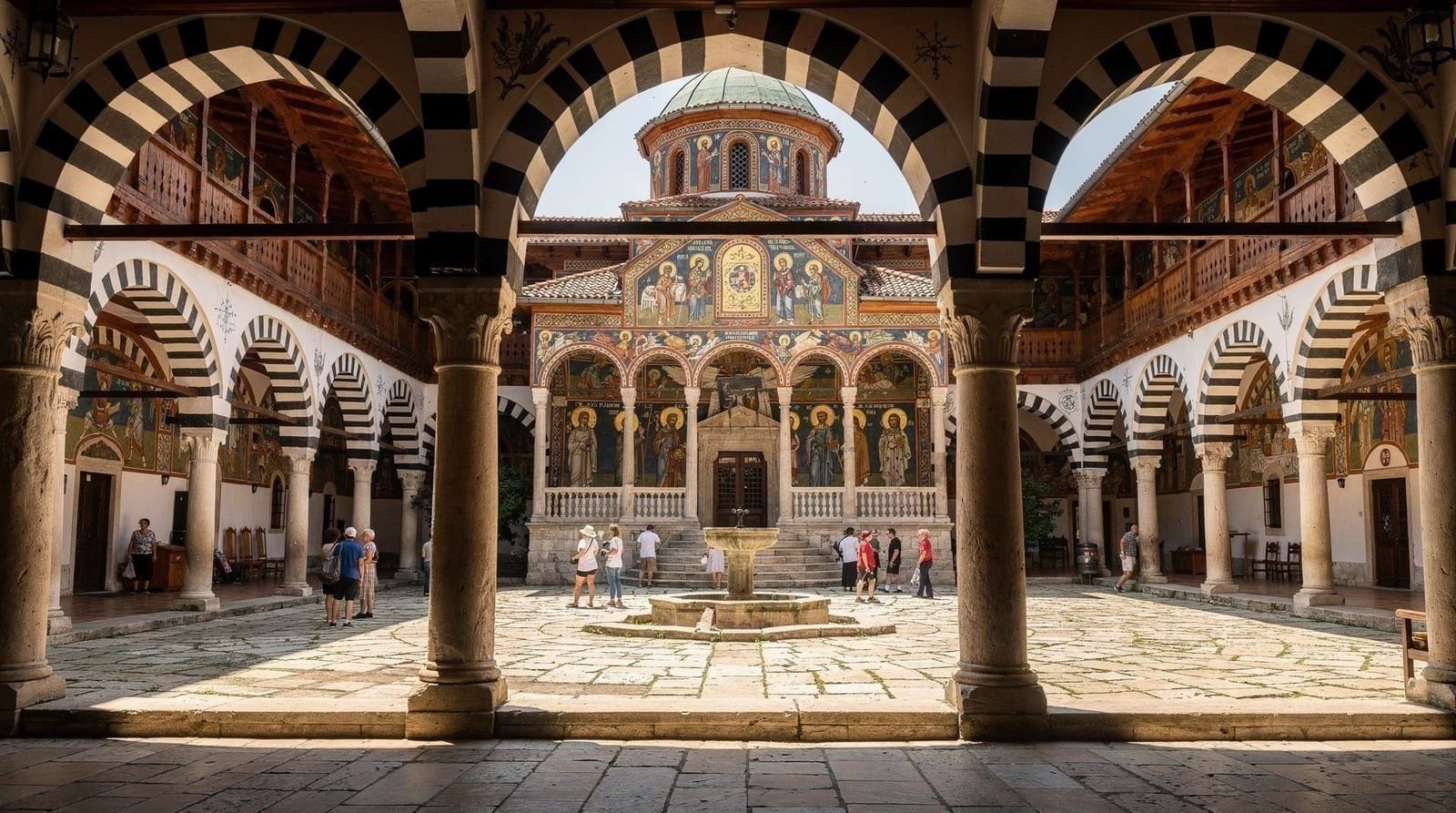
The Rozhen Monastery (5 km from Melnik, founded in the 13th century, current buildings mostly 16th century) is one of the better-preserved monastic complexes in southwestern Bulgaria. It is significantly less visited than Rila Monastery and has a quiet, working atmosphere.
The main church holds a 16th-century icon of the Virgin Mary, which is attributed miracle-working properties and draws pilgrims on specific feast days. The frescoes in the outer narthex are partly preserved 16th-century work.
Combined walk from Melnik: village → sandstone pyramid path → Rozhen (2 hours on foot). Return the same way or by car (15 minutes on the unpaved road).
Treat the monastery as a place of worship first. Dress modestly, keep your voice low inside the church, and ask before photographing icons or frescoes. Visitors who come with that attitude are generally welcomed, and the quiet courtyard is a good place to rest before the walk back. If you enjoy Orthodox monastic architecture and want to compare, the Rila Monastery guide covers the much larger complex to the north, and the Bulgarian Revival architecture guide explains the building traditions behind the merchant houses you see in Melnik.
GetYourGuideSofia: Full-Day Hiking to Rozhen Monastery & MelnikCheck availability →Rupite: the Vanga site
Baba Vanga (1911–1996) was a Bulgarian mystic and prophet — enormously famous in Bulgaria and across Eastern Europe, less so in the West. Her former home and the church she funded near Rupite (10 km from Melnik) are pilgrimage sites for Bulgarian visitors.
Whether you have any interest in Vanga’s predictions or not, the church of St. Petka Tarnovska at Rupite is an architecturally interesting building set in a geothermally active area (warm mineral water flows at the site). The combination of Melnik wine tasting and Rupite gives a distinctly Bulgarian day.
GetYourGuideFrom Sofia: Private Day Trip to Melnik and RupiteCheck availability →Getting to Melnik from Sofia
By car
170 km south on the Struma highway (A3) toward Kulata border crossing, then east to Sandanski and Melnik. Approximately 2.5 hours. The last 7 km into Melnik village are on a narrow road.
By bus
Bus from Sofia to Sandanski (2 hours, regular service), then local bus or taxi to Melnik (15 km). Infrequent connections to Melnik itself — plan ahead or arrange a taxi in Sandanski.
By guided tour
Day tours from Sofia combine Melnik with Rozhen Monastery and sometimes Rila Monastery on the return route. Cost approximately €30–45. The driving distance makes a tour practical.
GetYourGuideMelnik the City of Wine, Rozhen Monastery Day Trip from SofiaCheck availability →Accommodation and eating
Melnik has limited accommodation — 3–4 guesthouses, capacity perhaps 60–80 beds total. Booking in advance is essential in summer. Prices are modest: €30–55/night.
The guesthouses generally serve food and wine; the valley village does not have a restaurant strip. Mencheva House and Despotova House are frequently recommended guesthouses with attached wine cellars.
An overnight stay makes sense if you want to experience Melnik without the day-trip crowd — the village in the evening, after coaches leave, has a completely different quality.
Expect unfussy, home-style cooking rather than a restaurant scene. Dinner is usually a long, slow affair on a terrace or in a cellar, with local wine poured by the person who made or chose it. Arrive with realistic expectations: there is no nightlife to speak of, and that is much of the charm. If you want a fuller picture of what to order, the Sofia food guide and the Bulgarian wine guide will help you recognise the dishes and bottles you meet along the way.
Planning a Melnik day trip from Sofia
The practical question is how to fit Melnik into a wider Sofia stay. The day trips from Sofia overview compares the main options so you can decide whether Melnik, Rila or Plovdiv suits the time you have. If you are building a longer route, the Bulgaria highlights itinerary shows where the southwest fits among the other regions, and the how many days in Sofia guide helps you judge whether a full day away from the capital is a good trade.
A sensible rhythm for a single day is to start early, taste wine while the cellars are cool, walk toward Rozhen in the gentler light, and leave the valley before the long drive feels tiring. Slower travellers should drop one of those stops rather than rush all of them. The honest trade-off in Melnik is always between seeing more and enjoying what you see.
Combining Melnik with Bansko
Bansko is 60 km east of Melnik (1 hour by road via Sandanski and the Struma Valley). A wine-and-hiking combination — Melnik wine tasting and the Rozhen walk, overnight in Bansko, then Pirin hiking the next day — is a natural two-day southwest Bulgaria route.
See Bansko guide for the Pirin hiking details.
Combining Melnik with Rila Monastery
Some Sofia-based tours combine Melnik with Rila Monastery on the return leg — the two are roughly 75 km apart via Razlog. This makes for a very full day given the driving distances involved from Sofia, but it works if wine and monastery architecture are both priorities and you cannot fit two separate trips.
Melnik and Rila Monastery day tour from SofiaFrequently asked questions about Melnik
What is the Melnik grape?
Shiroka Melnishka Loza, an indigenous Bulgarian variety grown almost exclusively around Melnik. Produces dark, tannic reds with good aging potential — 5–15 years in good vintages. Unavailable in most export markets; drink it here.
How do you get from Melnik to Rila Monastery?
Approximately 75 km northeast (1.5 hours by road via Razlog). Feasible as a combined day trip from Sofia, but a long day.
Is Melnik worth the drive from Sofia?
For wine enthusiasts and lovers of unusual landscapes: yes. As a general sightseeing destination: the distance is significant. Prioritise Plovdiv and Rila Monastery first if your time is limited.
What is the best time to visit Melnik?
April–June and September–October. Summer is very hot in the valley and winter reduces access to some sites.
Can you visit Melnik and Bansko on the same day?
Yes, with an early start. Melnik in the morning (arrive by 09:00), Rozhen walk by midday, drive to Bansko for the afternoon and evening. Tiring but possible with a car.
Which Melnik winery should I visit if I only have time for one?
Kordopulov House if you want the architectural and historical experience; Mitko Manolov’s cellar if you want the most personal, family-run tasting.
Is Melnik better paired with Rila Monastery or Bansko?
Bansko makes an easier, less rushed combination (1 hour away). Rila Monastery is feasible but adds up to a very long day given the total driving distance from Sofia.
Top experiences
Bookable activities with verified prices and instant confirmation on GetYourGuide.