Bulgarian wine day trips from Sofia: Melnik, Thracian Valley, and the Koprivshtitsa route
Bulgaria has been producing wine for over 3,000 years. Archaeological evidence of viticulture dates to Thracian settlements around 4000 BCE, and the country was historically one of the largest wine exporters in the Soviet bloc. After a difficult transition period in the 1990s when many state vineyards fell into disuse, a new generation of Bulgarian winemakers has spent the past two decades rebuilding both quality and reputation. The result is a wine scene that remains largely unknown outside the region but offers genuine quality at prices well below Western European equivalents.
The main wine regions are within day-trip distance of Sofia. This guide covers three routes, each with a different character — a long southern drive to Melnik and its unique microclimate, a combined cultural and wine itinerary via Koprivshtitsa and Starosel, and a western Thracian valley route combining Plovdiv with Bessa Valley winery.
| Where | Melnik (190km), Koprivshtitsa/Starosel (100-120km), Plovdiv/Bessa Valley (130km) |
| Cost | around €10-35/person for a tasting; €25-45 for a guided tour |
| Time needed | full day for any of the three routes |
| Getting there | car or organized tour; buses are limited/slow |
| Best time | September-October (harvest) or April-June |
Bulgarian wine: what makes it distinctive
Before getting into logistics, some context on the grapes worth knowing.
Mavrud is arguably Bulgaria’s most important red grape. Indigenous to the Plovdiv region, it produces dark, tannic wines with good structure that can age well. Quality Mavrud from serious producers is comparable to southern Italian reds in character and is rarely found outside Bulgaria. Prices locally: €8-20 per bottle.
Melnik 55 (also called Melnik Broad-Leaved) is the indigenous grape of the Melnik region. It is grown nowhere else in the world and produces a distinctive full-bodied red with earthy, mineral notes. Winston Churchill reportedly ordered Melnik wine by the case. Local bottle prices start around €5-8 for entry-level; good estate wine runs €12-20.
Rubin is a cross developed in Bulgaria in the 1950s between Nebbiolo and Syrah. It produces spicy, fruit-forward reds and is less commonly found than Mavrud but worth trying.
Dimyat is the most widely planted white grape in Bulgaria — light, aromatic, and typically consumed young. Reasonable everyday drinking at €4-8 per bottle.
Understanding these grapes helps when visiting wineries, as producers will often offer tastings organized around them rather than by region.
Route 1: Melnik and Rozhen Monastery (190 km, full day)
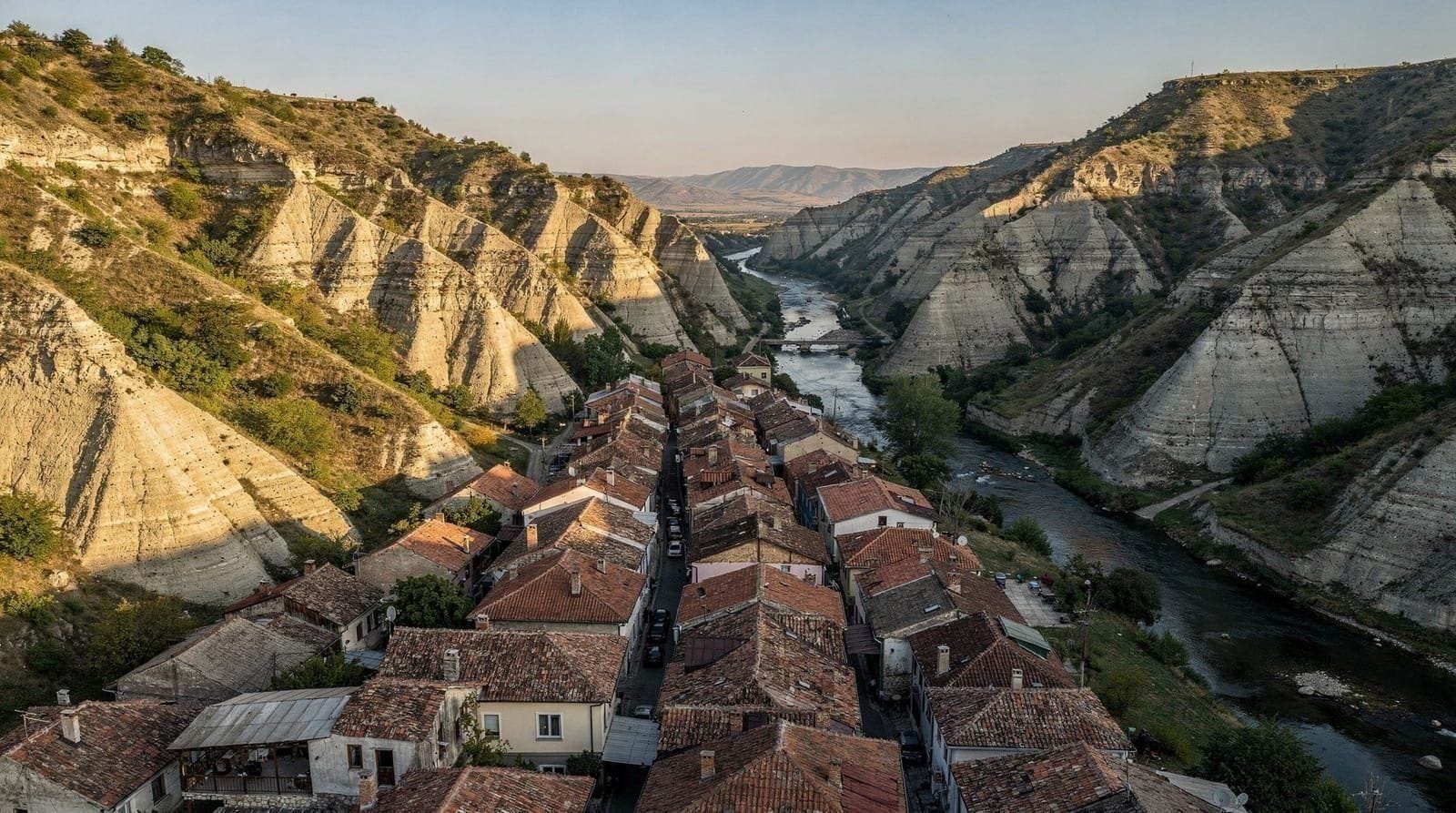
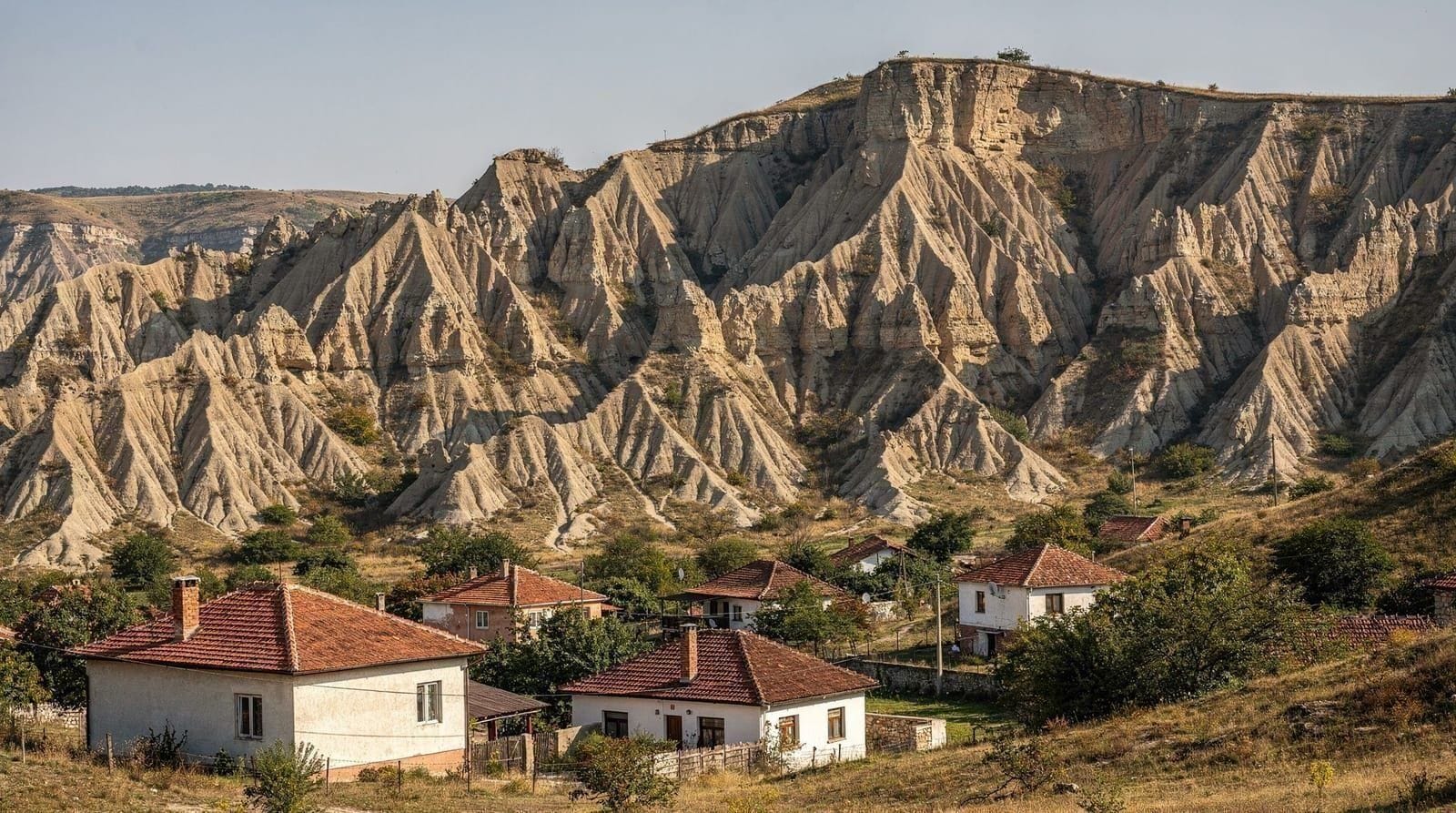
Melnik is the smallest town in Bulgaria, with roughly 200 permanent residents. It sits in a dramatic landscape of sandstone pyramids in the far southwest of the country, about 190 km from Sofia — approximately a 3-hour drive each way via the A3 motorway toward Blagoevgrad, then south.
This is a long day trip and is best done with a car or a guided tour. There is a daily bus from Sofia’s Ovcha Kupel bus terminal, but the schedule makes a comfortable wine tasting day difficult unless you stay overnight.
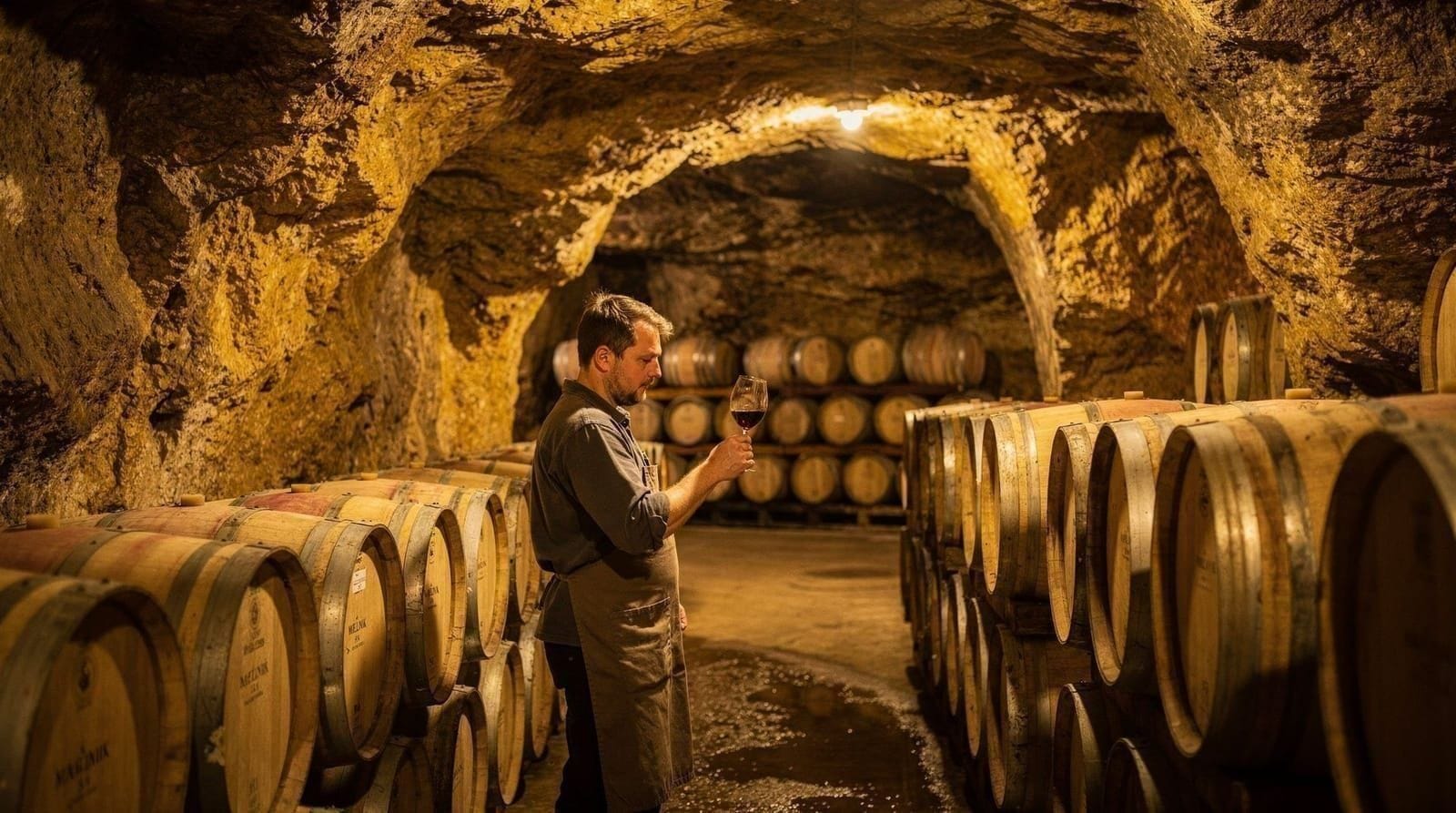
The town itself is compact and walkable in under an hour, with several winery cellars cut directly into the sandstone cliffs that you can visit for tastings. Most operate on a walk-in basis during spring and summer, though calling ahead is sensible in low season. A tasting of 4-5 wines typically costs €10-20 per person, often with small food accompaniments.
Notable wineries in the Melnik area include Damyanitsa (the largest, with a more commercial setup), Mitko’s Winery (small, traditional, with cellar cut into the rock), and several family operations that welcome visitors informally.
Rozhen Monastery is 7 km east of Melnik and can be combined with the same day. Founded in the 13th century, it holds a particularly well-preserved collection of Bulgarian National Revival architecture and frescoes. Entry is free or involves a small donation. The road between Melnik and Rozhen passes through a valley of the sandstone formations the area is known for.
What to buy: a case of Melnik 55 to take home is the obvious choice. Prices at the winery gate are lower than in Sofia shops. Budget roughly €40-80 for 6 bottles of decent quality. Rakia (grape brandy) from local producers is another good purchase — look for homemade variants in unlabeled bottles, which are legal to sell in small quantities in Bulgaria and are often the most interesting.
For an organized trip that handles the driving, this tour includes the winery visits and guide:
Melnik wine day tour from SofiaThe full destination guide with additional context is at Melnik and the Melnik wine region guide.
If Melnik is the only wine stop you can fit in, consider pairing the trip with a night in the area rather than rushing back. The Rila Monastery guide and the Sofia to Rila transport guide are useful if you want to extend the south-western leg of your trip toward the mountains, and the day trips from Sofia overview shows how the pieces fit together.
Route 2: Koprivshtitsa and Starosel Winery (100-120 km, full day)
This route combines two distinct attractions — the National Revival village of Koprivshtitsa and the Starosel winery complex, which sits within an ancient Thracian sanctuary. The combination makes for one of the more interesting days you can build from Sofia because it covers Bulgarian history across three separate eras: Thracian, National Revival, and contemporary.
Koprivshtitsa is a well-preserved 19th-century village about 100 km east of Sofia, now designated as a National Revival architectural and historical museum. It was the site of the April Uprising of 1876 against Ottoman rule — a failed rebellion that nonetheless accelerated Bulgarian independence. The town has some 380 protected period houses with distinctive architecture: bold colors, overhanging upper floors, decorative woodwork. Several are open as house museums, with entry fees of €1-3 per house.
There is a direct bus from Sofia’s Poduene bus terminal (about 2 hours). With a car, the drive takes 90 minutes via the Trakia motorway. The Koprivshtitsa day trip guide covers logistics and what to see in detail. The Koprivshtitsa destination page has background on the history.
Starosel is a purpose-built winery complex about 30 km south of Koprivshtitsa, near the village of the same name. What makes it unusual is its setting: the winery was constructed around a Thracian cult sanctuary dedicated to the hero Heros Karabasmos, dating to approximately the 4th-3rd century BCE. The sanctuary includes a beehive tomb and ritual complex that archaeologists excavated beginning in the early 2000s and that visitors can walk through as part of a winery visit.
The winery itself focuses on Mavrud, Syrah, and international varieties. Tastings with food pairings run €20-35 per person. They also offer simple food (mezze-style plates, cheese, charcuterie) to accompany the wine.
This route works best with a car so you can cover Koprivshtitsa in the morning, drive to Starosel for an afternoon tasting, and return to Sofia in the evening. It is a demanding day logistically but gives you three genuinely different experiences.
Route 3: Plovdiv and Bessa Valley Winery (130 km, full day)
Bessa Valley Winery is one of Bulgaria’s most internationally recognized wine estates, located in the Rhodope foothills about 50 km south of Plovdiv. It was established in 2001 by Belgian investor Marc Westmaas in partnership with the Moët Hennessy group’s winemaking team, and it produces wines that have received international press coverage and awards — unusually for Bulgarian wine, which is rarely promoted outside the country.
The estate focuses on Mavrud, Syrah, and Merlot. Their top wines are priced at €15-30 per bottle, which is expensive for Bulgaria but still modest by Western European standards for wines of comparable quality. Guided cellar visits and tastings are available by appointment; contact the winery directly before visiting.
Bessa Valley is most naturally combined with Plovdiv, which is 130 km from Sofia and one of the most enjoyable cities in Bulgaria for a day trip. Plovdiv’s Old Town covers a cluster of hills with well-preserved National Revival houses, an ancient Roman amphitheater still used for concerts, and the Kapana creative district with cafés, wine bars, and independent shops. The Plovdiv day trip guide covers what to prioritize if you only have one day.
From Sofia, Plovdiv is easily reached by car (about 90 minutes on the Trakia motorway), by intercity bus (frequent, about 2 hours from the Central Bus Station), or by train (about 2.5 hours, less frequent). The destination page for Plovdiv has logistics.
A practical itinerary: arrive in Plovdiv late morning, walk the Old Town and Kapana, have lunch, then drive south to Bessa Valley for an afternoon tasting, returning to Sofia by evening. If you are not renting a car, the Plovdiv section works on its own as a day trip with wine bars in Kapana substituting for a winery visit.
Tasting wine in Sofia before you go
If you want to get oriented on Bulgarian wine before committing a full day to a winery trip, several options exist in Sofia itself. Wine bars in the city center carry good selections, and a structured tasting can give you a sense of which grapes and regions you want to explore further.
Sofia Bulgarian wine and tapas tastingThis kind of in-city tasting is a reasonable starting point, particularly if your schedule only allows one or two day trips and you want to make them count. The Bulgarian wine guide covers regions and producers in more detail.
What to buy and how to bring it home
Bulgarian wine is significantly cheaper to buy at the source than after it has been exported. If you are flying home from Sofia Airport, you can purchase wine at the airport duty-free shops, but the selection is limited to mainstream producers. A better approach:
- Buy directly from wineries during your day trip (often the lowest prices and widest selection of estate wines)
- Buy from wine shops in Sofia (look for dedicated wine shops rather than supermarkets for better selection)
- Pack wine in checked luggage with adequate protection — Sofia’s Lidl and supermarkets sell wine bags and foam sleeves
EU carry-on rules apply: no bottles in hand luggage on flights. 12 bottles in checked luggage per adult passenger is the standard EU allowance for personal use.
Budget for purchasing: a well-chosen selection of 6 bottles covering Mavrud, Melnik 55, and a white Dimyat can cost €40-80 depending on producer and quality level. This makes Bulgarian wine one of the better value souvenirs you can bring from the region.
Wine pairs naturally with local food, so the Bulgarian dishes to try and the Sofia food guide are worth a look before you decide what to buy and what to drink it with. If you would rather learn the basics at a wine bar first, the Sofia nightlife guide points to the evening side of the city.
For combining wine travel with other day trips from Sofia, including non-wine destinations, the ranked guide covers the full range of options.
Choosing between the three routes
Each route serves a different priority, and the honest comparison helps more than a ranked list would.
| Route | Distance | Best for | Downside |
|---|---|---|---|
| Melnik + Rozhen | 190km, ~6hrs driving | Unique landscape + Melnik 55 grape | Long day; overnight is better if possible |
| Koprivshtitsa + Starosel | 100-120km | History + Thracian sanctuary + wine in one day | Demanding logistics, needs a car |
| Plovdiv + Bessa Valley | 130km | Easiest logistics + city day combined | Bessa Valley needs advance appointment |
If you have only one day and no car, Route 3 is the only one realistically doable by public bus (to Plovdiv), with the winery portion dropped in favor of Kapana’s wine bars. If you have a car and one day, Route 2 packs in the most variety. If wine is the actual priority rather than a nice-to-have, Route 1 is worth the extra driving.
Wine tourism etiquette and what to expect
Bulgarian winery visits are generally less formal than equivalents in France or Italy. Advance booking matters more for larger, internationally known estates (Bessa Valley, Starosel) than for small family cellars in Melnik, where showing up during opening hours often works. Tastings are typically guided by whoever is available rather than a dedicated sommelier, and questions about the indigenous grapes — Mavrud, Melnik 55, Rubin — are welcomed rather than seen as a distraction from a scripted presentation.
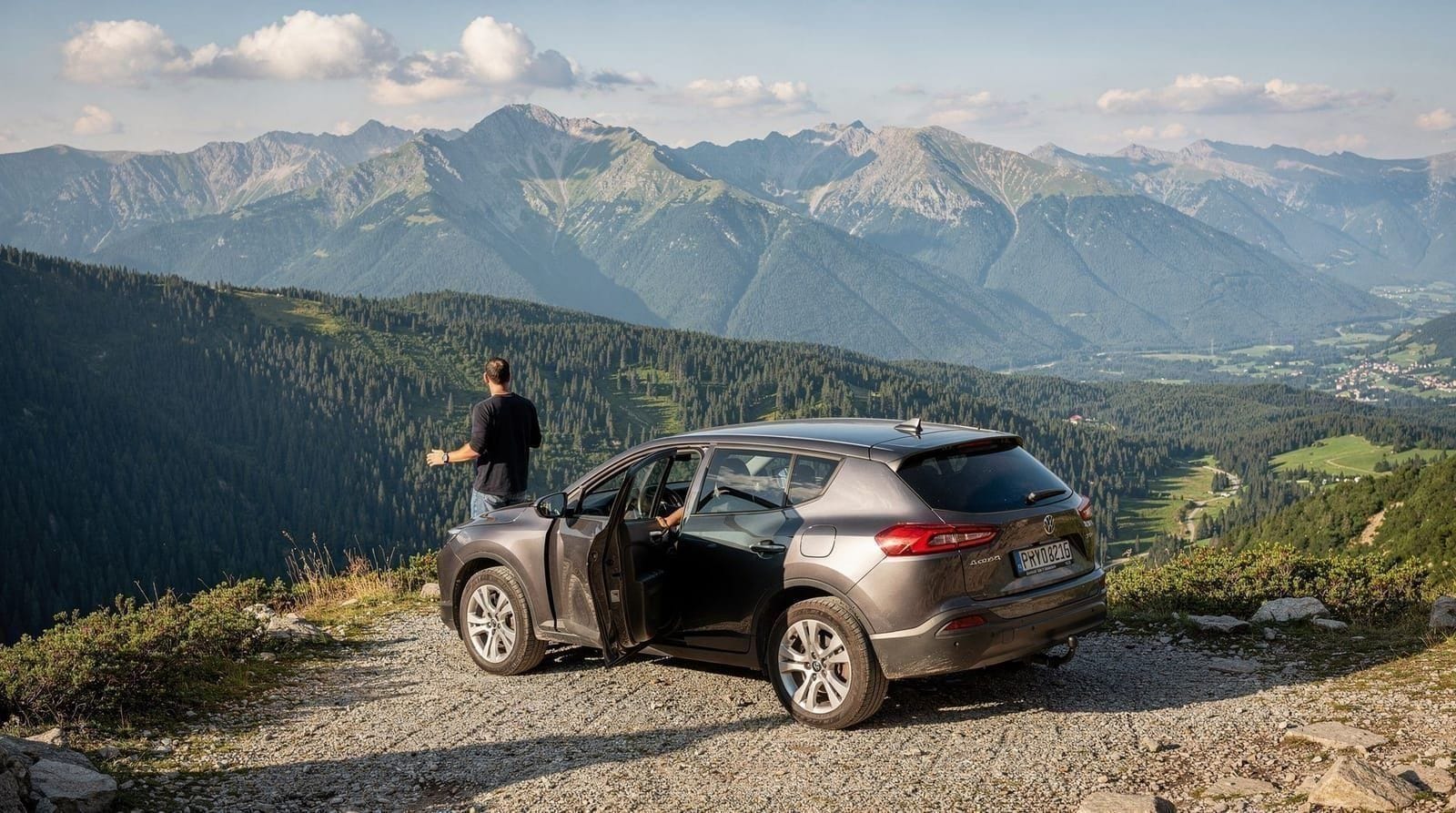
Driving and tasting do not mix in Bulgaria any more than elsewhere: if you are the designated driver, most wineries will pour a smaller taste or none at all without objection, and spitting buckets are standard practice at any winery running multiple tastings per day. A guided tour with a driver removes this constraint entirely, which is part of why the organized options are worth considering even for visitors who would normally prefer independent travel.
Koprivshtitsa and Starosel winery day tour from SofiaFrequently asked questions about Bulgarian wine day trips
Do I need to book winery visits in advance?
It depends on the winery. Large operations like Damyanitsa in Melnik and Bessa Valley near Plovdiv require or strongly prefer advance booking, especially for guided tastings with food. Small family wineries in Melnik often accept walk-ins during opening hours. Starosel is best booked ahead. A general rule: book anything that involves a guided tour or food pairing; walk-ins are more likely to work for simple cellar tastings.
How long is the drive to Melnik from Sofia?
Approximately 2.5-3 hours each way in normal traffic conditions, taking the A3 motorway toward Blagoevgrad and then the E79 south. The road is in reasonable condition but the final stretch into Melnik is narrow. Budget 6 hours round-trip driving for a day that also includes winery visits — it makes for a long day and staying overnight in Melnik is worth considering if your schedule allows.
Is Bulgarian wine genuinely good or is it just cheap?
Both things are true simultaneously. The Bulgarian wine industry has significant variation in quality. Entry-level supermarket wine is cheap and unremarkable. However, serious producers — particularly those working with Mavrud, Melnik 55, and Rubin — produce wines that stand comfortably alongside wines from better-known regions at double the price. The quality ceiling is real; the trick is knowing which producers to seek out.
What is the best Bulgarian wine to take home as a souvenir?
Melnik 55 from a reputable Melnik producer is the most distinctive option — it is grown nowhere else in the world and is genuinely interesting to wine-drinking friends who have not encountered it. Mavrud from a producer like Bessa Valley or Katarzyna Estate is the best option for someone who wants to impress with a quality red. For white wine, Dimyat is pleasant and inexpensive.
Can I visit Melnik without a car?
Yes, but it requires planning. There is one daily bus from Sofia’s Ovcha Kupel bus terminal to Melnik, with a journey time of about 3.5-4 hours. The bus schedule makes a same-day return feasible but tight. An alternative is to stay one night in Melnik and return the following morning — the town has several small hotels and guesthouses, and the evening light on the sandstone formations is worth experiencing. A guided tour from Sofia handles all transport and is the easiest option for a day trip.
When is the best time to visit for wine tourism?
Late September and October is the harvest period — vineyards are active, wineries are releasing new vintages, and some offer harvest experiences. Spring (April-June) is also good for winery visits before the summer tourist peak. July and August are hot, particularly in Melnik which sits in a sheltered valley. Winter visits are possible but some smaller wineries reduce their visitor hours.
Do I need to be a wine expert to enjoy these day trips?
No. Bulgarian wineries are used to visitors with no formal wine knowledge, and tastings are explained in plain terms rather than assuming prior expertise. The indigenous grapes (Mavrud, Melnik 55, Rubin) are unfamiliar enough to most international visitors that everyone is starting from a similar baseline, which makes the tastings approachable rather than intimidating.