Plovdiv day trip from Sofia: a complete planning guide
From Sofia: Small Group Guided Tour of Plovdiv's Highlights
How do I get from Sofia to Plovdiv for a day trip?
The most comfortable option is the train from Sofia Central Station: four services daily, 2h44m, €5–8 in second class, no changes. By bus from Avtogara Yug (South Bus Station), departures run every 30–60 minutes at peak times, take about 2 hours, and cost €8–12. By car, the E80/A1 motorway is 145km, around 1.5 hours, with a toll of approximately €4 one way.
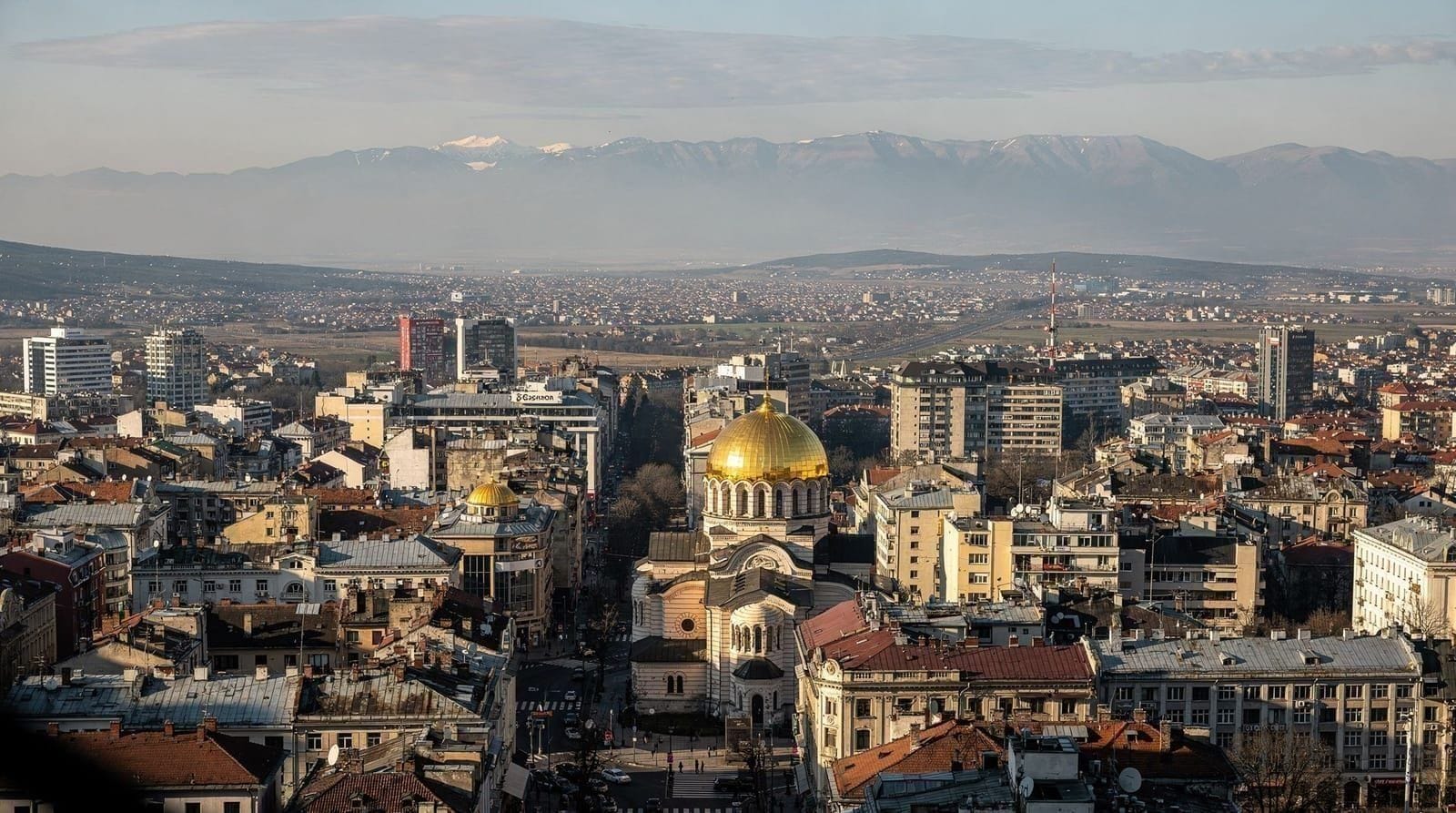
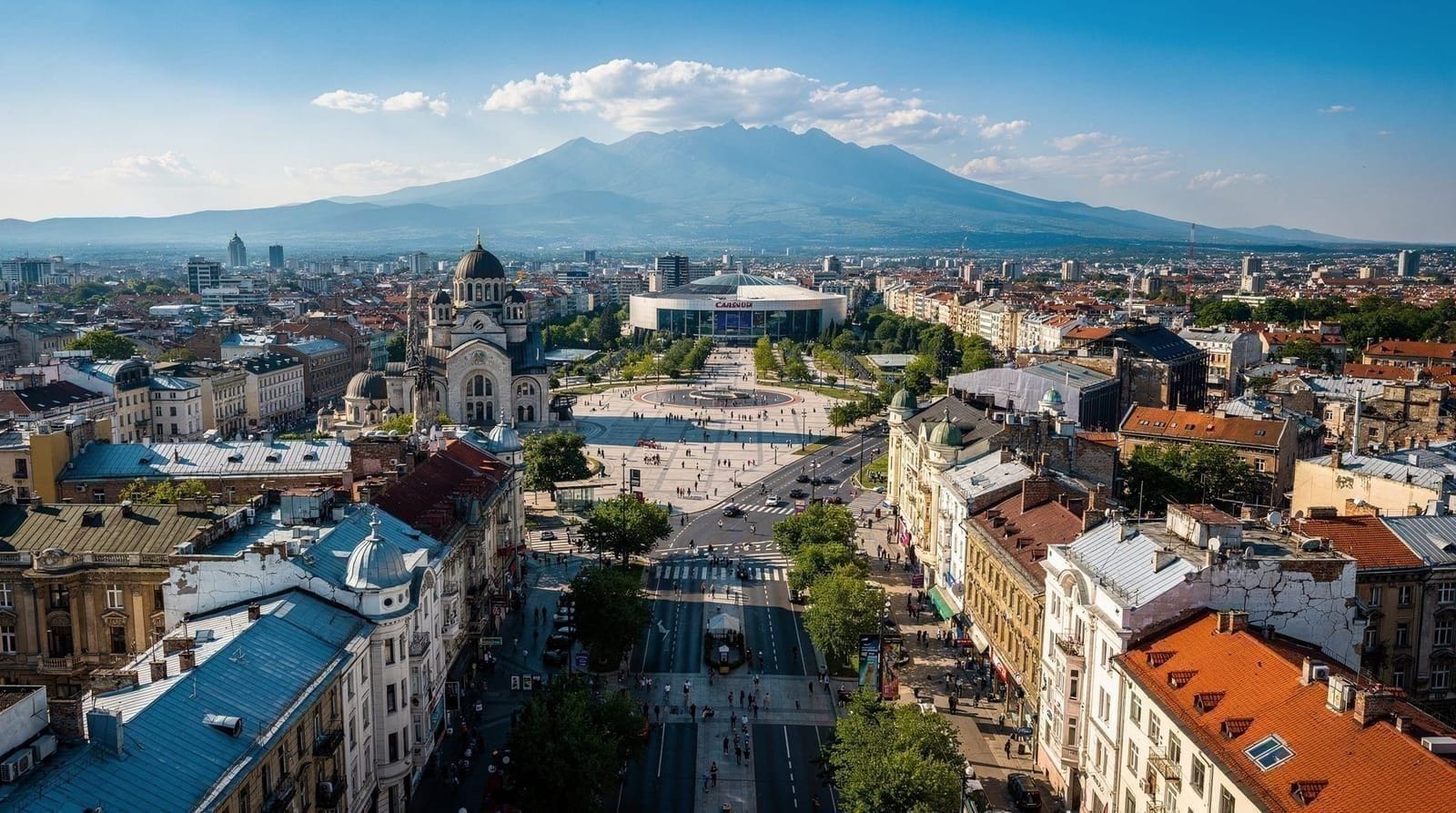
Plovdiv is Bulgaria’s second-largest city and one of Europe’s oldest continuously inhabited settlements, with evidence of human occupation going back more than 6000 years. It sits 145km east of Sofia in the upper Thracian Plain, where the Maritsa River curves between seven hills — three of which form the elevated Old Town. The city was chosen as European Capital of Culture in 2019, which brought investment in public spaces and arts venues, and much of that infrastructure remains visible. A day trip from Sofia is among the most rewarding and logistically simple excursions in Bulgaria.
| Where | Upper Thracian Plain, 145km east of Sofia |
| Cost | Train €5–8, bus €8–12, car toll ~€4 one way |
| Time needed | Half-day minimum (4–5h); full day recommended |
| Getting there | Train from Sofia Central Station, 2h44m, most reliable |
| Best time | Year-round; summer evenings liveliest in Kapana |
Getting there from Sofia
By train
The train is the most reliable option for a Plovdiv day trip. From Sofia Central Station (Centralna Gara, connected to metro line 2), four intercity trains depart daily for Plovdiv. Journey time is 2 hours and 44 minutes. Second-class tickets cost €5–8 depending on the service. Trains arrive at Plovdiv Central Station, which is about a 10-minute walk south from the main pedestrian zone and 15 minutes on foot from the edge of the Old Town.
Tickets can be bought at the station windows or, in some cases, online through the Bulgarian State Railways (BDZ) website. The service is generally punctual. The early morning departures (typically around 7am and 8am) allow you to be in Plovdiv by 10am for a full day.
By bus
Buses from Avtogara Yug (South Bus Station, connected to metro line 2) to Plovdiv run frequently — every 30–60 minutes at peak times. Journey time is about 2 hours. Fares run €8–12 depending on the operator and time of day. Buses arrive at Plovdiv’s Yug or Rodopi bus stations, both in the southern part of the city, a 15–20 minute walk or a short taxi ride from the Old Town. Several private bus companies serve this route; book through the operator directly or at the station window.
By car
The E80 motorway (also signed as A1) connects Sofia to Plovdiv directly — 145km of controlled-access road with a toll of approximately €4 one way. Journey time in normal traffic is 1.5 hours. Motorway toll is paid at booths before the Plovdiv exit.
Parking in the Old Town area is limited and controlled. The most practical approach is to park near the Maritsa River, where there is free or low-cost street parking, and walk up to the Old Town (10–15 minutes). Paid parking lots also exist on the western edge of the pedestrian zone. Avoid driving into the Old Town itself, where streets are narrow, one-way, and largely pedestrianised.
Organised tours
Day tours from Sofia to Plovdiv cost €30–55 and include transport and a guide. They are useful for historical context in the Old Town and house-museums, but Plovdiv is accessible enough that independent visitors manage easily.
For travelers weighing independent travel against a tour, the deciding factor is usually context rather than logistics: Plovdiv’s Old Town is easy to navigate without help, but the layered history — Thracian foundations, Roman theatre, Ottoman mosques, Bulgarian Revival mansions all within a few hundred metres — is easier to piece together with a guide who can point out what belongs to which period as you walk. Independent visitors can get most of this from museum placards and a bit of pre-reading; a guide simply delivers it in real time without the need to stop and read.
GetYourGuideFrom Sofia: Small Group Guided Tour of Plovdiv's HighlightsCheck availability →Plovdiv Old Town (Stariyat Grad)
The Old Town occupies three hills — Nebet Tepe, Taksim Tepe, and Dzhambaz Tepe — rising above the Maritsa plain. The streets are cobblestoned, steep in places, and lined with a mix of Roman-era foundations, Ottoman-period mosques and hans (caravanserais), and large Bulgarian Revival-era mansions of the 19th century. The combination is dense and visually distinctive.
The Old Town is compact — you can cross it on foot in 15 minutes — but the concentration of things to see rewards a slower pace. Plan 2–3 hours minimum for the Old Town itself.
Roman Amphitheater
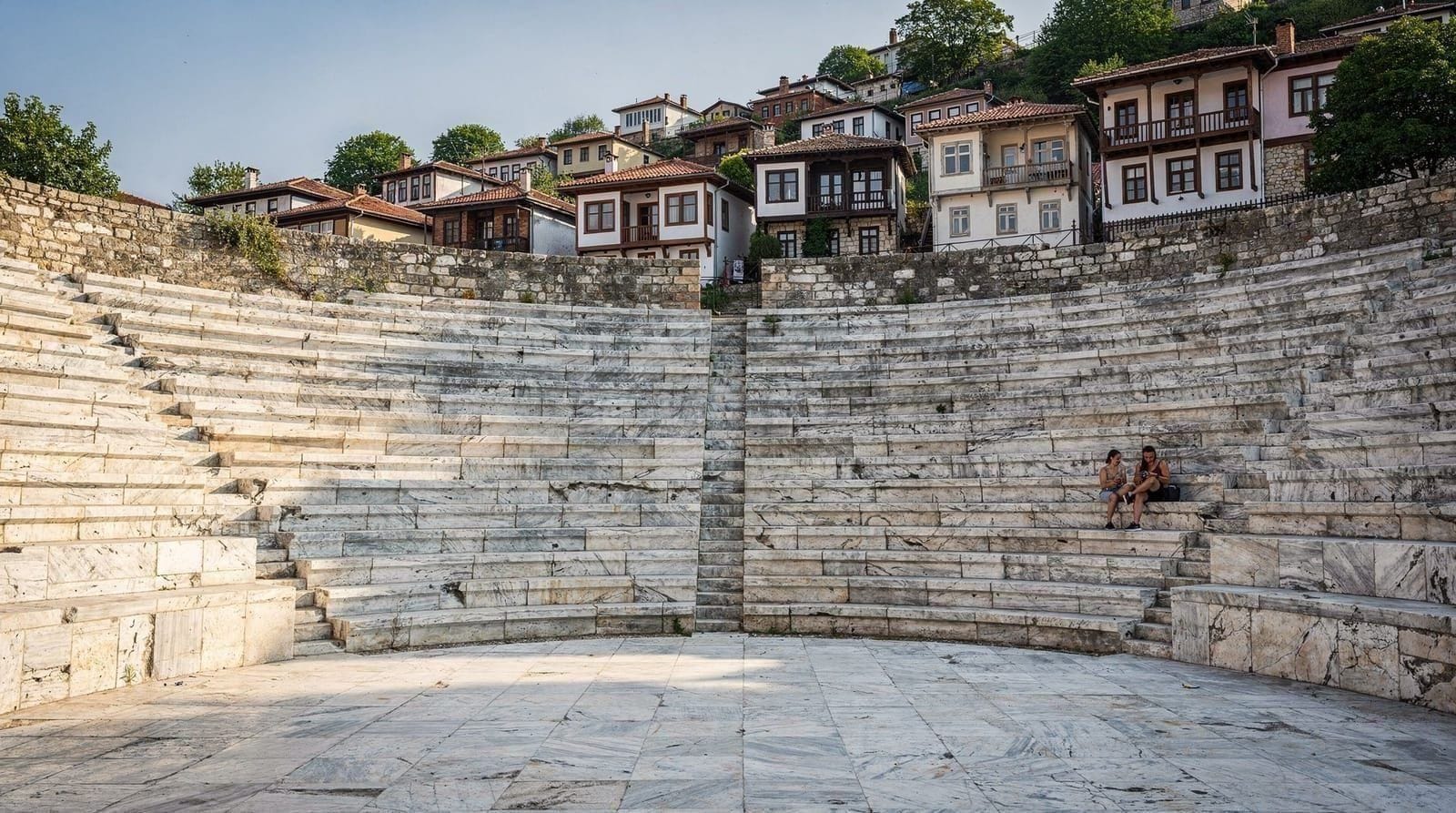
The amphitheater is the most recognisable sight in Plovdiv. Built during the reign of Emperor Trajan in the 1st–2nd century CE, it seated approximately 7000 spectators and hosted gladiatorial games and public assemblies. It was buried and forgotten for centuries — rediscovered in the 1970s after a landslide exposed the seating terraces. Restoration began in the 1980s and the theater now hosts open-air concerts and performances during the summer season.
Views of the amphitheater are available from the surrounding streets and terraces at no cost. Entry to the interior costs €4. If a performance is on during your visit, evening tickets can be worth the trip back from Sofia by late train.
Dzhumaya Mosque
The Dzhumaya Mosque dates from the 15th century, built during the early Ottoman period. It is an active mosque and one of the oldest surviving Ottoman religious buildings in Bulgaria. Entry is permitted outside prayer times; dress appropriately (remove shoes, cover shoulders). The mosque sits in a square at the northern end of the pedestrian zone, directly adjacent to the partially excavated Roman Stadium.
Roman Stadium
The Roman Stadium was a track built in the 2nd century CE for athletic competitions; it originally seated around 30,000 spectators. Portions of the curved northern end are visible as open-air ruins in the pedestrian zone (free to view). A museum at the site provides additional context. Much of the stadium remains beneath the modern city, and the exposed section gives a sense of scale without being an excavation site visitors can fully explore.
Etnografski Museum (Ethnographic Museum)
Located in a 19th-century Bulgarian Revival mansion in the Old Town, the Ethnographic Museum displays regional costumes, craft tools, household objects, and textiles from the Plovdiv region. The house itself — built for a wealthy Bulgarian merchant — is as interesting as the collection: the overhanging upper floor, painted interior ceilings, and carved wooden decoration are characteristic of the Revival style. Entry is approximately €4.
Balabanov House and Hindlian House
Both are Bulgarian Revival-era mansions open to visitors in the Old Town. Balabanov House (on Konstantsin Stoilov Street) is one of the best-preserved examples — three storeys with painted reception rooms and a central hall with a wooden ceiling. It now serves as an art gallery. Hindlian House (on Artin Gidikov Street) was built for a wealthy Armenian merchant and features wall paintings depicting European cities. Both charge small entry fees (€2–3 each).
The main pedestrian zone
Knyaz Alexander I Street (usually shortened to Aleksandrovska) is the main pedestrian artery running through the centre of Plovdiv — a broad, smooth-paved boulevard lined with 19th-century buildings now occupied by cafes, banks, jewellery shops, and clothing stores. It connects the main square and Dzhumaya Mosque in the north to the southern parts of the city and is the practical spine of a day visit. Well-maintained and lively in the evenings, it functions as Plovdiv’s main gathering space.
Kapana creative district
Kapana lies west of the pedestrian zone and immediately south of the Old Town hills. The name means “the trap” in Bulgarian — a reference to the maze of narrow streets that characterized the old artisan quarter. Renovation ahead of the 2019 Capital of Culture year converted workshops and storage spaces into cafes, bars, galleries, and boutique shops. The street art is substantial: murals cover many of the walls.
The district is compact — roughly four by four blocks — and can be explored in under an hour. It is the best part of Plovdiv for a coffee break, a craft beer, or a quick lunch. Several independent cafes and a handful of natural wine bars operate here. The atmosphere is younger and less tourist-focused than the Old Town immediately above.
GetYourGuideFrom Sofia: Guided Day Tour of Plovdiv's Must-See SightsCheck availability →Where to eat in Plovdiv
Mehana Gurko in the Old Town (on Gurko Street) is one of the more reliable traditional Bulgarian taverns in the city. The menu covers grilled meats, shopska salad, kavarma (clay-pot stew), and the local rakiya. Prices are honest (€8–15 per person), portions are large, and the outdoor terrace works well in summer. No reservation needed for lunch.
Pavaj is located near the Kapana district and serves traditional Bulgarian food in a casual, modern setting. Popular with locals. Expect €10–18 per person. Worth checking operating hours in advance as they sometimes have an irregular schedule.
Hebros Restaurant occupies a courtyard in one of the Old Town’s Revival-era mansions (on Stoyan Chalakov Street). The menu is Bulgarian cuisine with some regional specificity — local cheeses, lamb preparations, and seasonal vegetables — in a more formal setting. Budget €20–35 per person. Reservations are recommended, particularly for dinner.
Central market hall: A covered market building near the pedestrian zone sells cheap food — kebapcheta (grilled minced meat rolls) with bread, grilled sausages, pastries, and produce. This is the best option for a budget lunch or snack without sitting down. Expect to spend €3–5.
Restaurants on Knyaz Alexander I: Multiple cafes and restaurants along the pedestrian zone are convenient but generally tourist-priced. Food quality varies; most visitors use them for coffee rather than meals.
Half-day versus full-day
Half-day (4–5 hours in Plovdiv): Covers the Old Town circuit, Roman Amphitheater, Dzhumaya Mosque and Roman Stadium, and the pedestrian zone. Works if you take a midday train from Sofia, walk the Old Town, and return by early evening.
Full day: Adds Kapana, a museum visit or two (Ethnographic Museum, Balabanov or Hindlian Houses), and a proper sit-down meal. Also allows a slower pace with time to sit in a cafe and look at the city without rushing. If arriving on the 7am–8am train, a full day is comfortable and you can return on the early evening departure.
Extended day with Bachkovo: See the section below. Requires an early start from Sofia and either a car or local bus from Plovdiv.
Plovdiv versus Sofia’s other day trips
| Day trip | Distance/time | Main draw | Best for |
|---|---|---|---|
| Plovdiv | 145km, 2h44m train | Old Town, Roman ruins, Kapana nightlife | Urban culture, restaurants, easiest logistics |
| Rila Monastery | 120km, 2h | Bulgaria’s most important religious site | First-time visitors, single unmissable sight |
| Koprivshtitsa | 100km, 1.5–2h | April Uprising history, house-museums | History enthusiasts |
| Seven Rila Lakes | 120km, 1.5h + hike | Glacial lakes, mountain scenery | Hikers, nature-focused travellers |
Plovdiv is the easiest of Sofia’s major day trips logistically — frequent trains, a compact walkable centre, and no need for a car — which makes it a good choice for solo travellers or anyone without a rental car.
Bachkovo Monastery
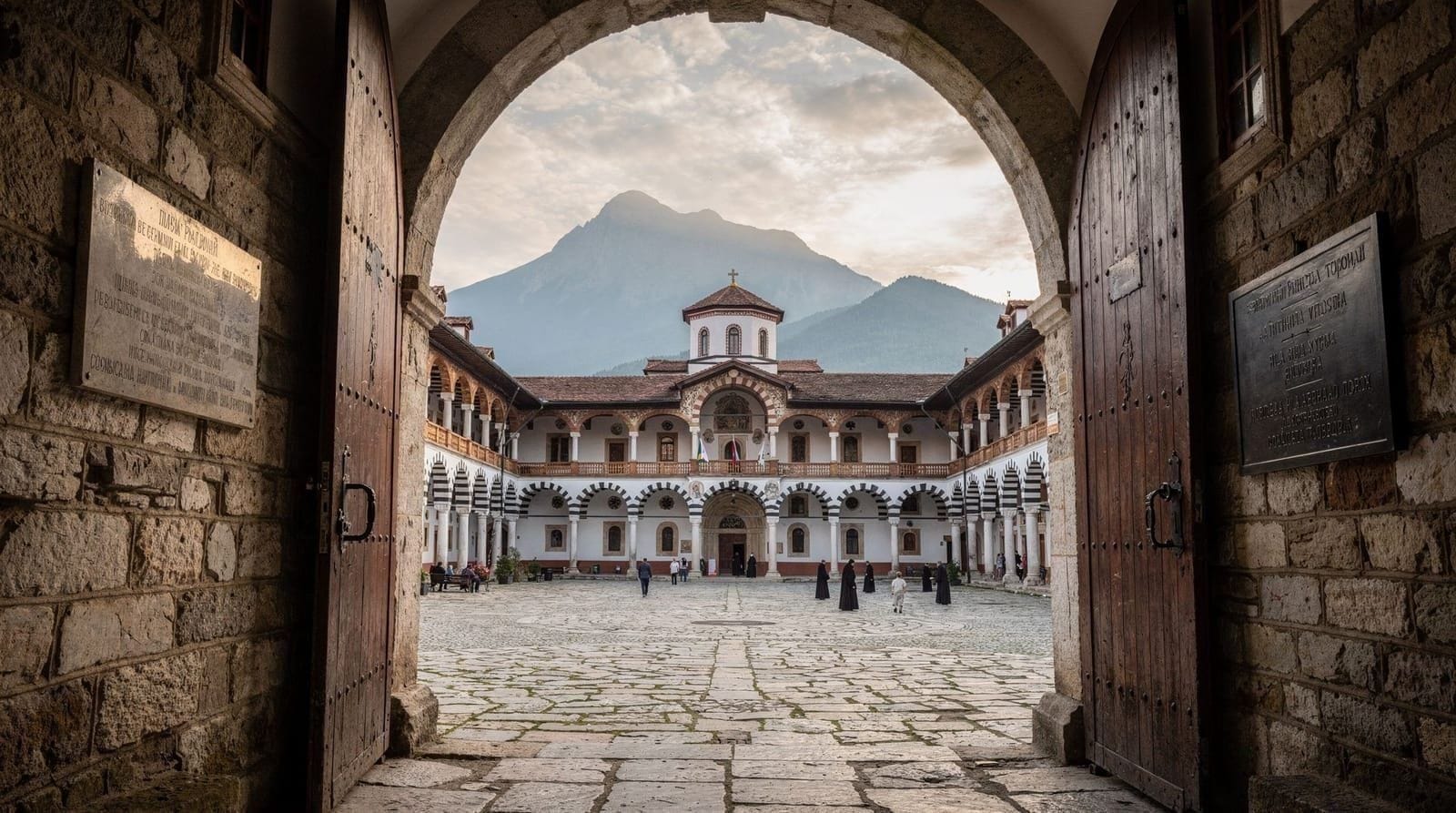
Bachkovo Monastery is the second-largest monastery in Bulgaria, founded in 1083 by two Georgian military commanders in service of the Byzantine Empire. It sits in the gorge of the Asenitsa River, 30km south of Plovdiv on the road toward Smolyan.
The monastery holds an icon of the Virgin Mary (the Bachkovo Icon) regarded as miraculous and is a major pilgrimage site. The 17th-century refectory contains frescoes by Zahari Zograf, a significant Bulgarian painter. The monastery church and courtyard are architecturally distinct from Rila — smaller, more intimate, and with a different character owing to its Georgian-Byzantine founding.
Getting there from Plovdiv: By car, follow the road toward Asenovgrad (about 20km south on road E871) and then continue on the road toward Smolyan — Bachkovo village and the monastery are well-signed. Total drive from central Plovdiv: about 45 minutes. A local bus from Plovdiv’s Rodopi bus station runs to Bachkovo village (about 1 hour); confirm the schedule at the bus station in person.
Entry: The monastery courtyard and church are free. The museum and ossuary charge a small fee (€2–3).
Adding this to a Plovdiv day trip: If you take the first morning train from Sofia (arriving Plovdiv ~10am) and have a rental car or join a tour, visiting Plovdiv for 3–4 hours and then driving to Bachkovo for another 1.5–2 hours is workable. Return to Sofia on the late afternoon train or bus.
GetYourGuideFrom Sofia: Full-Day Tour to Plovdiv with OptionsCheck availability → GetYourGuideFrom Sofia: Full-Day Tour to Plovdiv and Bachkovo MonasteryCheck availability →Staying overnight
If you want to see Plovdiv properly, including a quieter morning in the Old Town before tour groups arrive, and an evening in Kapana, an overnight stay is worth considering.
Budget: Hikers Hostel (well-reviewed, centrally located near the Old Town) offers dorm beds at €15–20 per night.
Mid-range: Several hotels operate on the edges of the Old Town and near the pedestrian zone in the €60–90 range per night. Look for options near Knyaz Alexander I for practical access.
Upscale: Hebros Hotel in the Old Town is housed in a restored Bulgarian Revival mansion on Stoyan Chalakov Street. Rooms run €100–160 per night and the location — inside the Old Town, with the restaurant on-site — is the most atmospheric option in the city.
An overnight also makes it easy to visit Bachkovo Monastery first thing the next morning before returning to Sofia.
For a full trip plan including Plovdiv, see the Sofia 3-day itinerary or the Bulgaria 7-day highlights. The day trips from Sofia overview covers all other excursion options.
Museums and galleries beyond the house-museums
Beyond the Ethnographic Museum, Balabanov House, and Hindlian House, Plovdiv has a handful of other collections worth knowing about if you have a full day or an overnight. The Regional Archaeological Museum, near the main square, holds Thracian and Roman material specific to the Plovdiv region, complementing what is on display at the Roman Stadium and Amphitheatre sites themselves. The City Art Gallery, housed in a Revival-era building near the Old Town, focuses on Bulgarian painting from the 19th century onward. Neither is essential on a half-day visit, but both are reasonable additions if you are staying overnight or returning for a second Plovdiv trip specifically for museums.
A practical half-day walking route
For visitors with genuinely limited time — arriving on a late-morning train and needing to catch an afternoon departure — a tight but satisfying route runs: start at the Roman Stadium and Dzhumaya Mosque at the northern end of the pedestrian zone, walk south along Knyaz Alexander I to the main square, climb into the Old Town for the Roman Amphitheatre and a look at Balabanov House from outside if time is short, then descend into Kapana for a coffee before heading back to the station. This covers the essentials in under three hours and works well if you are combining Plovdiv with another commitment the same day.
Frequently asked questions about Plovdiv day trip from Sofia
How do I get from Sofia to Plovdiv?
Three main options. Train: from Sofia Central Station (Centralna Gara), four departures daily, 2h44m, €5–8 in second class — the most reliable choice. Bus: from Avtogara Yug (South Bus Station, metro line 2), frequent departures (every 30–60 minutes at peak times), about 2 hours, €8–12. By car: 145km on E80/A1 motorway, approximately 1.5 hours, toll roughly €4 one way.How much time do I need to see Plovdiv properly?
A half-day (4–5 hours in the city) covers the Old Town, Roman Amphitheater, and main pedestrian zone. A full day allows you to add the Kapana creative district, visit one or two museums, and have a proper sit-down meal. If adding Bachkovo Monastery (30km south), plan for a full day from Sofia with an early start — the first train or bus makes this comfortable.Is Plovdiv worth a day trip from Sofia?
Yes. Plovdiv is one of Europe's oldest continuously inhabited cities (over 6000 years) and Bulgaria's most culturally rich city after Sofia. The Old Town's layering of Roman, Byzantine, Ottoman, and Bulgarian Revival architecture in walking distance of each other makes for a dense and varied day. It was European Capital of Culture in 2019, which brought significant investment in public spaces and arts venues. The train journey is straightforward and the city is compact enough to navigate on foot.What is the Roman Amphitheater in Plovdiv?
The Roman Amphitheater in Plovdiv's Old Town was built during the reign of Emperor Trajan in the 1st–2nd century CE. It seated approximately 7000 spectators and was used for gladiatorial games and public events. It was rediscovered in the 1970s after a landslide and partially excavated. Today, the restored theater still hosts open-air concerts and theatrical performances. Views from the surrounding streets are free; entering the interior costs €4.What is the Kapana district in Plovdiv?
Kapana (which means 'the trap' in Bulgarian, referring to the labyrinthine streets) is a former artisan quarter of Plovdiv just west of the main pedestrian zone. It was renovated before Plovdiv's 2019 European Capital of Culture year and is now the city's liveliest neighbourhood for independent cafes, craft beer bars, small galleries, boutique shops, and street art. It is compact (roughly four blocks) and easily walkable from the Old Town. Good for a coffee break or an afternoon beer.Where should I eat in Plovdiv?
Mehana Gurko in the Old Town is a reliable traditional Bulgarian tavern (mehana) with grilled meats, salads, and local wine at reasonable prices (€8–15 per person). Pavaj near Kapana serves traditional Bulgarian food in a casual setting (€10–18 per person). Hebros Restaurant in the Old Town is the upscale option — Bulgarian cuisine in a Revival house with a courtyard, expect €20–35 per person and book ahead. For a cheap lunch, the central covered market hall near the pedestrian zone sells kebapcheta (grilled minced meat rolls), fresh bread, and produce.Can I visit Bachkovo Monastery on the same day as Plovdiv?
Yes, if you take an early train or bus from Sofia and have a car in Plovdiv, or join a tour that includes both. Bachkovo Monastery is 30km south of Plovdiv on the road toward Smolyan (about 45 minutes by car). A local bus also runs from Plovdiv's Rodopi bus station to Bachkovo village — journey time around 1 hour. The combination works comfortably if you arrive in Plovdiv by 10am and plan to return to Sofia by the last evening train or bus.Are there other museums in Plovdiv worth visiting besides the house-museums?
Yes, though they are not essential on a tight day trip. The Regional Archaeological Museum near the main square covers Thracian and Roman finds specific to the region, and the City Art Gallery in a Revival-era building focuses on 19th- and 20th-century Bulgarian painting. Both suit visitors staying overnight or returning for a second, more museum-focused trip.Is it worth staying overnight in Plovdiv?
Yes, especially if you want to include Bachkovo Monastery and explore Plovdiv in the evening when the Old Town and Kapana are at their liveliest. An overnight also allows a more relaxed pace in the museum and house interiors. Budget accommodation starts around €15–20 per night in a hostel dorm. Mid-range hotels in the Old Town or near the pedestrian zone run €60–90 per night. Hebros Hotel, in a restored Revival house inside the Old Town, is the most atmospheric option at €100–160.
Top experiences
Bookable activities with verified prices and instant confirmation on GetYourGuide.