Melnik wine region: visiting Bulgaria's smallest town and its famous cellars
Melnik Wine Tour
Is Melnik worth a day trip from Sofia?
Yes, if wine and landscape are your priorities. The sandstone pyramid formations are visually unlike anywhere else in Bulgaria, and the rock-cut wine cellars offer a tasting experience you can't replicate. Budget a full day — the drive alone is three hours each way.
Melnik is Bulgaria’s smallest town by official population — around 200 permanent residents — and one of its most extraordinary landscapes. The town sits at the bottom of a narrow gorge surrounded by white sandstone formations that have eroded over millennia into the shapes of pyramids, towers, and mushrooms. Wine cellars carved directly into the base of these formations store Melnik 55 wines in barrels. The whole arrangement is so specific to this one place that it genuinely cannot be replicated or approximated anywhere else.
That singularity makes Melnik worth the effort to reach. The effort is real: it is a three-hour drive from Sofia on winding mountain roads. The town itself is tiny and sleepy with limited facilities. There is not much to do beyond wine tasting, walking the pyramid formations, and visiting the nearby monastery. For travelers who want bustle, multiple dining options, and easy logistics, Melnik will feel like too much work for too little reward.
For travelers who want landscape, silence, indigenous wine, and a place that has not been flattened into a tourist product, it is one of the best days Bulgaria offers.
| Where | Struma Valley, 144km southwest of Sofia |
| Cost | €35–55 self-drive with tastings; €35–55 organised tour |
| Time needed | Full day; 3hrs drive each way |
| Getting there | Car (recommended) or organised tour; public transport impractical |
| Best time | October (harvest) or September; avoid July–August heat |
Getting to Melnik from Sofia
The distance is 144km but the driving time is consistently around three hours. The route passes through the Struma River valley, which runs between the Rhodope Mountains to the east and the Belasitsa range to the west, narrowing and curving through gorges for the final section. Google Maps tends to underestimate the time — add 20-30 minutes to any estimate for safety.
By car: The most practical option for a day trip. Take the Trakia motorway south from Sofia toward Plovdiv, then pick up the road south to Blagoevgrad and continue through Sandanski to Melnik. Road quality is good as far as Sandanski (Bulgaria’s sunniest city and itself a pleasant brief stop); the final 18km to Melnik is a two-lane winding road through increasingly dramatic terrain.
By organized tour: Several Sofia tour operators run Melnik day trips, typically departing at 7:30–8am and returning by 8–9pm. These usually include a wine tasting at one or more cellars, a stop at Rozhen Monastery, and sometimes Rupite. Prices range from €35 to €55 per person. This is the option for those who prefer not to drive and want guidance.
By public transport: One daily bus runs from Sofia’s Central Bus Station to Sandanski (approximately 2.5 hours). From Sandanski, occasional minibuses or expensive taxis cover the 18km to Melnik. There is no scheduled return bus from Melnik in the evening — you would need to arrange transport back to Sandanski. For a day trip this is effectively impractical unless you stay overnight.
Overnight stays: Melnik has a handful of small guesthouses and family hotels. Staying one night transforms the logistics completely — you can arrive at a relaxed pace in the afternoon, taste wine with dinner, walk the pyramids at dawn before the day tour groups arrive, and still make Rozhen Monastery before heading back. For wine-focused travelers, this is arguably the best approach.
GetYourGuideMelnik Wine TourCheck availability →Melnik town: what to actually expect
Arrive prepared for a very small, slow-paced Bulgarian village. One main unpaved road runs through the gorge bottom. A handful of mehanas (traditional tavern-restaurants) cluster near the entrance, along with several family guesthouses with hand-painted wine signs. There is no supermarket, no ATM (bring cash), no significant nightlife. The permanent population skews elderly.
This is not a criticism — it is a description. The atmosphere is unhurried in a way that has become rare. Cats sleep on barrel tops. Grapevines grow over wooden trellises above doorways. Older residents sit in front of their houses in the afternoon shade.
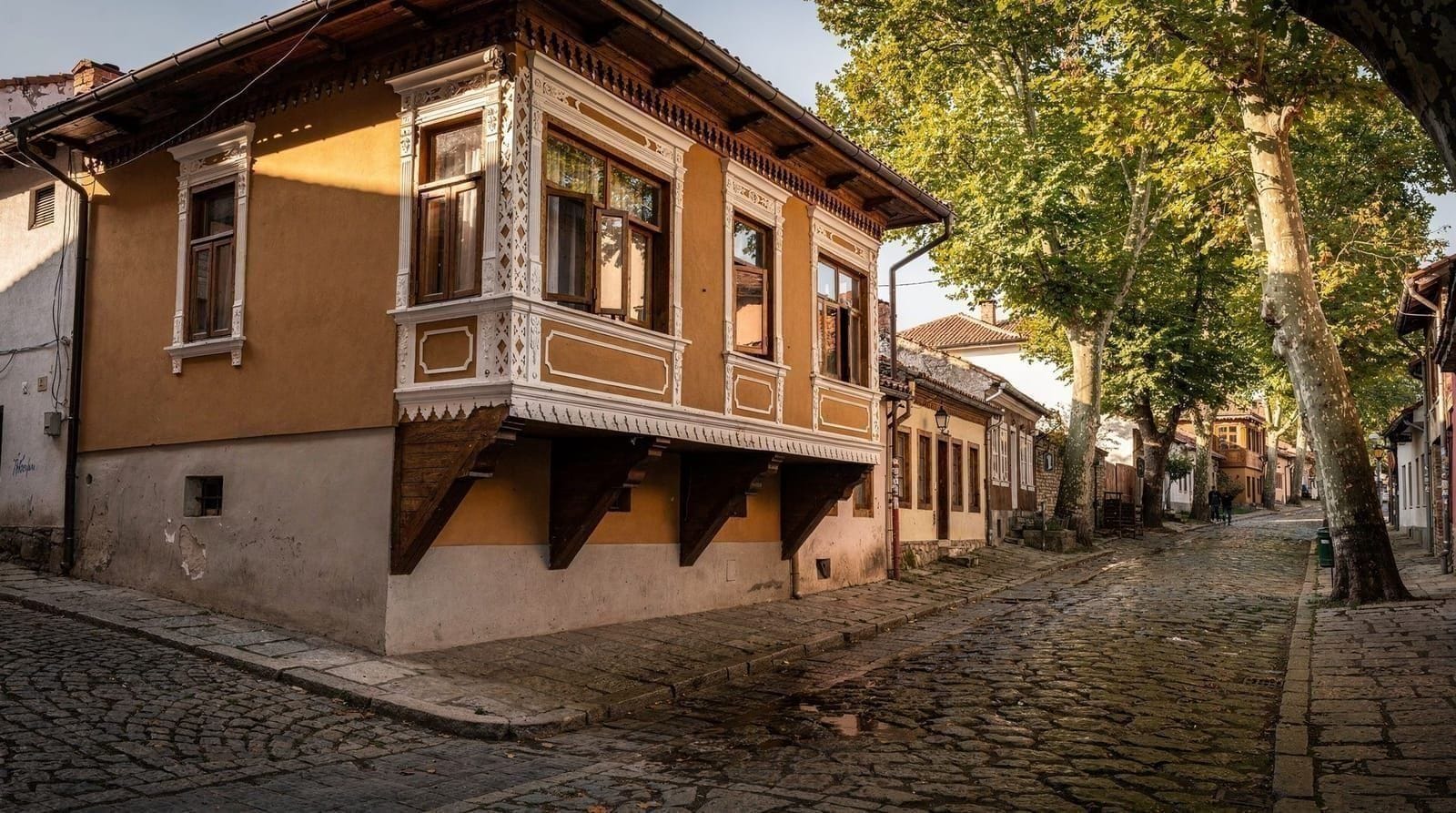
The buildings worth noting: Melnik has several well-preserved houses from the Bulgarian National Revival period (eighteenth to nineteenth century), the most impressive being the Kordopulov House. This three-storey mansion belonged to a wealthy wine merchant family and contains one of the original large rock-cut wine cellars, carved 15 meters into the cliff behind the house. Entry costs €3 and includes a basic explanation of the building’s history. The cellar itself — cool, stone-walled, lit by small lamps, with oak barrels visible in alcoves — is worth the entry fee on atmosphere alone.
Wine tasting in the rock cellars
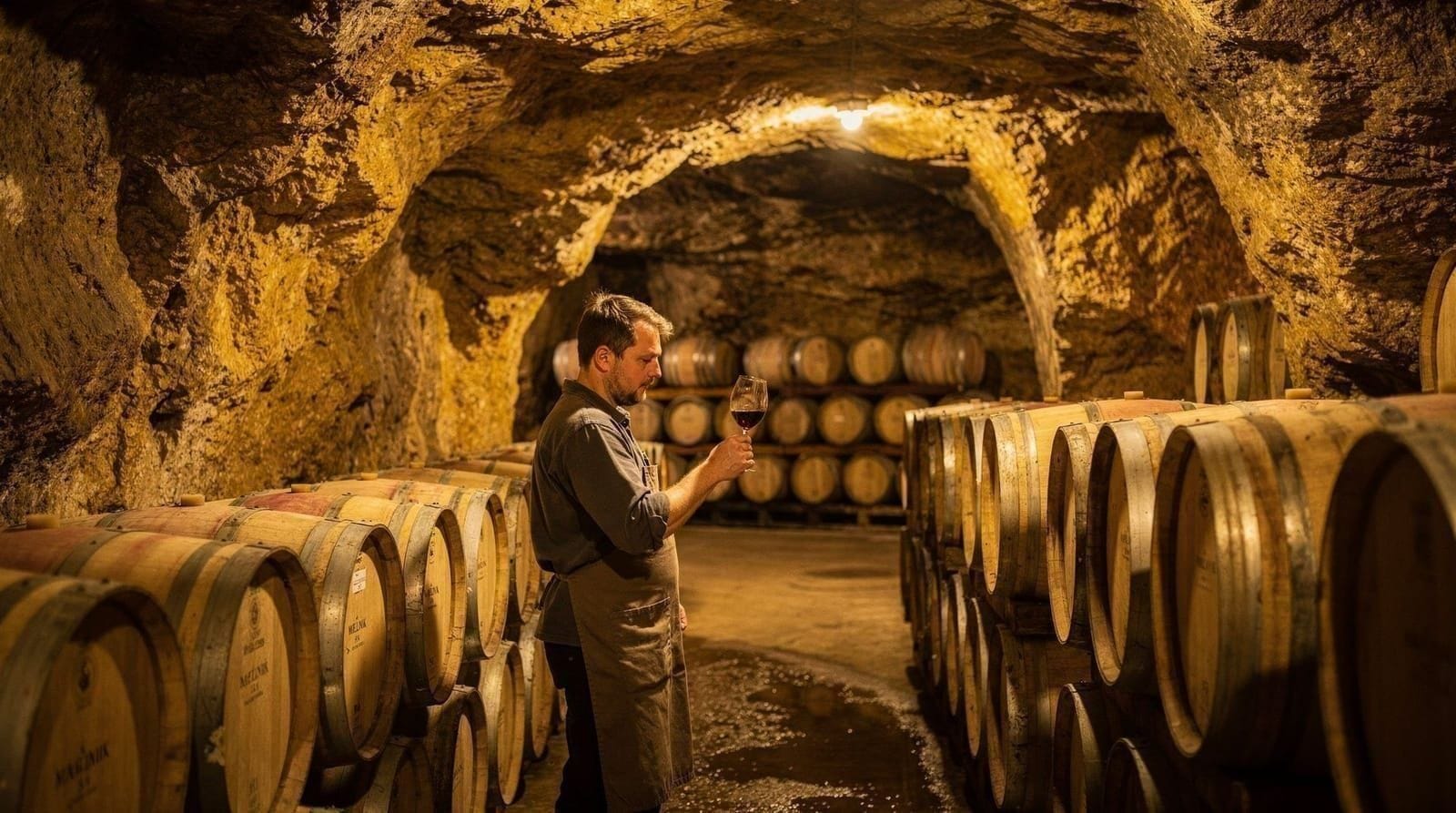
The defining experience of Melnik is tasting wine in a cellar carved into the sandstone pyramid formations. Several family producers in the town open their cellars for visitors, typically operating without reservations outside peak weekends — you walk up, knock (or follow the signs), and are welcomed in.
Mitko Manolev is among the most visited of the small family producers. His cellar goes deep into the rock, with barrels of Melnik 55 at various stages. Tasting is informal and generous: he or a family member pours several wines, explains the vintage differences, and lets you buy bottles at cellar-door prices (typically €10–20 per bottle). This is not a polished commercial tasting — it is a family showing you what they make. Bring cash.
Damianitza Winery, located in nearby Sandanski (15km south of Melnik), is the valley’s leading commercial producer and operates a more formal tasting room with appointments generally not required during visiting hours. Their flagship Melnik 55 wines — particularly the No Man’s Land and Rubin de Rubin — are among the best examples of what the valley can produce at its most polished. Prices are higher than family cellars, distribution reaches international wine shops, and the experience is more structured. Worth visiting if you want comparative context for what you taste in the village cellars.
What to expect to spend: a tasting of three to five wines at a family cellar typically costs €5–10, often redeemable against bottle purchase. Buying two or three bottles at the cellar door is normal and expected — it is the producers’ main income source.
GetYourGuideMelnik the City of Wine, Rozhen Monastery Day Trip from SofiaCheck availability →Walking the sandstone pyramids
The geological formations around Melnik are what make the landscape unlike anywhere else in Bulgaria. Over millions of years, the Struma Valley’s clay and sandstone layers eroded unevenly, leaving the harder sandstone standing in pyramid and mushroom shapes up to 100 meters high, while the softer clay between them washed away. The result is a landscape that looks sculpted rather than natural — pale-white formations catching the late afternoon light in ways that shift from cream to gold to amber.
A marked walking trail starts at the upper end of Melnik village and loops through the main pyramid zone. The complete circuit takes one to two hours at a comfortable pace. The path is not difficult but involves uneven terrain and some climbing — wear appropriate footwear. In October, when the vineyards on the terraces below the pyramids turn yellow and red, the combination of colour is remarkable.
Halfway up the trail, looking back toward the town in the gorge below with the formations on either side, is one of the better landscape viewpoints in southern Bulgaria.
Rozhen Monastery
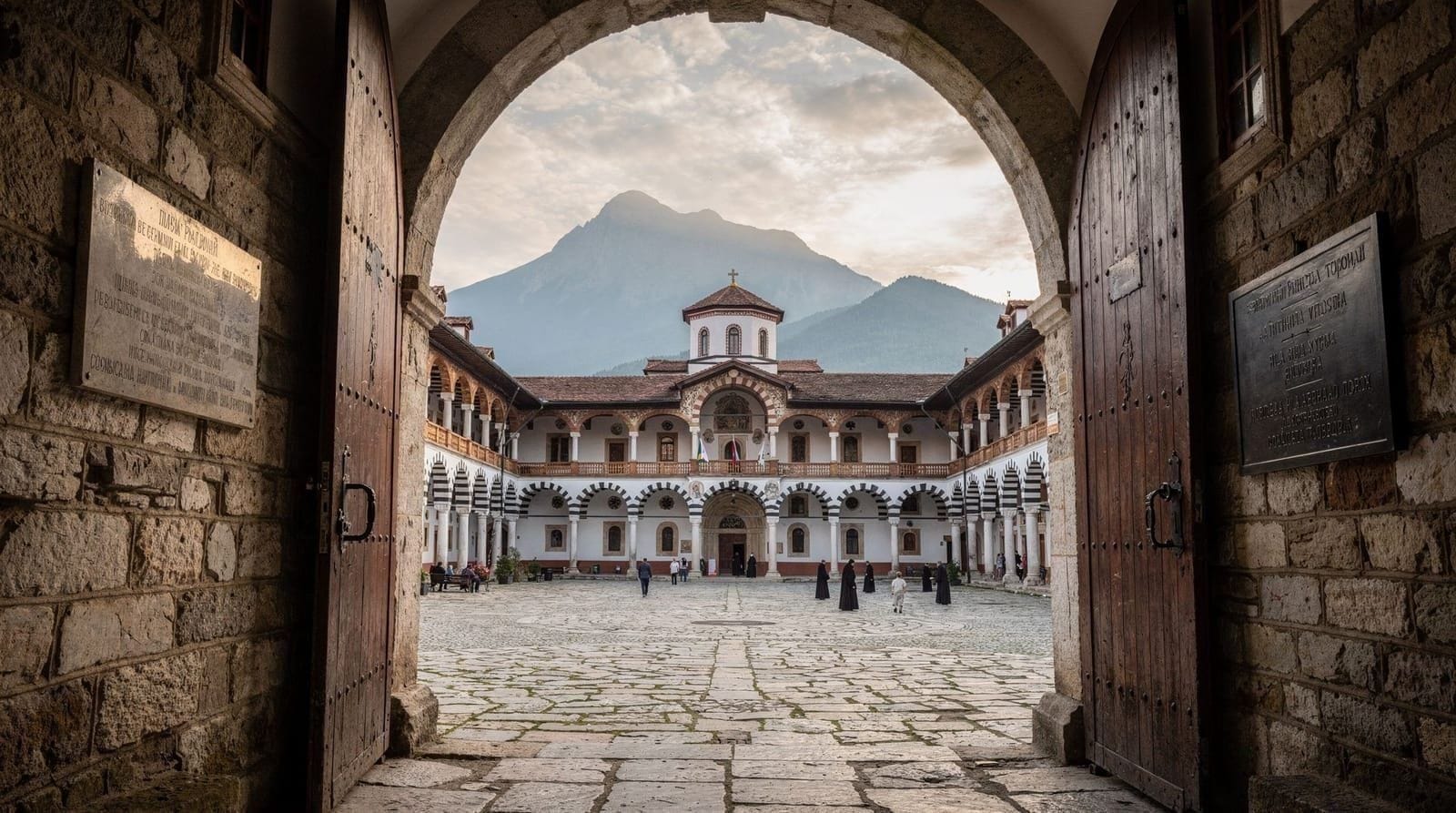
Five kilometers up a narrow road from Melnik (easily combined in a car, or a pleasant hour-long walk for those with energy left) sits the Rozhen Monastery — formally the Nativity of the Mother of God Monastery. It is not as large or as famous as Rila Monastery, but the setting may be more dramatic: the complex sits on a ridge above vine-covered terraces, with the Rozhen River valley falling away below and the hills above covered in forest.
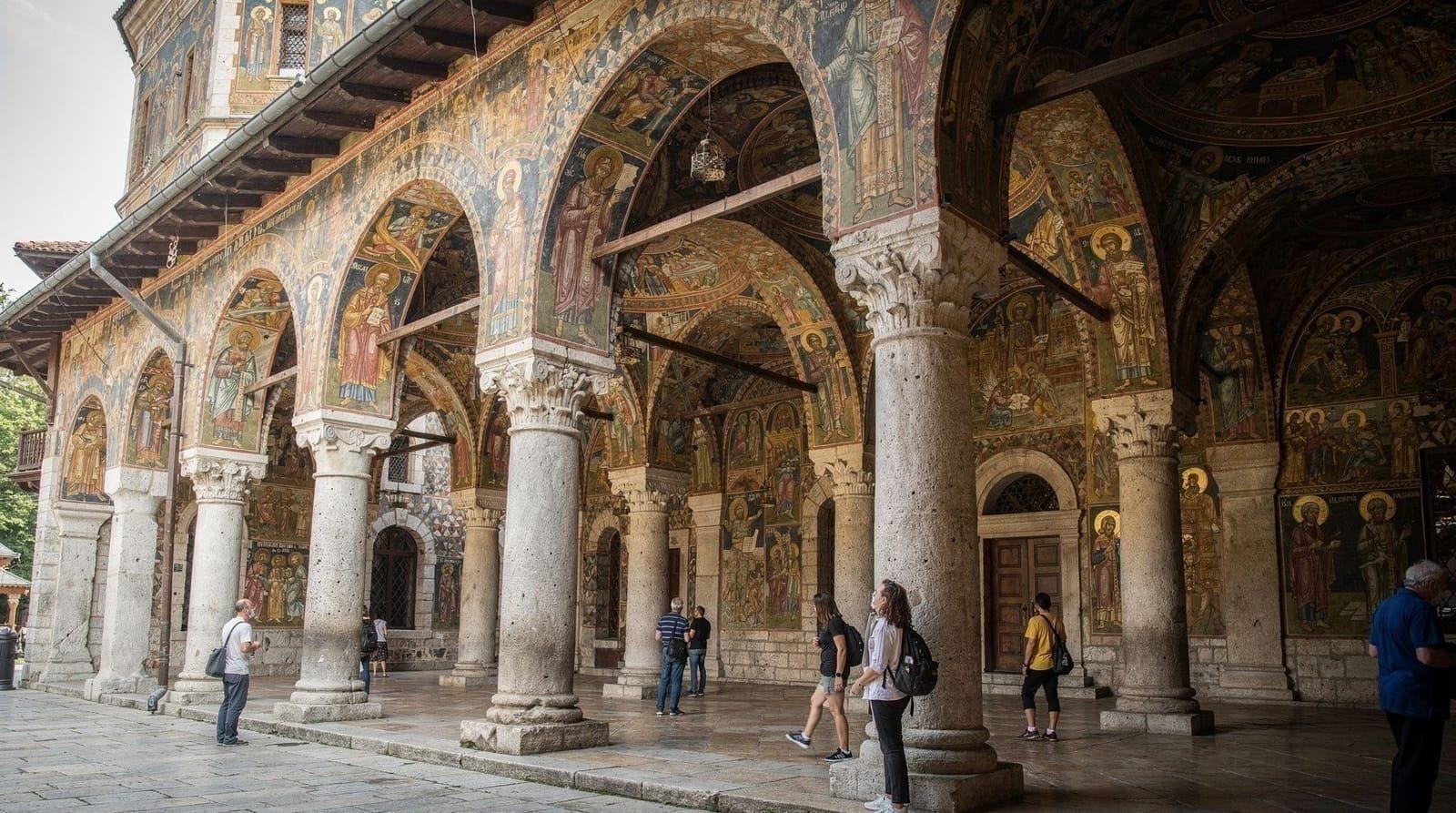
The monastery dates originally from the twelfth century, with the current frescoed church built in the sixteenth century under Ottoman rule. Entry to the courtyard and church is free. The frescoes inside the church are well-preserved and worth time — look particularly at the Last Judgment scenes on the western wall.
There is a small cafe in the monastery courtyard selling coffee and basic snacks. The combination of Melnik wine tasting and Rozhen Monastery is so natural that most organized day tours include both.
Rupite and the Vanga chapel
Fifteen kilometers south of Melnik lies Rupite, a geothermally active area where the ground is still warm from volcanic activity, minerals seep from the soil, and an unusual microclimate produces grapes and crops months ahead of the surrounding countryside. Warm mineral springs bubble at the surface.
The site gained fame during the communist period as the home of Vanga (Baba Vanga), a blind Bulgarian mystic who became one of the most famous prophets of the twentieth century — consulted by Soviet leaders and ordinary people alike, she died in 1996 at age 85. A small Orthodox chapel was built here in 1994, designed to Vanga’s specifications, in an unusual style quite different from traditional Bulgarian church architecture.
Visitors still come in large numbers — particularly Bulgarian visitors for whom Vanga is a cultural figure of genuine significance. The setting is striking: a simple white chapel surrounded by mineral-stained yellow earth, steam rising from the ground nearby, vineyards in the distance. Whether or not you have any interest in the prophetic dimension, Rupite is an odd and memorable place.
GetYourGuideFrom Sofia: Private Day Trip to Melnik and RupiteCheck availability →The Melnik 55 grape: what makes it distinctive
Most wine varieties can be grown, to varying effect, across multiple wine regions. Melnik 55 is one of the exceptions. It requires the specific combination of the Struma Valley’s heat (temperatures regularly exceed 35°C in summer), the mineral content of the sandstone soils, and the shelter of the surrounding mountains. Attempts to grow it outside its home territory have produced wines that are technically competent but lack the character of valley-grown examples.
The vine itself is late-ripening — harvest typically runs into late October, weeks after most Bulgarian varieties are finished. The thick skins produce wines with substantial tannin and extract. Young Melnik 55 can be grippy and somewhat austere; this is a wine designed for patience. With five years of bottle age, the tannins soften and the wine develops complexity — dried fruit, tobacco, leather, Mediterranean herbs — that justifies the wait.
The “55” in the name refers to the legally required minimum of 55 days in barrel or vat before release. Better producers age their flagship wines for two to three years before bottling, and the wines continue developing for another five to ten years afterward.
Buying to take home: If you are going to purchase wine in Bulgaria specifically to age and enjoy later, Melnik 55 from a good producer is the strongest case. It travels well, ages reliably, and represents a genuinely unique wine experience that cannot be replicated with anything from a wine merchant at home. Expect to pay €15–25 at cellar door for a good single-variety example.
Best time to visit: month by month
| Period | Conditions | Notes |
|---|---|---|
| June | Warm, vineyards green | Fewer visitors than autumn; wine still ageing from previous harvest |
| July–August | Very hot (regularly above 35°C) | Best avoided for the pyramid walk; cellars stay cool |
| September | Warm, quieter than October | Good balance of weather and crowds |
| October | Harvest season, vineyards gold | Most atmospheric time; some cellars allow participation in pressing |
| November–March | Cold, some guesthouses close | Off-season; check ahead that cellars and restaurants are open |
Combining Melnik with Rila Monastery
For travelers planning a longer day out of Sofia — or those driving through this corner of Bulgaria — Rila Monastery and Melnik can be combined in a single ambitious day. Rila is roughly 120km from Sofia in a different direction (southwest rather than due south), so the logistics require looping rather than backtracking.
A standard combined itinerary: leave Sofia at 7am, stop at Rila Monastery by 9:30am for two hours, continue south to Melnik for arrival by early afternoon, spend two to three hours tasting and walking, drive back to Sofia via Blagoevgrad arriving by 9pm. This is a long day with significant driving — approximately 350km total — but covers two of Bulgaria’s most remarkable sites. Organized tours that make this combination are available and handle the driving for you.
The Rila Monastery day trip guide covers that part of the itinerary in detail.
Honest assessment: who should go and who might skip it
Melnik is worth the journey if: wine is a genuine interest and you want to taste indigenous varieties in their actual place of origin; landscape matters to you and the sandstone pyramids sound compelling; you enjoy slow-paced, off-the-beaten-track places and can handle limited facilities.
Melnik is probably not worth the journey if: you have only two or three days in Bulgaria and wine is not a priority; you are traveling with young children who need activities and facilities; you expect a polished tourist destination with multiple dining options, reliable English, and easy logistics.
For the wine-focused traveler on a Sofia in 3 days itinerary, Melnik makes a strong case for being the dedicated day-trip day. For the general visitor following the Bulgaria highlights 7 days route, it fits naturally as an overnight stop en route between Sofia and Thessaloniki or as a southern detour.
The best version of a Melnik visit involves arriving in late afternoon, staying overnight at one of the small guesthouses, rising early to walk the pyramids before the day-trippers arrive, spending the morning tasting wine and visiting Rozhen, and driving back to Sofia in the afternoon. Two days in the village leaves you genuinely unhurried.
GetYourGuideSofia: Full-Day Hiking to Rozhen Monastery & MelnikCheck availability →Food and wine pairing in Melnik
Melnik’s mehanas serve traditional Bulgarian food that pairs naturally with the local wine. The kitchen style is slow-cooked and meat-forward: kavarma (clay-pot pork or chicken stew), grilled kebapcheta, stuffed vine leaves, white bean soup (bob chorba), and the ubiquitous shopska salad of tomato, cucumber, and white sirene cheese. These are not delicate flavors — they call for the kind of full-bodied, structured red that Melnik 55 provides.
The wine-food pairing here is not an invented one. The local cuisine developed alongside the local grape variety over centuries, and the match between the tannic, dark-fruited Melnik 55 and the rich stewed and grilled meat dishes of the valley is functional rather than designed. Ordering a kavarma and a glass of the house Melnik 55 in one of the village mehanas is the most authentic food experience the Struma Valley offers.
For context on Bulgarian food more broadly — what you’ll encounter in Sofia versus what you’ll find in village restaurants — the Bulgarian dishes to try guide covers the national kitchen with practical notes for travelers.
Wine and rakia: understanding both
Most visitors to Melnik encounter rakia alongside wine at some point during their stay. Rakia is a fruit brandy — made from plums, grapes, or other fruit depending on the region and producer. In the Struma Valley, grozdova (grape) rakia is common, often made from the marc left after pressing Melnik 55. It is typically 40–50% ABV and drunk at room temperature from small glasses.
Rakia and wine occupy different moments in the Bulgarian drinking rhythm. Rakia comes first — before the meal, often before ordering, alongside a small salad or slice of cheese. Wine accompanies food. Ending with rakia again is optional and signals a convivial mood. The two drinks are not interchangeable; they serve distinct cultural functions.
If a meal in Melnik starts with a shot glass of clear liquid appearing unbidden on the table, that is rakia. Accept it, clink glasses (“nazdrave”), and sip slowly. Shooting it like vodka is considered unsophisticated. A good estate rakia from a Melnik producer — aged in small oak, yellow-gold rather than clear, with fruit and spice notes — is worth the attention.
The Bulgarian wine guide covers the broader distinction between rakia and wine in the context of the national drinking culture.
Sandanski as an alternative base
Sandanski, 18km south of Melnik and Bulgaria’s sunniest city, is worth considering as a base if Melnik’s very limited guesthouse capacity is a concern, particularly in peak harvest season. Sandanski has a wider range of hotels, more restaurants, an ATM, and a small town centre with genuine amenities that Melnik lacks entirely. The trade-off is that you lose the experience of Melnik at dawn and dusk without the day-trip crowds — staying in Sandanski means driving back to Melnik each morning rather than walking out of your guesthouse door into the gorge.
For travelers combining wine with some general spa time, Sandanski also has thermal mineral water facilities at several hotels, an option Melnik itself does not offer. If your priority is maximum comfort and flexibility with Melnik as a day visit rather than an immersive overnight, Sandanski is a sensible compromise.
Practical information
Cash: Essential. Melnik’s family producers do not take cards, and most small guesthouses and mehanas prefer cash. The nearest ATM is in Sandanski.
Accommodation: Several small family guesthouses in Melnik village offer rooms at €30–60 per night including breakfast. Booking ahead for weekends in September–October is advisable; the town has limited capacity. Sandanski (18km south) has larger hotel options if you need more amenities.
Food: Melnik’s mehanas serve standard Bulgarian fare — shopska salad, grilled meats, stuffed peppers, beans — alongside the local wine. Nothing elaborate but consistently good and very cheap. Expect to pay €10–15 per person for a full meal with wine.
What to combine in the wider area: The Seven Rila Lakes are north of the valley but far enough to require a separate trip. The day trips from Sofia guide covers how to sequence multiple destinations if you are planning several days of excursions. For general planning help — how many days to spend in Sofia, what to prioritize — the Sofia travel guide is the starting point.
Melnik versus Bulgaria’s other wine regions
Melnik is not the only wine-producing area accessible from Sofia, and it is worth understanding what sets it apart before committing a full day. The Bulgarian wine guide covers the country’s wine regions broadly; the short version for Melnik specifically is that it is the only place to taste genuine Melnik 55 in its home terroir, in family cellars rather than commercial tasting rooms.
Other Struma Valley producers and the broader Thracian Lowlands (further east, near Plovdiv) grow different grape varieties in more conventional vineyard settings, with easier access and more polished visitor facilities, but without Melnik’s combination of geology, isolation, and a single indigenous grape found almost nowhere else. If your priority is a comfortable, efficient wine-tasting afternoon, a closer option nearer Plovdiv may suit better. If the point is a genuinely singular Bulgarian wine landscape, Melnik is worth the three-hour drive.
Shoulder-season and off-season considerations
Outside the June–October window, Melnik quiets down considerably. Several small guesthouses and mehanas reduce their hours or close entirely between November and March, and the family wine cellars — which rely on foot traffic rather than reservations — may simply not be attending if few visitors are expected. If you are considering an off-season visit, it is worth calling ahead (a Bulgarian-speaking hotel concierge in Sofia can help) to confirm at least one cellar and one restaurant will be open on the day you plan to arrive. The pyramid walking trail remains open year-round and is genuinely beautiful with a light dusting of winter frost, though the exposed sandstone can be slippery after rain or snow — sturdy footwear matters more in winter than in summer.
Frequently asked questions about Melnik wine region
How far is Melnik from Sofia?
Melnik is 144km from Sofia but the journey takes around three hours by car because of winding mountain roads through the Struma Valley. Do not plan the trip expecting a quick drive — the road is scenic but slow.Is it possible to get to Melnik without a car?
Technically yes — there is one bus per day from Sofia to Sandanski (the nearest town), from which occasional minibuses or taxis cover the final 18km to Melnik. In practice this makes a day trip nearly impossible. Renting a car or booking an organized tour are the two realistic options.What is Melnik 55 wine?
Melnik 55 is an indigenous Bulgarian grape variety grown almost exclusively in the Struma Valley around Melnik. The '55' refers to the minimum number of days the wine must spend in wood or vats before release. It produces full-bodied, structured reds that improve significantly with five to ten years of ageing.What else is there to do in Melnik besides wine tasting?
The sandstone pyramid formations surrounding the town are worth exploring on foot — a marked trail takes one to two hours. The Kordopulov House is an impressive eighteenth-century mansion with a rock-cut cellar (€3 entry). Rozhen Monastery, 5km away, is one of Bulgaria's most photogenic religious sites.When is the best time to visit Melnik?
October is the harvest season and the most atmospheric time — the vineyards turn gold, producers are pressing the new vintage, and some wineries allow participation. September is quieter and slightly cooler. Summer (July–August) is very hot in this southern valley and best avoided for outdoor walking.Can I combine Melnik with Plovdiv in one trip?
Not comfortably in a single day — they lie in different directions from Sofia and combining both would mean over seven hours of driving alone. A better approach is a two-day loop: Plovdiv as an overnight stop on the way south, then Melnik the following day, returning to Sofia via Blagoevgrad. See the Plovdiv day trip guide for the city portion of that route.
Top experiences
Bookable activities with verified prices and instant confirmation on GetYourGuide.