Sofia in 3 days: city + Rila Monastery day trip
Sofia: Must-See Attractions Walking Tour
Three days gives you a proper look at Sofia — not just the monuments but some texture around them — plus a full day at Rila Monastery, which is the single most significant site within day-trip distance of the capital. This itinerary requires no car. It works best from Thursday to Sunday (starting any weekday works, but the Rila bus schedule is slightly more frequent on weekdays).
Bulgaria joined the eurozone on 1 January 2026; all prices here are in EUR.
| Where | Central Sofia, Rila Monastery (120 km south), Boyana |
| Cost | Roughly €350–450/person, mid-range, excl. flights |
| Time needed | 3 days (Rila needs a full day on its own) |
| Getting there | Metro/bus in Sofia; tour, bus, or taxi to Rila |
| Best time | April–June or September–October |
How this itinerary is structured
Day 1 covers the central city. Day 2 is entirely devoted to Rila Monastery — the 120 km journey is long enough that anything else would be rushed. Day 3 moves to Boyana Church (UNESCO-listed) and wraps with free time in Sofia for markets, museums, or one more meal before departure.
For a broader planning overview, see the Sofia itinerary planning guide and the how many days in Sofia guide.
Day 1: Sofia city — old town, communist history, evening out
Morning: Serdica ruins and the central monuments
Start at Serdica metro station — this is where Sofia’s Roman past is most visible. The in-station ruins preserve sections of Serdica, the Roman city that existed on this site from the 2nd to 6th centuries CE. These are free to view from the metro platforms and connecting corridors, and they’re often overlooked by visitors who walk straight past. The Serdica Roman ruins guide gives historical context.
Emerge from the metro and walk east toward the Largo, the Stalinist administrative ensemble — three large symmetrical buildings arranged in a horseshoe around a central open space. This is the best place in Sofia to understand the Communist-era urban reordering of the city center. The communist Sofia tour guide covers the key buildings and their history. Just south of the Largo, the Presidency building has an hourly changing of the guard; the Lions Bridge (Lavov Most) to the north is worth a short detour.
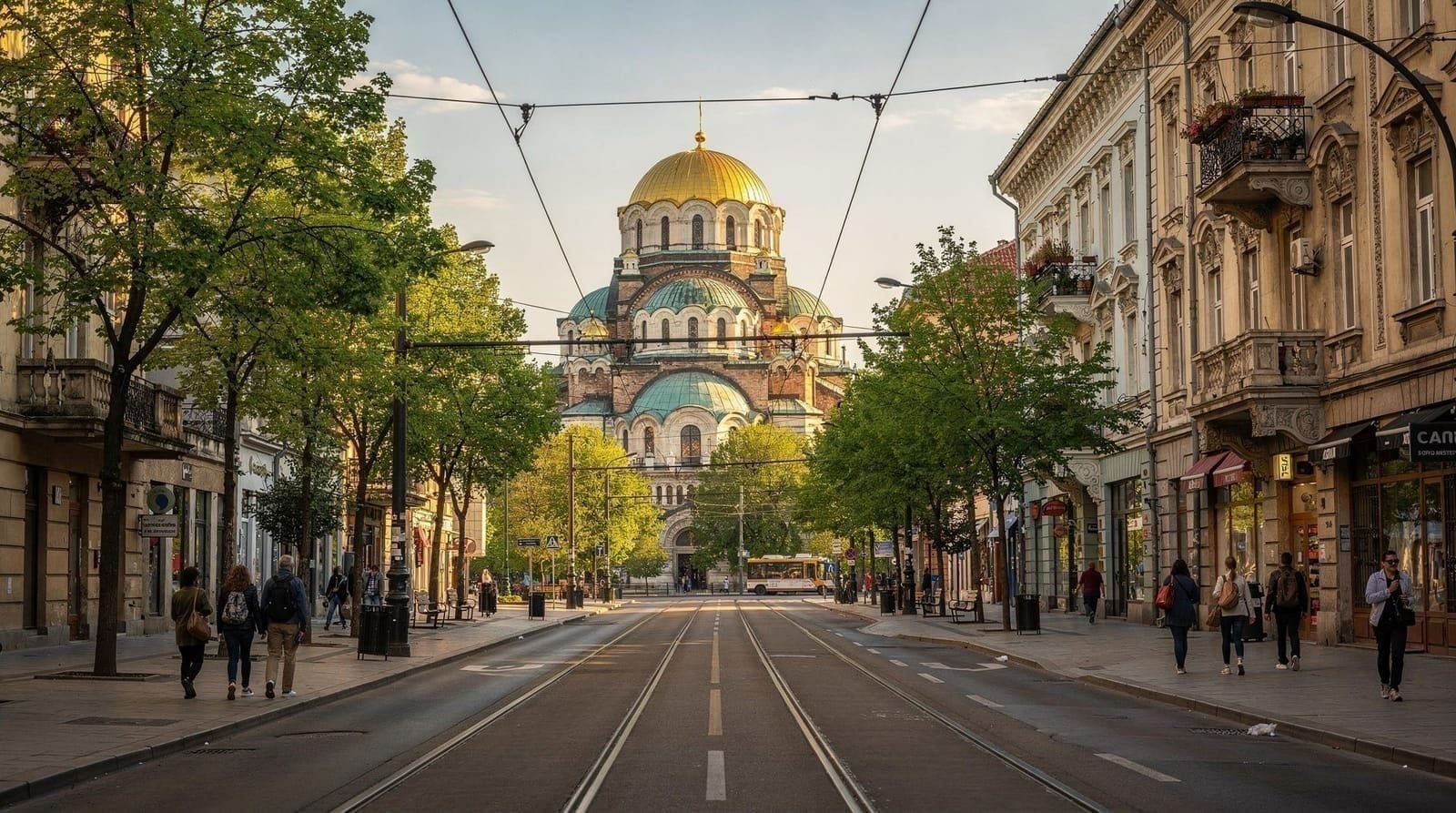
Continue east along Tsar Osvoboditel Boulevard to Alexander Nevsky Cathedral. Built between 1882 and 1912, this is the defining image of Sofia — a Neo-Byzantine structure seating 5,000 with gold mosaics and a crypt museum of Bulgarian Orthodox icons. The main nave is free to enter; the crypt charges around €4. Spend time in both. The Alexander Nevsky Cathedral guide covers the iconographic programme and historical context in detail.
Behind Alexander Nevsky, the St Sophia Church (6th century) is one of the oldest surviving churches in the Balkans — quieter than its famous neighbor and worth ten minutes.
Late morning: churches and a coffee break
Walk south from Alexander Nevsky toward the National Assembly building and then west toward the Sofia University area. The streets between the university and Vitosha Boulevard contain a concentration of Sofia’s better cafes and some of the Bulgarian Revival architecture that survived Soviet-era planning.
The Sofia churches guide covers the main Orthodox, Catholic, and Armenian churches in the center, most of which you pass on this route.
Stop for coffee on or near Graf Ignatiev Street — this pedestrian street is the quieter alternative to Vitosha Boulevard and has a better ratio of local cafes to tourist-oriented spots. For an overview of what distinguishes Sofia’s cafe culture, the Sofia coffee culture guide is useful pre-reading.
Afternoon: the old town and a guided walk
After lunch (the market hall at Zhenski Pazar — Women’s Market — has cheap prepared food: €2-5 for a full plate), follow the Sofia old town walk through the medieval core. The walk loops through the area around the Rotunda of St George (a 4th-century Roman rotunda now used as an Orthodox church, set inside the Sheraton hotel courtyard — free to enter), the Banya Bashi Mosque (1576, Sofia’s only active mosque), and the Central Mineral Baths building.
A guided walking tour on this first afternoon is a useful option if you’d rather have a guide than read between stops. The Sofia must-see attractions walking tour covers Alexander Nevsky, the Largo, and the main squares with an English-speaking guide for around €15-20. The food-focused alternative, Sofia food tasting and cultural walk, adds meals at local spots.
Evening: the communist monuments and dinner
Sofia’s communist-era monuments are most atmospheric at dusk and after dark. The National Palace of Culture (NDK) plaza, the 1300 Years of Bulgaria Monument, and the remains of the mausoleum site (the building was demolished in 1999 but the space remains) are all within walking distance of the center. The communist history walking tour runs evening departures and is one of the better-value thematic tours in the city.
For dinner, the area around Stara Planina Street and Bacho Kiro Street northwest of Alexander Nevsky has a concentration of Bulgarian restaurants at mid-range prices (€12-20 for a main and a drink). For what to order, the Bulgarian dishes to try guide covers the essentials — start with shopska salata, then a kavarma or musaka.
Day 2: Rila Monastery — full day excursion
Rila Monastery is 120 km south of Sofia, in the Rila Mountains at 1,147 m elevation. It is Bulgaria’s most important monastery, a UNESCO World Heritage Site since 1983, and the day trip is one of the most worthwhile excursions from any Balkan capital. Allow a full day; this is not an afternoon.
Getting there
By organized tour: The simplest option. Tours depart from central Sofia hotels and the central bus station area, include a guide, and typically cost €25-45 per person depending on group size and inclusions. They handle all logistics. The Rila Monastery full-day group tour is the standard format; the combined Rila and Boyana tour is useful if you want to knock out both sites in one day (though it’s rushed).
By public bus: Buses depart from Ovcha Kupel bus terminal (metro line 1, western end). The journey takes around 2 hours, with a change at Dupnitsa or direct on some services. The fare is around €6-8 each way. The schedule is limited — typically 1-2 direct departures in the morning, returning in mid-to-late afternoon (the last bus back leaves around 17:00). Check current timetables at the terminal or on the YOVKOVTRANS website. Do not rely on Google Maps for Bulgarian rural bus schedules — they are frequently out of date.
By taxi/private car: A private taxi to Rila Monastery and back, with 3-4 hours of waiting time, costs around €80-120 depending on negotiation. Split between 3-4 people this is competitive with a tour and offers flexibility on timing.
The Sofia to Rila transport guide covers all options in more detail. For a dedicated guide to the monastery itself, see the Rila Monastery guide.
At the monastery
The monastery complex is open throughout the day; entry to the main courtyard and church is free. What you’re paying for when you book a tour is the guide and transport, not site access.
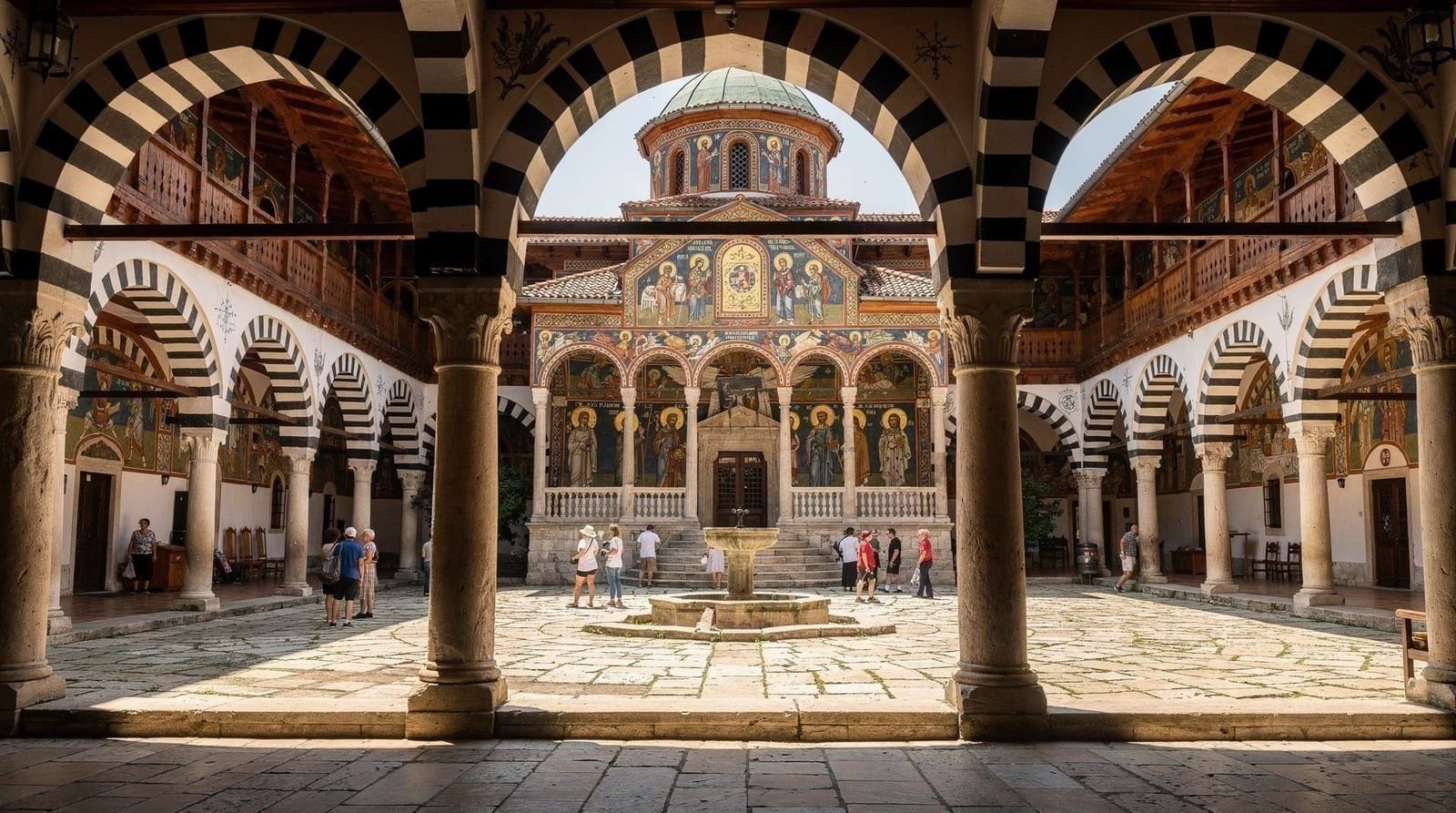
The courtyard: The 300-arch arcade on four sides is the first thing you see after the main gate. The current buildings date from a post-1833 fire reconstruction, but the site has been occupied since the 10th century. The Hrelyo Tower (the oldest surviving structure, 14th century) charges around €2 to enter. Worth it for the view from the top.
The Church of the Nativity: The frescoes covering the church’s three porticos and interior were painted in the 1840s by masters from the Bansko and Samokov revival schools. The coverage is total — approximately 1,200 square meters of painted surface. The quality varies across sections, but the best passages (particularly the Last Judgment scene in the outer portico) are exceptional. Entry to the church is free; photography inside varies by section — check the posted rules.
The monastery museum: Holds the collection of historical artifacts including the famous Raphael’s Cross — a wooden cross carved with 1,500 miniature biblical figures by monk Rafail between 1790 and 1802. He went blind from the work. Entry around €5. The museum is well worth the time and fee.
The surrounding area: The Rila River runs through the valley below the monastery. A 2 km walk upstream leads to the Nevyastata Waterfall — a pleasant addition if you have time and energy. The path is straightforward.
Lunch: The monastery complex has a small refectory open to visitors, and there are restaurants and cafes in the village immediately below. Prices are higher than Sofia but not dramatically so. A full meal in the village runs €10-15.
What time to arrive and leave
Aim to reach the monastery by 10:00 before tour groups peak. The main rush is between 11:00 and 14:00. If you arrive early, you can have the courtyard and church to yourself or nearly so. Plan to leave by 16:00 if using public buses, or 17:00 if on a tour.
The Rila Monastery day trip guide covers visiting strategy in more detail.
Day 3: Boyana Church and free time in Sofia
Morning: Boyana Church (UNESCO)
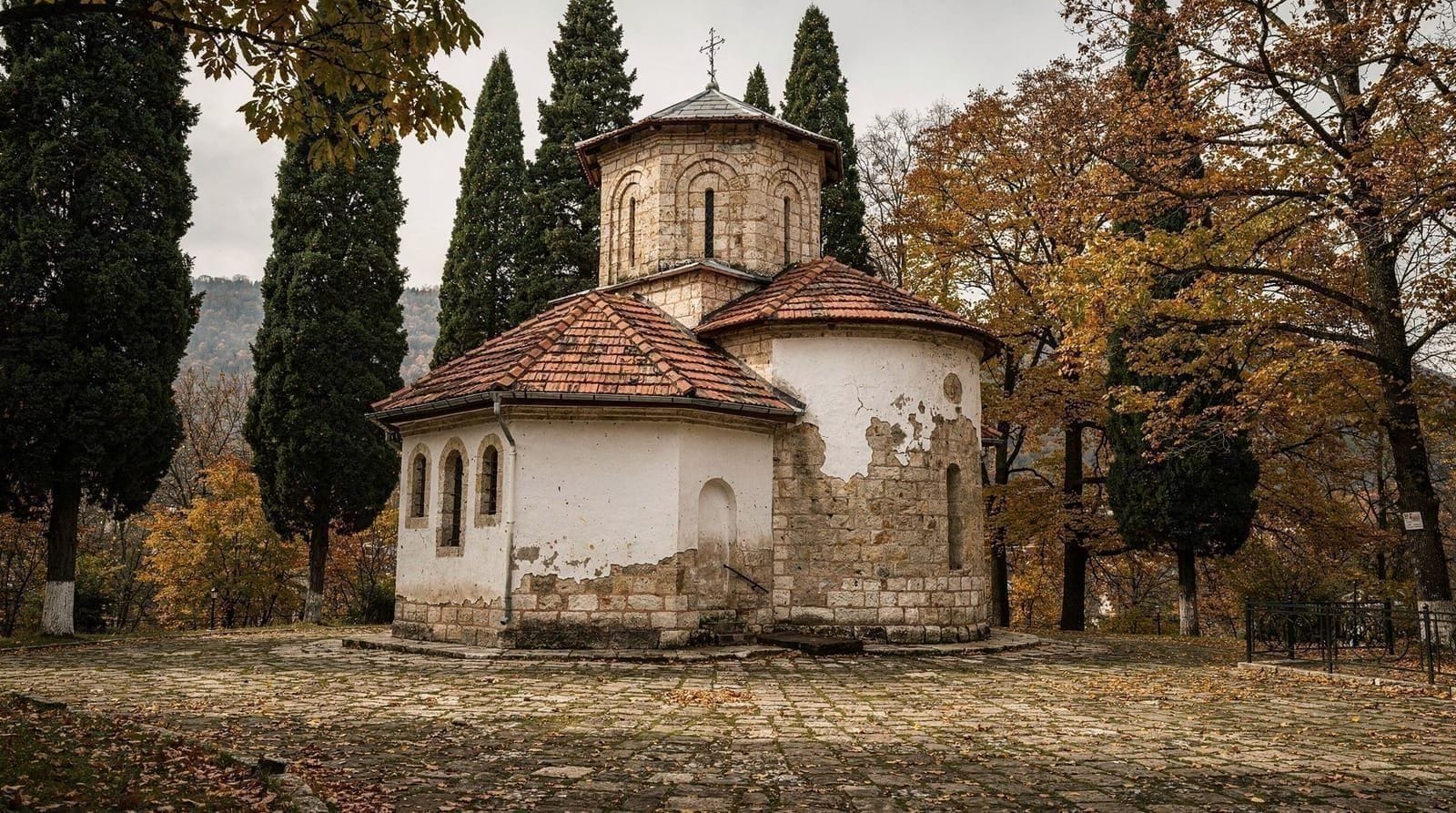
Boyana Church is 7 km southwest of central Sofia in the leafy suburb of Boyana. It holds 13th-century frescoes — painted in 1259 — considered among the finest surviving medieval paintings in Europe. They predate Giotto’s Florentine frescoes by several decades and show comparable individualism and psychological depth in the figure painting.
Getting there: Bus 64 from Hladilnika metro station (line 1) to the Boyana Church stop, around 25 minutes and €1.60. Taxis from the center cost €4-6.
Visiting: Entry costs approximately €10. The church is very small and visits are timed — typically 8-10 minutes per group to limit humidity and light exposure. Book tickets online in advance from April through October; on-the-day tickets are often unavailable in summer. A half-day private tour of the church with a specialist guide is available:
Private half-day Boyana Church and History Museum tourImmediately adjacent is the National History Museum, Bulgaria’s largest history collection, housed in the former state residence of Communist Party leaders (which tells you something about the scale). The permanent collection covers Thracian treasures, Byzantine religious art, the Ottoman period, and the 19th-century National Revival. Entry around €6. If you visited the Rila monastery museum the day before, the Thracian section here provides useful context on pre-Christian Bulgaria. Allow 90 minutes minimum.
Afternoon: Sofia free time
The afternoon is deliberately unscheduled. Options depending on interests:
Art: The National Gallery of Bulgaria is split between two locations. The main branch at the Kvadrat 500 building (near NDK) holds Bulgarian art from the 19th century onward. The Sofia museums guide covers current hours and which collections are most significant.
Markets: The Women’s Market (Zhenski Pazar) near Lion’s Bridge is an everyday local market — produce, dried goods, cheap prepared food — running every morning except Sunday. Not a tourist market; the prices are local and the atmosphere is functional. Good for a last walk through the city at street level.
Wine: A short wine and cheese tasting is a low-effort way to spend a final afternoon. Sofia wine and cheese tasting runs 90-minute sessions covering Bulgarian wine regions. For background, see the Bulgarian wine guide.
Last dinner: The streets around Ivan Vazov and Slaveykov Square have a density of good restaurants. A final dinner at a Georgian or Bulgarian restaurant in this area rounds out the trip well.
The three days at a glance
| Day | Focus | Pace |
|---|---|---|
| 1 | Sofia city core, communist monuments, old town | Full day, mostly walking |
| 2 | Rila Monastery day trip | Full day, most of it in transit or on site |
| 3 | Boyana Church, unscheduled Sofia afternoon | Half structured, half free |
Packing across three quite different days
Day 1 and Day 3 are city days — comfortable walking shoes and normal city clothing cover both, with a scarf or light layer handy for the Rotunda of St George and Boyana Church, where modest dress is expected. Day 2 is different: Rila Monastery sits at 1,147 m, and even on a warm Sofia morning the mountain air can be noticeably cooler, especially if you extend the visit to the Nevyastata Waterfall walk. A light jacket that packs down small is worth carrying for that one day rather than assuming the city’s weather will hold at altitude.
Choosing between the bus, the tour, and a taxi to Rila
The three ways to reach Rila Monastery trade off differently, and which suits you depends less on budget than on how much you want to think about logistics. The organized tour is the lowest-effort option: fixed pickup, a guide who explains what you’re looking at, and no need to track a return bus schedule — worth the premium over the public bus if this is your only full-day excursion from Sofia and you’d rather not manage it.
The public bus from Ovcha Kupel is the cheapest and gives you full control over how long you stay, but the limited schedule (often just one or two morning departures) means missing the return bus is a real risk, not a minor inconvenience — a taxi back from the monastery village runs €50–70 if you do miss it. A private taxi with waiting time makes most sense for three or four people splitting the cost, since it removes the schedule risk entirely and lets you leave whenever you’re actually done rather than whenever the tour or bus dictates. For most first-time visitors travelling alone or as a couple, the organized tour is the better trade of cost against certainty.
What Day 3’s free afternoon is actually for
Day 3’s unscheduled afternoon exists because arriving back from Rila and immediately front-loading Boyana Church leaves you with decision fatigue by early afternoon, and forcing another structured activity into that slot tends to produce a worse experience than an open one. Use it as a pressure release: revisit whichever neighbourhood from Day 1 you wanted more time in, sit somewhere on Graf Ignatiev Street rather than rushing to a new sight, or use the Sofia museums guide to pick one collection that specifically interests you rather than trying to cover several. If you have any energy left and haven’t done a market walk yet, the Sofia old town walk has a shorter loop version worth revisiting at a different time of day than Day 1’s morning pace.
Practical information for 3 days in Sofia
Budget breakdown (per person):
- Accommodation (mid-range hotel): €70-90/night, so €210-270 for 3 nights
- Transport (metro/bus within Sofia + bus to Rila): ~€20
- Rila tour (if not self-navigating by bus): €30-45
- Site entries (Boyana, Alexander Nevsky crypt, History Museum, monastery museum): ~€25
- Food: €30-50/day mid-range
Total excluding flights: approximately €350-450 per person for 3 days at mid-range.
What to book in advance: Boyana Church tickets (mandatory in summer). Rila Monastery tour if using one. Nothing else requires advance booking.
Getting around: The metro handles most city movement at €1.60/ticket. Bus 64 (Boyana) and buses to Ovcha Kupel terminal (for Rila by bus) require some navigation; Google Maps generally works for these routes in real time. The getting around Sofia guide covers the full picture.
Day trip alternatives: If Rila Monastery doesn’t interest you, the Plovdiv day trip is the main alternative — a 130 km journey west with frequent buses from the central bus station. See the Plovdiv day trip guide for logistics.
Frequently asked questions about 3 days in Sofia
Can I do Rila Monastery as a day trip without a tour?
Yes, by public bus from Ovcha Kupel terminal. The bus schedule is limited (1-2 departures in the morning, last return around 17:00), so you have less flexibility on timing than with a tour. The fare is around €6-8 each way. If you miss the last bus back, a taxi from the monastery village to Sofia costs approximately €50-70. The Sofia to Rila transport guide covers the current schedule and alternatives.
Is the Rila Monastery entrance free?
Entry to the main monastery courtyard and church is free. The Hrelyo Tower charges around €2, and the monastery museum charges around €5. Total site cost, if you do everything, is under €10.
Should I combine Rila and Boyana in one day?
It’s possible — several tours do it. But you end up spending 6-7 hours in a vehicle and 1-2 hours at each site. Rila Monastery deserves 3-4 hours minimum to see properly. If you only have 2 days in Sofia, this combined day makes sense; if you have 3, dedicate a full day to Rila and give Boyana its own morning.
Is Sofia safe for first-time visitors?
Yes. Sofia has low violent crime rates and the main tourist areas are well-lit and busy in the evening. Standard urban precautions apply: watch your bag in crowded metro carriages, avoid unlicensed taxis. The Sofia scams to avoid guide covers the specific things to watch out for, mostly around transport and fake tour operators.
What language is spoken in Sofia?
Bulgarian, written in Cyrillic. English is widely spoken in restaurants, hotels, and by most people under 40 in the center. Russian is understood by older generations. Street signs are in Cyrillic; the metro has English signage at all stations.
Is the food in Sofia good?
Bulgarian food is underrated. The combination of Slavic, Ottoman, and Greek influences produces a cuisine centered on grilled meats, dairy (particularly the local white cheese, sirene), vegetables, and pastry. Prices are low by Western European standards. The Sofia food guide and Bulgarian dishes to try are worth reading before you arrive.
What’s the best time of year for this 3-day itinerary?
April-June and September-October offer the most comfortable weather for walking the city and visiting Rila (comfortable mountain temperatures without summer crowds). July-August is busy and hot (30-35°C in the city, cooler at Rila). December-February is cold but Sofia has a functional winter scene; Rila in winter is beautiful but requires more careful planning. See best time to visit Sofia for a month-by-month breakdown.
Top experiences
Bookable activities with verified prices and instant confirmation on GetYourGuide.