Rila Monastery day trip from Sofia: a complete planning guide
From Sofia: Full-Day Tour to Rila Monastery with Options
How do I get to Rila Monastery from Sofia?
By car: 120km south via E79, about 2 hours. By public bus: take a bus to Blagoevgrad (2h from Sofia), then a local bus to Rila village (30 min), then a taxi 15km to the monastery — total 3.5–4.5h each way. Organised tours from Sofia cost €25–55 and include transport; they are the most practical option for most visitors without a car.
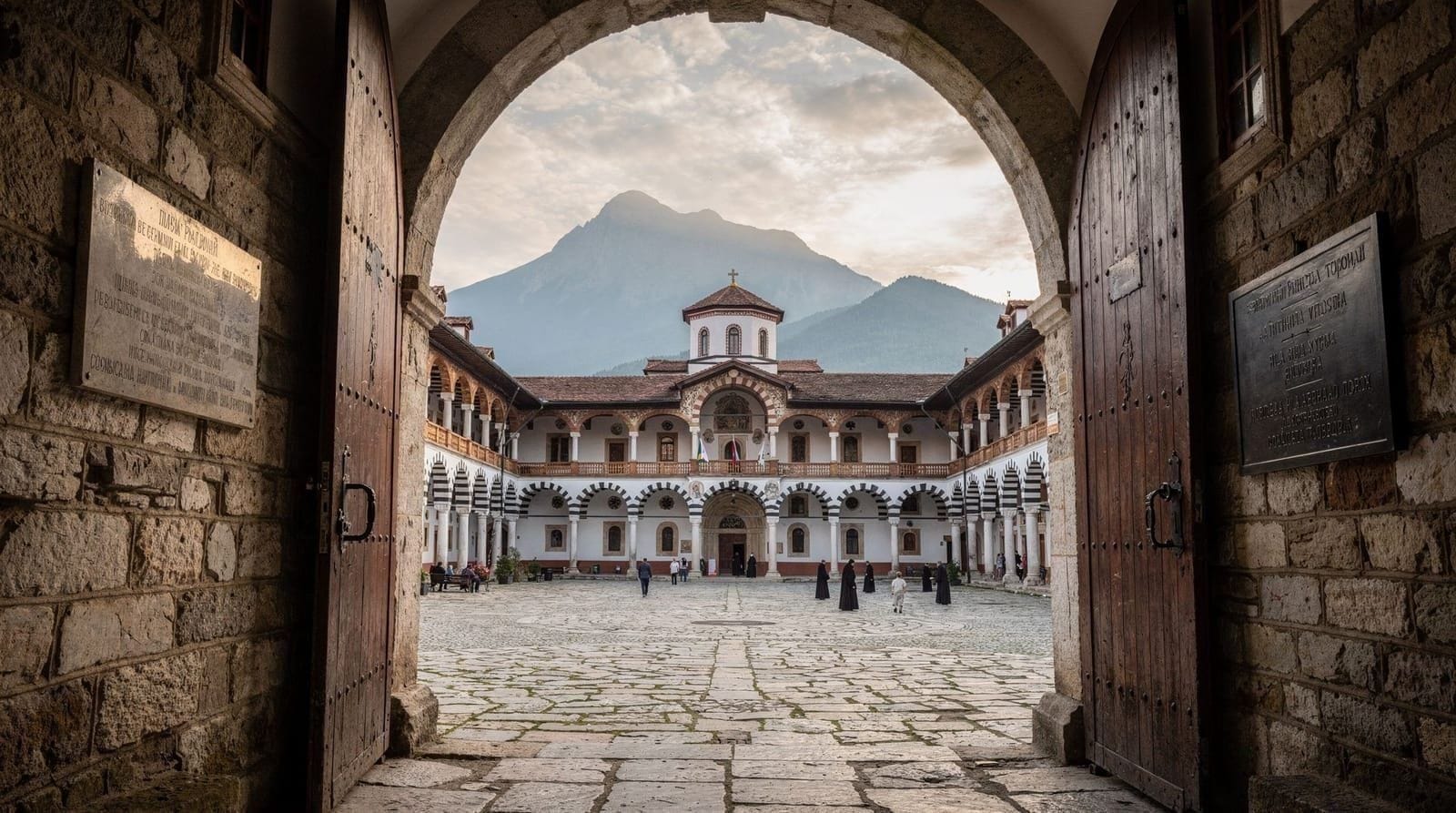
Rila Monastery is the most visited sight in Bulgaria and one of the most significant cultural monuments in the Orthodox world. It sits in the Rila River valley at around 1150m elevation, surrounded by dense conifer forest, 120km south of Sofia. The scale of the complex — a vast four-winged courtyard enclosing a church whose exterior walls are covered in thousands of painted scenes — is not something that photographs prepare you for. A day trip from Sofia is entirely feasible, and this guide covers every option in detail.
| Where | Rila River valley, 120km south of Sofia |
| Cost | Free courtyard/church; museum ~€5; tours €25–55 |
| Time needed | 3–4 hours minimum; 8–10 hours with the hermitage hike |
| Getting there | Car (2h), organised tour, or bus via Blagoevgrad (3.5–4.5h) |
| Best time | May–June or Sept–Oct; arrive before 10am year-round |
This page is the practical, plan-your-day version. If you want a deeper look at the monastery itself, its art and its place in Bulgarian history, read the Rila Monastery guide alongside it; for a detailed comparison of the ways to get there, see Sofia to Rila transport.
A brief history
The monastery traces its founding to St. Ivan Rilski — Saint John of Rila in the Orthodox calendar — who retreated to the Rila Mountains as a hermit around 927–940 CE during the reign of Tsar Peter I. His disciples gathered around him and established the first monastic community on the site. The monastery moved to its current location in the valley in the 14th century.
Throughout the medieval and Ottoman periods, Rila Monastery served as a repository of Bulgarian language and culture. Manuscripts, books, and historical records were preserved here when they might otherwise have been destroyed or suppressed. The monastery received donations from Bulgarian nobility and later from Russian tsars; it held a recognised position even under Ottoman administration.
The oldest surviving structure on the current site is Hrelyo Tower, a five-storey defensive tower built in 1334–1335 by the feudal lord Hrelyo, who also funded major construction at the time. The tower’s top floor contains a small chapel with early 14th-century frescoes.
Most of what visitors see today dates from the period 1834 to 1837, following a fire that destroyed much of the medieval complex in 1833. The reconstruction was funded by donations from across the Bulgarian lands and from the Bulgarian diaspora in Wallachia (present-day Romania). The master builders came primarily from the Rila and Samokov schools, producing the distinctive striped arcades and painted facades of the current courtyard wings.
What to see
The main courtyard
The courtyard is the heart of the complex: a large open space enclosed by four wings of monks’ cells arranged on three gallery levels, painted in alternating red and black stripes and white plaster. The upper galleries are reached by exterior staircases. The effect is unusual — decorative and fortress-like simultaneously. Around 60 monks currently live and work at the monastery.
At the centre of the courtyard stands the Church of the Nativity of the Virgin (1834–1837). The exterior is covered in an estimated 2500+ fresco scenes arranged in horizontal bands across the portico walls — saints, biblical narratives, scenes of the Last Judgment, and detailed representations of heaven and hell. The work was completed by multiple teams of painters over several decades following the initial construction.
Inside, the nave is dominated by the carved wooden iconostasis — an altar screen stretching the full width of the church — produced by craftsmen from the Debar school (in present-day North Macedonia) and the local Samokov school. The walnut carving took approximately four years to complete. Photography is not permitted inside the church.
Hrelyo Tower (Hrelyova Kula)
The tower stands at the southwest corner of the courtyard and is the only surviving structure from the medieval monastery. Five storeys tall, built of stone with arched openings, it originally served both as a defensive position and as a watchtower. Entry is included with the museum ticket (€5). The chapel on the top floor retains fragments of 14th-century frescoes, including a portrait of the patron Hrelyo.
The monastery museum
The museum occupies a wing of the main complex and holds a collection of ecclesiastical objects, historical documents, and applied arts spanning the monastery’s history. The highlight is Rafail’s Cross, completed in 1802 by the monk Rafail using only a magnifying glass and a small chisel. The cross is about 80cm tall and contains 104 biblical scenes with 1500 miniature figures. Rafail reportedly went blind from the work, which took 12 years. The cross is displayed under magnification so visitors can examine individual figures. Museum entry is €5 and is recommended — the outdoor courtyard alone does not give you this.
The ossuary
A small ossuary (charnel house) near the church holds the skulls of former monks. It is sobering rather than macabre and reflects an Orthodox monastic tradition of returning to the earth in stages. Not all visitors seek it out but it is part of the complete monastery experience.
The hermitage cave of St. Ivan Rilski
Four kilometres from the main monastery complex, up a marked forest path through Scots pine and fir, is the cave where St. Ivan Rilski is said to have lived as a hermit. The path begins near the monastery car park and follows the Rila River upstream before climbing to the cave site.
The cave complex includes the main chamber where Ivan lived, a spring, and a narrow passage in the rock through which pilgrims traditionally crawl on hands and knees — the belief being that passing through the rock grants a form of blessing or spiritual merit. The passage is about 22 metres long and requires genuine effort; people with claustrophobia or limited mobility should skip it. The surrounding forest walk is worth doing regardless of whether you enter the cave.
Walking time: 1–1.5 hours each way from the monastery. The path gains around 300m of elevation. Wear proper shoes — the trail can be muddy after rain, and the final approach to the cave is on uneven rock. Water is available from the spring at the cave.
This half-day hike turns the monastery visit into a full-day experience. Allow 8–10 hours total from Sofia to fit in both.
If the forest walk appeals more than the cave itself, the wider Rila mountains hiking guide lists longer routes in the same range, and the Seven Rila Lakes hike is the classic high-mountain day for anyone who wants more time on foot.
GetYourGuideDay Trip: Rila Monastery & Ivan Rilski Cave – Small GroupCheck availability →Getting there from Sofia
By car
The most comfortable option. Leave Sofia on E79 south (the highway toward Blagoevgrad, signed also toward Kyustendil and Greece). At Kocherinovo (about 85km from Sofia, roughly 1 hour 20 minutes), take the exit for Rila village. The road from Kocherinovo to Rila village is about 20km on regional road number 107. From Rila village, follow signs for the monastery — another 15km on a winding single-lane mountain road. Total distance from Sofia: approximately 120km. Total drive time: 2 hours in normal traffic.
Parking is available in a large lot just outside the monastery gates, managed by a private operator. Cost is typically €2–3 for the day. The lot fills quickly in summer peak season — arrive before 10am.
Petrol stations are available in Blagoevgrad and in Kocherinovo. Fill up before the mountain section.
By public transport
This is the most complex day trip by public transport from Sofia, but it is doable. The most reliable route:
-
Bus from Sofia to Blagoevgrad: buses depart from Avtogara Yug (South Bus Station, connected to metro line 2) and also from Ovcha Kupel bus station. Journey time is about 2 hours. Fare approximately €4–6. Services run frequently (every 30–60 minutes during peak hours).
-
Local bus from Blagoevgrad to Rila village: the bus station in Blagoevgrad is near the town centre. Local buses to Rila village run several times daily — check the schedule at the station, as departure times change seasonally. Journey time about 30 minutes. Fare around €1–2.
-
Taxi from Rila village to the monastery: the monastery is 15km from Rila village on a mountain road. Taxis wait near the bus stop in the village. Agree the fare before you get in — expect €8–12 one way. Arrange for the same driver to collect you at a fixed time, or use a different taxi for the return.
Total journey time each way: 3.5–4.5 hours. This makes for a long day with significant time spent in vehicles, but it works if tours do not suit your travel style.
Note on direct services: There have historically been occasional direct buses from Ovcha Kupel bus station directly to the monastery, running a few days per week in peak season. These schedules change year to year — ask at Ovcha Kupel station in person, as online information is unreliable.
Organised tours
The most practical option for visitors without a car. Organised tours from Sofia depart in the morning (typically 8–9am), reach the monastery by 10–11am, allow 3–5 hours on site, and return to Sofia by early evening. Prices range from €25 to €55 depending on group size, whether a guide is included, and what additional sites are covered.
GetYourGuideFrom Sofia: Full-Day Tour to Rila Monastery with OptionsCheck availability →Most tours include the drive, a guide at the monastery, and time for the museum. Entry to the museum (€5) is sometimes included and sometimes an additional cost — check before booking.
Weather and what to pack by season
The monastery valley sits at 1150m, which means noticeably different conditions from Sofia depending on the time of year. In summer (June–August), expect warm days but cooler mornings and evenings than the city — a light layer is worth carrying even in July. Spring (April–May) and autumn (September–October) bring genuinely cold mornings, occasional rain, and temperature swings of 10–15°C between midday and evening; a proper jacket, not just a light layer, is the right call. Winter (November–March) can bring snow on the mountain roads leading in, and while the monastery itself stays open, the museum reduces its hours and the courtyard experience is a different, quieter, colder proposition than the summer version. Whatever the season, comfortable closed shoes matter — the courtyard is cobbled stone and can be slippery when wet.
Practical information on-site
Hours: The monastery is open daily from approximately 7:00 to 20:00 in summer, with reduced hours in winter (typically 8:00 to 17:00 from November to March). The museum has separate hours (usually 8:30 to 16:30) and may close on certain religious holidays.
Dress code: Shorts are not permitted inside the church. Shoulders should be covered. Women are expected to cover their hair when entering the church — scarves are sometimes available to borrow near the entrance. Outside in the courtyard, modest but normal clothing is fine.
Photography: Freely permitted in the courtyard and on the exterior. Not permitted inside the church. Ask before photographing monks or religious services in progress.
Food and drink: There is a restaurant within the monastery complex (in one of the courtyard wings) serving Bulgarian food at tourist prices. Quality is mediocre. If you have a car, eating in Rila village on the way is a better option — there are several family taverns with more honest cooking. If arriving by tour, bring food or buy from the stalls outside the monastery gates (these sell bread, snacks, dried fruit). Candles for the church can be bought inside — avoid the kiosks outside the gates which sell lower-quality items.
Shops: Several shops outside the monastery gates sell icons, religious items, honey, rakiya, and woodcarvings. Prices are negotiable if you are buying multiple items.
Altitude and temperature: The monastery sits at 1150m. Even in summer, evenings are cool. In shoulder seasons (October, April) temperatures drop sharply after 3pm. Bring a light jacket regardless of the season.
Making it part of a longer Sofia stay
Rila works best as one chapter of a wider trip rather than the only thing you do. Most visitors slot it between city days: see how it fits in the Sofia itinerary planning guide or in the Rila and Seven Lakes escape, which pairs the monastery with the high lakes over more than one day. If you enjoy the painted churches and carved woodwork here, Sofia’s churches and the Bulgarian Revival architecture guide show the same craft traditions in a city setting.
Half-day versus full-day
Half-day (3–4 hours at the monastery): Covers the courtyard, church, museum, and Hrelyo Tower. Comfortable for most visitors. Works for both independent travellers and guided tour participants.
Full-day (7–9 hours at and around the monastery): Add the hermitage cave hike (4km each way, 1–1.5 hours each way). Suits those with an interest in hiking or pilgrimage. Requires leaving Sofia early.
Extended day combining with another site: See the combinations section below.
Rila Monastery day trip options at a glance
| Option | Journey time each way | Cost | Best for |
|---|---|---|---|
| Self-drive | ~2 hours | Fuel + ~€2–3 parking | Flexibility, arriving before crowds |
| Organised tour | ~2 hours | €25–55 per person | No car, want a guide, first visit |
| Public bus + local bus + taxi | 3.5–4.5 hours | ~€13–18 total | Budget travellers with full flexibility |
For most first-time visitors without a car, an organised tour is the practical middle ground: it costs roughly the same as the self-drive fuel-and-parking total once you factor in a rental, and it removes the public-transport uncertainty entirely.
Combining with other destinations
Rila Monastery and Boyana Church
Boyana Church is 8km from Sofia city centre — visit it on the way out or on the return. Entry is timed (max 10 people every 10 minutes), so book your Boyana slot in advance online. The church is a UNESCO site with 1259 frescoes of exceptional quality. The combination adds 1.5–2 hours and is easy with a car.
GetYourGuideFrom Sofia: Rila Monastery & Boyana Church Day TourCheck availability → GetYourGuideFrom Sofia: Rila Monastery and Plovdiv Town Full-Day TripCheck availability →Rila Monastery and Sapareva Banya
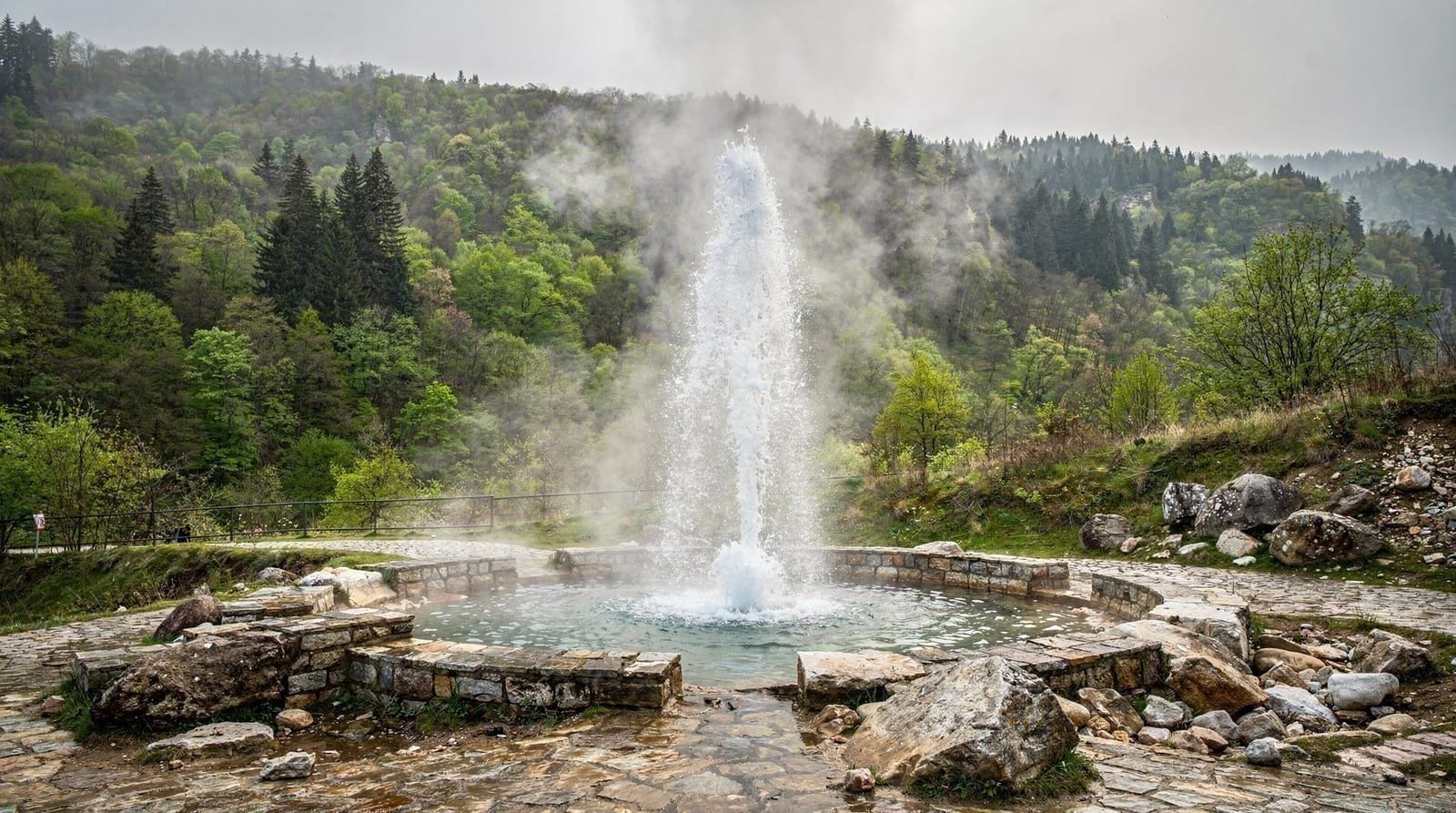
Sapareva Banya is a small spa village with natural hot springs (the spring itself reaches 103°C; the public pool is cooled to bathing temperature) about 30km north of the monastery via Dupnitsa. After a full day of walking the monastery and cave trail, the thermal pool is a reasonable conclusion. See the hot springs Bulgaria guide for pool hours and entry fees.
Rila Monastery and Koprivshtitsa
Combining the monastery with Koprivshtitsa is possible but ambitious — the two sites are roughly 90km apart via secondary roads and lie in different directions from Sofia, so the combination works better as a two-day loop with an overnight than as a single long day. Travellers with a specific interest in both religious architecture and 19th-century revolutionary history sometimes pair them this way rather than doing each as a separate return trip from Sofia.
Rila Monastery and the Seven Rila Lakes
This combination is covered in detail in the day trips from Sofia overview. The short version: possible with an early start, but it is a long day (12–14 hours). Unless you are on an organised tour that handles all logistics, most travellers are better served by splitting the two visits across two days. The Seven Rila Lakes day trip guide covers the lakes separately.
What most first-time visitors get wrong about timing
The single biggest factor in how a Rila Monastery day feels is arrival time relative to tour bus schedules. Most organised tours from Sofia — and most independent drivers — arrive between 10am and noon, which means the courtyard is genuinely crowded for a two-to-three-hour window in the late morning. Arriving at opening (7am in summer) or staying until late afternoon gives a completely different experience: the same courtyard, close to empty, with better light for photographs and none of the jostling around the church entrance. If you have the flexibility of a rental car, this single adjustment — leaving Sofia an hour earlier than feels necessary — does more for the quality of the visit than any other planning decision.
Frequently asked questions about Rila Monastery day trip from Sofia
How far is Rila Monastery from Sofia?
Rila Monastery is 120km south of Sofia. By car on the E79 highway (Sofia toward Kyustendil, then turning at Kocherinovo toward Rila village), the drive takes about 2 hours in normal traffic. The last section from Rila village to the monastery is a winding mountain road of about 15km.Can I visit Rila Monastery by public transport?
Yes, but it takes planning. The most reliable route is: bus from Sofia's Ovcha Kupel bus station or Sofia Central to Blagoevgrad (about 2 hours, €4–6), then a local bus from Blagoevgrad to Rila village (about 30 minutes, €1–2), then a taxi from Rila village to the monastery (15km, around €8–10). Total journey time is 3.5–4.5 hours each way. There are occasional direct services from Ovcha Kupel to the monastery, but these run a few days per week and schedules change seasonally — check locally before relying on them.Is there an entry fee for Rila Monastery?
The monastery courtyard and church are free to enter. The museum (which includes access to Hrelyo Tower) costs €5. Photography inside the church is not permitted. A separate €2 charge sometimes applies for video cameras in the courtyard.What should I wear when visiting Rila Monastery?
The monastery is an active religious site. Shorts are not permitted inside the main church. Shoulders should be covered. Women are expected to cover their hair when entering the church — scarves are sometimes available at the entrance to borrow. Outside in the courtyard, the dress code is more relaxed, but modest clothing is still appropriate. Pack a layer regardless of season, as the valley sits at around 1150m elevation.How long should I spend at Rila Monastery?
Allow a minimum of 3–4 hours for the courtyard, church, museum, and Hrelyo Tower. If you want to add the hermitage cave hike (4km each way through forest to the cave where St. Ivan Rilski lived as a hermit), plan for a full day — 8–10 hours including travel from Sofia. Most organised tours from Sofia spend 3–5 hours at the monastery itself.Can I visit Rila Monastery and the Seven Rila Lakes in one day?
It is possible but makes for a very long day — 12–14 hours including travel. Several organised tours combine both sites. If driving, leave Sofia by 6am: visit the monastery first (3–4h), then drive approximately 45 minutes to the gondola at Panichishte for a shorter version of the lakes circuit. The combination is manageable but leaves little time at each site. For a more relaxed experience, spread them over two days.What is the best time to visit Rila Monastery?
The monastery is open year-round and is impressive in every season. Summer (July–August) is the busiest period — arriving before 10am makes a significant difference. Orthodox Easter and Christmas attract large numbers of Bulgarian pilgrims, which adds atmosphere but also crowds. October and early November offer good conditions with fewer visitors and autumn colour in the surrounding forest. Winter visits are peaceful and the snow-covered courtyard is striking, though the museum has reduced hours.What is the best time of day to arrive at Rila Monastery?
Before 10am or after 3pm. Tour buses cluster between 10am and noon, when the courtyard is at its most crowded. Arriving right at opening (7am–8am in summer) gives the best light for photographs and a noticeably calmer visit, particularly around the church entrance.What is the hermitage of St. Ivan Rilski and how do I get there?
The hermitage cave is where St. Ivan Rilski (John of Rila) lived as a hermit before founding the monastery. It is 4km from the main monastery complex on a marked forest path — about 1–1.5 hours walking each way. The cave includes a narrow passage in the rock through which pilgrims traditionally crawl for a blessing. The path is well-maintained but involves some uphill sections. Wear sturdy shoes. The walk is included in some full-day organised tours.
Top experiences
Bookable activities with verified prices and instant confirmation on GetYourGuide.