Hiking in the Rila Mountains: routes, huts, and practical planning
Musala Peak, Rila Mountains: Full-Day Hiking Tour from Sofia
What is the best hike in the Rila Mountains for a day trip from Sofia?
The Musala Peak hike via Borovets is the most rewarding and accessible. Take the gondola from Borovets to Yastrebets station (2369m), hike to Musala hut (2389m) then the summit (2925m) — about 2.5h up and 2h down from the gondola top. Total day from Sofia is 10–11 hours.
Bulgaria’s Rila Mountains form the country’s largest mountain massif and contain the highest peaks in the entire Balkan Peninsula. Musala, at 2925m, stands above everything else between the Alps and the Caucasus. The range covers roughly 2600 square kilometres, spans an altitude range from 600m to nearly 3000m, and includes Rila National Park — one of Bulgaria’s three national parks and one of the largest in the Balkans.
For hikers based in Sofia, Rila is exceptional value. The main trailheads are 90–110km from the city, the national park charges no entry fees, huts are affordable, and the trail network is extensive. The challenge is that most visitors focus entirely on the Seven Rila Lakes, which means the rest of the mountains — including the summit of Musala — see far fewer people. This guide covers the full picture: the Borovets area and Musala peak, the Malyovitsa basin, the approach trails from the Rila Monastery, the hut network, and the practical logistics of getting there.
| Where | Rila National Park, 90–110km south of Sofia |
| Cost | No park fee; gondola ~€10–12 return; huts ~€10–20/bunk |
| Time needed | 10–11 hour day for Musala; half-day for lower trails |
| Getting there | Car (~1.5h to Borovets) or bus from Avtogara Yug (~2h) |
| Best time | July–September for the summit; June for wildflowers |
The Borovets area: highest access point for day hikers
Borovets is Bulgaria’s oldest ski resort and sits at around 1350m on the northern slopes of Rila. In summer it functions as a hiking base: the gondola runs from the resort to Yastrebets station at 2369m, which is a serious head start for anyone targeting the Musala summit. Hotels are open year-round, there are several restaurants, and the village has enough infrastructure to serve as an overnight base if you want an early start for the summit.
Getting to Borovets from Sofia is straightforward. By car, follow the E79 motorway south from Sofia toward Dupnitsa for about 65km, then take the signposted turn east toward Samokov and Borovets. The total distance is 90km and the drive takes around 1.5 hours in normal traffic. If you prefer public transport, buses depart from Avtogara Yug (South Bus Terminal) in Sofia. Journey time is roughly 2 hours; frequency is higher during the ski season (December to March) and drops in summer to a few services per day, so check schedules at the terminal or on the carrier’s website the day before. The bus drops you in Borovets village, a few hundred metres from the gondola base.
The Musala peak hike
Musala at 2925m is the primary objective for most serious hikers who come to Borovets, and for good reason. It is the highest point in Bulgaria, the highest in the Balkans, and the route is well-marked and achievable for anyone with a solid base of hiking fitness.
The standard approach uses the gondola from Borovets resort to Yastrebets station at 2369m. The gondola operates from late spring through autumn (typically late May to October, but check current operating dates with the resort) and costs around €10–12 for a return ticket. From Yastrebets, the marked trail heads southwest and climbs steadily to Musala hut at 2389m — a short walk of 20–30 minutes. This is where you fill water, have an early lunch or a hot drink, and take stock of conditions before the final push to the summit.
From Musala hut, the trail ascends the open ridge toward the summit. The path is marked with red-and-white paint blazes on rocks and with cairns on the upper section. The terrain is increasingly rocky and the final 300m of altitude gain involves a direct climb up a broad stony ridge. There is no scrambling required on the standard route, but the exposure and altitude mean the last section feels harder than the gradient alone would suggest. Count on 2–2.5 hours from Yastrebets to the summit and roughly 2 hours for the descent.
Total round trip including gondola rides and a break at Musala hut comes to 7–8 hours, which means a departure from Sofia before 7am for a comfortable day. Hikers who want to do the route without using the gondola can follow the trail from Borovets village all the way to the summit — this adds approximately 3–4 hours to the total day and around 1000m of additional ascent. It is a long day; most hikers use the gondola.
One popular alternative is to stay overnight at Musala hut and hike to the summit at dawn before the afternoon storms develop. The hut sleeps around 100 people in shared dormitory rooms and serves hot meals. In July and August it fills quickly — call ahead or try to book through the contacts listed on Bulgarian hiking forums and the Rila National Park website. Rates run around €12–18 per bunk.
GetYourGuideMusala Peak, Rila Mountains: Full-Day Hiking Tour from SofiaCheck availability → GetYourGuidePrivate Hiking Tour to the Stob Pyramids and Rila MonasteryCheck availability →An organised tour is the most reliable way to do the Musala hike if you are not comfortable navigating independently or if you want to avoid the logistics of early-morning transport. Tours from Sofia typically include minibus transfer, a guide, and the gondola ticket, and they pace the day appropriately for the conditions.
Lower Borovets trails
Not every visit to Borovets needs to aim for the summit. The forest trails in the lower resort area are pleasant for a gentler day. The trail to Ivan Vazov hut passes through mature conifer forest and takes about 2 hours round trip from Borovets village. The hut serves food and drink. Several loop routes in the 500–800m elevation range are suitable for families with older children and require no specialist equipment.
The Malyovitsa area
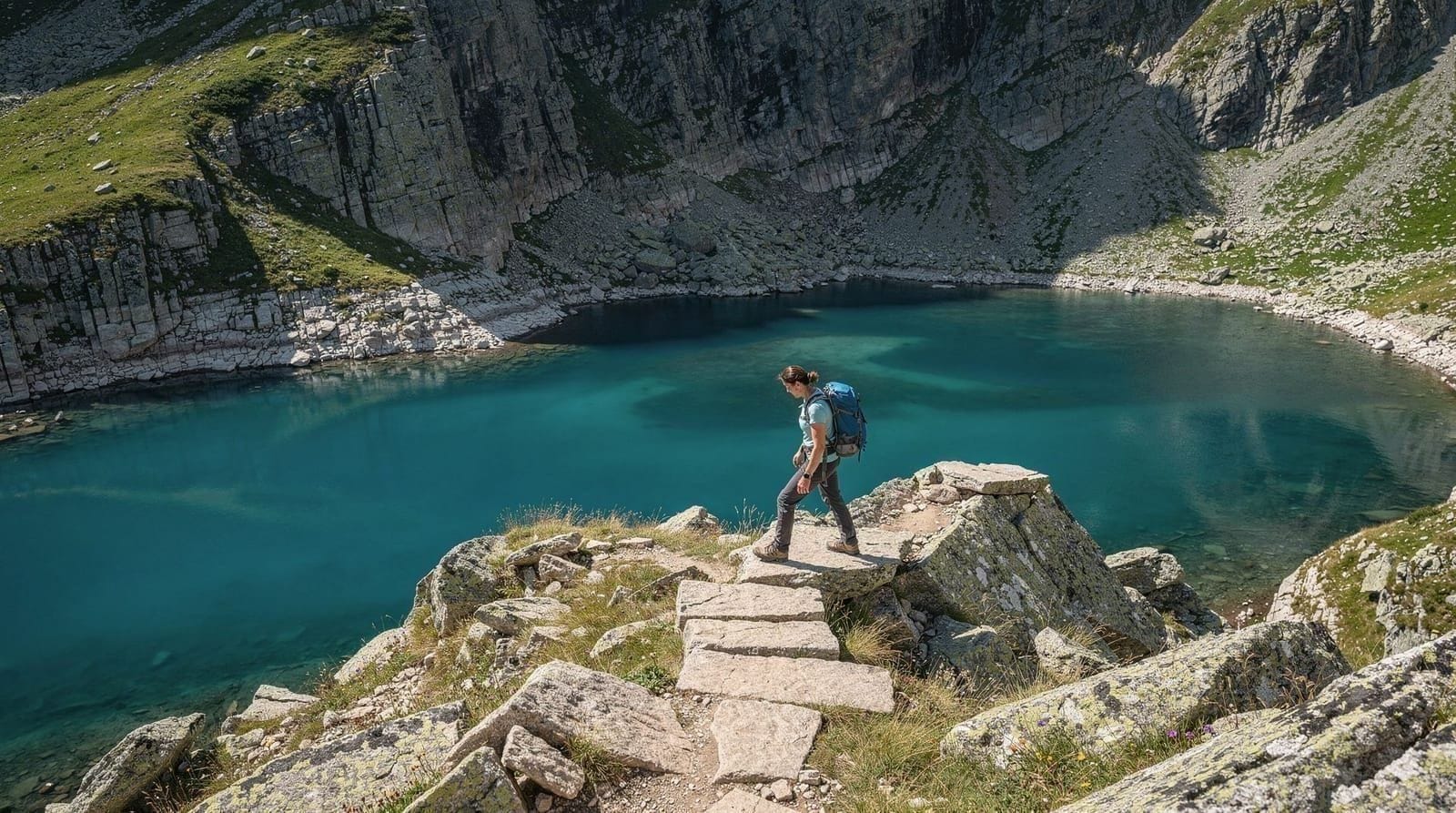
Malyovitsa is a separate basin within Rila National Park, roughly 30km from Samokov and accessible by road. It is less visited than Borovets but offers some of the best ridge hiking in the entire range, including its own distinct lake zone and the approach trail to the Seven Rila Lakes from the southwest.
The road to Malyovitsa branches off from the main Samokov road and climbs through forest to Malyovitsa hut at 1960m. The hut is one of the better-maintained in the Rila network, operates year-round, sleeps around 80 people, and serves food. If you want a quieter alternative to Borovets with similar high-altitude access, Malyovitsa is worth considering.
Malyovitsa peak
Malyovitsa peak at 2729m is a more demanding objective than the standard Musala route. The trail from the hut is well-marked but the upper section involves sections of hands-on scrambling over large boulders — nothing that requires a rope, but noticeably more physical than the Musala ridge. Allow 3–3.5 hours from the hut to the summit and 2.5 hours down. The views from the top take in a large part of the western Rila, with the Malyovitsa cirque directly below.
Approach to the Seven Rila Lakes from Malyovitsa
The trail connecting Malyovitsa with the Seven Rila Lakes is one of the longer cross-country routes in the park. It takes roughly 4 hours one way in good conditions, traversing high ridges and passing several smaller mountain lakes before descending to the main lake zone. This is best done as a point-to-point with transport arranged at both ends, or as part of a multi-day hut-to-hut itinerary. The Seven Rila Lakes hike guide covers the lakes area in detail, including the Panichishte gondola approach.
GetYourGuideSeven Rila Lakes - Full Day Hiking Trip in the Rila MountainCheck availability →The Rila Monastery area
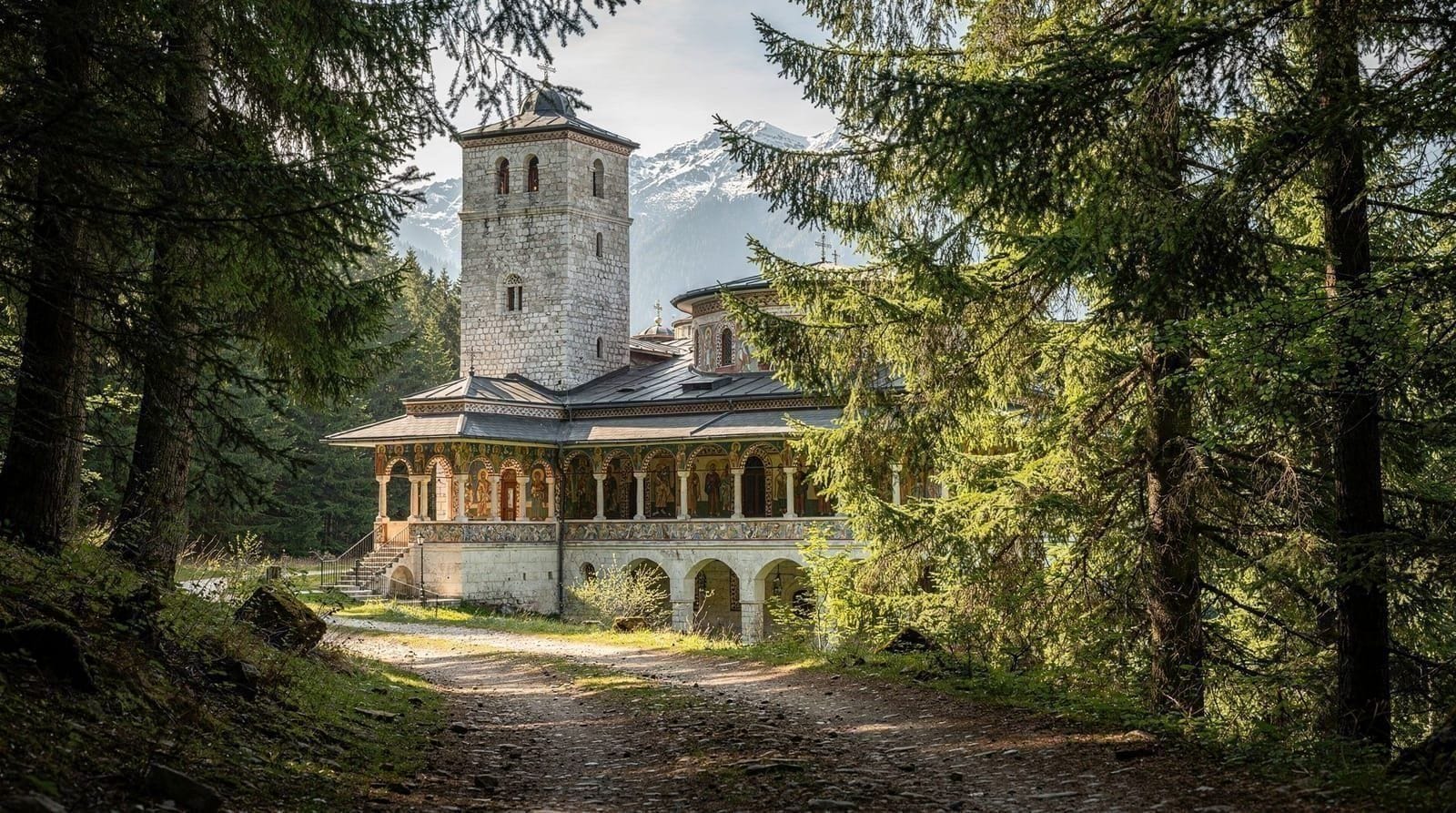
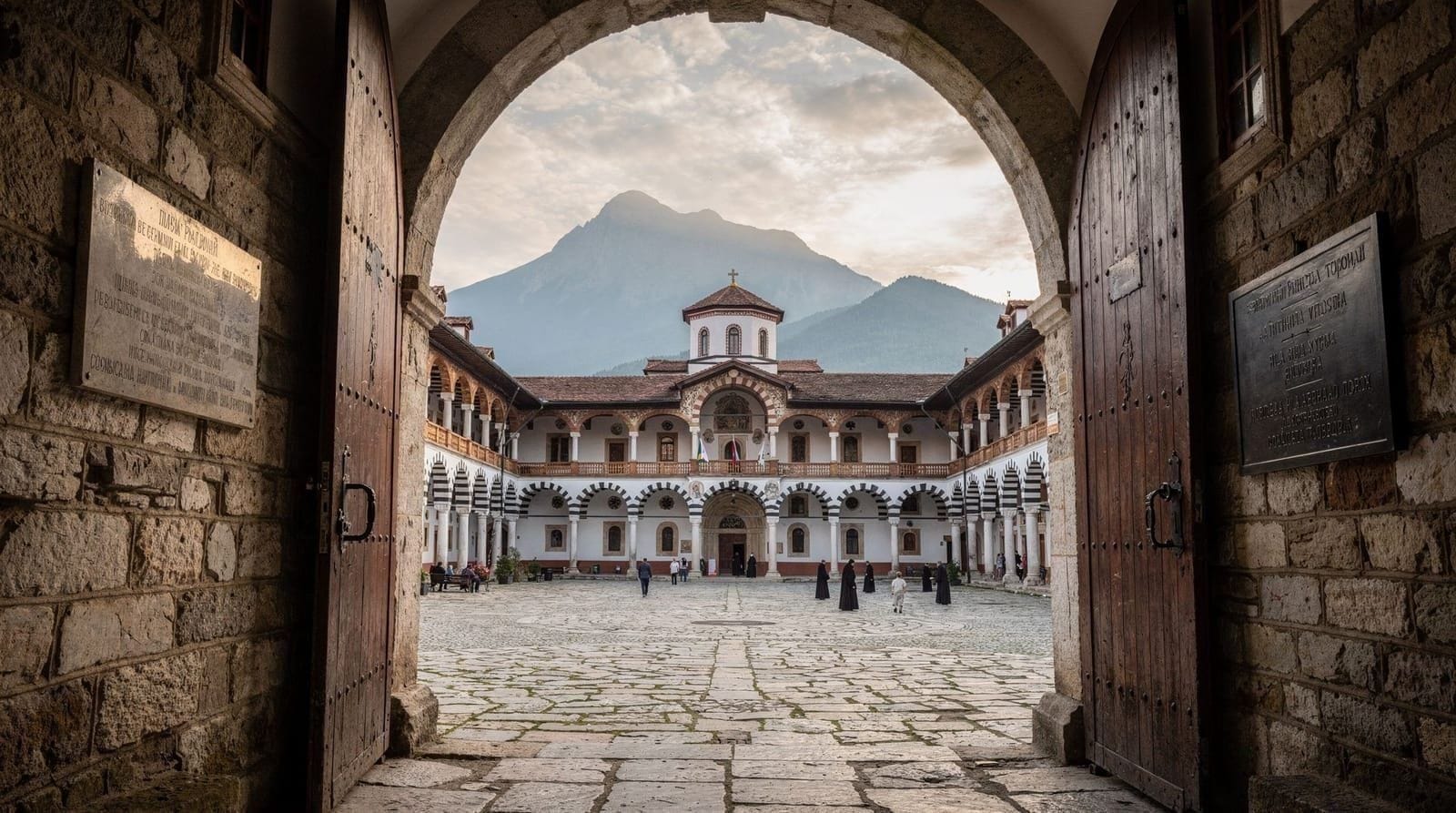
The Rila Monastery sits at around 1147m in a sheltered valley in the southwestern part of the range. It is primarily a cultural and religious site — one of Bulgaria’s most important and a UNESCO World Heritage property — but the surrounding forests offer genuine hiking options for those who want to combine monastery and trail in a single day. The Rila Monastery day trip covers the monastery itself; here the focus is the trails.
Trail to Ivan Rilski’s hermitage cave
Ivan Rilski, the 10th-century hermit-monk who founded the original monastery, lived for many years in a cave in the cliffs above the valley. A well-maintained forest path leads from the monastery to the cave hermitage: 4km one way, gaining around 300m in elevation, taking about 1.5 hours each way. The trail passes through old-growth forest of beech and fir and crosses two wooden footbridges over the Rilska River. The cave itself is a small chapel carved into the rock, still an active place of pilgrimage. It is a moderate walk, suitable for anyone reasonably fit, and one of the more atmospheric trails in the region.
Upper trails toward Kirilova Polyana
Above the monastery, the trail network continues upward into the high ridges. The meadow area known as Kirilova Polyana sits at around 1800m and can be reached in 2–3 hours from the monastery. From there, longer routes connect to the wider Rila trail network. Most day visitors to the monastery do not venture this far, which means the upper trails are noticeably quieter.
The mountain hut network
Rila has an extensive hut (hizha) network developed primarily in the Bulgarian mountaineering tradition of the 20th century. Most huts are staffed in season, serve basic hot food, and offer dormitory beds. Standards vary, but the better-maintained huts are comfortable enough for a good night’s rest. Here are the main options relevant to the routes in this guide:
Musala hut (2389m): The highest staffed hut in Bulgaria, positioned just below the final summit ridge. Dormitory rooms, hot meals, around 100 beds. Open June to October. Busy in July and August; book in advance.
Malyovitsa hut (1960m): Year-round operation, good facilities for a mountain hut, around 80 beds. Quieter than Musala except on summer weekends. Accessible by road as well as on foot, which makes resupply easier.
Seven Lakes hut (approximately 2200m): Basic seasonal hut near the lake zone. Beds are limited and it fills quickly in peak season. More of a rest stop than an overnight base, but possible for a one-night stay if you book early.
Ivan Vazov hut (lower Rila near Borovets): In the forest zone, a popular destination for a half-day walk from Borovets. Not a summit base but a pleasant lunch stop.
For multi-day hiking, connecting Borovets, Malyovitsa, and the Seven Lakes area via the hut network is achievable in 3–4 days. The routes are marked and the huts are spaced appropriately for daily stages of 5–8 hours.
Difficulty guide: what each level means in practice
Understanding Bulgarian trail classifications helps set expectations. Rila trails use a combination of colour-coded marks (red, blue, yellow, green) that indicate route importance rather than difficulty, so the same colour can appear on an easy valley trail and a challenging ridge route.
Easy (below 1500m, forest trails): Suitable for walkers of any fitness level. Examples include the monastery-to-hermitage trail and the lower Borovets forest loops. No elevation extremes, wide paths, usually well-shaded.
Moderate: Includes the Seven Rila Lakes loop from the Panichishte gondola and the lower Malyovitsa trails. Some elevation gain, terrain can be stony or uneven, but nothing requiring navigation skill or scrambling. Suitable for regular walkers who do 2–3 hour walks at home.
Strenuous: Musala peak via gondola, Malyovitsa peak. Full mountain days, significant altitude gain above the gondola or hut, exposure to weather, and demanding on the legs even for fit hikers. Previous mountain hiking experience is strongly recommended.
Technical (not covered in this guide): Some peaks in Rila, particularly faces accessible only with via ferrata equipment or rock climbing skills. The main Musala and Malyovitsa routes described here do not fall in this category.
Route comparison: choosing your Rila hike
| Route | Difficulty | Round-trip time | Best for |
|---|---|---|---|
| Musala peak (via gondola) | Strenuous | 7–8 hours | Fit hikers wanting the Balkans’ highest point |
| Malyovitsa peak | Strenuous, some scrambling | 5.5–6 hours from hut | Experienced hikers wanting more technical terrain |
| Seven Rila Lakes circuit | Moderate | ~4 hours | Most visitors; scenic without a summit push |
| Ivan Rilski hermitage cave | Easy–moderate | 3 hours | Rila Monastery visitors wanting a forest walk |
| Lower Borovets forest loops | Easy | ~2 hours | Families, casual walkers |
For a first visit to Rila with limited hiking experience, the Seven Rila Lakes circuit or the hermitage cave trail are the sensible starting points; save Musala and Malyovitsa for a return trip once you know the terrain and your own pace at altitude.
Safety in the Rila Mountains
Weather is the central safety consideration in Rila. Summer thunderstorms develop reliably on warm afternoons, typically between 13:00 and 16:00. Electrical storms on open ridges above 2500m are genuinely dangerous. The standard approach is to start hiking early enough to be off the exposed summit ridges by 12:30 at the latest. In practice, this means leaving the hut or gondola top no later than 7:00–8:00 on a summit day. If clouds are building on the horizon at 9am, consider turning back.
Mist is a secondary hazard. It descends quickly on the high plateaus, reducing visibility to a few metres in minutes. Without a GPS track or good compass skills, navigating in mist on the upper Rila ridges is risky. Before any high-altitude hike, download an offline map. Maps.me has decent Rila coverage; Wikiloc has community-contributed GPS tracks for most standard routes including the Musala approach. Test the app before you leave the hotel.
Mobile coverage on Bulgarian networks (A1, Vivacom, Yettel) is generally good up to around 1800m and patchy above. On the Musala summit there is occasionally signal, but do not count on it. The practical implication is that if something goes wrong above 2000m, you may not be able to call for help. Carry a charged phone, a basic first aid kit, and a foil emergency blanket. Tell someone — your hotel, a friend, whoever — your plan and your expected return time.
Lightning protocol: if a storm catches you on an exposed ridge, descend immediately toward lower ground. Do not shelter under isolated trees. If caught in the open with lightning overhead, move away from high points and summits, crouch low with feet together, and avoid lying flat on the ground.
Water in the Rila backcountry is generally safe to drink from flowing streams above 2000m and away from huts and trails, but carry at least 1.5 litres from a known source. Musala hut has tap water.
Getting to the Rila Mountains from Sofia
By car: The most flexible option. Borovets is 90km via the E79 south toward Dupnitsa, then east. Malyovitsa requires continuing past Samokov on a forest road. The Rila Monastery approaches from the south (exit E79 at Kocherinovo, then follow signs for 22km). Car rental in Sofia runs €30–50 per day for a standard car.
By bus: From Avtogara Yug (Овча купел area, served by Metro Line 2), buses run to Borovets and Samokov. Borovets buses take around 2 hours; Samokov buses (which you can then connect from to Malyovitsa by taxi) take about 1.5 hours. The Sofia to Rila transport guide covers timetables and platforms in detail.
By organised tour: Tour operators running full-day hiking trips from Sofia handle transport, guiding, and timing. They typically use minibuses that can manage mountain roads and include the gondola in the price. For a first visit to the Musala area or for solo travellers who want company on the trail, this is a sensible option.
Guided versus independent hiking in Rila
Whether to hire a guide depends mostly on experience level and comfort with independent mountain navigation, not on the difficulty of the route itself. The marked trails to Musala, the Seven Lakes, and the hermitage cave are all well signposted and manageable without a guide for anyone with moderate hiking experience and a downloaded offline map. Where a guide adds genuine value is in reading weather conditions in real time — knowing when cloud building over the peaks means turn back now rather than in twenty minutes — and in pacing a group appropriately for altitude, which matters most for visitors who have not hiked above 2000m before.
Solo travellers and those without their own transport also benefit from the logistics a guided tour removes: minibus transfer, gondola tickets handled in advance, and a fixed return time that takes the planning pressure off. For a first Rila hiking day, particularly outside the main Musala season when trail traffic (and therefore informal safety-in-numbers) is lower, a guided tour is a reasonable choice even for experienced hikers simply for the convenience.
Combining hiking with other activities
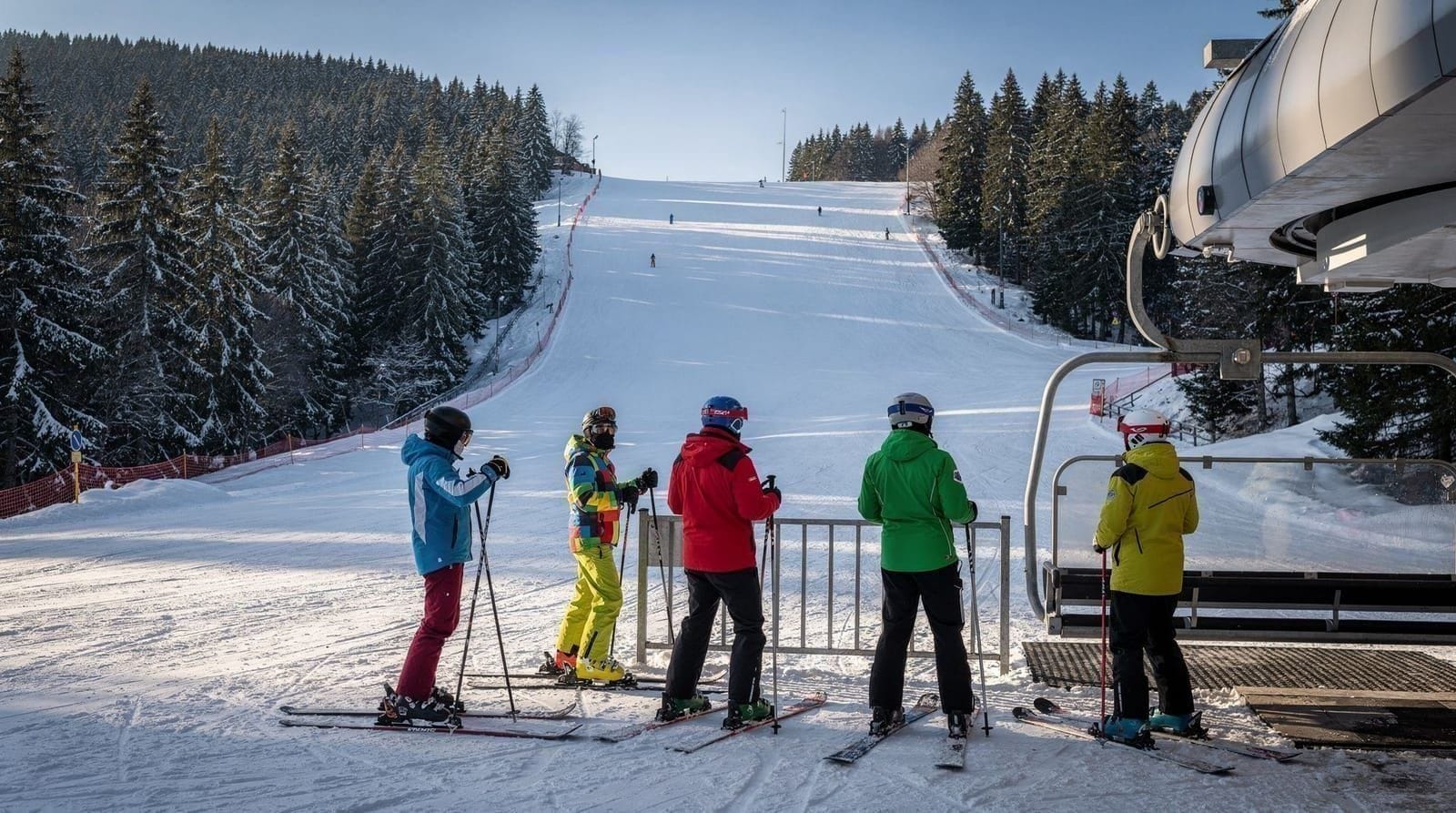
Borovets is Bulgaria’s oldest ski resort and the gondola that serves summer hikers is the same infrastructure used by skiers in winter. If you are planning a combined ski-and-hike trip, Borovets makes that straightforward: ski between December and March, hike between June and October, with shoulder-season gaps in April-May and November when neither activity is ideal.
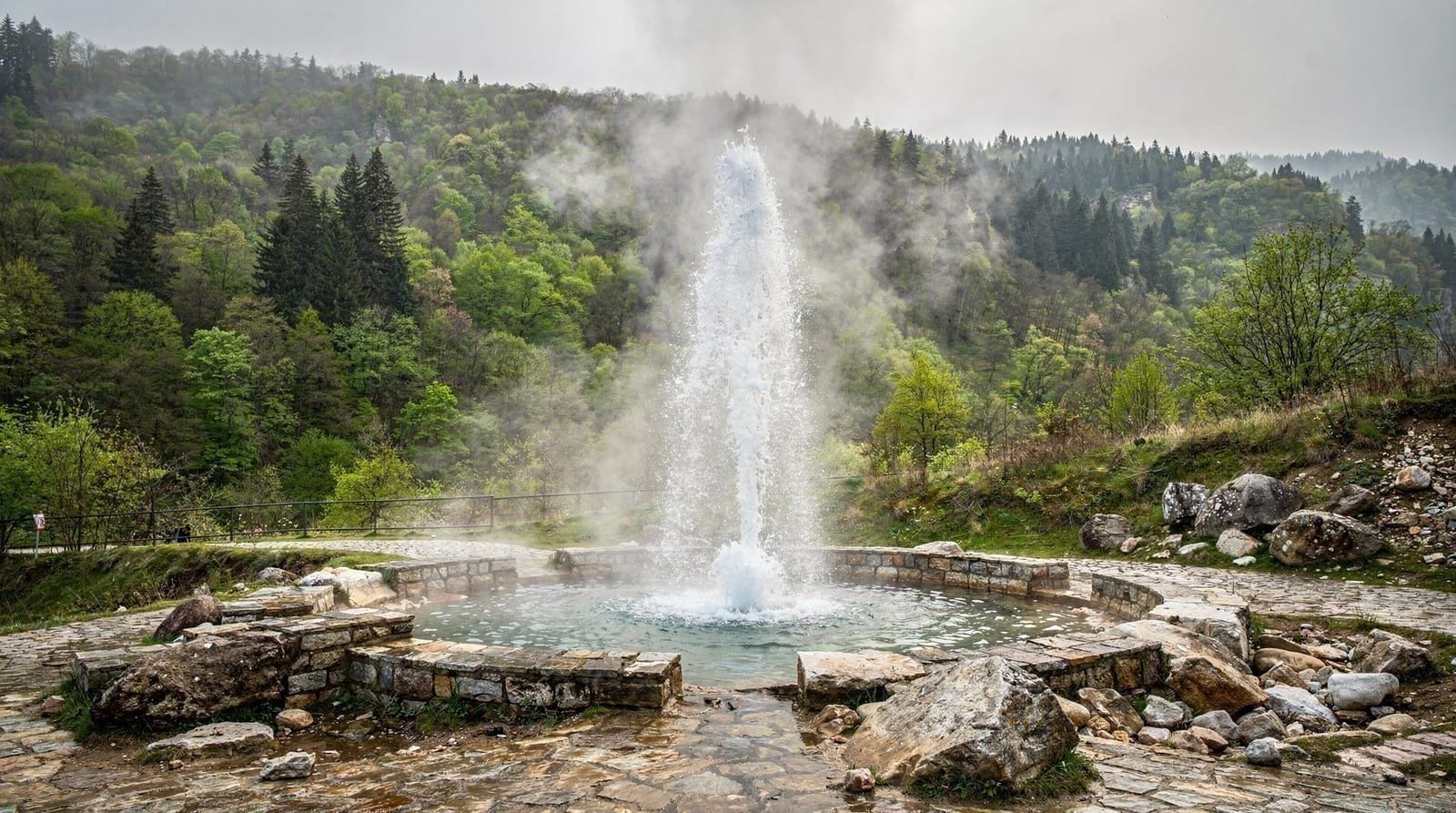
After a long day on the Rila trails, the hot springs at Sapareva Banya — about 30km from Borovets by car — are a reasonable detour. Sapareva Banya has outdoor thermal pools open year-round, and the combination of a hard mountain day followed by an hour in a 38°C pool has obvious appeal. This is also possible on the same day as a Seven Rila Lakes hike: the Seven Lakes day trip guide explores that option.
The Rila Monastery can be combined with a Borovets hiking day if you are driving and efficient with time, though it makes for a full schedule. The monastery is 50km south of Borovets by the most direct route, and combining the two works best with a midday departure from the mountains after a morning hike rather than a summit attempt.
Skiing itself deserves a separate note for anyone building a winter trip around Borovets: the same gondola infrastructure used for summer hikers switches to serving pistes from December, and the resort’s lower slopes are suitable for beginners while the upper runs suit more experienced skiers. This is covered in full in the skiing from Sofia guide, but it is worth knowing that the hiking and skiing seasons at Borovets barely overlap — planning a trip in the April–May or October–November shoulder windows for either activity is generally a mistake, since lifts, huts, and trail conditions are all in transition.
For broader planning, the day trips from Sofia guide compares Rila against other options, and the Sofia travel guide covers the city base. If you are building a multi-day itinerary, the Rila and Seven Lakes escape itinerary maps it out in detail.
What to pack for a Rila hiking day
Regardless of which route you choose, a few essentials apply across the range. Layers matter more than any single piece of gear: temperatures at 2000m+ can be 15–20°C cooler than Sofia, and wind on exposed ridges adds a further chill factor even on a sunny day. A waterproof shell is not optional in summer given how reliably afternoon storms develop.
Sturdy hiking boots with ankle support are worth the extra weight over trail runners on the rockier upper sections of Musala and Malyovitsa, though trail runners are adequate for the Seven Lakes circuit and the hermitage trail. Carry at least 1.5–2 litres of water — refill points are limited to the huts — plus sun protection, since UV exposure increases significantly above 2000m. A basic first aid kit, a fully charged phone, and an offline map are worth carrying on any route above the treeline, given the patchy mobile coverage discussed below.
Frequently asked questions about Hiking in the Rila Mountains
What is the highest peak in the Rila Mountains and can I hike it?
Musala at 2925m is the highest peak in the Rila Mountains and the highest point in the Balkans. It is accessible to fit hikers without technical climbing skills. The standard route starts from Borovets, using the gondola to reach 2369m, then hiking via Musala hut to the summit. The final section involves a steeper rocky ridge but no scrambling. Allow 2.5–3 hours from the gondola top to the summit.How do I get from Sofia to Borovets for hiking?
By car, Borovets is 90km from Sofia via the E79 motorway south toward Dupnitsa, then a signposted turn toward Borovets — about 1.5 hours. By bus, depart from Avtogara Yug terminal in Sofia; buses run several times daily (more frequently in ski season, fewer in summer), and the journey takes around 2 hours. Taxis and rideshares are also options, though the cost adds up for a full day.Do I need permits to hike in Rila National Park?
No permits are required for day hiking anywhere in Rila National Park, and there is no entry fee for the park itself. You pay if you use the gondola at Borovets (around €10–12 return) or the gondola at Panichishte for the Seven Rila Lakes area. Overnight stays in huts require booking and payment directly with the hut.What is the best month to hike in the Rila Mountains?
July to September is the safest and most reliable window for high-altitude routes including Musala peak. June is excellent for wildflowers and the snow has mostly cleared from the main trails by mid-June. October brings autumn colour and quieter trails but weather is less predictable and snowfall can return to high peaks. Avoid the high ridges in May when snow remains on north-facing slopes.How difficult is the Musala peak hike?
The Musala hike via the gondola from Borovets is rated strenuous but not technical. The route follows well-marked trails with clear cairns above the treeline. The key challenges are altitude (the final 500m of ascent from Musala hut to the summit is exposed and tiring), the length of the day (7–8 hours round trip including gondola queues), and afternoon weather. Anyone who regularly hikes full days in the mountains will manage it; casual walkers may find the final ascent hard.Are there mountain huts where I can stay overnight in Rila?
Yes. Musala hut (2389m) sleeps around 100 people in dormitory-style rooms and serves hot meals — book well in advance for July and August. Malyovitsa hut (1960m) is year-round and sleeps around 80. The Seven Lakes hut (approximately 2200m) is basic and seasonal. Ivan Vazov hut operates in the lower Rila forest near Borovets. Huts charge around €10–20 per bunk per night. Call ahead or book through Bulgarian hiking forums as most huts do not have online booking systems.Which Rila hike should a first-timer choose?
The Seven Rila Lakes circuit via the Panichishte gondola or the trail to Ivan Rilski's hermitage cave near Rila Monastery. Both are moderate-to-easy, well-marked, and require no scrambling. Save Musala and Malyovitsa peaks for a return trip once you know the terrain and how you handle altitude.What are the main safety risks when hiking in Rila?
Afternoon thunderstorms are the primary hazard in summer, typically developing between 13:00 and 16:00. Start early and plan to be off exposed ridges before midday. Mist descends quickly above 2000m and trails become hard to follow without GPS. Download an offline map before you go — maps.me or Wikiloc with the Rila layer work well. Mobile coverage is patchy above 2000m on most Bulgarian networks, so tell someone your plan and expected return time. Lightning is the acute risk: do not shelter under trees or on open ridges.
Top experiences
Bookable activities with verified prices and instant confirmation on GetYourGuide.