Sofia vs other Balkan capitals: how it compares to Bucharest, Belgrade, Athens, and Skopje
The Balkans are on more travel itineraries than they were ten years ago, and travelers planning a regional trip frequently need to make a decision: which capital gets the days? Sofia, Bucharest, Belgrade, Athens, and Skopje each have genuine claims on your time, and they are genuinely different in character, cost, logistics, and what they offer.
This comparison is not promotional. The purpose is to give an honest read on each city’s strengths and weaknesses relative to Sofia, so you can make a decision based on what you actually want from a trip.
| Best for mountains | Sofia — Vitosha (30 min), Rila (2hrs) |
| Best for ancient ruins | Athens, decisively |
| Best for communist spectacle | Bucharest |
| Cheapest overall | Sofia and Skopje, roughly tied |
| Best flight connections | Bucharest, then Athens |
| Currency | Sofia uses euro; Bucharest uses leu; Belgrade uses dinar; Skopje uses denar |
A note on Bulgaria’s 2026 context
Two changes affect how Sofia compares in 2026:
Euro adoption (January 2026): Bulgaria joined the eurozone, meaning prices are now directly visible in euros without conversion. Sofia is still affordable by Schengen standards, but the currency transparency makes comparisons with non-euro Balkan destinations (Belgrade, Bucharest, Skopje) more straightforward than before.
Schengen accession (January 2025): Bulgaria joined the Schengen Area in January 2025, meaning the land borders with Romania, Greece, and North Macedonia no longer involve passport checks for Schengen-document holders. This changes the overland travel dynamics from Sofia significantly — the drive or bus to Skopje (230 km) now crosses no controlled border. Athens by road still requires crossing at least one non-Schengen border (if going via North Macedonia or through Serbia and other non-Schengen countries).
Sofia vs Bucharest
Bucharest is the most direct peer comparison for Sofia: similar population (both between 1.5-2 million in the metro area), both post-communist capitals, both in the EU, both with significant communist-era architectural legacies and an increasingly active café and arts scene.
Communist heritage: Bucharest wins decisively
Bucharest’s communist legacy is on a completely different scale from Sofia’s. Nicolae Ceausescu’s Palace of Parliament (Casa Poporului) is the second-largest administrative building in the world by floor area after the Pentagon. It is a genuine piece of absurdist megalomania — 12 stories above ground, 8 underground, 1000+ rooms, mostly empty — and nothing in Sofia matches it for sheer spectacle of totalitarian architecture.
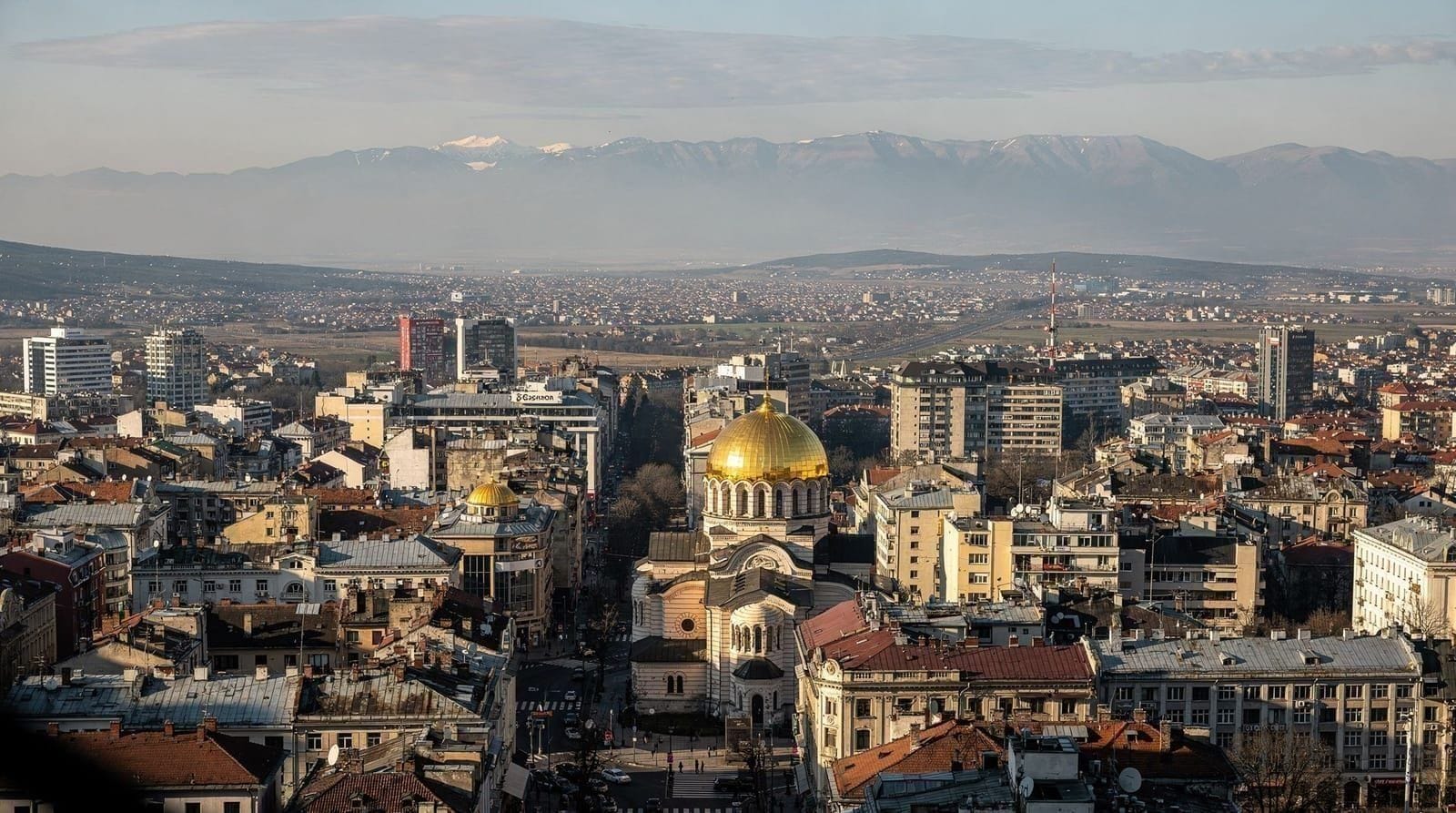
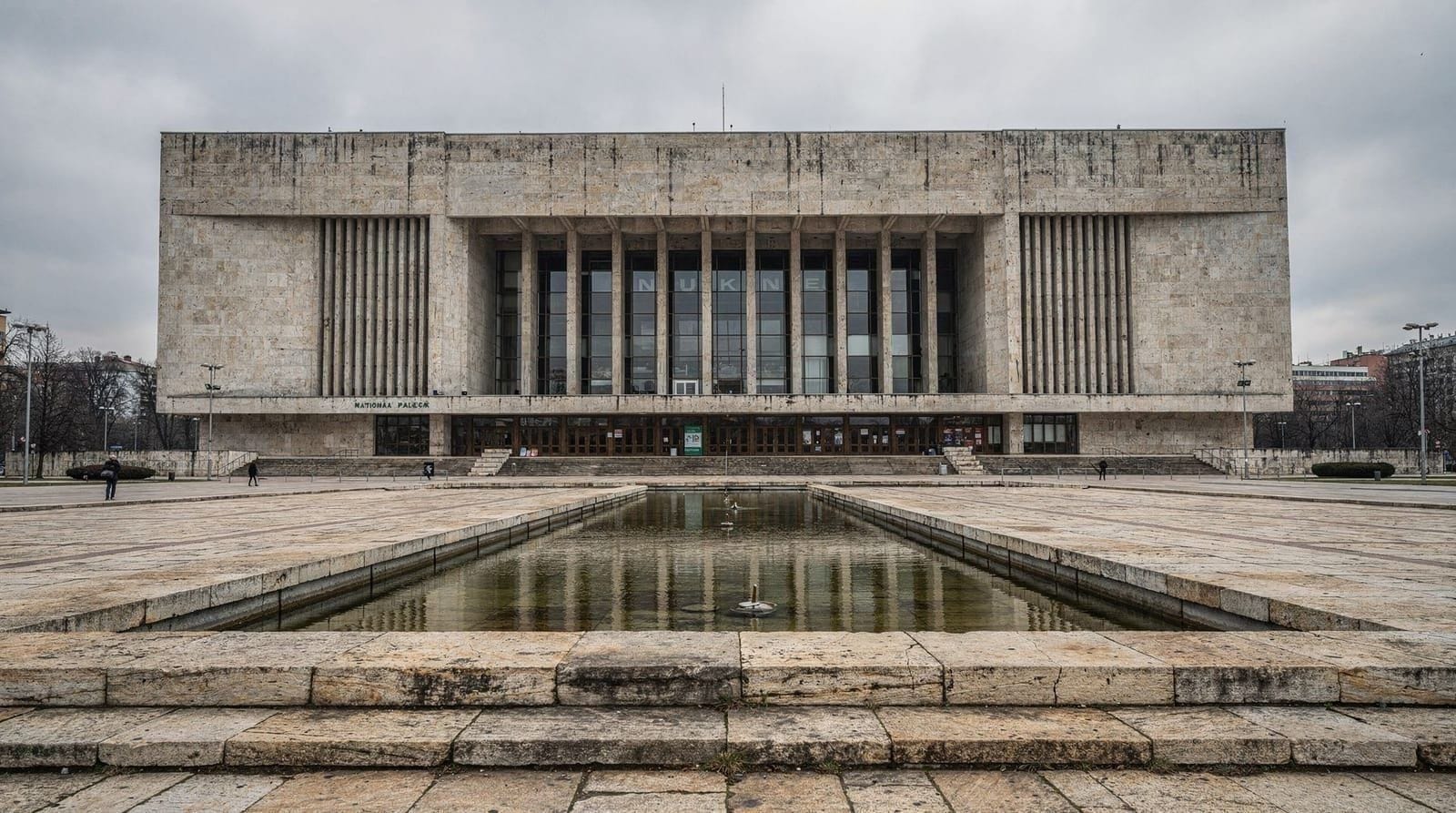
The surrounding Civic Centre (Centrul Civic), constructed by demolishing a substantial portion of Bucharest’s historic district in the 1980s, gives the city a boulevard (Bulevardul Unirii) explicitly modeled on the Champs-Élysées but wider. Sofia’s communist architecture — the Largo, the Party House, the NDK — is significant but modest by comparison.
Sofia’s communist heritage is more curated and somewhat more intellectually accessible. The Museum of Socialist Art and the socialist monument walking tours give context that Bucharest’s communist sites mostly lack. Sofia’s approach tends toward documentation and interpretation; Bucharest’s main communist site is experienced primarily as spectacle.
Day trips and natural access: Sofia wins
Sofia’s position at the foot of Vitosha Mountain (accessible in 30 minutes) and its proximity to the Rila Mountains (2 hours) gives it a natural access advantage that Bucharest cannot match. Bucharest’s surrounding terrain is flat Wallachian plain. The nearest mountains — the Bucegi range in the Prahova Valley — are about 120 km away and less dramatic than Rila.
Sofia → Rila Monastery (2 hours): no real Bucharest equivalent within the same travel time.
Sofia → Seven Rila Lakes (2 hours + gondola): no real Bucharest equivalent.
If mountain access matters to your trip, Sofia is the significantly better base. The Vitosha mountain guide and the Rila Monastery day trip show how easily those hours on the trail or in the mountains slot into a city stay.
Flights and connections: Bucharest wins
Henri Coanda Airport (Bucharest) handles substantially more international traffic than Sofia Airport. More carriers fly to Bucharest; more routes are available; low-cost options to more European cities are more frequent. If you are building a multi-city itinerary around flight connections, Bucharest is a more flexible hub.
Sofia Airport has improved its connections since Schengen accession in 2025 (some carriers added routes) but remains a smaller airport. Wizz Air and Ryanair both serve Sofia, but with fewer frequencies to some destinations than Bucharest.
Cost comparison
Both cities are now in the EU. Bucharest uses the Romanian leu (RON) and is not yet in the eurozone, but costs in practical terms are similar. A budget meal in Bucharest: €6-9. In Sofia: €5-8. A hostel dorm: Bucharest €15-25, Sofia €15-25. These differences are small enough that cost should not be the deciding factor between these two cities.
Verdict: Sofia vs Bucharest
Choose Bucharest if: you are specifically interested in communist architecture on a grand scale, or if you need Bucharest’s better flight connections.
Choose Sofia if: you want mountain access, more hiking day trips, and a slightly less tourist-saturated city center.
Sofia vs Belgrade
Belgrade is the capital of Serbia (population roughly 1.8 million in the city, 3+ million metro). It sits outside both the EU and the Schengen Area, which creates a different set of travel logistics for EU nationals than Sofia.
EU/Schengen status: Sofia wins for EU travelers
For European Union and Schengen-document holders, entering Serbia from Bulgaria (or anywhere else) requires a passport and involves a border crossing. Serbia uses the Serbian dinar (RSD), not euros. There is no Schengen roaming for mobile data in Serbia. If you are flying from within the EU and only want to visit EU/Schengen territory, Sofia has the administrative simplicity.
For non-EU travelers (particularly US, Canadian, and UK passport holders), Serbia is visa-free and the border crossing is straightforward, so this distinction matters less.
Nightlife and youth culture: Belgrade arguably wins
Belgrade has a more internationally recognized party reputation than Sofia. The concept of splav (river raft clubs) moored along the Sava and Danube rivers — which become intense music venues from midnight to dawn in summer — is genuinely distinctive and has no direct Sofia equivalent. Belgrades’s Exit Festival (held in Novi Sad, 90 km away) draws international crowds.
Sofia’s nightlife is real and worth engaging with (see the Sofia nightlife guide) but it is quieter, more local, and less marketed internationally. Which is better depends on what you want: Sofia’s scene is less oriented toward tourist presence; Belgrade’s is larger and more internationally diverse.
Historical sightseeing: different strengths
Belgrade’s central sight is Kalemegdan Fortress, a large medieval-to-Ottoman fortification on a cliff above the confluence of the Sava and Danube. It is genuinely impressive, free to walk through, and has good museums. The Church of Saint Sava (Crkva Svetog Save), one of the largest Orthodox churches in the world, is currently being decorated — the gold mosaic interior is extraordinary.
Sofia has the Alexander Nevsky Cathedral, Serdica Roman ruins, Boyana Church, and its own set of Orthodox churches, but nothing quite like Kalemegdan as an urban fortress experience. The day-trip access from Sofia (Rila, Plovdiv) is significantly better than what Belgrade can offer within comparable distances.
Cost: comparable
Belgrade is marginally cheaper than Sofia for some items (drinks, particularly) because it is outside the EU and does not have VAT at EU rates. The difference is not enormous — expect Belgrade to feel slightly cheaper for bar prices, slightly comparable for food, and roughly similar for accommodation.
Verdict: Sofia vs Belgrade
Choose Belgrade if: you want a more international nightlife scene, you have the flexibility to deal with non-Schengen border crossings, or the Kalemegdan/Sava waterfront aesthetic appeals to you.
Choose Sofia if: you want Schengen-integrated travel, mountain day trips, and a city that has not yet fully arrived on the major tourist circuit (which translates to lower tourist fatigue and more authentic local experience).
Sofia vs Athens
Athens is a significantly different beast: a much larger city (700,000 in the municipality, 3.7 million metro), the Greek capital, and a major international hub with a level of ancient historical heritage that nothing in Bulgaria — or most of Europe — can match.
Ancient history and monuments: Athens wins, comprehensively
The Acropolis with the Parthenon, the Ancient Agora, the Temple of Olympian Zeus, the Kerameikos cemetery, the Odeon of Herodes Atticus — Athens has more intact, accessible ancient Greek monuments than any other city in the world. The Acropolis Museum is one of the best museums in Europe.
Sofia has Serdica — a significant Roman ruin visible through glass panels in the metro and partially excavated under the Largo — and the Thracian heritage in the wider Bulgarian landscape (the Kazanlak tomb, Rose Valley). These are interesting and historically significant. They are not the Parthenon.
For anyone whose primary interest is classical antiquity, Athens is the destination. There is no question.
Cost: Sofia wins substantially
Athens is meaningfully more expensive than Sofia across nearly all categories. A sit-down lunch in Athens: €12-18. In Sofia: €5-8. A mid-range hotel double in Athens: €80-150. In Sofia: €40-65. Coffee in Athens: €2-3.50. In Sofia: €1.20-1.60.
The post-pandemic tourism spike in Athens has pushed prices toward — and in some areas beyond — Western European levels. Sofia remains significantly cheaper, and the gap is meaningful if budget matters. The Sofia on a budget guide goes into how to keep that advantage over a whole stay.
Day trips: different types
Athens has island access (Aegina, Hydra, Poros within 1-2 hours by ferry) and mainland destinations (Corinth, Nafplio, Cape Sounion). These are excellent. Sofia has mountain access (Rila, Vitosha) and historic villages (Koprivshtitsa, Plovdiv). The comparison depends entirely on what kind of day trip you want: islands and classical ruins vs mountains and medieval heritage.
Weather: Athens is hotter
Athens in July and August is brutal — 35-40°C is common, and the Acropolis at noon in August is an exercise in endurance. Sofia sits at 550 meters elevation and has a more temperate continental climate. Sofia summer days reach 30-35°C but are cooler, particularly in the mornings. For summer travel, Sofia is more comfortable for active sightseeing.
Verdict: Sofia vs Athens
Choose Athens if: classical Greek antiquity is your primary interest, or you want island day trips, or you can visit outside summer months when prices are lower.
Choose Sofia if: you are budget-constrained, you want mountain access, you prefer less tourist-saturated environments, or Bulgaria’s specific historical layers (communist era, Bulgarian Revival, Thracian) are your focus.
Sofia vs Skopje
Skopje, the capital of North Macedonia, is the closest major city to Sofia (230 km southwest) and the one most different in character from Sofia’s actual urban texture.
The Skopje 2014 controversy
Skopje’s downtown was substantially remade under the “Skopje 2014” project — a government initiative, completed by around 2018, that built neoclassical-style government buildings, Baroque fountains, and dozens of large bronze statues throughout the center. The Alexander the Great equestrian fountain on Macedonia Square is approximately 22 meters tall. The national museum is housed in a neoclassical building constructed entirely new in the 2010s.
The project is controversial both inside and outside North Macedonia. Critics argue it is a manufactured antiquity — a fake historical cityscape built to assert a contested national identity. Supporters argue it created a distinctive visual character. Visitors tend to find it either fascinating as an example of political architecture at scale, or somewhat jarring.
Sofia’s equivalent communist-era imposition — the Largo (the monumental government complex in the center) and the National Palace of Culture — is more restrained and architecturally coherent with the rest of the city’s fabric.
Size and transport links: Sofia is substantially better connected
Sofia Airport is larger and better connected than Skopje’s Alexander the Great Airport. Sofia has an active metro system (3 lines). Skopje’s public transport is bus-only. Sofia has frequent international bus connections throughout the Balkans and Eastern Europe; Skopje has fewer.
Cost: comparable, Skopje marginally cheaper
Skopje is marginally cheaper than Sofia for some items because North Macedonia is not in the EU. The difference is minor for food and accommodation; more noticeable for taxis and informal services. Both cities are budget-friendly by European standards.
What Skopje has that Sofia does not
The Kale Fortress above the city is genuinely old (Ottoman-era with Byzantine foundations) and provides good views. The Old Bazaar (Čaršija) is the most intact Ottoman-era commercial district in the Balkans — larger and more authentic than anything similar in Sofia. Skopje’s Ottoman heritage is, in some ways, more visible than Sofia’s.
Verdict: Sofia vs Skopje
Choose Skopje if: you are specifically interested in the Skopje 2014 project as an architectural-political curiosity, or you want to explore the Ottoman Bazaar, or you are already in the region and 230 km is a manageable day trip.
Choose Sofia if: you need flight connections, want a more organically developed city center, or want day trips to Rila and Plovdiv.
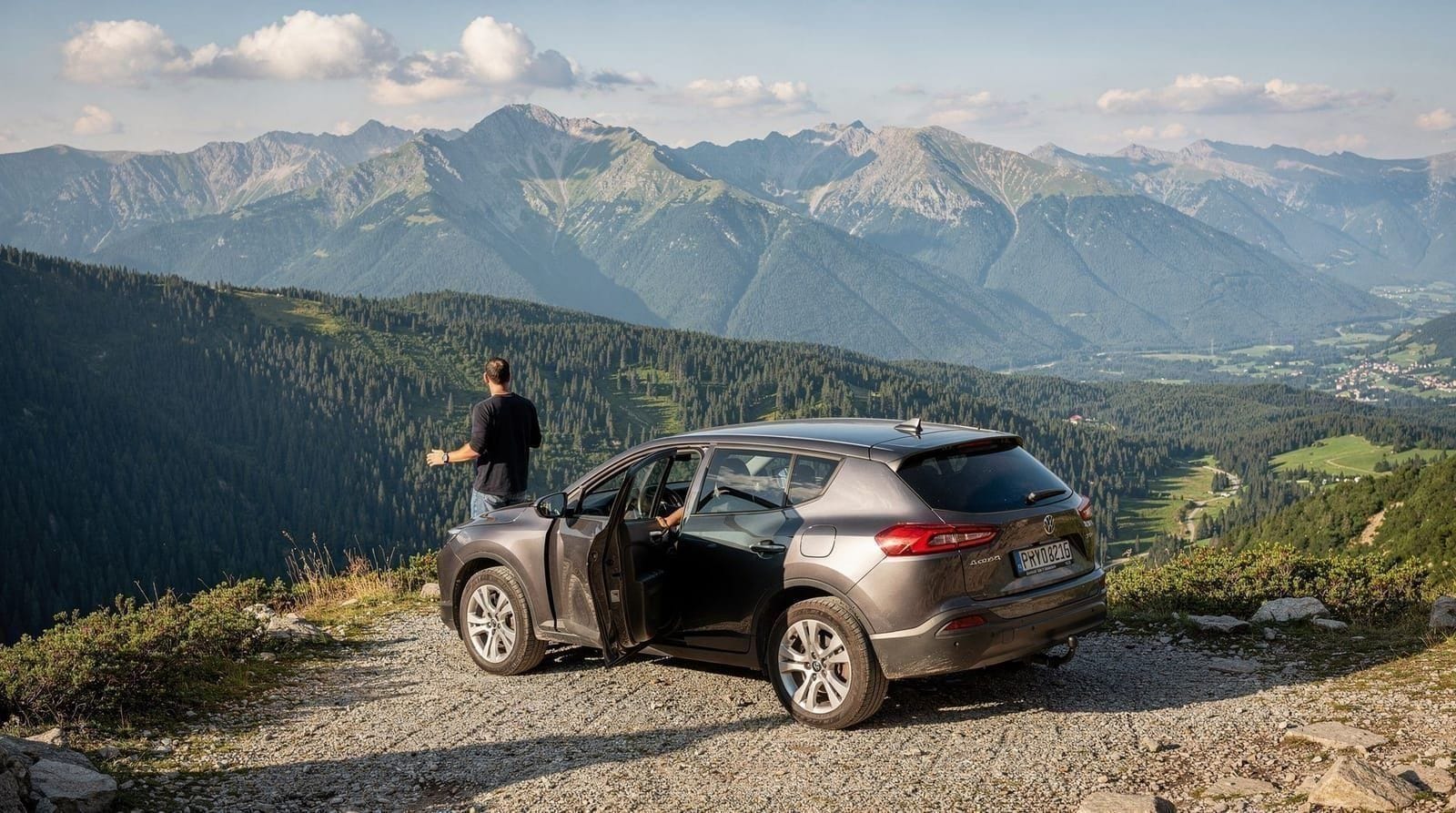
Day trip note: Sofia to Skopje is 230 km and now a seamless Schengen crossing. It is technically doable as a day trip from Sofia by car (3.5 hours each way), though it makes Skopje feel rushed. For those doing a Balkans circuit, it is a reasonable single overnight.
If you would rather not drive yourself, a guided option such as a day tour from Sofia to Skopje in North Macedonia takes the logistics off your hands, though the same caveat applies: a single day leaves little time for the Old Bazaar and the fortress. For more on getting around once you are back in the capital, see the getting around Sofia guide.
Where Sofia sits in the comparison: an honest summary
Sofia’s consistent advantages:
- Mountain and national park access within 30-120 minutes
- Schengen zone (since January 2025), simplifying inter-Balkan travel
- Eurozone (since January 2026), removing currency conversion
- Lower tourist saturation than Athens and parts of Bucharest
- Specific historical layers (communist heritage, Bulgarian Orthodox, Thracian) that are distinct and underrepresented in international coverage
Sofia’s consistent disadvantages:
- Airport connections fewer than Bucharest and Athens
- Ancient classical heritage does not compare to Athens
- Communist architectural spectacle does not compare to Bucharest’s scale
- English language usage is lower than Bucharest (where it is nearly universal) — though most tourism-facing staff in Sofia speak it
- The city center is not as immediately striking on arrival as Belgrade’s Kalemegdan or Athens’ Acropolis hillside
None of these disadvantages are reasons not to visit Sofia. They are context for calibrating expectations and for deciding how Sofia fits alongside — or instead of — other Balkan destinations in your itinerary.
Side-by-side summary
| City | Cost vs Sofia | Day trips | Flight connections | Best for |
|---|---|---|---|---|
| Bucharest | Similar | Weaker (flat terrain) | Better | Communist-era architecture at scale |
| Belgrade | Slightly cheaper | Weaker | Comparable | Nightlife, river culture |
| Athens | More expensive | Different (islands) | Better | Ancient Greek ruins |
| Skopje | Slightly cheaper | Weaker | Weaker | Ottoman bazaar, Skopje 2014 architecture |
Building a multi-capital Balkan trip around Sofia
If you are not choosing just one city, Sofia’s Schengen and geographic position make it a workable hub rather than an endpoint. A common pattern: fly into Sofia, use it as a base for Rila Monastery and Plovdiv day trips, then take the overland route to Skopje (3.5 hours, no border stop since Schengen accession) or the longer bus to Belgrade (6-7 hours) for a second base. Athens and Bucharest are better reached by a short flight than overland from Sofia, given the distance and, for Athens, the non-Schengen border crossing involved.
For a single Bulgaria-focused trip rather than a multi-capital circuit, the 7-day Bulgaria highlights itinerary gives a fuller sense of what a week centered on Sofia actually covers, including Plovdiv and the mountains. Solo travelers weighing Sofia against Belgrade or Bucharest for safety and logistics should also check the solo female travel in Sofia guide, which compares Sofia’s safety profile to its regional peers directly.
A week’s budget compared
For a rough sense of scale, a week combining flights, mid-range accommodation, food, and a couple of paid activities looks noticeably different across these five cities. Sofia and Skopje sit at the affordable end — expect roughly €500-700 per person for a comfortable week outside peak season, including a mid-range hotel, three meals a day mixing street food and restaurants, local transport, and one or two paid attractions or tours. Belgrade runs close behind, slightly cheaper on drinks and nightlife but similar overall. Bucharest lands in a comparable range to Sofia despite the leu/euro difference, since wage levels and price structures across the two economies are close. Athens is the outlier: the same week, done at a similar comfort level, more commonly runs €800-1100, driven mainly by accommodation and restaurant prices rather than transport or attractions.
These figures assume booking outside the absolute peak of July-August and avoiding the most tourist-saturated restaurant streets in each city — Vitosha Boulevard in Sofia, Plaka in Athens, Knez Mihailova in Belgrade — where prices run 30-50% above the citywide average for comparable food. Shoulder-season travel (April-May, September-October) tends to shave a further 10-15% off accommodation costs across all five cities, and Sofia’s shoulder season is genuinely pleasant weather-wise, unlike Athens’ summer heat, which pushes many travelers toward spring or autumn anyway.
If you want a fast, guided orientation to Sofia itself before deciding how much time it deserves relative to the other capitals, a half-day city tour covers the Largo, Alexander Nevsky Cathedral, and Serdica in a few hours.
Sofia guided city tourFrequently asked questions about Sofia vs other Balkan capitals
Is Sofia cheaper than Bucharest?
Roughly comparable. Both are EU capitals with similar wage levels and cost structures. Sofia joined the eurozone in 2026 (making euro prices directly visible), while Bucharest uses the Romanian leu. In practical terms, expect to spend similar amounts on food, accommodation, and transport. Neither city is markedly cheaper than the other.
Is Sofia in the Schengen Area?
Yes, since January 2025. This means no passport checks at borders with other Schengen countries (Greece, Romania by land). It simplifies overland travel significantly and makes Sofia easier to include in multi-country Schengen trips.
How does Sofia compare to Athens for summer travel?
Sofia is cooler in summer (30-35°C compared to Athens’ 35-40°C) and significantly cheaper. Athens has incomparably better ancient Greek ruins. Sofia has better mountain day trips and a less tourist-saturated center. For a budget-conscious summer trip focused on Balkan culture rather than classical antiquity, Sofia has a better case. For ancient history, Athens is irreplaceable.
Which Balkan capital has the best day trips?
Sofia, by a clear margin. The combination of Rila Monastery (2 hours), Seven Rila Lakes (2 hours + gondola), Plovdiv (1.5 hours), Koprivshtitsa (2 hours), and Vitosha Mountain (30 minutes) is a uniquely rich day-trip portfolio from a capital city. See the day trips from Sofia ranked guide for specifics.
Should I visit Sofia or Bucharest?
Both are worth visiting and the experience is complementary rather than duplicative — Bucharest is stronger on communist spectacle, Sofia on natural access and smaller-scale historic tourism. If you have time for one: go to whichever has better flight connections from your origin city. If the connections are comparable, Sofia is the right choice for anyone who wants mountains and hiking alongside the city.
Is Belgrade worth including on a Balkan itinerary?
Yes. Belgrade’s character is distinct from Sofia’s — more nightlife-oriented, outside Schengen, with a different cultural flavor. The bus from Sofia to Belgrade takes 6-7 hours (direct services available). Including both on a 2-week Balkan trip is reasonable. Do not try to do both as day trips from a single base; they are far enough apart that each deserves at least 2 nights.