Getting from Sofia to Rila Monastery, Seven Lakes, Borovets, and Bansko
From Sofia: Full-Day Tour to Rila Monastery with Options
What is the best way to get from Sofia to Rila Monastery?
By car (2 hours, parking €3) or organised shuttle (no driving required). Public buses exist but involve two changes, 3–4 hours each way, and a real risk of missing the last bus back. For a day trip, the car or a guided tour is by far the better choice.
The Rila mountain range begins about 70km south of Sofia, which makes it one of the most accessible mountain landscapes in Europe from a major capital. Within a single day you can visit an 800-year-old UNESCO monastery, hike to a set of glacial lakes at 2100 metres, reach a ski resort, or arrive in Bansko — Bulgaria’s main mountain town. The challenge is not distance but logistics. Public transport in the Rila region is sparse, return services are limited, and the consequences of missing a bus can be significant. This guide covers every option honestly.
| Rila Monastery | 120km, around 2h by car |
| Seven Rila Lakes | 100km + gondola, around 2h by car |
| Borovets | 73km, around 1h30 by car |
| Bansko | 160km, around 2h by car |
| Vignette needed | Yes, E79 — around €12–18/week |
Transport options compared
| Destination | Car | Bus | Best independent option |
|---|---|---|---|
| Rila Monastery | ~2h, easiest | 3–4h, risky return | Organised shuttle |
| Seven Rila Lakes | ~2h + gondola | 2.5–3.5h, 3 connections | Self-guided tour |
| Borovets | ~1h30, simplest route | ~2h, reliable | Bus is genuinely fine |
| Bansko | ~2h | 2.5–3h, comfortable | Bus for multi-day stays |
Sofia to Rila Monastery
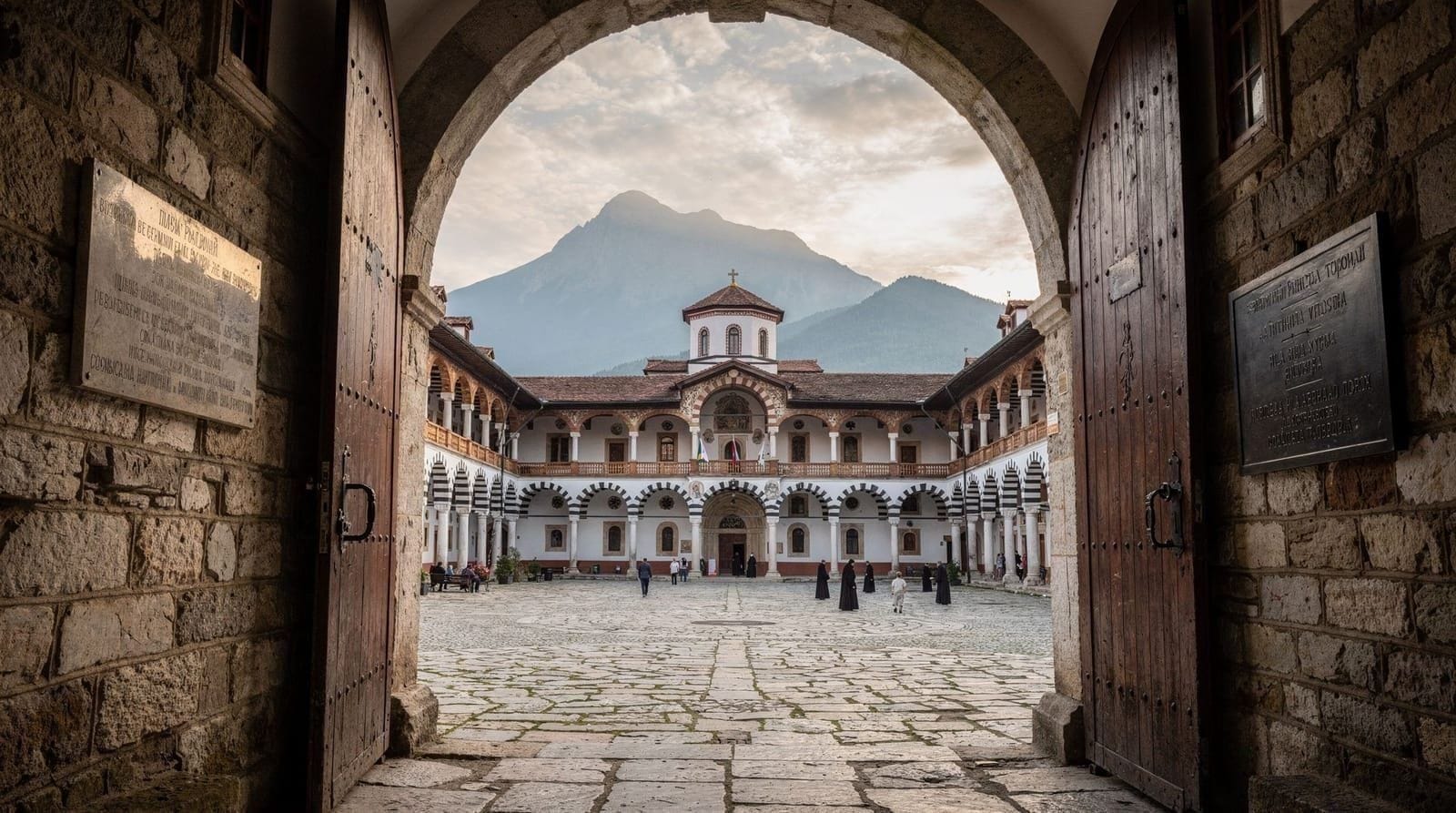
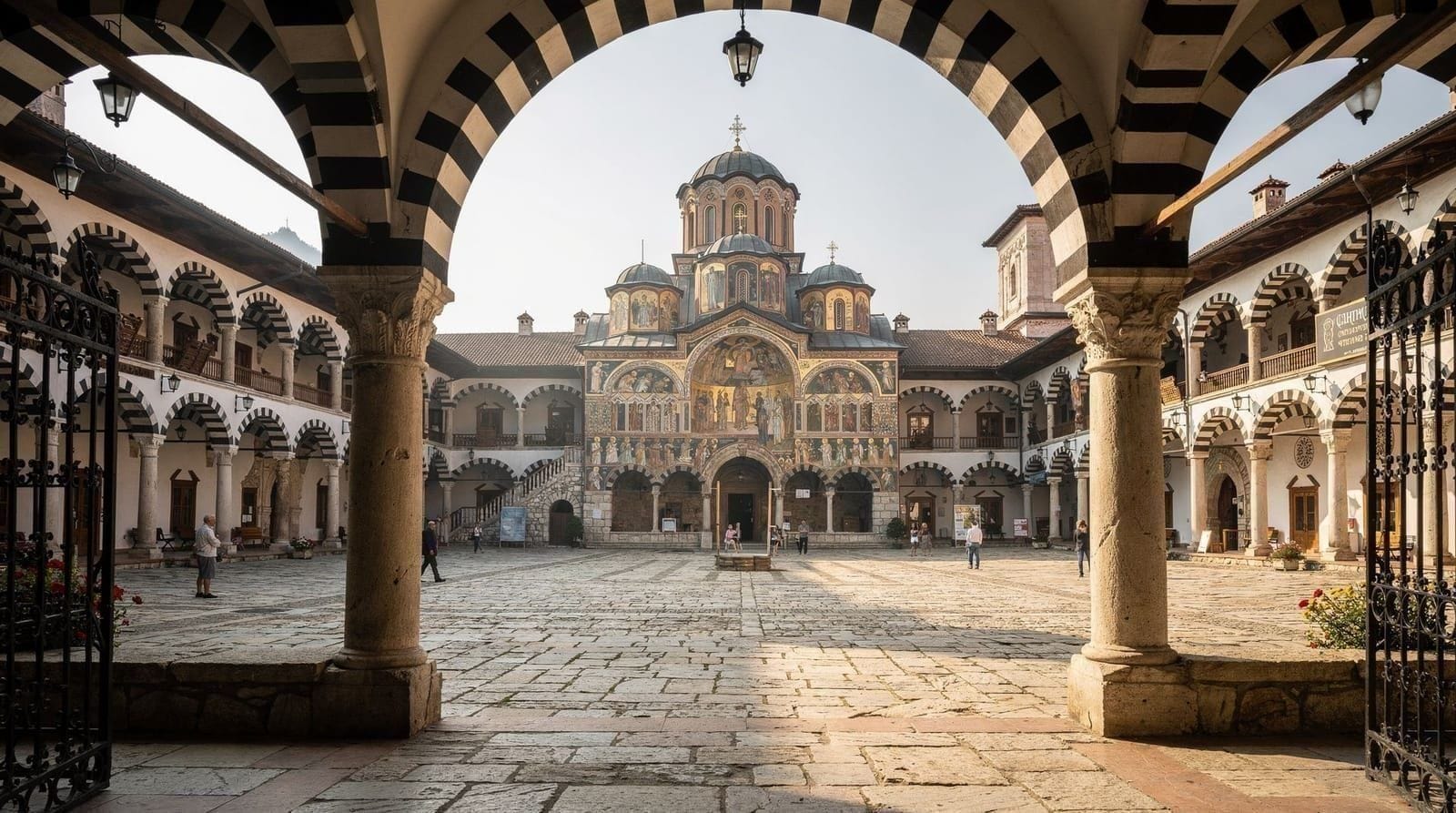
Rila Monastery is 120km south of Sofia and sits in a narrow valley at 1150 metres. It is the largest and most important Eastern Orthodox monastery in Bulgaria, its interior frescoes dating back to the 14th century, and it receives more visitors than any other site outside the capital. Most people visit as a day trip.
By car
Driving is the most practical option for most visitors.
Take the E79 south from Sofia (sign-posted toward Blagoevgrad and Greece). The motorway section begins at the city’s southern edge and runs past Pernik toward Dupnitsa. At the Dupnitsa exit, follow signs for Rila village, then continue on a narrower paved road up the valley to the monastery. The final 20km after leaving the E79 is a single carriageway mountain road — well-maintained but tight in places, particularly around the village of Rila itself.
Total distance: approximately 120km. Driving time: 1 hour 50 minutes to 2 hours in normal conditions, longer in peak summer. Parking at the monastery entrance costs €3 and is adequate for the site’s volume on most weekdays. Arrive before 10am on summer weekends if you want an uncrowded experience.
Vignette. The E79 requires a valid Bulgarian electronic vignette. Buy one at bgtoll.bg, at the first petrol station after the airport, or at some border crossings. A weekly vignette costs approximately €12–18 depending on vehicle category. The system is entirely camera-based — there are no toll booths to stop at.
Driving allows you to stop at Boyana Church (Boyana is a Sofia suburb on the way out of the city), combine the monastery with a lunch stop in Rila village, or detour to Sapareva Banya for its hot springs on the way back.
By bus — possible, but genuinely risky
The bus route to Rila Monastery is technically possible. The key word is technically.
How it works. From Sofia, take a bus from Yug terminal (near NDK) or Ovcha Kupel bus station (accessible by metro) toward Rila village. Some services go via Dupnitsa. Journey time to Rila village: 2.5–3 hours, costing around €6–10 one way. From Rila village, a connecting local bus or shared taxi covers the final 22km up to the monastery. That leg takes 20–30 minutes.
The problem: return services. This is where the risk lies. Return buses from Rila village to Sofia run only once or twice in the afternoon — often at 3pm and 5pm, with schedules varying by season. If you miss the last bus, there is almost no accommodation at or near the monastery, Rila village has very limited options, and a taxi from there to Sofia costs €60–80. Checking the current timetable on the Yug terminal website before you go is essential, not optional.
Bottom line. The bus is theoretically doable for travellers who start early, check return times carefully, are comfortable with uncertainty, and have a backup plan. For everyone else, it introduces unnecessary risk to what should be a pleasurable day out.
By organised tour or shuttle
An organised day trip from Sofia removes every logistical problem. Your driver knows the road, departure time is fixed, return time is fixed, and you do not need to worry about missing buses or navigating an unfamiliar road network. Most tours include a guide who provides context about the monastery’s history that would take hours of reading to absorb on your own.
GetYourGuideFrom Sofia: Full-Day Tour to Rila Monastery with OptionsCheck availability →The shuttle option is more flexible than a fully guided tour: you travel with a small group, get dropped at the monastery, explore independently at your own pace, and return on the scheduled coach. This suits travellers who prefer to wander without commentary but want the logistical simplicity of an organised departure.
For a full itinerary combining the monastery with other day trips from Sofia, see also our Rila Monastery day trip guide.
Sofia to the Seven Rila Lakes
The Seven Rila Lakes sit at 2100–2500 metres in a glacially carved cirque. They are among the most photographed places in Bulgaria and on a clear day in summer the colour of the water and the scale of the surrounding peaks make for an extraordinary few hours. Getting there requires reaching the village of Panichishte and then ascending by gondola.
By car
From Sofia, take the E79 south in the same direction as Rila Monastery, but instead of exiting for Rila village, continue to the Sapareva Banya exit (approximately 85km from Sofia). From Sapareva Banya, follow signs to Panichishte — a further 12km on a mountain road that climbs steeply. Total driving time: 1.5 to 2 hours depending on traffic.
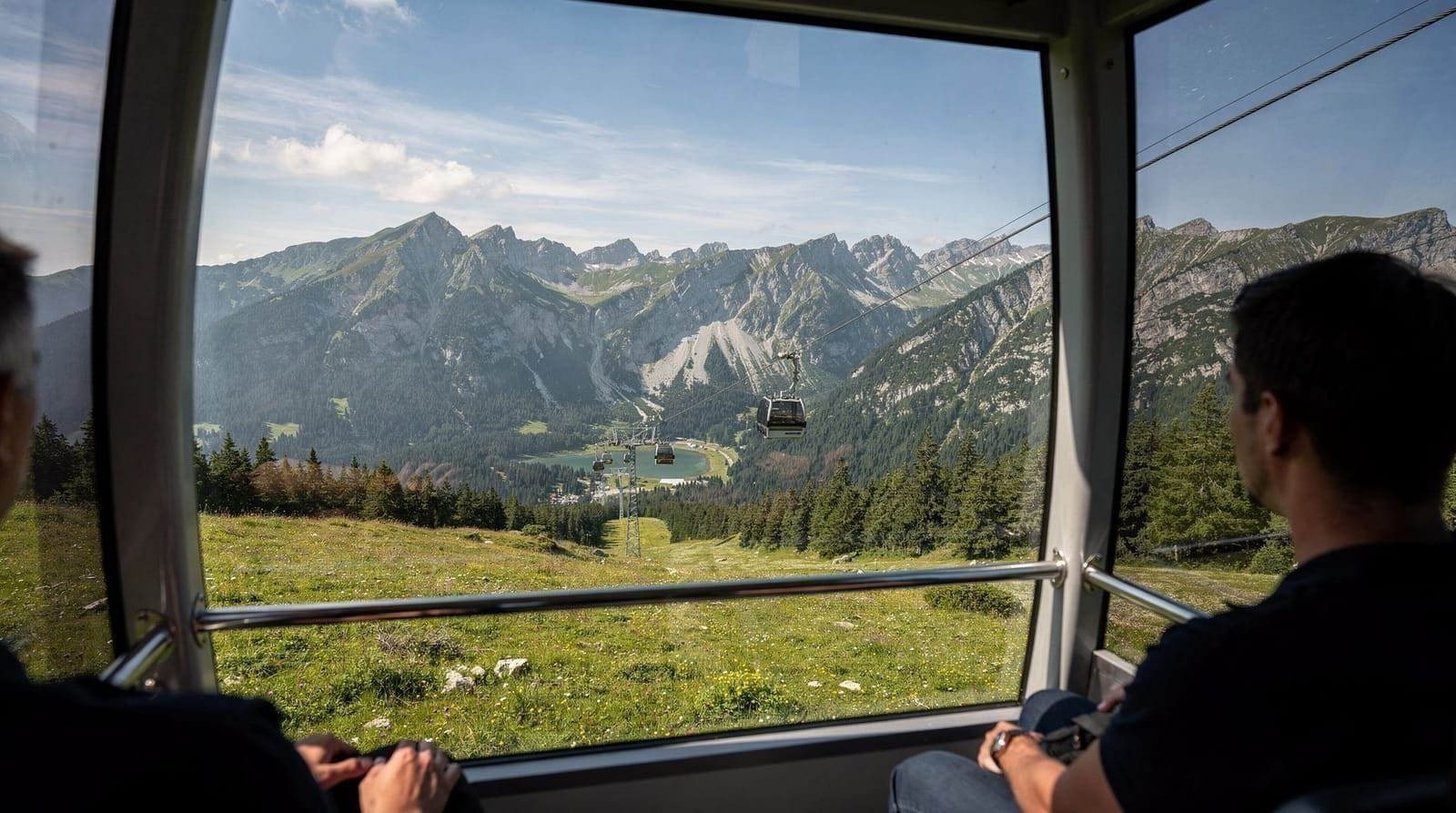
From the gondola base station at Panichishte (elevation approx 1600m), a gondola rises to around 2100m, from where a marked hiking trail reaches the lakes in 45 minutes to an hour. The gondola runs from approximately 7am to 5pm in summer and charges a return ticket of around €8–10.
Parking at Panichishte is free and reasonably large, though it fills up by 9am on summer weekends. Arriving before 8am and being at the gondola for its first run is the best strategy for avoiding both crowds and afternoon thunderstorms, which build reliably over the range from around 2pm in July and August.
By bus and local taxi
A public bus from Sofia runs to Sapareva Banya, from where you need a local taxi for the final 12km to Panichishte. Taxis in Sapareva Banya are available but not guaranteed — there are a handful of local drivers and no formal taxi rank. You may need to phone one.
Return planning has the same problem as the Rila Monastery bus route: return buses from Sapareva Banya to Sofia run infrequently in the afternoon. The total journey each way, including taxi and gondola, is 2.5–3.5 hours and involves three separate connections.
By organised tour
A self-guided full-day tour provides transport to and from Panichishte, which is the main practical barrier to visiting independently. You still hike and explore on your own — the tour simply handles the getting there.
GetYourGuideFrom Sofia: The Seven Rila Lakes Full-Day Self-Guided TourCheck availability →See our dedicated Seven Lakes day trip guide and the Seven Rila Lakes hike guide for trail details, what to bring, and timing advice. The Seven Rila Lakes destination page covers the lakes themselves.
Sofia to Borovets
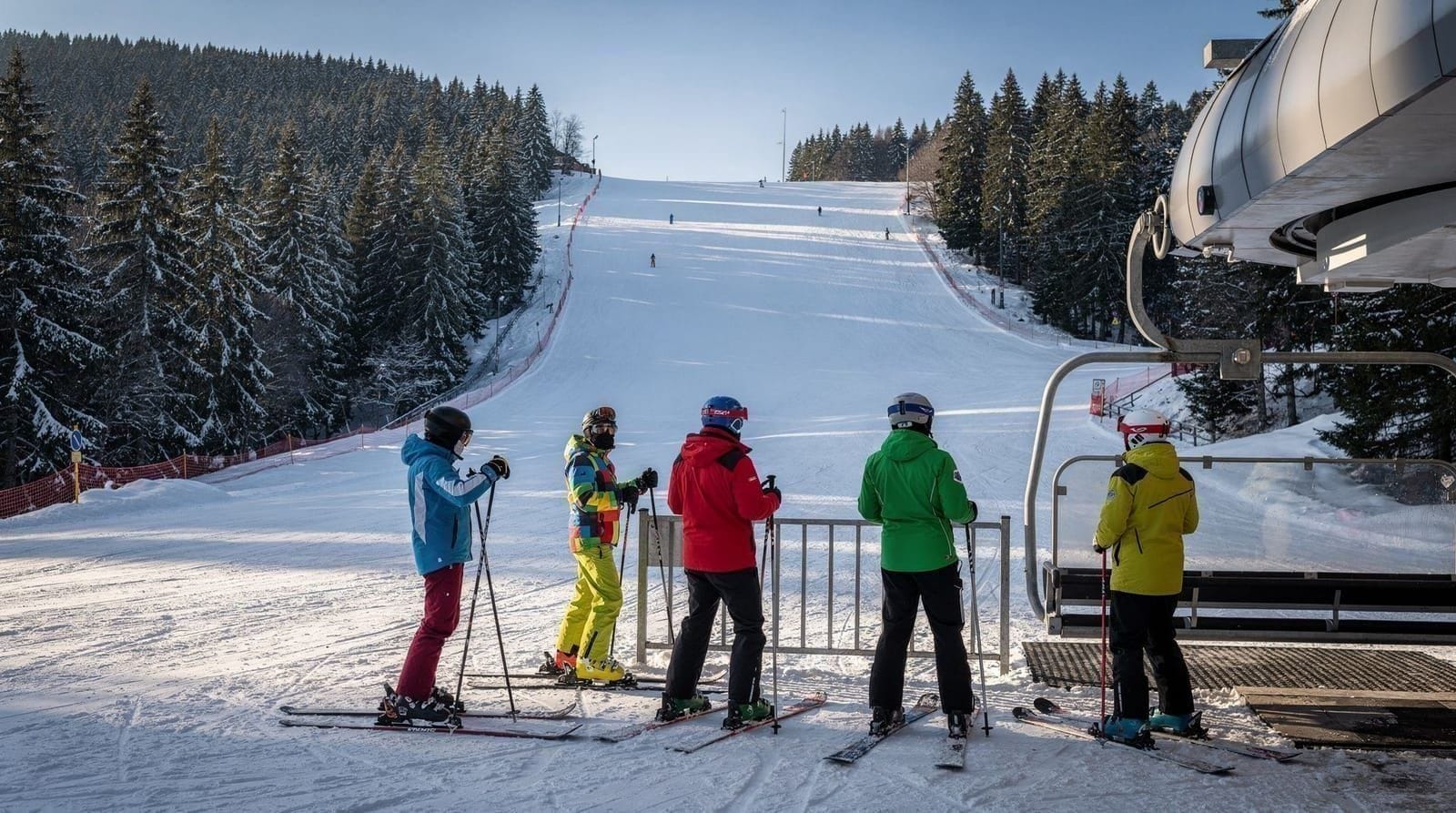
Borovets is Bulgaria’s oldest ski resort, sitting at the northern edge of the Rila range at around 1350 metres. In winter it draws skiers from across the region; in summer it is a hiking base and weekend destination for Sofia families.
By car
The drive from Sofia is 73km via the E79 south, taking the exit for Samokov and continuing on a well-signed road to Borovets. Driving time is approximately 1 hour 30 minutes in normal conditions, slightly longer with ski-season weekend traffic from Sofia. Parking is available at most hotels and near the gondola base station.
This is the most straightforward of all the mountain routes from Sofia — no complicated turns, the road is wide and well-maintained, and the resort is clearly sign-posted.
By bus
Buses from Sofia’s Yug terminal run directly to Borovets and take approximately 2 hours. The service is reasonably regular (multiple departures per day) and the return schedule is more generous than the Rila Monastery route. Ticket price is around €5–7 one way.
For skiers, the bus is a viable option if you pack light or are using rental equipment. Travelling with full ski gear on a bus, however, is cumbersome — a car or private transfer is more comfortable.
By private transfer
A shuttle transfer from Sofia or Sofia Airport to Borovets is available and typically costs €35–60 per car (1–4 people). Useful for ski weekends when you have equipment and want door-to-door service, or when arriving on a late flight and driving mountain roads at night is not appealing.
Sofia Airport small-group transfer to BorovetsSofia to Bansko
Bansko is the largest ski resort in the Balkans and Bulgaria’s main mountain tourism hub in both winter and summer. At 160km from Sofia, it is too far for a comfortable day trip but easily reachable for a weekend stay.
By car
Take the E79 south from Sofia all the way to Blagoevgrad (90km), then continue on the A3 (or continue on E79 depending on direction taken) south toward Bansko. Total journey: approximately 160km, 1 hour 50 minutes to 2 hours in normal traffic. The road is good quality throughout. In winter during ski season, expect delays on the approach to Bansko on Friday evenings and Sunday afternoons, as Sofia families arrive and depart for the weekend.
The vignette requirement applies to the E79 portion as noted above. There are no additional tolls on the Bansko road itself.
Parking in Bansko is plentiful and generally free. Most accommodation has private parking, and even the gondola base station has large free car parks.
By bus
Direct buses from Sofia’s Yug terminal to Bansko run several times daily and cost approximately €10–15 one way. Journey time is 2.5–3 hours. The service is reliable and the coaches are reasonably comfortable. This is a practical option for travellers who want to spend 2–3 days in Bansko without the cost or hassle of a rental car.
By shuttle transfer
Private shuttle transfers from Sofia or Sofia Airport to Bansko are popular, particularly among ski groups. A shared shuttle typically costs €15–25 per person; a private car transfer runs €60–90 for 1–4 people.
GetYourGuideSofia: Bansko Shuttle Transfer from/to Sofia AirportCheck availability → GetYourGuideSofia: Rila Monastery Day TripCheck availability →The shuttle is particularly practical for visitors who fly into Sofia and want to head directly to Bansko without spending a night in the city first. Transfers from Sofia Airport direct to Bansko typically take 2.5 hours.
The honest recommendation
Car or organised tour. Always for Rila Monastery and the Seven Lakes.
The public transport routes exist and determined travellers do use them, but they require significant planning, accept meaningful risk (particularly the last bus back from Rila village), and consume 3–4 hours each way in journey time. Unless you have a particular interest in local bus travel or are severely budget-constrained, neither the monastery nor the lakes is worth the stress of an unreliable return bus.
Borovets is the exception — the bus from Yug terminal is direct, runs multiple times per day, and is a reasonable option for a ski weekend, especially if you are staying overnight.
Bansko by bus is fine for a multi-day visit. For a day trip, the 3-hour return journey eats too much of the day.
If you do not have a driving licence or prefer not to rent a car, an organised shuttle or day tour is the single best solution for Rila and the Seven Lakes. You pay more than the bus, but you get a predictable, comfortable return journey and can plan your day with confidence.
For an overview of all worthwhile excursions from the capital, see day trips from Sofia. The Sofia in 3 days itinerary shows how to schedule a mountain day trip alongside city sightseeing. If you are coming for the ski season, skiing from Sofia covers the Borovets and Bansko options in more depth.
Renting a car for the Rila region
For visitors comfortable driving abroad, a rental car is often the single best value option if you plan to see more than one Rila destination. Rental agencies cluster at Sofia Airport and in the city centre; a small car for 2–3 days typically costs less than the combined price of two organised day tours, and gives you the flexibility to stop at Boyana Church or Sapareva Banya en route without waiting on a group schedule. The E79 and connecting roads toward Rila and Bansko are well-maintained and signposted in Latin script as well as Cyrillic, which makes self-navigation more manageable than the mountain roads elsewhere in Bulgaria. Winter driving is the exception — snow chains or winter tyres are effectively mandatory on the approach to Borovets and Bansko from November through March, and rental companies generally fit these automatically for winter bookings.
Seasonal considerations
Road conditions and opening times shift meaningfully by season. In winter (December–March), the Seven Rila Lakes gondola and hiking trail are typically closed or heavily restricted due to snow and avalanche risk — this is a summer and early-autumn destination, roughly June through October. Rila Monastery stays open year-round and is genuinely atmospheric under snow, with far fewer visitors than summer. Borovets and Bansko run in reverse: their high season is winter for skiing, with a quieter but still worthwhile hiking season in summer. Spring (April–May) can bring residual snow and muddy trails at altitude even when Sofia itself feels warm, so check current conditions before a Seven Lakes trip in that window — the Rila mountains hiking guide has more detail on trail-specific timing.
Frequently asked questions about Getting from Sofia to Rila Monastery, Seven Lakes, Borovets, and Bansko
How do I get from Sofia to Rila Monastery by public transport?
Take a bus from Sofia's Yug terminal or Ovcha Kupel station to Rila village (approximately 2.5–3 hours), then a local bus or taxi to the monastery (about 20 minutes). The total one-way journey takes 3–4 hours. Return services are limited — typically only 1–2 buses back from Rila village to Sofia in the afternoon. Missing the last bus is a real risk, and there is almost no accommodation near the monastery if you are stranded.How long is the drive from Sofia to Rila Monastery?
Around 2 hours for the 120km journey via the E79 south and then the Rila village road. You will need a valid electronic vignette for the E79 motorway section (€12–18 per week). Parking at the monastery costs €3. The road to the monastery is paved but narrow in places — drive carefully in the final 10km.Is there a direct bus from Sofia to Rila Monastery?
No direct bus exists. You must change at Rila village or Dupnitsa. The combination of infrequent connections and limited return services makes the bus route unreliable for a day trip. An organised shuttle or your own car eliminates this problem entirely.How do I get from Sofia to the Seven Rila Lakes?
By car: take the E79 south to Sapareva Banya, then follow signs to Panichishte (about 100km, 1.5–2 hours). From Panichishte, a gondola lifts you to the lakes area. By public transport: buses run Sofia–Sapareva Banya, then you need a local taxi (12km) to Panichishte. The gondola adds another step. Car or organised tour is strongly recommended.How do I get from Sofia to Borovets ski resort?
By car via the E79 south, approximately 73km (1.5 hours). Buses run from Sofia's Yug bus terminal to Borovets and take about 2 hours. The bus is straightforward for skiers who pack light. A private shuttle transfer is available and removes the need to navigate bus times with ski equipment.How long does it take to drive from Sofia to Bansko?
About 2 hours for the 160km via the E79 south and A3 motorway. Traffic is light outside peak ski weekends. A weekly electronic vignette (€12–18) covers the tolled sections. Parking in Bansko is plentiful and free near most hotels and the gondola.Do I need a vignette to drive from Sofia to Rila or Bansko?
Yes. The E79, which connects Sofia to the Rila area and Bansko, is a tolled motorway. Bulgaria uses an electronic vignette system — you register your vehicle registration online at bgtoll.bg or buy at petrol stations and border crossings. A weekly vignette costs €12–18. You do not get a physical sticker; the system is camera-based.Can I visit Rila Monastery and the Seven Rila Lakes in the same day?
It's possible by car but very rushed, since the two sites are on different roads off the E79 and each deserves 2–3 hours. Most visitors choose one or the other for a single day; combining both realistically needs a full day starting before 8am, or better, an overnight stay in the region.Is renting a car worth it just for Rila and the Seven Lakes?
If you're already comfortable driving abroad, yes — a rental gives you flexibility for both destinations plus stops like Boyana Church or Sapareva Banya, and the vignette and parking costs are modest. If you're not driving, an organised shuttle removes the risk of the unreliable public bus return times without the commitment of a rental.
Top experiences
Bookable activities with verified prices and instant confirmation on GetYourGuide.