Sofia ski weekend: 3 days at Borovets and Bansko
Day Tour: Ski Borovets & Relax in Thermal Pools and Sauna
Bulgaria offers two ski resorts accessible from Sofia in under two hours: Borovets to the southeast (70 km, around one hour fifteen minutes by car) and Bansko to the south (155 km, around two hours). Visiting both in a three-day weekend is possible and worthwhile — they are meaningfully different from each other in character, difficulty, and price — but it requires efficient logistics. This itinerary is for anyone arriving in Sofia on a Friday, skiing Saturday and Sunday, and flying home on Monday morning or afternoon.
Ski season runs from approximately December to March, with mid-January through late February the most reliable for snow at all altitudes. Borovets has snowmaking capacity on its lower runs, which extends the season; Bansko at higher altitude holds snow more naturally but the access road can be affected by heavy snowfall. If you want to combine skiing with a non-ski day in the mountains, see the Vitosha hiking guide — Vitosha Mountain above Sofia is also accessible in winter for snowshoeing.
| Where | Borovets (70 km) and Bansko (155 km) from Sofia |
| Cost | Roughly €340–520/person for 3 days |
| Car needed | Recommended — makes combining both resorts practical |
| Best time | Mid-January to mid-February |
| Ski level | Borovets suits beginners/families; Bansko suits intermediates+ |
Borovets vs Bansko: honest comparison
| Borovets | Bansko | |
|---|---|---|
| Distance from Sofia | 70 km, ~1h15 | 155 km, ~2h |
| Terrain | 58 km, mostly green/blue | 75 km, more blue/red, more off-piste |
| Best for | Beginners, families | Intermediate–expert |
| Day pass | Around €30–40 | Around €40–55 |
| Base-to-slope access | Compact, short walk to lifts | 15-min gondola from old town |
| Atmosphere | Quiet, family-oriented | Livelier, international après-ski |
Before the day-by-day logistics, understand the real differences between the two resorts.
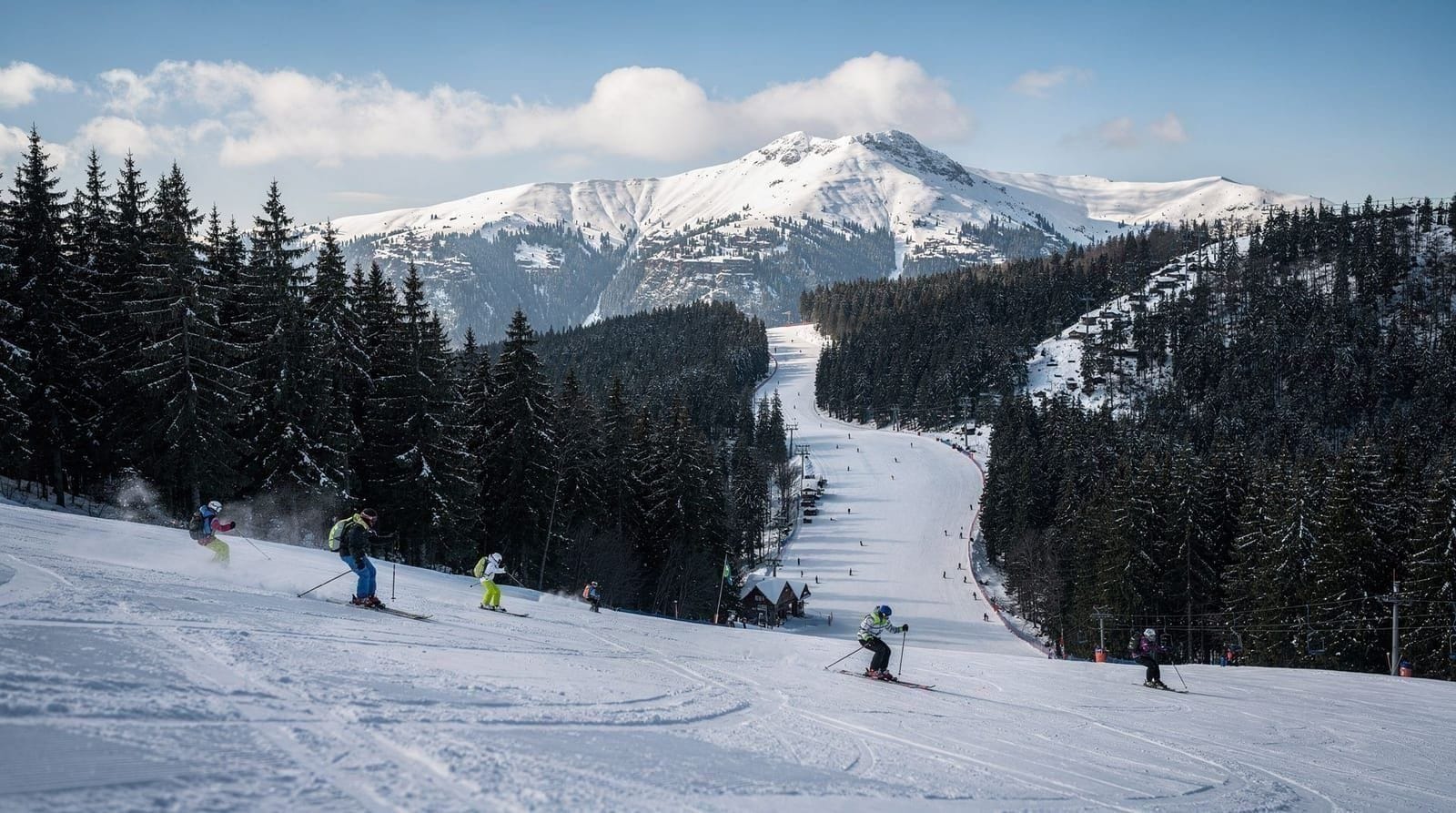
Borovets is the older resort — the first ski resort in the Balkans, established in 1896, now with 58 km of marked runs. It sits in the Rila Mountains at 1,350 m to 2,560 m altitude. The resort is compact, family-friendly, and straightforward: a central cluster of lift stations, a few hundred metres of slope-side restaurants, and a village of hotels and chalets. Around two-thirds of the pistes are rated green or blue (easy to intermediate), which makes it the better choice for beginners and families with children learning to ski. The highest lift reaches Musala shoulder, close to the highest peak in the Balkans; the upper runs above 2,000 m have good snow throughout the season.
Day ski pass at Borovets: approximately €30–40 depending on the date (cheaper on weekdays, more expensive in peak weeks around Christmas, New Year, and February half-term). Ski and boot hire costs around €20–25/day. Snowboard hire is the same. Ski school lessons are available for children and adults at the resort ski school; group lessons run approximately €15–20 for two hours.
Bansko is larger, more modern, and better-suited to intermediate and expert skiers. The resort opened its main gondola in 2003 and now operates approximately 75 km of pistes reaching from the old town at 925 m to 2,560 m altitude. The gondola from the town centre to the ski area is itself 15 minutes, which means even clear roads sometimes require a wait at the gondola base in peak season. The piste distribution skews more toward blue and red runs (intermediate); there is more off-piste terrain above the marked runs than at Borovets, and the vertical drop is greater.
Day ski pass at Bansko: approximately €40–55 depending on the period. Ski hire: €22–30/day. The resort has accumulated an international après-ski scene — largely British and Eastern European — that means more English-language bars, live sports screenings, and a broader range of accommodation options at the price extremes (both cheaper and more expensive than Borovets).
The honest trade-off: Borovets is better for first-timers, families with children, those who want a quieter ski environment, and skiers who want to get on the snow without elaborate logistics. Bansko is better for experienced skiers who want more challenging terrain, more vertical, and an active resort-town atmosphere. Attempting both in a weekend is ambitious and involves about 225 km of driving; it is doable in good conditions but becomes harder if there is heavy snow on the road between the two resorts (the connecting road goes through Sofia).
Day 1: Arrive Sofia — settle and prepare
Arrive at Sofia Airport (terminal 2 for most international flights). If you have not pre-booked a rental car, do so now at the airport desks or shuttle to a nearby agency. A small car (adequate for two people with ski kit, or four people without kit) costs approximately €35–50/day from a major agency. If you have a lot of ski equipment, book a larger vehicle.
Important for ski weekend logistics: do not pick up the car until you arrive if you have ski equipment — airport desks are convenient and allow you to load bags directly. If you are renting skis at the resort (recommended for most visitors), you need only bring your own boots and helmet if you prefer fitted equipment.
Sofia does not require more than an evening on a Friday. Stay near the centre (walking distance to Vitosha Boulevard) for the simplest logistics. Check in, have dinner, and plan the next day’s early start. Most ski resorts open lifts around 08:30–09:00; getting to Borovets by opening time from central Sofia means leaving around 07:15. That is manageable but requires an organised morning.
If you arrive with a full afternoon spare, the Boyana district (30 minutes south from the centre) has the Boyana Church (UNESCO World Heritage, 13th-century frescoes, book ahead in winter) and the National Historical Museum. But on a ski weekend, conserve energy for the slopes.
Dinner in Sofia: the streets around Vitosha Boulevard have dozens of options. For a specifically Bulgarian experience before the resort food, try one of the traditional mehanas in the centre — baked cheese banitsa, shopska salad, and kavarma are all good choices. Budget €12–18 per person with drinks.
Day 2: Borovets — ski day in the Rila Mountains
Leave Sofia around 07:30 to arrive at Borovets by 09:00. The route is straightforward: south on the E80 motorway toward Plovdiv, then south on the A2 toward Samokov, and then the resort road up through the Rila foothills. The final 15 km are a mountain road that climbs steadily through pine forest; it is not difficult but requires care in icy conditions. Snow chains are rarely necessary but keep the car in a low gear on the descent if roads are icy.
GetYourGuideDay Tour: Ski Borovets & Relax in Thermal Pools and SaunaCheck availability →Parking at Borovets is free at the main resort car park. Walk from the car to the rental shop or ski school desk if you have pre-booked equipment hire. On a busy Saturday in peak season, equipment queues can take 20–30 minutes; arrive early or pre-book online where possible.
The lift network at Borovets is organised around three main areas:
Sitnyakovo: the green and blue runs in the forest zone between 1,350 m and 1,800 m, served by the main gondola and several chair lifts. This is where the ski school operates and where beginners should spend their first half-day. The terrain is gentle and well-groomed.
Markudzhik: above 1,800 m, the piste character changes — more open terrain, better snow quality, longer red runs. The Markudzhik 1 and 2 lifts serve this area. More interesting for intermediate skiers than the lower runs.
Yastrebets: the upper area served by the Yastrebets gondola reaching 2,369 m. The runs from here are the longest at the resort (over 3 km for the longest piste) and include some genuinely steep black sections. In good snow, this is the most rewarding part of the resort.
For a single ski day, a realistic approach for an intermediate skier is: one or two runs to warm up on Sitnyakovo, then up to Yastrebets for the main part of the day, and back down through Markudzhik in the afternoon when snow is softening. Avoid the lowest blue runs in afternoon when they can get icy or slushy depending on temperature.
GetYourGuideSofia: Small-Group Sofia Airport to Borovets TransferCheck availability →Lunch options at Borovets are slope-side and modest: grilled sausages, fries, hot soup, and Bulgarian beer at the on-mountain restaurants. The quality is functional rather than good. Budget €8–12 for a slope-side lunch. The resort village at the base has better sit-down restaurants for a longer lunch break.
Ski until approximately 16:00 when lifts close. Return equipment if hired at the resort, then drive back to Sofia to pick up the main road to Bansko. Total driving from Borovets to Bansko via Sofia is approximately 225 km — the road goes Sofia–Dupnitsa–Razlog–Bansko. Allow two and a half hours in normal conditions, add 30–45 minutes for peak weekend traffic through Sofia ring road.
Alternatively: if doing Borovets on day two feels like too much driving, stay overnight in Borovets itself (several hotels and apartment rentals at the resort, typically €50–80/night for a double) and drive to Bansko on day three morning. This adds only 155 km of driving versus returning through Sofia.
GetYourGuideRila Mountain Winter Day TripCheck availability →Arrive in Bansko in the early evening. Check in, walk the old town briefly, and eat at one of the mehanas (Mehana Baryakova on the main square is consistently good; Chevermeto near the Sveta Troitsa church has better atmosphere). Bansko’s old town restaurants serve substantial mountain food at prices roughly 20–30% below equivalent food in Sofia.
Day 3: Bansko — ski day in the Pirin range
The Bansko gondola base station is a 10–15 minute walk or 5-minute taxi ride from the old town. The gondola itself takes approximately 20 minutes to reach the ski area at Banderitsa (1,600 m). This gondola is the main bottleneck: on peak Saturdays and Sundays, the queue at the gondola base can be 30–50 minutes. Arrive by 08:30 when the gondola opens to avoid the worst of it.
GetYourGuideSofia: Bansko Shuttle Transfer from/to Sofia AirportCheck availability →Day ski pass purchase: the ticket offices are at the gondola base. Buying online in advance (through the resort website) sometimes offers modest discounts; more importantly, it lets you skip the ticket queue. Budget €40–55 for a day pass.
The Bansko ski area divides into several zones once you exit the gondola at the top:
Bunderishka Polyana: the intermediate plateau around 1,600–1,800 m, served by several chair lifts. This is where most skiers spend time — blue and red runs, good grooming, relatively sheltered. The on-mountain restaurants here (including the Banderitsa mountain restaurant) are better quality than Borovets equivalents.
Shiligarnika and Tomba: the upper area above 2,000 m accessed from Bunderishka by the Tomba Express and Shiligarnika chair lifts. The runs here are longer, more exposed, and rated red and black. The Tomba run (one of the most popular blacks) drops around 400 vertical metres. In good snow conditions this is the best skiing at the resort.
Off-piste terrain: the bowls above Tomba and between marked pistes hold powder after snowfall. This is ungroomed and unpatrolled terrain; skiing it requires experience and ideally local knowledge. The guides and ski school instructors based at the resort are the best source of information on current off-piste conditions.
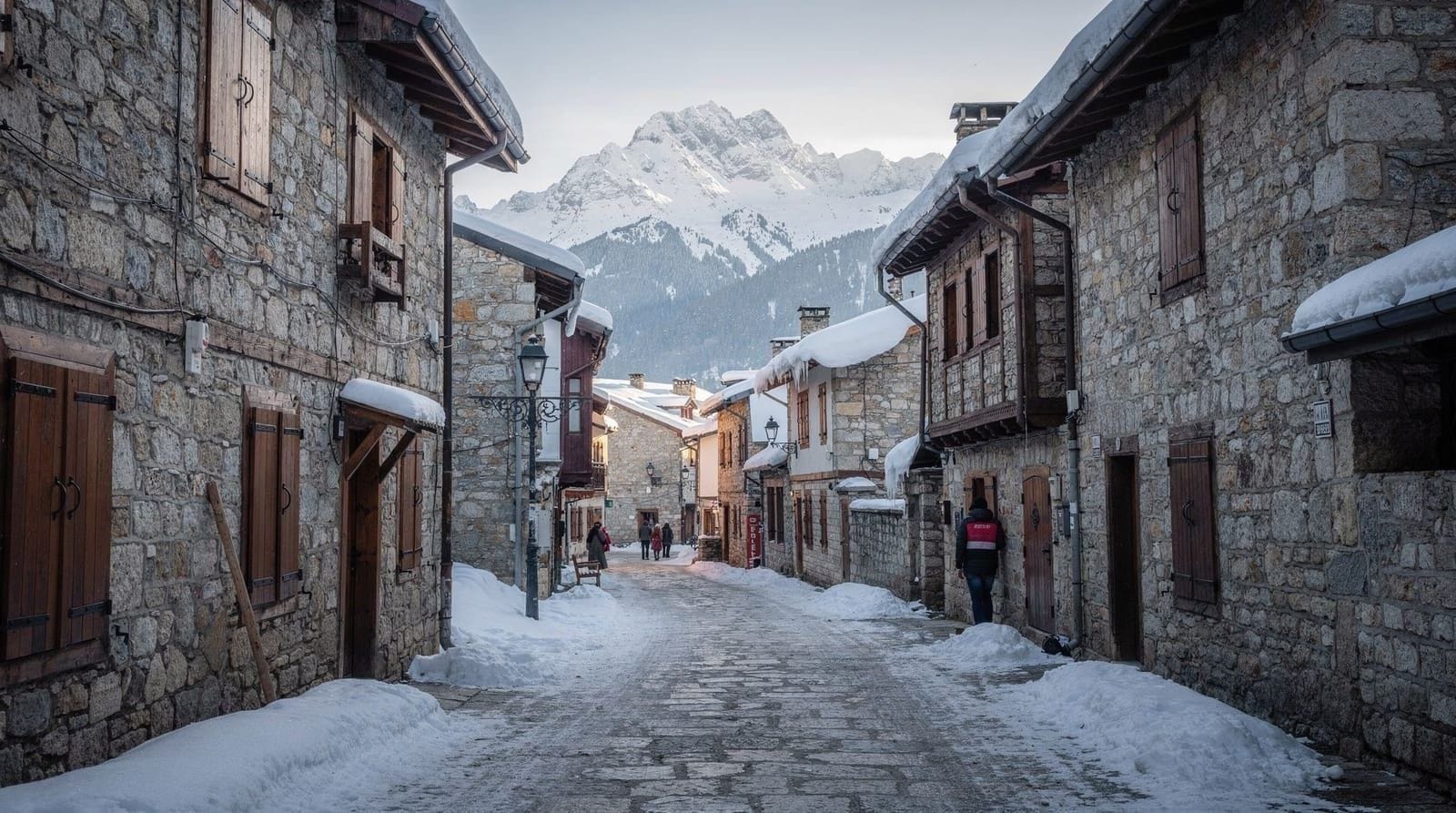
For the afternoon, consider riding the gondola back down to Bansko old town by 15:30–16:00 (rather than skiing to 16:30 when the last runs close). This gives you an hour in the town before the après-ski crowds hit the bars, and lets you walk through the old Varosh quarter in the late afternoon light, which is the best time to see it — the stone walls and wooden balconies of the old houses look particularly striking in winter.
If the weather closes in at altitude — cloud, wind, or ice — Bansko’s lower runs remain skiable but the upper gondola may close. Check the resort weather forecast the evening before and adapt plans accordingly.
En route: Sapareva Banya thermal spa
If you have time on the return to Sofia — either after Borovets on day two or as a stop on day three if returning via the A2 — Sapareva Banya lies on the road between Borovets and Sofia (approximately 20 km north of Borovets).
Sapareva Banya has the only geysir in Bulgaria: a natural hot-water spring at 103°C that shoots to around 15 metres. The geyser is a short walk from the road and visible for free. More usefully, the town has several thermal spa pools using the geothermal water, cooled to usable temperatures (around 36–42°C). A session in the public outdoor pools costs approximately €5–8; private spa centres charge €15–25 for pool access. After a full day of skiing, a forty-minute thermal soak is genuinely restorative.
See the Sapareva Banya destination guide for specific pool recommendations and opening hours.
Extending to a fourth day
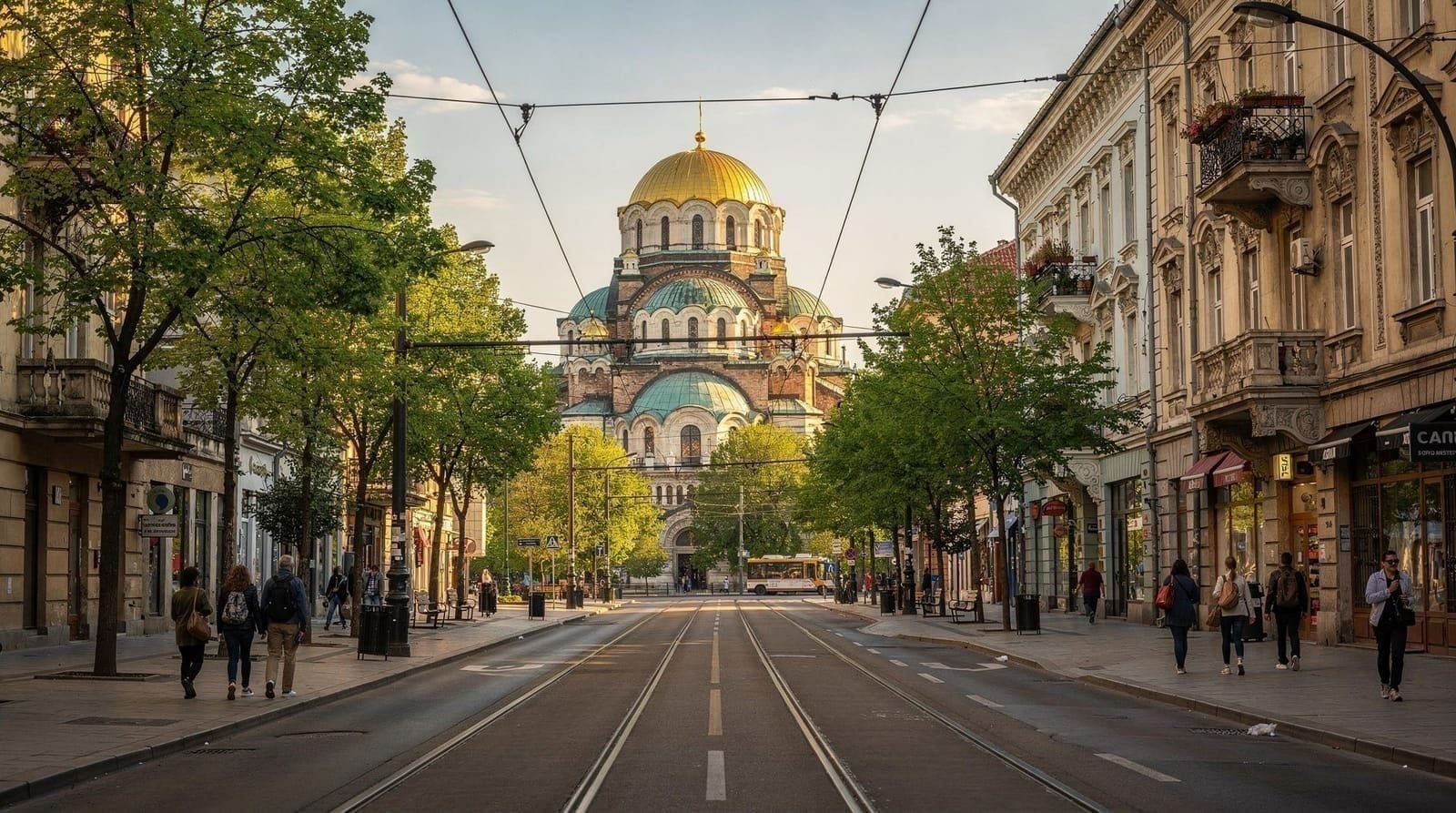
If Monday can be a full day rather than a travel day, the cleanest addition is a relaxed morning in whichever resort you finished at, followed by an afternoon drive back to Sofia with time to spare before an evening flight — rather than trying to fit skiing into a genuinely tight Monday-morning departure. Alternatively, a fourth day is enough to swap the Sapareva Banya stop for a proper half-day there instead of a quick pass-through, or to add a short Sofia sightseeing block (Alexander Nevsky, the Serdica ruins, Vitosha Boulevard) before an evening flight if you skipped the city on arrival. The Sofia in 2 days itinerary has the right pacing for that kind of bolt-on city day if skiing isn’t the only thing you want from the trip.
Packing for a Bulgarian ski weekend
Beyond standard ski kit, a few things are specific to this trip. Layering matters more than at a single high-altitude resort, since you’ll move between Sofia at city elevation, Borovets between 1,350–2,560 m, and Bansko’s old town at 925 m with slopes up to 2,560 m — pack a mid-layer you can add or shed rather than committing to one thickness of jacket. Bring a lock or small dry bag for valuables at slope-side lunch spots, since neither resort has the locker infrastructure of larger Alpine resorts.
If you’re driving between resorts, keep a phone charger and offline maps downloaded — signal on the Borovets–Sofia–Bansko road is generally fine but drops in the mountain sections near Rila. A swimsuit is worth packing even on a ski-only trip, since the Sapareva Banya thermal pools en route make a genuinely good use of a spare hour, and Bansko’s old town has a couple of small hotel spas as well.
If someone in your group doesn’t ski
A mixed group of skiers and non-skiers is common enough to plan for rather than treat as an edge case. Both resorts have sledging areas and marked winter walking trails that work for non-skiers, and Bansko’s old town is genuinely worth a slow morning on its own terms — the Varosh quarter’s stone-and-timber houses, the Sveta Troitsa church, and the Neofit Rilski Museum give a non-skier a full day without setting foot on the mountain. Borovets is thinner on non-ski activity beyond the Rila National Park trails immediately around the resort, so a non-skiing companion may find Bansko the more comfortable base of the two. The Sapareva Banya thermal pools work well as a shared activity that both skiers and non-skiers can enjoy together at the end of a day, rather than splitting the group further.
Choosing one resort instead of both
Splitting a short weekend across two resorts is the ambitious version of this itinerary, but it isn’t the only sensible one. If you’re travelling with children, are a first-time skier, or simply don’t want two long driving legs eating into ski time, spending both days at Borovets is a reasonable and less tiring alternative — you gain a full extra half-day of skiing that would otherwise go to driving, at the cost of never seeing Bansko’s more challenging terrain.
The reverse (two days at Bansko) suits confident intermediate-to-expert skiers who want maximum vertical and don’t need Borovets’ gentler learning slopes. Either single-resort version also opens up staying a fourth night without adding a second round of packing and unpacking, which the two-resort version doesn’t easily allow. See skiing from Sofia for a fuller comparison if you’re still deciding which single resort suits you best.
Practical notes for the ski weekend
Timing: Book this trip for mid-January through mid-February for the best combination of reliable snow and reasonable crowds. Christmas and New Year weeks (December 24 – January 6) are the most expensive and most crowded; February half-term (typically the third week of February) is the second peak. Early December and late March offer the lowest prices but less certain snow cover on lower runs. The best time to visit Sofia guide covers the winter months in the context of the full calendar year.
Equipment rental vs bringing your own: For a two-day ski weekend, renting at the resort is almost always more economical than checking ski equipment on a flight (extra bag fees) and transporting it by car. Both Borovets and Bansko have well-stocked rental shops with modern equipment. Bring your own boots if you have fitted ones; helmet rental is usually available but personal helmets are better.
Driving conditions: Bulgarian roads are generally well-maintained, but winter mountain roads can be icy in the early morning. Winter tyres are required in Bulgaria from November 1 to March 1 on designated roads. Rental agencies in Sofia typically fit winter tyres on their fleet during this period — confirm at pickup. Carry a small bag of grit or ensure the rental includes snow chains; you will not need them on a clear weekend but they matter if the weather changes.
Combining both resorts vs picking one: Doing both resorts in a weekend means two long driving days in addition to skiing. For physically confident skiers this is fine. For anyone who finds ski days tiring, or who is travelling with children who need earlier evenings, consider picking the resort that better matches your level and spending both ski days there. Borovets for beginners and families; Bansko for intermediates and experts. See skiing from Sofia for a broader overview of both resorts.
Ski school booking: Both resorts have ski schools with English-speaking instructors. Book lessons at least a week in advance in peak season — group lesson spots sell out. The resort ski school at Borovets has a good reputation for children’s instruction; Bansko has several competing schools and prices vary.
Budget breakdown for three days per person: Sofia accommodation (1 night): €30–50 sharing. Borovets/Bansko accommodation (1 night each): €45–70/night. Ski passes: €35–40 (Borovets) + €45–55 (Bansko). Equipment hire (2 days): €45–55. Meals: €15–25/day. Car hire split two ways (3 days including airport): €55–75/person. Fuel: €25–35 total. Total per person: approximately €340–520 for the three days.
Frequently asked questions about the Sofia ski weekend
Is it realistic to ski at both Borovets and Bansko in one weekend?
Yes, but it requires efficient logistics. The key is accepting that the travel between resorts (via Sofia, approximately 225 km) takes most of a Saturday evening. If you drive from Borovets to Bansko after skiing, arrive around 20:00–21:00, sleep, ski Bansko Sunday, and return to Sofia Sunday evening — it works. Two people sharing a car makes the driving less tiring. Solo travellers should consider whether both resorts are worth the additional driving.
Which resort is better for families with young children?
Borovets. The lower runs are gentler, the resort is more compact (less time spent on gondolas and transfers), the ski school has a strong reputation for young learners, and the atmosphere is quieter than Bansko. The drive from Sofia is also shorter, which matters if children are in the car. Bansko’s gondola queue on peak mornings is particularly ill-suited to small children.
Can I reach Borovets without a car?
Yes. Buses run from Sofia’s Ovcha Kupel bus terminal to Samokov, with a connection or taxi to the resort. Journey time is approximately two hours total. Shared shuttle services from Sofia to Borovets also operate in ski season; GetYourGuideSofia: Small-Group Sofia Airport to Borovets TransferCheck availability → connects the airport directly. For a standalone Borovets day, this is workable; for a two-resort weekend, the car is more practical.
Can I reach Bansko without a car?
Several daily buses run from Sofia’s Ovcha Kupel terminal to Bansko (2.5–3 hours, approximately €8–10). The GetYourGuideSofia: Bansko Shuttle Transfer from/to Sofia AirportCheck availability → from Sofia is the most comfortable option for those without a car. Shuttle services also run from Sofia Airport. Bansko itself is compact and navigable on foot between the old town and gondola base.
What ski level do I need for Bansko?
Intermediate or above is ideal. Bansko has blue runs suitable for confident beginners (those who can ski parallel and link turns), but if you are still in the snowplough phase, Borovets’ ski school terrain is more suitable. The gondola itself takes you to 1,600 m directly, which means the resort’s lowest accessible runs are already intermediate terrain.
What happens if there is no snow?
Both resorts have artificial snowmaking on their main runs, which significantly extends the season and covers lean natural snow years on the lower slopes. Borovets has snowmaking on approximately 17 km of runs; Bansko on a similar proportion of the lower area. The upper runs (above 2,000 m) rely on natural snow. In a genuinely poor snow year, lower runs become hard and icy by mid-afternoon; checking the resort snow reports for the week before travel is worth doing.
Is there anything non-skiing to do at either resort?
Yes. Borovets is within the Rila National Park and has snowshoeing and cross-country ski trails in the forest zone. Bansko’s old town is genuinely interesting to walk — the Varosh quarter, the Sveta Troitsa church, the Neofit Rilski Museum (birthplace of the creator of the modern Bulgarian alphabet) — and the mehana culture is well-developed. Both resorts have sledging areas suitable for non-skiers travelling with children. Sapareva Banya’s thermal pools (between Sofia and Borovets) work well as a non-skiing activity for a mixed group. For the broader Sofia in winter picture, that guide covers what the city itself offers during the cold months.
Is Bulgarian ski culture different from Alpine resorts?
Noticeably. Bansko has an international nightlife scene (particularly popular with British skiers), but neither resort has the same density of high-end après-ski infrastructure as Verbier or Courchevel. Lift queues are generally shorter than in the Alps on non-peak days. Prices are substantially lower. The on-mountain food is simpler. Ski patrol is present but medical facilities at the resort level are more limited than in Western Alpine resorts — travel insurance that covers mountain rescue and helicopter evacuation is important. For more context on what Bulgaria has to offer in non-ski months, the Bulgaria highlights 7-day itinerary covers the same destinations in summer form.
Top experiences
Bookable activities with verified prices and instant confirmation on GetYourGuide.