Banitsa and street food in Sofia: the complete guide
Sofia: Banitsa Pastry Class with a Local with Bulgarian Wine
What is the best street food in Sofia?
Banitsa (filo pastry with white cheese) is the essential Sofia street food — €1-2, best eaten hot from the oven between 7-10am. Women's Market has the best informal food stalls for lunch. Bitaka flea market on Saturdays has a cluster of cheap food vendors worth combining with market browsing.
The best breakfast in Sofia costs less than €2 and is eaten standing up outside a bakery. The best lunch is consumed at a market stall counter, served by someone who has been at their post since 6am. This is not poverty tourism or a budget traveller’s compromise; it is simply how a large part of Sofia eats, and the food is excellent.
Street food and market eating in Sofia exist in a different register from restaurant culture. There is no theatre, no Instagram backdrop, no menu with a font chosen by a designer. What there is, is food made fresh at high volume by people who have been making it for years, priced for the people who eat it every day. That means you pay honestly and eat honestly.
| Where | Central Market Hall (halite), Women’s Market, Bitaka |
| Cost | Banitsa around €1–2; a market lunch under €6 |
| Time needed | 2–3 hours for a proper market morning |
| Getting there | Serdika metro (5 min to halite); tram lines 3/7 for the Women’s Market |
| Best time | 7–10am for banitsa; Saturday 7am–2pm for Bitaka |
Banitsa: everything you need to know
Banitsa is the axis around which Bulgarian street food revolves. To understand it properly is to understand something fundamental about how the country eats.
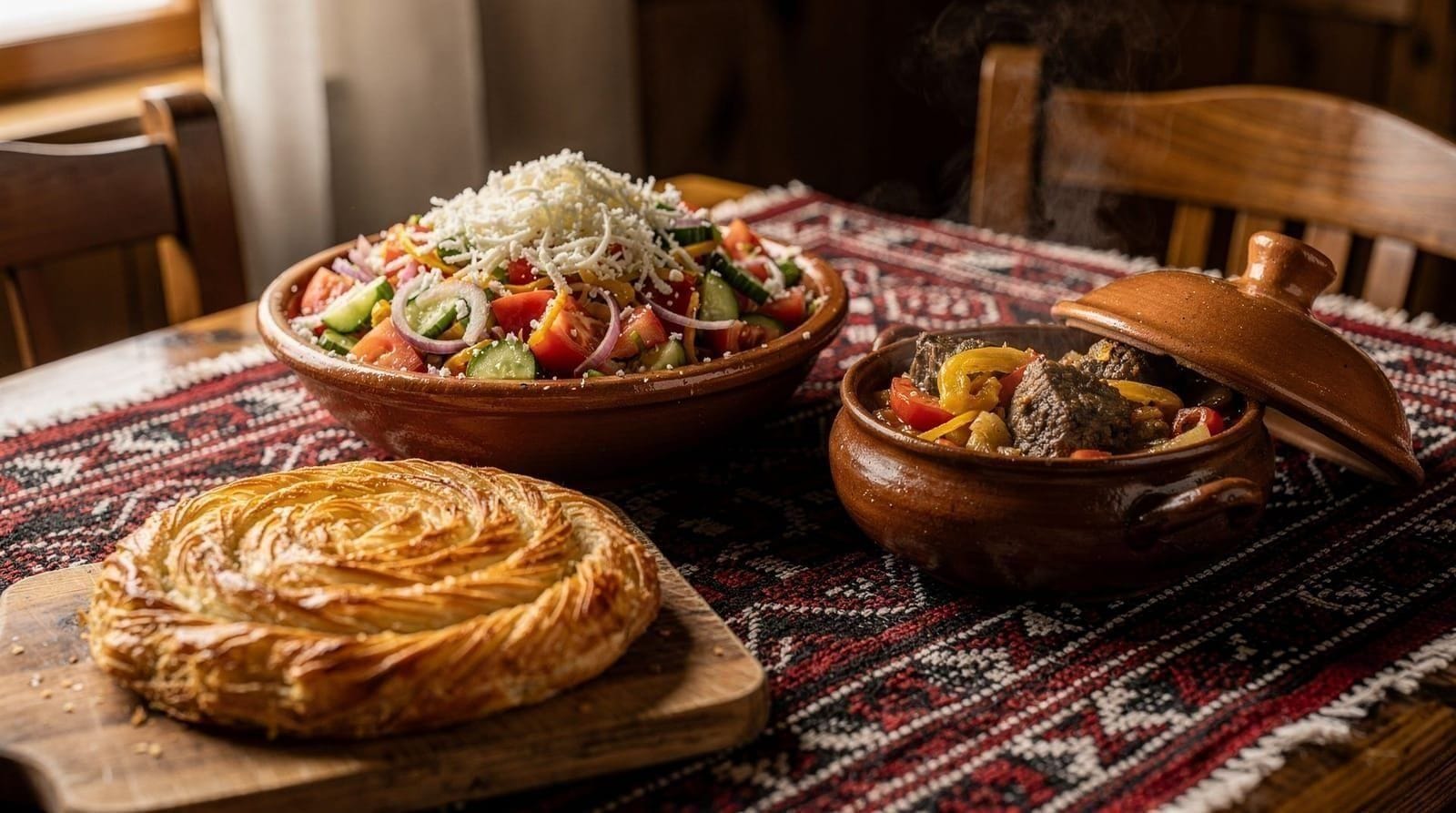
The structure is simple: sheets of filo pastry layered with a filling, folded or rolled into shape, brushed with fat (butter or sunflower oil), and baked until the exterior is golden and shatteringly crisp while the interior remains hot and unctuous. The standard filling is sirene (white brined cheese) mixed with eggs and a small amount of kiselo mlyako (yogurt). The result is simultaneously light and rich — the filo shatters at first bite and releases a filling that is creamy, tangy, and slightly salty.
Why it has to be fresh
Banitsa is a pastry with a sharply defined quality window. Fresh from the oven — and by fresh we mean within the first fifteen minutes — the filo is crisp, the filling is molten, and the whole thing delivers on every promise. An hour later it has softened. Three hours later it is acceptable. Six hours later it is a different and much inferior product.
This means that the time you visit a bakery matters as much as the bakery itself. The production cycle in most Sofia bakeries starts at 5-6am. Fresh banitsa begins coming out of the ovens at roughly 7am and continues in batches through mid-morning. The quality peak is 7-10am. If you arrive at a bakery at noon asking for banitsa, you will get banitsa, but not the thing being discussed here.
The indicator: a queue. Any bakery with a line of people before 9am is cycling through fresh product fast enough to matter. An empty bakery at 8am is not a sign that you are ahead of the crowd; it is a sign that something is off.
Banitsa variations
Sirene (cheese): the standard and the reference point. Try this first.
Spanak i sirene (spinach and cheese): the spinach is blanched and squeezed dry before being mixed with the cheese, adding an earthier note and a slightly darker filling. Popular across all ages.
Mesna (meat): minced pork with onion. Heavier, less delicate than the cheese versions. A proper option but not the reason to seek out banitsa.
Tikva (sweet pumpkin): a seasonal preparation, most common in October through January, using roasted pumpkin sweetened with sugar and flavoured with cinnamon. A different experience from the savoury versions — more like a pastry than a snack. Worth trying if you visit in autumn or winter.
The New Year’s fortune banitsa
On the night of December 31st, every household in Bulgaria makes or buys a banitsa with something hidden inside: traditionally a coin, sometimes a slip of paper with a written fortune, sometimes a small plastic charm. The whole banitsa is cut into portions — one per person — and whoever finds the coin is supposed to have luck in the coming year.
Bakeries across Sofia sell fortune banitsa from around December 27th onwards, and the tradition is taken with varying degrees of literal belief and collective good humour. If you are in Sofia for New Year, the fortune banitsa experience is one of the most specifically Bulgarian things you can participate in.
Where to get the best banitsa in Sofia
Central Market Hall (halite): the bakery section inside halite — the covered Victorian market building on Maria Luiza Boulevard — does consistently good banitsa through the morning. The advantage here is that you can pair it with fresh cheese from the dairy vendors and yogurt from the stalls, eating in a context that makes the whole thing more coherent.
Women’s Market stalls: the food counter area on the western side of Zhenski Pazar includes multiple bakery options selling hot banitsa through breakfast and into the morning. The prices here are among the lowest in the city (€1-1.50) because the customer base is market workers and local residents rather than visitors.
Neighbourhood bakeries: the most reliable approach is simply to walk in any residential direction from your accommodation and follow your nose before 9am. Bakeries are dense in Sofia. The smell of hot filo and butter travels. Any bakery with an active oven and a cluster of people is doing the job.
Tourist trap warning: the “artisan banitsa” sold near the Alexander Nevsky Cathedral and in the pedestrianised old town zone is often €3-4 for a pastry that is no different from the €1.20 version at the Women’s Market. The markup is entirely location-based.
Mekitsi: the other Bulgarian breakfast
Banitsa gets most of the attention, but mekitsi deserve theirs. These are fried dough pieces — sometimes described as Bulgarian doughnuts, though the texture is closer to a light, slightly chewy fried bread. They are made from a yeasted dough that is stretched and torn rather than cut, so each piece has an irregular shape and an uneven crust.
Mekitsi are served hot from the oil with powdered sugar (the most common version), jam, honey, or sometimes sirene cheese. They are thicker and more filling than banitsa and less ubiquitous in the city centre — they appear more commonly at village mehanas, market stalls, and traditional breakfasts than at urban bakeries. The Women’s Market stalls are the most reliable city source.
In Bulgarian villages, mekitsi and banitsa together constitute the traditional Sunday breakfast. If you want to understand what Bulgarian domestic food tastes like, this combination with yogurt and coffee is as close as street food gets.
Women’s Market (Zhenski Pazar): the full picture
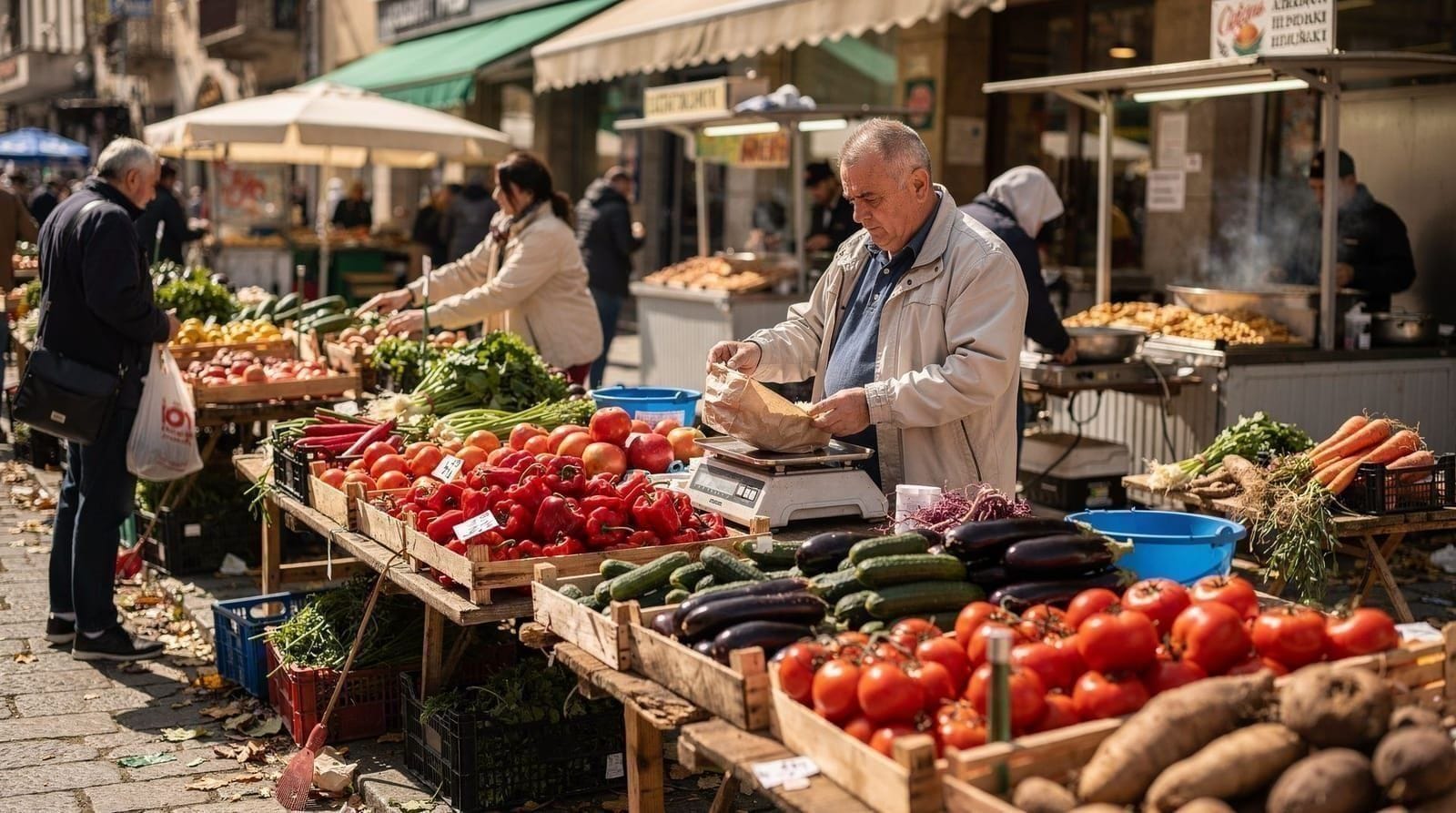
GetYourGuideSofia: Flea and Food Markets TourCheck availability →Zhenski Pazar — the Women’s Market — is the largest open-air market in Sofia and one of the most useful places for understanding how the city feeds itself. It runs daily along Stamboliyski Boulevard and the surrounding streets, starting from around 6am and running to 6pm (smaller on Sundays; fuller Tuesday through Saturday).
What you find here
Produce: seasonal vegetables and fruit at prices below any supermarket. In summer: tomatoes, peppers, aubergines, cucumbers, fresh herbs. In autumn: apples, pears, pumpkins, root vegetables. The quality range is wide — buy from stalls that look like they have high turnover, where the produce has clearly arrived that morning.
Dairy and cheese: vendors selling yogurt in large tubs, ayran, various cheeses including sirene in blocks, kashkaval (yellow cheese, Bulgarian version of a mild yellow cow’s milk cheese), and cottage cheese. This is where the quality difference between mass-market Bulgarian dairy and the real thing becomes obvious. Buy a small tub of kiselo mlyako here and compare it to supermarket yogurt.
Dried spices and herbs: chubritsa (summer savory — the Bulgarian herb), dried red peppers, cumin, dried mint, dried chamomile, rose hip, paprika in bulk. The spice stalls are worth browsing even without buying.
Pickles: Bulgarians pickle extensively. Large plastic buckets of turshiya — mixed pickled vegetables including cabbage, carrots, peppers, cauliflower, and hot peppers — line the pickle vendors. These are for eating alongside main meals, not as snacks.
Food stalls and eating
The food stall area is on the market’s western end, towards the Vitosha Boulevard side. Here you find: banitsa and mekitsi from the morning bakery counter, bob chorba (white bean soup, thick, served with bread, €2-3), kavarma portions served from a steam tray, kebapche from a small grill, and sometimes a mish-mash counter.
The eating context is standing or sitting on a low stool at a counter. There is no menu with English translation. Pointing works. Google Translate works. The person at the stall has seen non-Bulgarian speakers before and will accommodate. Bring cash; card readers are rare.
A full market breakfast — banitsa, coffee, maybe a small cup of yogurt from a dairy stall — costs under €4. A market lunch of soup and a grilled item costs under €6. This is not a compromise; it is genuinely good food at a price that reflects local economic reality rather than tourist margin.
Getting there
Women’s Market is at Stamboliyski Boulevard, between Banski Square and the Lion’s Bridge area. The nearest metro is Serdika (five minutes’ walk) or Women’s Market tram stop on lines 3 and 7. It is ten minutes on foot from the Central Market Hall.
Bitaka flea market: Saturday mornings
GetYourGuideSofia: Flea and Food Markets TourCheck availability →Bitaka is Sofia’s main flea market, held on Saturday mornings (roughly 7am to 2pm) near the Yuzhen Park area. The name comes from the Bulgarian word for a junk shop or second-hand dealer. The market sells: books, vinyl records, vintage clothes, tools, Soviet-era military surplus, amateur antiques, local crafts, and a spread of miscellaneous objects that range from genuine finds to optimistically priced junk.
The food dimension at Bitaka is smaller than at the Women’s Market but more social in character. There are several food vendors positioned along the market perimeter: banitsa, hot drinks, grilled kebapche, and sometimes homemade preserves and pickles from people selling directly from their car boots. The eating here is less about food discovery and more about the rhythm of a market morning — browsing, snacking, standing in the sun with a coffee.
Bitaka is most enjoyable if you give it two to three hours rather than thirty minutes. Arrive at 8am, when it is still cool and the best stall positions are occupied, eat breakfast at the market, and browse until things start winding down after noon. The combination of flea market and food makes it one of the better weekend morning activities in Sofia — the Bitaka flea market breakfast tour takes in both this and the Women’s Market in a single guided morning.
Other street food worth knowing
Kebapche from kiosks
The grilled minced meat roll appears not just in restaurants but from roadside kiosks that serve kebapche in bread as a sandwich, with lyutenitsa (roasted pepper spread) and sometimes onion. The quality varies by kiosk. The indicators of a good one: the grill is actively in use (not just warming pre-cooked product), there is turnover (empty grills at lunchtime are a problem), and the bread is from a local bakery rather than a plastic-wrapped industrial loaf.
A kebapche sandwich costs €2-3. It is a legitimate lunch when you are moving between sights and do not want to stop for a full restaurant meal.
Lyutenitsa
Lyutenitsa is a roasted pepper and tomato relish — somewhere between a thick spread and a condiment — used in Bulgarian cooking the way Western Europeans use ketchup or chutney. It appears as a condiment alongside grilled meats, spread on bread as a snack, and used in sandwiches from market stalls. It is smoky, slightly sweet, occasionally with a trace of heat depending on the version.
Buy it in jars from the Women’s Market or Central Market Hall to take home. The homemade versions sold at markets are noticeably better than the commercial brands, and the price difference is minimal.
Fresh juice stalls
From spring through autumn, fresh-squeezed juice stalls appear around Sofia’s busier pedestrian areas. The standard is orange juice (€1.50-2) but apple and seasonal fruit juices are available. Most juice stalls near the Serdika metro area and around Vitosha Boulevard are straightforward and honest; the prices are fixed and consistent.
Chestnuts and corn
In autumn and winter, chestnut vendors with charcoal-fired drums appear around the busiest pedestrian zones — Vitosha Boulevard, Serdika, the area near Alexander Nevsky. A bag of hot chestnuts costs €1.50-2. They are not sophisticated food, but walking through a November Sofia with a bag of hot chestnuts is an experience worth having on its own terms.
Corn on the cob (царевица, tsarevitsa) appears from summer stalls from June through September, boiled or grilled, with butter and salt. A cob costs €1-2.
Tourist traps and how to avoid them
The tourist food zone in Sofia — the streets immediately around Alexander Nevsky Cathedral, the Vitosha Boulevard restaurant terraces, and some of the old town alleys near the Rotunda — operates on a different pricing logic from the rest of the city. “Street food” near these areas often means €4-6 for a banitsa that costs €1.20 three streets away. The product is identical; the location premium is the entire difference.
The rule of thumb: if the food vendor has a banner in English saying “TRADITIONAL BULGARIAN STREET FOOD” with stock photos, you are in the tourist price zone. Walk towards a residential neighbourhood, a market, or any street where the people eating there are clearly not tourists, and the prices will normalise immediately.
Central Market Hall (halite): the indoor option
For visitors who want the market experience without the open-air chaos of Zhenski Pazar, the Central Market Hall — halite — on Maria Luiza Boulevard is the more photogenic and more accessible option. The building itself dates from 1909 and was designed in a Belle Époque style that makes it look more like a Parisian covered market than the functional Soviet-era produce hall you might expect in Sofia.
Inside: fresh produce at the back, cheese and dairy vendors along the sides, meat counters, a row of vendors selling packaged Bulgarian products (honey, rakia, dried herbs, jams), and a bakery section near the main entrance that produces hot banitsa from 7am onwards.
The halite is more expensive than the Women’s Market by perhaps 15-20% across equivalent goods. It is also more compact, more covered, and easier to navigate without speaking Bulgarian. The cheese vendors here will let you taste before buying; this is the best place in the city to understand the range of Bulgarian sirene by comparison rather than by description.
Go between 8am and 10am. The bakery banitsa sells out by 11am. The dairy vendors are busiest before noon. After 2pm the market thins significantly and the best produce is gone.
Halite is at the corner of Maria Luiza Boulevard and Ekzarh Yosif Street, adjacent to Banya Bashi mosque. It is five minutes on foot from Serdika metro, and ten minutes from Alexander Nevsky.
The lyutenitsa tradition
Lyutenitsa (sometimes spelled lutenitsa) appears throughout Bulgarian street food and market eating as the default condiment and spread — a thick paste of roasted red peppers and tomatoes, cooked down with garlic and oil until sweet, concentrated, and slightly smoky. It has a faint heat (lutenitsa comes from lyut, meaning spicy) but is more complex than hot.
In Bulgarian households, making lyutenitsa is an autumn ritual. When red peppers are at their cheapest and best in September and October, families roast them by the kilo over open fires, peel and blend them with tomatoes, and cook the mixture in large pots that cover the whole stove. Jars are put up for the winter. The smell of roasting peppers in Bulgarian villages in early autumn is specific and unmistakeable.
In the city, lyutenitsa appears at market stalls in both homemade and commercial forms. The homemade versions from village producers at the Women’s Market — sold in unlabelled jars or weighed from open containers — are substantially better than the commercial brands in supermarkets. They are also better value. A jar costs €2-4 and keeps for weeks once opened if refrigerated.
Street food uses lyutenitsa as a spread on kebapche sandwiches, on bread alongside cheese, and as a dip for roasted vegetables. Understanding it as a condiment — not a sauce, not a salsa, but a spread with its own character — helps you order around it and use it correctly when it arrives on the table.
Pairing street food with coffee and a wider budget
A banitsa on its own is half a breakfast. Bulgarians pair it with ayran, yogurt or a strong coffee, and the Sofia coffee culture guide explains where to find a good cup to follow the pastry. If you are watching your spending, the Sofia on a budget guide shows how a few market meals change the arithmetic of a whole trip, and the Sofia street food guide on the blog gives a second, more personal take on the same stalls.
Which market to choose
Sofia has three main markets worth a food-focused visit, and they each serve a different purpose:
| Market | Best for | When | Vibe |
|---|---|---|---|
| Central Market Hall (halite) | Compact, indoor, photogenic | Daily, 8am–10am best | Belle Époque covered hall |
| Women’s Market (Zhenski Pazar) | Cheapest prices, full produce range | Daily 6am–6pm, smaller Sundays | Working local market |
| Bitaka | Flea-market browsing plus food | Saturdays 7am–2pm | Social, second-hand goods |
If you have only one morning, pair halite (banitsa, dairy tasting) with the Women’s Market (lunch, produce) — they are ten minutes apart on foot. Save Bitaka for a Saturday if your trip allows it.
Autumn and winter street food
The street food calendar in Sofia changes significantly between seasons, and the cooler months have their own specific pleasures that summer visits miss.
From October, chestnut vendors with charcoal-fired drums appear at the busiest pedestrian locations — Vitosha Boulevard, near the Serdika metro, around NDK. A bag of hot chestnuts (€1.50-2) is the most pleasurable cold-weather street food in the city. The smell carries across the street; follow it.
Corn on the cob (tsarevitsa) is a summer street food from June through September, sold boiled or grilled from small carts, with butter and salt. Price: €1-2. In autumn it disappears completely.
Winter brings the fortune banitsa season from late December through early January, as described above. It also brings a heavier lean into hot liquids at market stalls — bean soup (bob chorba) in cups from market counters, hot drinks from kiosks, and an increase in the rakia-with-soup combinations that constitute the Bulgarian cold-weather working lunch.
Combining markets with sightseeing
A market morning leaves the rest of the day free, so it helps to know what else fits around it. Travellers planning a short stay will find the Sofia in 2 days itinerary a useful frame for slotting in a banitsa breakfast, and the Sofia travel guide gives the wider picture of the city before you start choosing stalls. Visitors on a tight budget can also read Sofia on 50 euros a day to see how market eating fits into a daily spend.
The geography of Sofia’s main markets overlaps usefully with the city’s sightseeing. The Central Market Hall (halite) is five minutes from Banya Bashi mosque and a ten-minute walk from the Serdika Roman ruins at the metro station. A morning that starts at halite for banitsa and coffee, moves to Banya Bashi and the Synagogue, and ends at the Women’s Market for a noon food stall lunch is coherent, interesting, and costs under €10 for both food stops.
The Sofia old town walk passes close to the Central Market Hall on its route; the Sofia museums guide has the National History Museum in a different direction but the Archaeological Museum near the Largo is walkable from halite in five minutes.
For a visit that focuses specifically on the market food experience, the guided flea and food markets tour takes in both the Women’s Market and Bitaka in a single morning with context from a local guide — useful if you want to understand what you are looking at beyond the obvious produce.
Connecting street food to the wider city
Street food and market eating make most sense in the morning. The productive Sofia street-food window is roughly 7am-12pm: banitsa hot from bakeries, mekitsi from market stalls, fresh produce at its best, food counter lunches served from stalls in full swing.
This means the ideal sequence for a food-focused morning combines market visiting with sightseeing. The Central Market Hall (halite) is five minutes from Banya Bashi mosque and ten from the Serdika Roman ruins. The Women’s Market is near the Lion’s Bridge, itself worth walking to. A morning that starts at halite for banitsa and ends at the Women’s Market for a market lunch and a browse of the produce stalls is a coherent and excellent few hours.
The Sofia in 3 days itinerary includes a market morning as a dedicated half-day. The day trips from Sofia guide has context on reaching village markets and mehanas outside the city where the banitsa tradition is even more embedded in daily life. For the full restaurant picture alongside street food, the Sofia food guide covers mid-range and upscale dining as well.
And for the broader Bulgarian dishes that street food introduces in abbreviated form — the full shopska salad, proper kavarma, rakia culture — the Bulgarian dishes to try guide goes into detail on each one.
Frequently asked questions about Banitsa and street food in Sofia
Where can I get banitsa in Sofia?
Bakeries throughout the city, but the best are inside the Central Market Hall (halite) and near the Women's Market. Look for places with a queue before 10am — that is the freshness indicator that matters. Any bakery doing active trade before breakfast is a good bet.What is the Women's Market in Sofia?
Zhenski Pazar (Women's Market) is the largest open-air market in Sofia, running along Stamboliyski Boulevard. Daily from roughly 6am to 6pm (smaller on Sundays). Produce, spices, dairy, pickles, herbs, and food stalls serving cheap local food. It is where Sofia actually shops.What is Bitaka flea market?
Bitaka is a Saturday flea market in Sofia — second-hand books, vinyl, clothes, tools, antiques, and food stalls. It is smaller than the Women's Market and more social in character. Go for the atmosphere as much as the food; the vendors and browsing crowd make it the most interesting market morning in Sofia.What is mekitsi?
Mekitsi are fried dough balls, traditionally eaten for breakfast, served with powdered sugar, jam, or sirene cheese. They are the other classic Bulgarian breakfast food alongside banitsa — less prevalent in the city centre than in villages and market stalls, but worth hunting down.Is the fortune banitsa tradition real?
Very much so. On New Year's Eve and the morning of January 1st, Bulgarians make or buy a special banitsa with a coin (or small written fortune strips) baked inside. Whoever gets the coin is supposed to have good luck in the coming year. Every bakery in Sofia sells fortune banitsa in late December.Which Sofia market should I visit if I only have time for one?
Zhenski Pazar (Women's Market) if you want the full working market — produce, dairy, spices, and food stalls, open daily. Bitaka if you are in Sofia on a Saturday and want a more social, browsing-focused morning combining flea-market finds with food. If your trip includes a Saturday, doing both back to back works well since Bitaka is a short tram ride from the centre.Can I eat street food in Sofia if I have dietary restrictions?
Vegetarians eat well: cheese banitsa, mekitsi, and bob chorba (bean soup) are all meat-free. Vegan options are harder since banitsa and mekitsi use eggs and dairy, but market stalls sell fresh produce you can combine yourself. Gluten-free options are limited at bakeries but the Women's Market's produce and dairy stalls work well for a gluten-free lunch.
Top experiences
Bookable activities with verified prices and instant confirmation on GetYourGuide.