Rila Monastery: the complete visitor's guide
From Sofia: Full Day Trip to Rila Monastery
Is Rila Monastery worth visiting from Sofia?
Yes, without reservation — it is the single most important cultural site in Bulgaria. The 120 km journey takes 2–2.5 hours, the monastery complex entry is free, and the frescoed Nativity Church is genuinely spectacular. Go early (before 10am) to avoid tour groups. Most people do it as a day trip; overnight is quieter.
Rila Monastery is not the biggest or the oldest religious site in Bulgaria, but it is the most significant — culturally, historically, and as a place of pilgrimage that has continued without interruption for over a thousand years. The statistics (120 km from Sofia, UNESCO since 1983, 1,200 sq m of frescoes) only begin to suggest why it matters. What they cannot convey is the experience of walking into that courtyard for the first time: the scale, the color, the improbable preservation.
This guide covers everything you need to visit well, from the history that explains what you are seeing to the practical details that will make the day comfortable.
| Where | Rila River valley, 120km south of Sofia |
| Cost | Free complex; museum €1–2; tower €2–3; tours €25–50 |
| Time needed | 2–3 hours; add 1.5–2 hours for the cave hike |
| Getting there | Organised tour, self-drive (2–2.5h), or public bus (limited) |
| Best time | May, June, September, October; arrive by 8am |
The history of Rila Monastery
St Ivan of Rila and the founding
The monastery’s story begins with a hermit. Ivan of Rila was born around 876 CE in a village near what is now Sofia. He retreated to the Rila Mountains in his twenties to live as an ascetic, initially in a cave and later in a hollow tree. His reputation for holiness spread despite his deliberate withdrawal from society, and disciples began gathering around him, eventually building a small monastic community.
Ivan died in 946 CE. He was canonized, and his relics became objects of veneration — a pattern that would drive the monastery’s expansion over the following centuries. The Bulgarian Tsar Peter I ordered the original monastery buildings to be constructed around the cave site, establishing the institution that would survive a thousand years of turbulent history.
Fire, rebuilding, and the Ottoman period
The monastery’s physical history is one of repeated destruction and rebuilding. Fire destroyed the complex multiple times; Mongol raids in the 13th century caused significant damage; political upheavals after the fall of the Second Bulgarian Kingdom in 1396 threatened the institution’s existence.
Under Ottoman rule (1396–1878), the monastery occupied a peculiar position. The Ottoman administration generally tolerated Orthodox monasteries as long as they did not engage in overt political activity, and Rila — sufficiently remote and already a major pilgrimage site — was largely left alone. Monks continued to copy manuscripts, teach, and maintain the traditions of Bulgarian literacy and Orthodox practice through a period when Bulgarian cultural institutions elsewhere were systematically suppressed.
This role — as a guardian of Bulgarian language, literature, and identity during the Ottoman centuries — is why Rila is the single most nationally significant religious site in Bulgaria. It is not merely a monastery; it is the place where Bulgarian civilization was kept alive when there was no Bulgarian state.
The great rebuilding: 1833–1847
The monastery that visitors see today is the product of a catastrophic fire in 1833 and the subsequent rebuilding between 1833 and 1847. The current church — the Church of the Nativity of the Virgin — was completed in 1837. The surrounding monks’ cells and galleries were rebuilt progressively through the 1840s with donations from Bulgarian communities across the Balkans, including the Ottoman-controlled territories.
The reconstruction coincided exactly with the height of the Bulgarian National Revival movement — the cultural and political awakening that would culminate in Liberation in 1878. The architects and craftsmen who rebuilt Rila were the same people building Revival-period houses in Koprivshtitsa and decorating churches across Bulgaria. The frescoes are by masters of the Bansko and Samokov icon-painting schools. The result is the most ambitious expression of Revival-period monastic art in the country.
UNESCO recognized the site in 1983. It remains an active Orthodox monastery with approximately ten monks in residence.
What to see at Rila Monastery
The courtyard
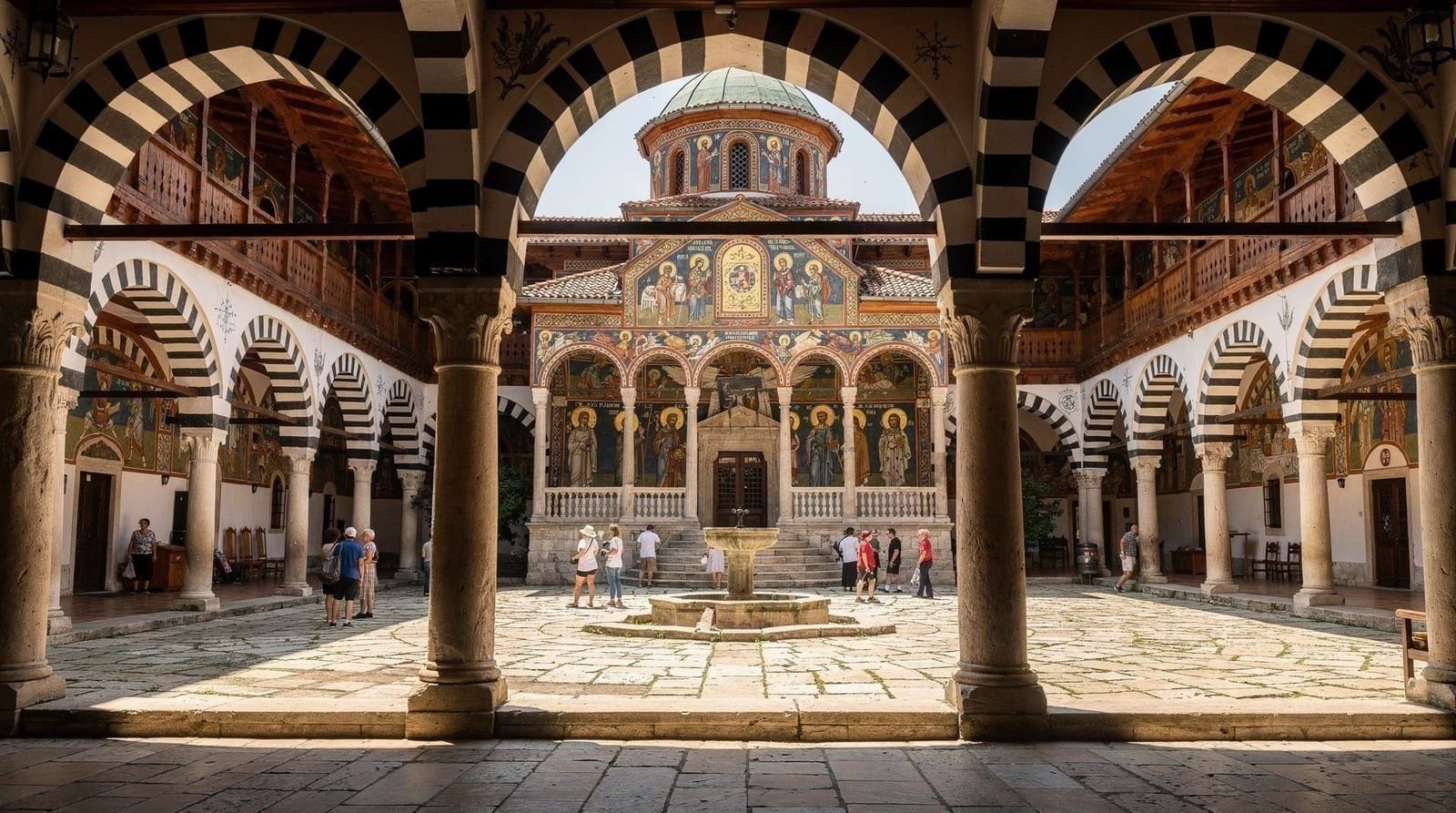
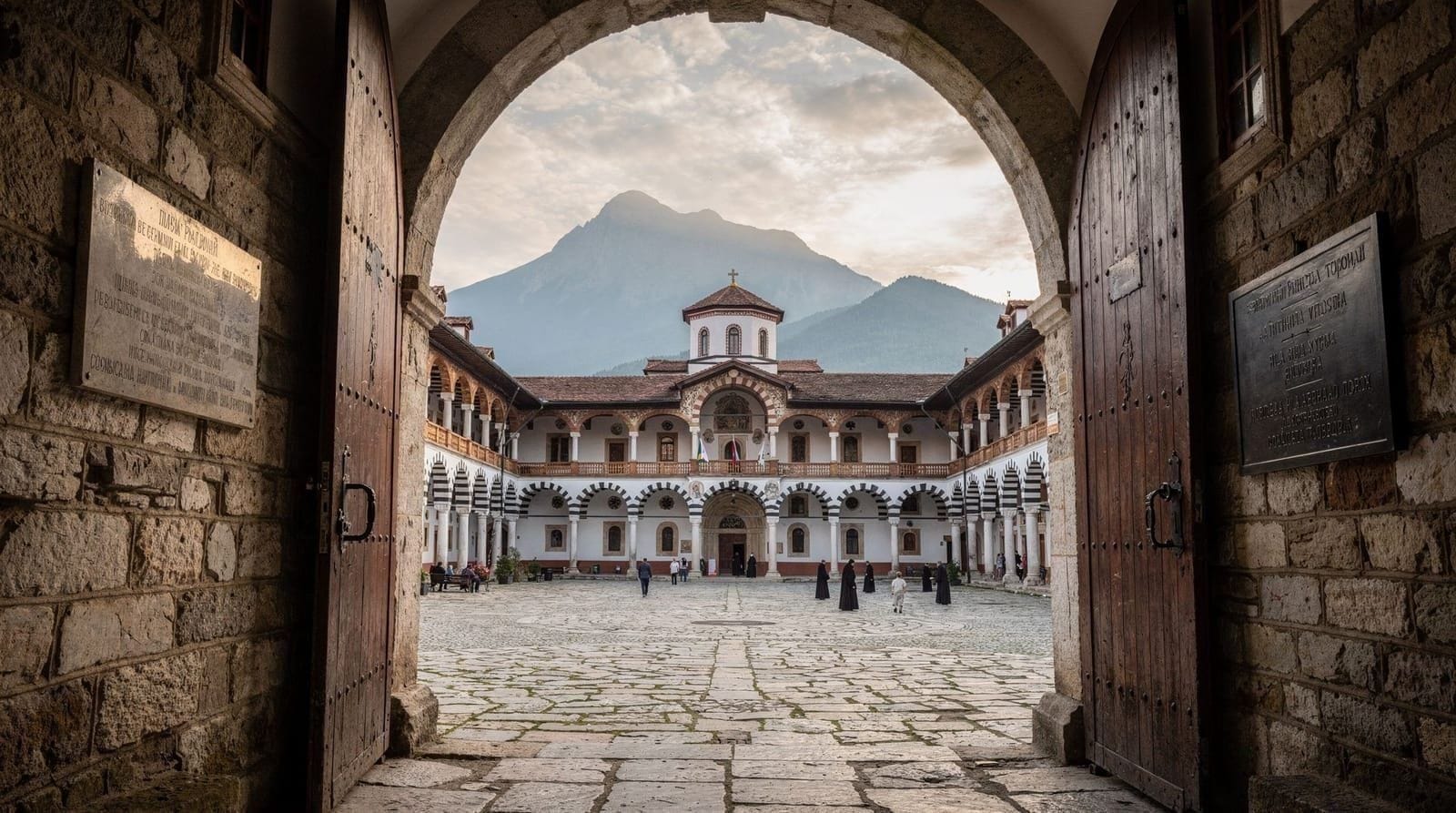
The monastery is built around a large central courtyard enclosed by four wings of monks’ cells, each with an open arcade of arches on multiple floors. The visual effect on arrival — particularly if you enter through the Dupnishka Gate, the main western entrance — is of an interior world completely enclosed from the outside. The courtyard is paved in large stones; in the center stands the Hrelyo Tower and the domed church.
The painted arches of the arcade are among the first things that strike visitors: black-and-white striped arches in the Tuscan Romanesque tradition, interleaved with the painted Byzantine fresco tradition. The exterior walls of the monks’ cells above the arcade are frescoed with scenes from the Bible and the lives of saints — not as interior decoration but as exterior public art, visible to pilgrims who never entered any building.
Walk the entire courtyard perimeter before entering the church. At different times of day, the light through the arcade creates a constantly changing pattern of shadow and color that the photographs in travel articles almost never capture adequately.
The Church of the Nativity
The main church is the visual centerpiece and the reason most people make the journey. Three porticos precede the nave, all covered from floor to ceiling with frescoes in a palette of ochre, terracotta, cobalt, and gold. The iconostasis — the carved wooden screen separating the nave from the sanctuary — is a masterwork of the Revival woodcarving tradition, with gilded ornament over walnut and birch.
The frescoes in the three porticos are the most accessible because they are in full daylight. The nave interior is darker and more complex: over 1,200 square meters of painted surface, organized according to Orthodox theological iconography, with scenes from the Old and New Testament, images of heaven and hell, and portraits of saints.
Photography inside the church is not permitted. The prohibition is enforced; respect it. The best strategy is to stand in each portico and look carefully rather than trying to process everything quickly — the density of imagery rewards slow attention.
The Hrelyo Tower
The Hrelyo Tower is the only surviving structure from the medieval monastery, built in 1334–1335 by the nobleman Hrelyo Dragovola during a period of restoration under the Second Bulgarian Empire. It is a defensive tower with a chapel on the upper floor. Entry costs €2–3 and the climb to the top provides the best elevated view of the courtyard complex.
The 14th-century frescoes in the upper chapel are the oldest surviving original art at Rila and represent a different visual tradition from the 19th-century Revival work that dominates the rest of the complex — darker, more austere, and in considerably worse condition despite conservation efforts.
The monastery museum and relics
The monastery museum (accessed via a separate entrance, €1–2 entry) contains the cross of St Ivan of Rila — a remarkable object: a small wooden cross carved with 104 biblical scenes and 650 miniature figures, taking a monk twelve years to complete and reportedly blinding him in the process. It is the kind of artifact that is more astonishing the closer you look.
The museum also holds the relics of St Ivan of Rila (a partial set; other relics are distributed among several Orthodox institutions), medieval manuscripts, ecclesiastical metalwork, 19th-century icons from the monastery’s ateliers, and historical objects related to the monastery’s role in Bulgarian cultural history.
The Ethnographic Museum
A separate ethnographic collection inside the complex covers monastic life and the surrounding region’s folk traditions — textiles, tools, craft objects. It is of specialist interest and adds perhaps 30 minutes to the visit for those interested.
Getting to Rila Monastery
Organized tour (recommended for most visitors)
The clearest option for most visitors is an organized day trip from Sofia. Tours typically depart by 8–9am, include return transport, and often include a guide who explains the history and iconography. Round-trip cost ranges from €25–50 depending on group size and inclusions.
GetYourGuideFrom Sofia: Full Day Trip to Rila MonasteryCheck availability →The case for a tour: the monastery’s significance is much easier to appreciate with context. The iconography of the frescoes, the specific history of St Ivan, the monastery’s role during the Ottoman period — all of this is available in the museum and on signs, but a guide provides it in real time where it is relevant.
Some tours combine the monastery with Boyana Church in the Sofia suburbs on the way back — a UNESCO World Heritage Site with remarkable 13th-century frescoes. This is an efficient combination and worth seeking out.
GetYourGuideFrom Sofia: Rila Monastery & Boyana Church Day TourCheck availability → GetYourGuideFrom Sofia: Rila Monastery & The Cave of St. John Group TourCheck availability →Driving yourself
The monastery is 120 km from Sofia, primarily via the A3 motorway toward Blagoevgrad and then mountain roads. The drive takes 2–2.5 hours depending on traffic through Sofia and road conditions in the mountains. There is a parking area near the monastery entrance; parking costs are modest.
The advantages of driving: complete flexibility over timing, ability to arrive before tour groups (aim for the monastery opening at 8am), and the option to stop at points along the route. The primary costs are fuel (around €40–50 return) and the responsibility of navigating mountain roads, which are manageable in good conditions but can be challenging in winter or wet weather.
If driving, plan to arrive at or near 8am. Tour groups arrive between 10am and noon, and the courtyard can become genuinely crowded. The difference between the monastery at 8:30am and at 11am is significant.
Public bus
Buses run from Sofia Central Bus Station to the town of Rila, where a connection to the monastery is theoretically possible. In practice, the schedule is limited and transfers are unreliable for day-trip timing. This option works for travelers with full flexibility and patience; for a planned day trip it introduces too much uncertainty. Check current bus schedules through the National Transport Information System before attempting it.
The hike to St Ivan’s Cave
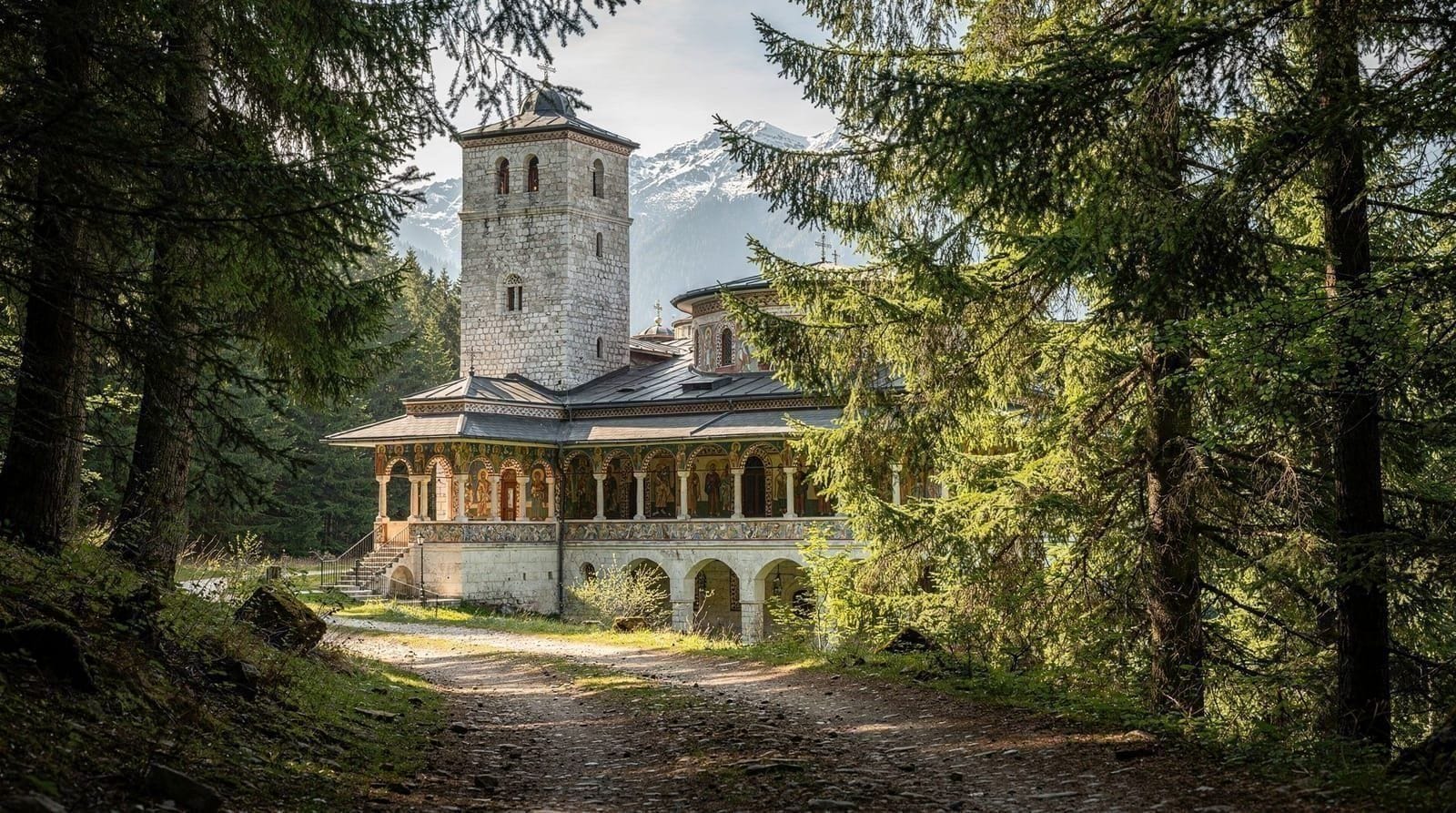
Four kilometers from the monastery, accessible via a marked trail through the Rila river valley, is the cave where Ivan of Rila lived as a hermit for part of his life. The trail is well-marked and moderate in difficulty — some elevation gain but nothing requiring specialized equipment. The return hike takes 1.5–2 hours.
The cave itself is a place of active pilgrimage. A small chapel has been built at the entrance, and Orthodox visitors pass through the cave’s narrow passage as a devotional act. The wider valley walk is beautiful in its own right.
GetYourGuideFrom Sofia: Rila Monastery & Optional St. Ivan Cave Day TourCheck availability →Adding the cave hike makes the monastery visit a full-day affair — ideally arriving at the monastery by 8–9am, spending 2.5–3 hours in the complex, eating lunch in the village, and then walking to the cave in the early afternoon. This is the recommended approach if you have the time and the inclination.
Practical information
Opening hours: Daily, 8:00am–7:00pm. The monastery does not close on Mondays (unlike most Bulgarian museums).
Entry to the complex: Free. Individual attractions (Hrelyo Tower, museum) have separate small fees.
Dress code: Modest dress is expected inside the church — shoulders covered, no shorts. Sarongs or wraps are available to borrow at the church entrance.
Photography: Permitted throughout the courtyard and exterior. Not permitted inside the church. Ask before photographing in the museum.
Crowds: July and August are the busiest months, with multiple tour buses arriving mid-morning. May, June, September, and October are preferable. Spring and autumn light is also better for photography. Whatever the season, early arrival significantly improves the experience.
Food: Restaurants inside and near the monastery complex are overpriced for what they offer. Bring a packed lunch or eat before arriving. The village of Rila, 15 km down the valley, has more modest local restaurants.
Accommodation: It is possible to stay overnight inside the monastery complex — a small number of rooms are available for visitors, primarily pilgrims. The experience of the courtyard at dawn or dusk, before and after the day visitors, is genuinely different from the daytime experience. Enquire directly with the monastery administration if interested.
Reading the frescoes: a short primer
Orthodox fresco cycles are not decorative in the way Western church art can be — they are organised according to a theological programme that repeats, with variation, across Orthodox churches. Knowing the basic layout makes the Church of the Nativity’s frescoes considerably more legible on a first visit.
The three exterior porticos typically carry scenes intended for public teaching: the Last Judgment is usually prominent, along with parables and moral narratives rendered in a way that could be understood by an illiterate medieval congregation standing outside. Moving into the nave, the imagery becomes more liturgical and hierarchical — scenes from the life of Christ and the Virgin arranged in horizontal registers, with the most sacred images (Christ Pantocrator, if present in the dome or apse) positioned to dominate the sightline from the door. Saints particular to Bulgarian Orthodoxy, including Ivan of Rila himself, appear in dedicated panels, often near the entrance or in a side chapel.
You do not need to identify every scene to appreciate the fresco cycle, but understanding that the placement is deliberate — public teaching outside, liturgical hierarchy inside — turns what can look like an overwhelming wall of imagery into something with a discernible logic.
Rila Monastery by season: what to expect
| Season | Conditions | Crowd level |
|---|---|---|
| May–June | Mild, forest in full leaf, some rain | Moderate |
| July–August | Warm, busiest tour bus season | High, especially 10am–1pm |
| September–October | Cool mornings, autumn colour | Moderate to low |
| November–March | Cold, occasional snow on the access road | Low; museum hours reduced |
For photographers and those who prefer a quieter visit, late September through mid-October offers the best combination of good weather, autumn light in the surrounding forest, and thinner crowds than the summer peak.
Combining Rila Monastery with other destinations
The Rila Monastery day trip from Sofia guide covers logistics in more detail. For broader planning, Day trips from Sofia compares all major day-trip options by distance, journey time, and what you get for the effort.
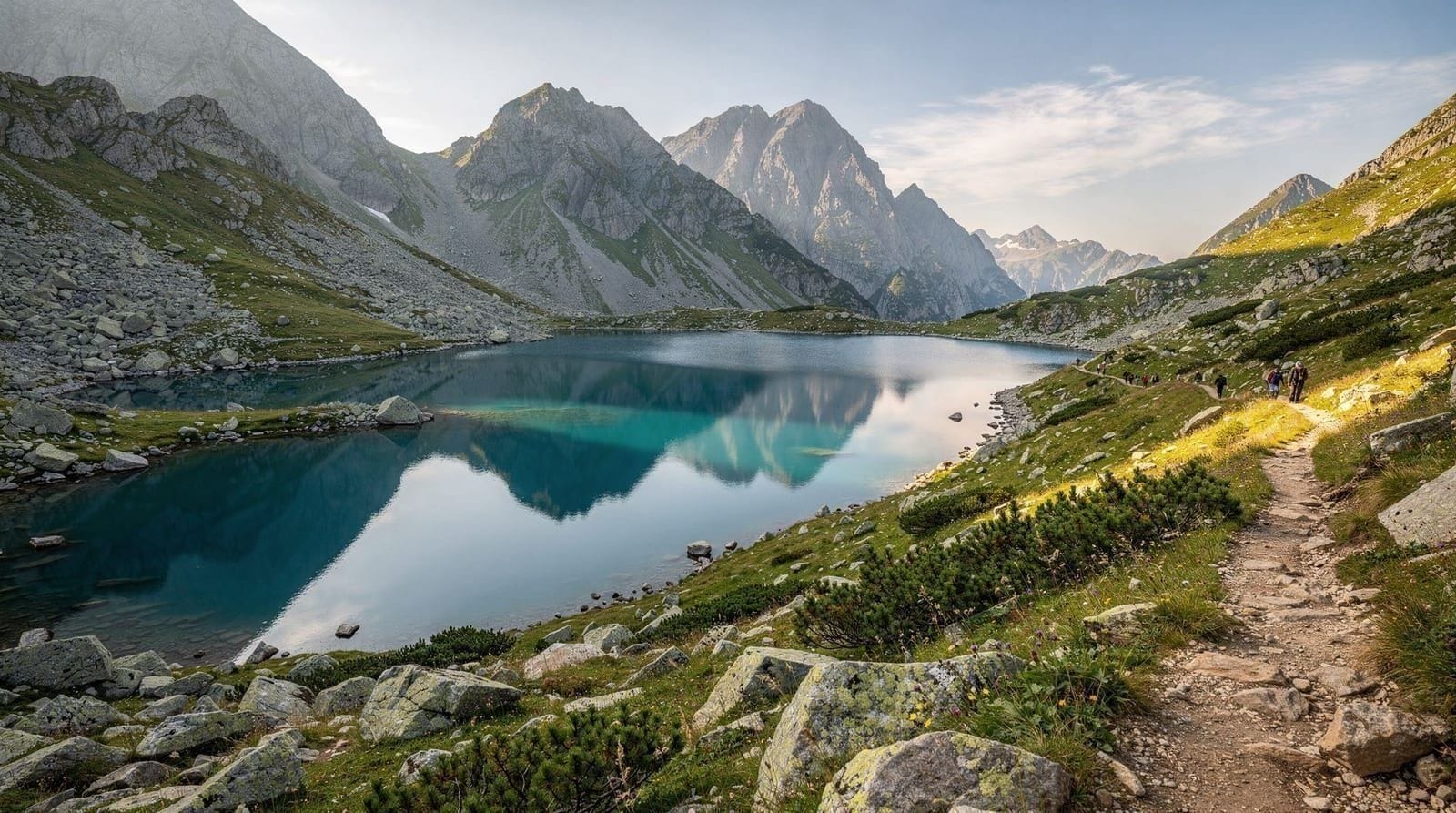
Rila Monastery and Seven Rila Lakes are in different parts of the Rila mountain range and are not practical to combine in a single day. They are separate trips.
Rila Monastery and Boyana Church can be combined in a single day, and several tours offer exactly this itinerary. Boyana adds 1.5–2 hours to the day and is well worthwhile — the 13th-century frescoes at Boyana represent the same tradition of Bulgarian Orthodox art but 600 years earlier than Rila’s Revival-period work.
For context on the broader religious architecture of Sofia itself, see Sofia churches and the Alexander Nevsky Cathedral guide. For planning your time in the city around a Rila day trip, Sofia in 2 days and Sofia in 3 days integrate the monastery into broader itineraries.
What visitors commonly miss
The exterior frescoes
Most visitors focus correctly on the church interior, but the exterior of the church and the arcade walls reward careful attention in their own right. The portico frescoes — painted on exterior surfaces exposed to weather and light — depict the Last Judgment and various saints in a style designed to be read from a distance. The detail is extraordinary given that these were meant as public teaching images rather than intimate devotional works. On the outer arcade of the monks’ cells, scenes from the Bible are painted in long narrative registers that unroll around the courtyard like a comic strip, each scene captioned in Old Church Slavonic.
The Lapidary
A smaller, less-visited section of the museum complex holds a lapidary: a collection of stone inscriptions, architectural fragments, and carved elements from earlier phases of the monastery. For visitors interested in the physical history of the site — the layers of construction, destruction, and rebuilding over ten centuries — this section makes the history concrete in a way the main church cannot.
The monks’ cells as architecture
The four-story wings of monks’ cells that enclose the courtyard are themselves remarkable works of vernacular architecture. Each floor has a projecting gallery with painted arches; the overall composition, when viewed from the center of the courtyard, creates a sense of enclosure and upward movement simultaneously. The cells themselves are largely closed to visitors but the galleries are accessible. Walking them gives you a sense of the monastic day — the spatial relationship between private cell and communal courtyard, the view of the mountains visible above the roofline.
The wider Rila Mountain context
The monastery sits at 1,147 m in the Rila Mountains, Bulgaria’s highest range, which reach 2,925 m at Musala — the highest peak in the Balkans. The mountain context matters for the monastery’s history: the remoteness that made it a refuge during the Ottoman centuries is the same remoteness that limited its accessibility for modern tourists until relatively recently.
Vitosha Mountain at the edge of Sofia gives you a sense of what Bulgarian mountain terrain looks like; the Rila range is higher, more remote, and more dramatic. If your trip extends beyond the monastery, Bansko in the Pirin range to the south is the most accessible mountain destination for further hiking or, in winter, skiing.
The Medieval Bulgaria loop itinerary places Rila Monastery within a broader circuit of medieval Bulgarian sites including Veliko Tarnovo — useful context if you have a week and want to understand how Rila fits into the arc of Bulgarian civilization from independence through Ottoman rule to Liberation.
Rila Monastery in the context of Bulgarian monastic tradition
Rila is the largest and most visited of Bulgaria’s monasteries, but it belongs to a wider tradition of monastic building that includes Rozhen Monastery near Melnik and Bachkovo Monastery south of Plovdiv, Bulgaria’s second-largest. Comparing them helps place Rila’s scale in perspective: Rozhen is smaller and more intimate, set on a ridge above vine terraces rather than in a forested valley, and rewards visitors who want a quieter monastic atmosphere.
Bachkovo, founded by Georgian commanders in Byzantine service, has a distinctly different architectural character owing to its non-Bulgarian founding. Rila’s scale, its role as guardian of Bulgarian literacy through the Ottoman centuries, and the sheer density of its fresco programme set it apart from both — it is not simply the biggest monastery in Bulgaria, it is the one around which the national memory of religious and cultural survival is organised.
Visitors who have time for more than one monastery on a Bulgaria trip often find the contrast valuable: Rila for scale and historical weight, Rozhen or Bachkovo for a quieter, more contemplative half-day.
Before you go
The practical preparation that most improves a Rila visit is reading the history in advance — not a textbook, but enough to understand who Ivan of Rila was, why the monastery survived the Ottoman period, and what the 1833–1847 rebuilding represented politically. The Sofia travel guide provides background on Bulgarian history more broadly. The context transforms what might otherwise be a pleasant but only partially understood visit into something genuinely affecting.
Dress in layers, particularly in spring or autumn: the mountain valley can be considerably cooler than Sofia even on warm days. Bring water for the cave hike. Wear shoes you are comfortable walking in for 2–3 hours on cobbled and stone surfaces.
It is also worth deciding in advance whether you are visiting primarily as a cultural traveler or in a more devotional frame of mind — both are entirely appropriate, and the monastery accommodates both, but the pace differs. Pilgrims tend to move slowly, spend longer in the church itself, and treat the courtyard as a place of quiet rather than a photo opportunity. Being aware of this and moving respectfully around anyone in prayer, particularly near the church entrance and the ossuary, makes for a better visit for everyone.
Rila Monastery is the landmark that justifies a visit to Bulgaria for many travelers who arrive expecting Sofia alone. Give it a full day. Go early. Read the history before you go, or find a guide who can tell it to you on the spot. What you see will mean considerably more.
Frequently asked questions about Rila Monastery
How much does it cost to enter Rila Monastery?
The monastery complex and courtyard are free to enter. The church interior is also free but photography inside is not permitted. The Hrelyo Tower museum entry is €2–3. The separate Ethnographic Museum inside the complex is €1–2. Budget €5–6 total per person if you visit everything.How long does a visit to Rila Monastery take?
Allow 2–3 hours for the monastery complex itself: the courtyard, the Nativity Church, the museum, and the tower. Add another 1.5–2 hours if you walk to the St Ivan of Rila Cave (4 km each way). A full day from Sofia allows for comfortable travel and a thorough visit.Can I visit Rila Monastery without a tour?
Yes. The monastery is open to independent visitors daily 8am–7pm. If driving, parking is available near the entrance. Public bus from Sofia is possible but requires a change in Rila village and has limited schedule — check current timetables before relying on it.Is photography allowed at Rila Monastery?
Photography in the courtyard and of the exterior frescoes is permitted and encouraged. Photography inside the church interior (the Nativity Church) is not allowed. The Hrelyo Tower and museum allow photography in some sections — check signage on entry.Can I combine Rila Monastery with Seven Rila Lakes?
Not easily in a single day. They are in different parts of the Rila mountains with no direct road between them — returning via Sofia adds significant distance. Seven Rila Lakes is best done as a separate trip. See the Seven Rila Lakes itinerary for details.Is there food at Rila Monastery?
Yes, but it is expensive and mediocre. Several restaurants and cafes operate in the village outside the monastery gates and inside the complex. The food is overpriced tourist fare. Bring a packed lunch if you are cost-conscious, or eat in the village before the monastery rather than at the complex restaurants.What is the best season to visit Rila Monastery for photography?
Late September through mid-October gives the best combination of good weather, autumn colour in the surrounding forest, and noticeably thinner crowds than the July–August peak. Spring (May–June) is also good, with fresh greenery, though rain is more likely.
Top experiences
Bookable activities with verified prices and instant confirmation on GetYourGuide.