Bulgaria's Thracian heritage: what to visit and what to skip
Sofia: Archaeology and History Museum Guided Tour
Where can I see Thracian heritage near Sofia?
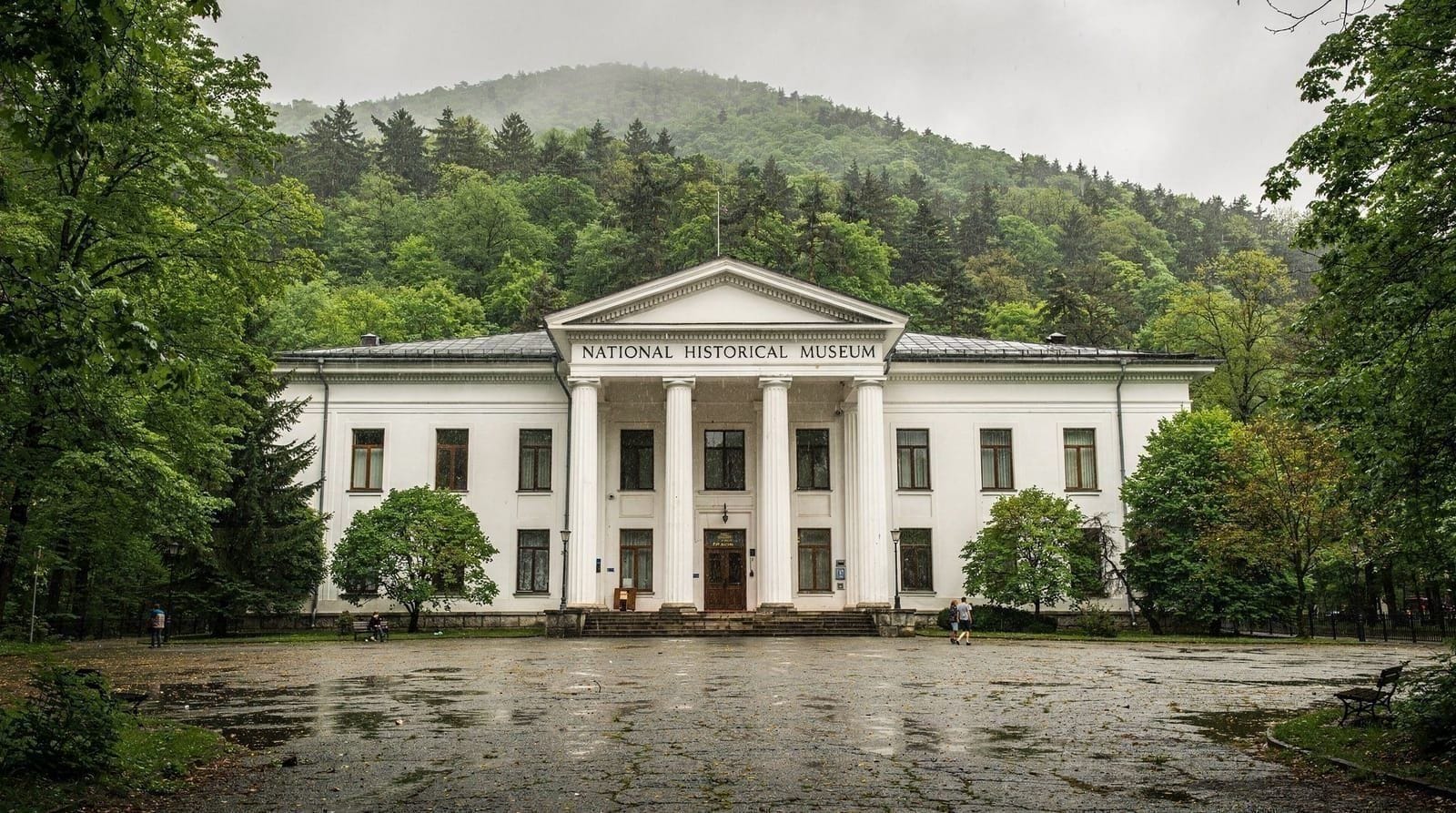
The best single starting point is the National Archaeological Museum in central Sofia, which holds the Panagyurishte gold treasure and major Thracian artifacts. For the best Thracian tomb frescoes, Kazanlak is 3.5 hours away but genuinely worth the trip. Plovdiv's ancient layers (Thracian then Greek then Roman) are accessible on a day trip.
Before the Slavs, before the Byzantine Empire, before even the Romans — the Balkans were Thracian. For roughly 1,500 years, from around 1000 BC to 500 AD, the Thracians dominated the eastern Balkans from what is now northern Greece through Bulgaria to Romania. They left no written language of their own, which is one reason they have largely disappeared from popular history. But they left gold — extraordinary quantities of it, worked to a standard that has never been fully explained given the archaeological record of their civilization otherwise.
Bulgaria has the best surviving Thracian material culture in the world. Most of it is accessible from Sofia: some directly in the city’s museums, some via day trips of varying ambition.
| Start here | National Archaeological Museum, Sofia |
| Best tomb | Kazanlak, around 3–3.5h from Sofia |
| Time period | roughly 1000 BC – 500 AD |
| Kazanlak entry | around €3 (replica tomb) |
| Skip unless driving south | Perperikon, 7h round trip |
Thracian sites compared
| Site | Distance from Sofia | What you see | Worth it if |
|---|---|---|---|
| National Archaeological Museum | in Sofia | Panagyurishte gold, Rogozen silver | Always — the essential stop |
| Plovdiv | ~1.5h | Thracian-to-Roman layered settlement | You have a day to spare |
| Kazanlak tomb | ~3–3.5h | Finest painted Thracian tomb (replica) | 3+ days in Bulgaria, overnight possible |
| Perperikon | ~7h round trip | Rock-cut Thracian sanctuary | Already travelling near Kardzhali |
Who were the Thracians?
The honest answer is that we know less than we would like. The Thracians were an Indo-European people — linguistically related to, but distinct from, the Greeks to their south and the Celts to their northwest. They were not a unified state but a collection of tribes with shared cultural and religious practices. The Greeks viewed them as warlike, hard-drinking, and culturally inferior — standard Greek commentary on any non-Greek people — while simultaneously trading with them, fighting alongside them, and occasionally marrying into Thracian aristocratic families.
What the archaeological record shows is more interesting than Greek stereotypes suggest: a warrior aristocracy that accumulated extraordinary wealth, expressed through burial goods, armor, and ritual vessels, and a funerary tradition that built massive burial mounds (tumuli) across the landscape. Hundreds of these mounds survive in Bulgaria, particularly concentrated around the Kazanlak region and in the Rhodope foothills. Many remain unexcavated even today, and new discoveries — a fresh gold hoard, a previously unrecorded tomb chamber — still surface periodically, which is part of what keeps Thracian archaeology an active rather than a closed field of study.
The Thracians were also the originators of the cult of Orpheus — or at least, the Greeks believed this. Whether the mythological figure of Orpheus reflects a historical Thracian priest-king or is entirely Greek invention is still debated. What is clear is that the Thracians practiced ecstatic religious rites involving music, intoxication, and what Greek sources describe as possession — a tradition the Greeks found both fascinating and unsettling.
The slow absorption of Thracian culture began with Greek colonization of the Black Sea coast from the 7th century BC, accelerated with the Macedonian conquest under Philip II and Alexander the Great, and was completed by Roman incorporation of Thrace as a province in 46 AD. By late antiquity, the Thracians as a distinct cultural entity had been absorbed into the Roman world. The Slavs arrived in the 6th–7th centuries AD to a landscape where the Thracian identity had already been gone for centuries.
What the Thracians left behind
Gold and silver metalwork
Thracian goldsmithing is the most immediately astonishing legacy. The surviving pieces — discovered primarily in burial hoards across Bulgaria, Romania, and northern Greece — demonstrate technical sophistication in granulation, filigree, repoussé, and inlay that matches anything produced in the ancient Mediterranean world.
The most important Bulgarian collection is the Panagyurishte gold treasure, currently in the National Archaeological Museum in Sofia. Found in 1949 near the town of Panagyurishte, it consists of nine vessels in pure gold: seven rhyton (drinking vessels) with animal-headed spouts (stag, ram, goat), an amphora decorated with mythological figures, and a large phiale (libation bowl). The total weight is approximately 6 kg of gold. Dating is estimated at late 4th to early 3rd century BC, placing it in the period of Macedonian expansion — whether the pieces are Thracian-made, Greek-made for a Thracian patron, or from some workshop in between is still debated by specialists.
The experience of standing in front of the Panagyurishte treasure in the Archaeological Museum is one of the highlights of any visit to Sofia. The craft is remarkable; the scale (these are working drinking vessels, not miniatures) is surprising; and the condition after two and a half thousand years in the ground is extraordinary.
GetYourGuideSofia: Archaeology and History Museum Guided TourCheck availability → GetYourGuideFrom Sofia: Plovdiv, Fortress Asen & Bachkovo Monastery TourCheck availability →The museum also holds the Valchitran treasure (Bronze Age, approximately 1300 BC — technically pre-Thracian but in the same tradition), Rogozen silver treasure (fourth-century BC silver vessels, the largest Thracian hoard ever found, with pieces now split between Sofia and the Vratsa Regional Museum), and numerous smaller pieces from excavations across Bulgaria. For anyone with an interest in ancient metalwork, this museum alone justifies the trip to Sofia.
Burial mounds and tomb architecture
The Thracian aristocracy was buried under tumuli — artificial earthen mounds, sometimes 20 meters high — with elaborate tomb chambers housing the deceased, their weapons, horses, sacrificed servants, and food and drink for the afterlife. Bulgaria has hundreds of these mounds, concentrated in the regions around Kazanlak, Shipka, and the Rhodope foothills.
The tomb chambers vary from simple cists (stone boxes) to elaborate stone-built structures with domed chambers and painted frescoes. The painted tombs are rare — perhaps a dozen survive across Bulgaria and Romania with significant painted decoration — and the finest is at Kazanlak.
Settlements and sanctuary sites
Thracian settlements are less well preserved than their tombs, partly because Thracian urban architecture was less monumental than Greek or Roman, and partly because many Thracian sites were built over by Greek colonies (on the coast) or Roman cities (inland). Plovdiv is the best surviving example of this layering: the ancient Thracian settlement of Eumolpias was built over by Philip II’s Macedonian foundation Philippopolis, then by the Roman city, then by Byzantine, Ottoman, and modern Bulgarian layers.
Perperikon, a rock sanctuary in the Rhodope Mountains near Kardzhali, preserves Thracian ritual architecture in an unusually intact form — rock-cut structures, libation channels, and what appears to have been a major oracle site. But it is remote (7+ hours round trip from Sofia) and more realistically visited from Plovdiv or Kardzhali.
Thracian wine culture
Wine occupied a central place in Thracian religious and social life, closely bound up with the ecstatic cult practices Greek sources associated with Dionysus (a god the Greeks themselves partly credited to Thracian and Phrygian origin). Rhyton drinking vessels — the same form as the Panagyurishte gold treasure — were specifically wine vessels, designed for ritual drinking at banquets that combined feasting, music, and religious ceremony.
Grape cultivation in the Thracian plain around modern Plovdiv and the Rose Valley predates the Roman period by centuries, and several of Bulgaria’s modern wine regions sit on land that has been under vine, on and off, since Thracian times. Travellers who want to follow this thread further can pair a Thracian heritage trip with the Bulgarian wine guide or a day trip to the Melnik wine region, where the connection between ancient ritual and modern winemaking is often made explicit by local producers.
The Kazanlak Thracian tomb
The Kazanlak tomb (officially the Thracian Tomb of Kazanlak, UNESCO World Heritage Site since 1979) is the most important surviving painted Thracian tomb and the best reason to make the journey to central Bulgaria.
Located just outside the city of Kazanlak in the Kazanlak Valley (also called the Valley of Roses), the tomb dates to approximately the 4th–3rd century BC. It was discovered in 1944 during wartime excavations and immediately recognized as exceptional. The burial chamber contains frescoes that survive in remarkable condition: a scene of a Thracian nobleman and his wife at a funeral banquet, flanked by attendants and musicians, with a processional frieze around the lower walls showing warriors and horses.
The fresco style is a hybrid — Hellenistic compositional conventions applied to Thracian subject matter, by artists who may have been Thracian, Greek, or some combination. The color palette (ochre, terracotta, black, and white with traces of blue and green) and the confident drawing of figures in motion make this one of the finest ancient paintings surviving anywhere in the Balkans.
The original tomb is closed to the public. UNESCO closure came in the 1970s when it became clear that visitor breath and humidity were damaging the frescoes irreversibly. The solution: an exact replica, built immediately adjacent to the original, with faithful reproductions of the frescoes executed by Bulgarian conservators working from detailed photographs and measurements. The replica is open daily and costs approximately €3 to enter.
This sounds like a disappointment, but the replica is extremely well done. The proportions of the domed chamber are accurate, the frescoes are painted to full scale, and the effect — ducking through a low stone passage into a circular chamber covered with 2,300-year-old images — is genuinely affecting.
The Valley of the Thracian Kings, the surrounding area, contains over 40 burial mounds excavated to various degrees, with several open as archaeological parks. The most significant additional site is the tomb at Ostrusha (Остру̀ша), which has a more elaborate stone architecture but less impressive frescoes than Kazanlak. Several of the mounds are visible from the road as landscape features even if you do not enter.
Practical logistics for Kazanlak: The city is 230 km from Sofia, approximately 3–3.5 hours by car via the Troyan Pass or the Shipka Pass. The drive is scenic but long. Overnight is the comfortable option — Kazanlak has adequate accommodation at reasonable prices. As a day trip, a very early departure (6am from Sofia) allows a full day at the sites and return by evening, but it is tiring.
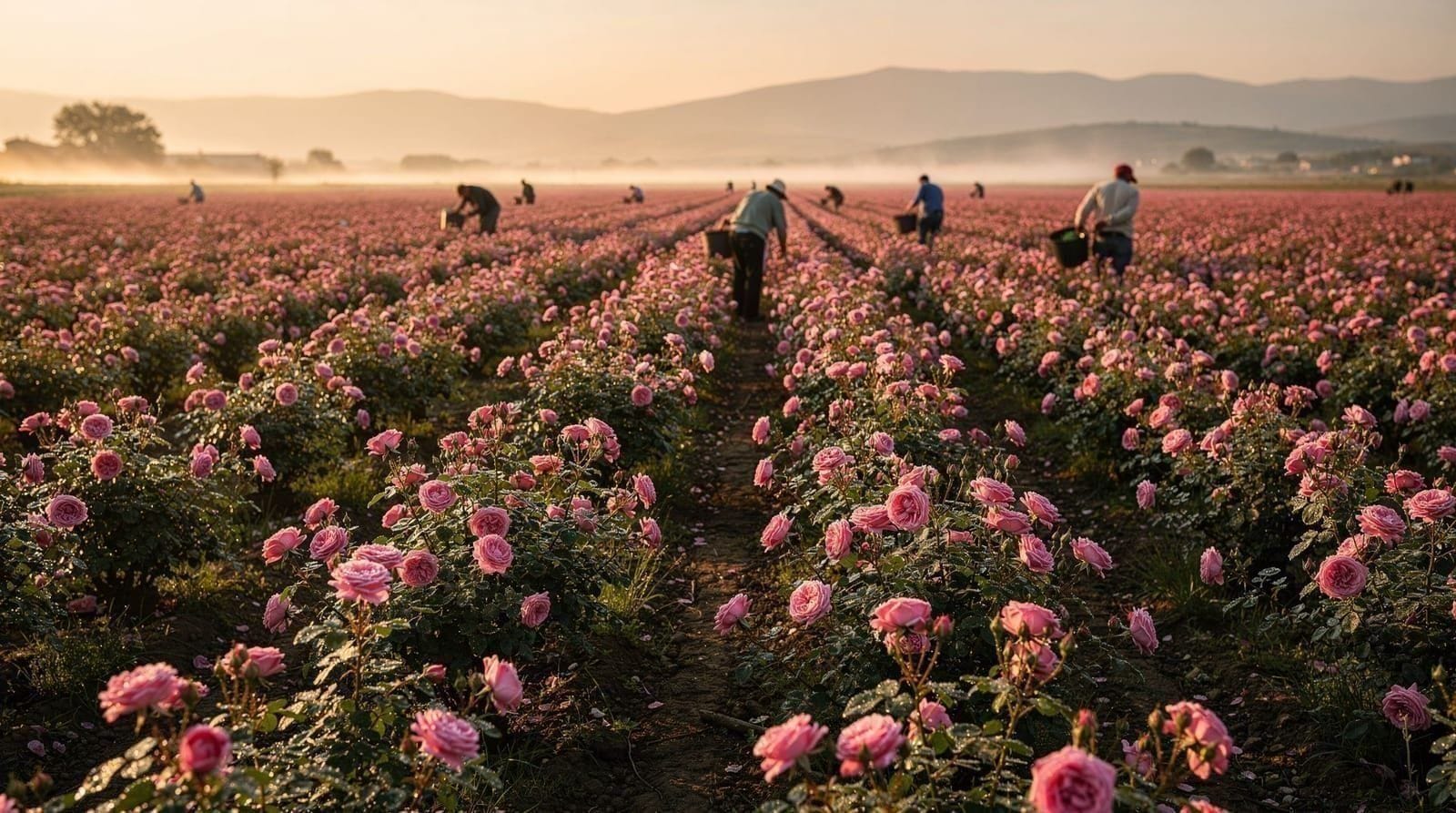
The Kazanlak Valley is also the center of Bulgaria’s rose oil industry, and the Rose Festival (late May to mid-June) significantly increases tourism to the area. Visiting outside the rose season means fewer crowds but more muted visuals — the surrounding fields are not in bloom. The tomb is worth visiting regardless of season.
Plovdiv: Thracian layers in a living city
Plovdiv is Bulgaria’s second city and one of the oldest continuously inhabited cities in Europe — the European Capital of Culture 2019 used the slogan “Forever Young” with some historical accuracy. The Thracian layer of Plovdiv is the oldest and least visible, but it is there.
The settlement the Thracians called Eumolpias stood on the hills above the Maritsa River by at least the 5th century BC. Philip II of Macedon captured it in 342 BC and renamed it Philippopolis. The Romans took it in 72 AD and made it the capital of the province of Thrace, building the forum, stadium, and theater whose remains are still visible throughout the modern city. The current city name — Plovdiv — derives from the Slavic rendering of Philippopolis.
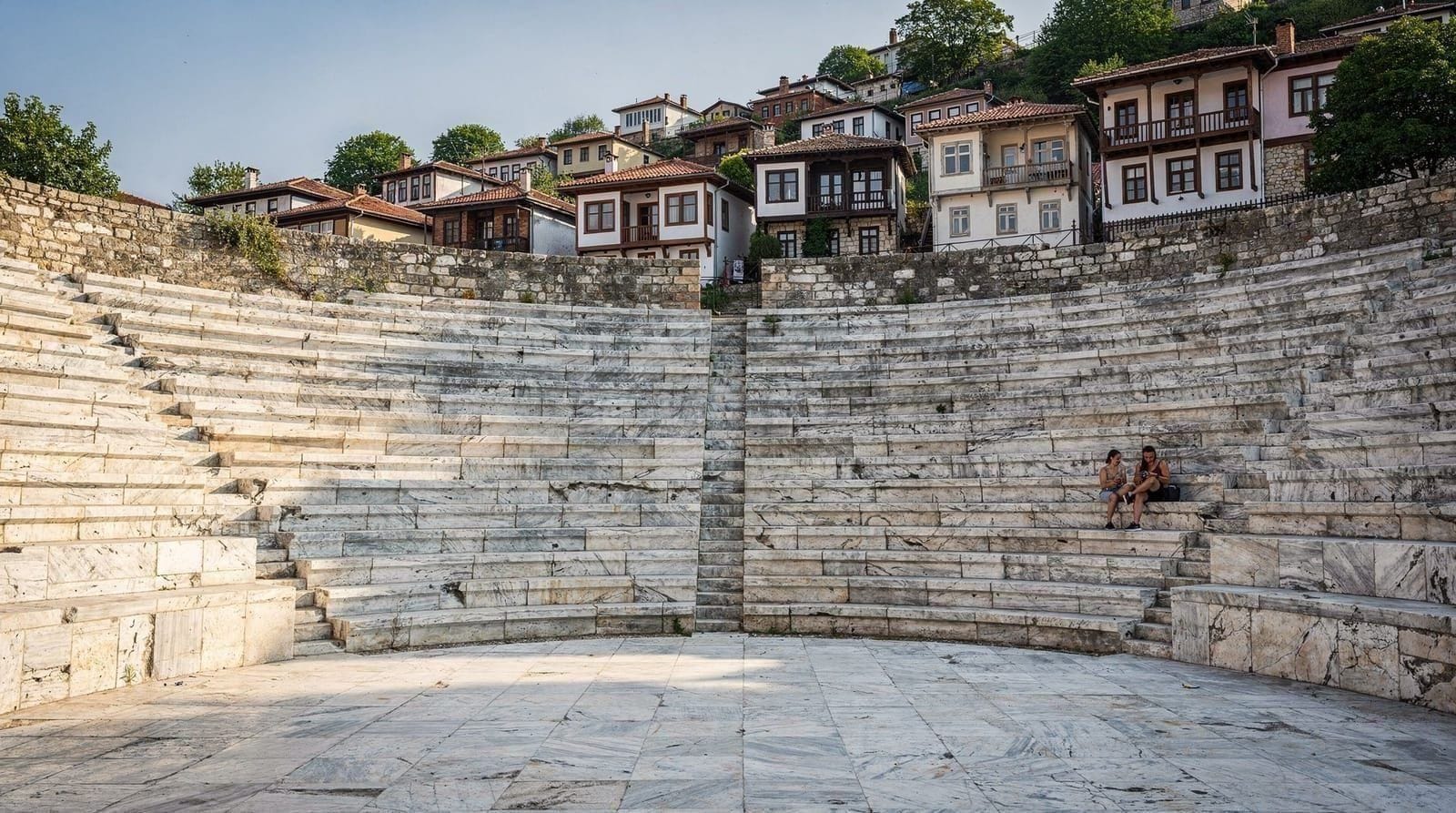
What remains of the Thracian period in Plovdiv is largely subterranean and partially excavated. The Plovdiv Regional Archaeology Museum (across the river from the old town) has a dedicated Thracian room with local finds — ceramics, bronze objects, and some metalwork — that contextualizes the city’s pre-Greek history. The Roman remains are far more prominent in the landscape: the Roman amphitheater in the old town is one of the best-preserved in the Balkans and still used for performances.
GetYourGuideFrom Sofia: Small Group Guided Tour of Plovdiv's HighlightsCheck availability →For the Thracian heritage specifically, Plovdiv is the beginning of the story rather than the highlight. It is valuable for understanding how Thracian settlements were absorbed into the Macedonian and then Roman world — a process visible here more than anywhere else in Bulgaria because the subsequent layers are so well preserved and accessible.
The Plovdiv day trip guide covers all aspects of visiting Plovdiv from Sofia. The Sofia museums guide covers the Plovdiv Regional Museum in context with other collections.
Plovdiv old town and Thracian-to-Roman walking tourShipka Pass: nearby but a different story
The Shipka Pass, 15 km north of Kazanlak, is frequently mentioned alongside Thracian heritage because it is in the same region. The connection is geographic, not historical. Shipka is the site of a famous battle in the Russo-Turkish War of 1877–78 — the battle that effectively secured Bulgarian Liberation from Ottoman rule. The memorial church at the summit and the Russian-built Monument of Freedom are striking and historically significant, but they have nothing to do with the Thracians.
Combining Shipka with a Kazanlak day trip is natural given the proximity, and the memorial church is worth the 20-minute detour. Just be clear that you are shifting from 300 BC to 1877 AD in the space of 15 km.
What is worth the trip versus what to see in Sofia
An honest assessment for visitors with limited time:
See in Sofia (no travel required):
- Panagyurishte gold treasure and the Thracian collection at the National Archaeological Museum — this is the best introduction to Thracian material culture and covers the highlights in 1.5–2 hours
- The Serdica Roman ruins underground complex (adjacent to the Serdika metro station) — not strictly Thracian but shows the Roman layer that absorbed and followed Thracian culture directly
Worth the day trip:
- Kazanlak tomb and the Valley of the Thracian Kings — the best painted Thracian tomb in Bulgaria, genuinely impressive even as a replica, and the surrounding landscape of tumuli adds context. Best done with an overnight stay.
- Plovdiv — valuable for the Thracian-to-Greek-to-Roman continuity of settlement, though the Thracian period specifically is less visible than later layers. Plovdiv is worth visiting regardless of Thracian interest.
Skip unless specifically motivated:
- Perperikon — 7+ hours round trip from Sofia, better visited from Plovdiv or Kardzhali
- Individual burial mounds that are not open or marked — dozens visible in agricultural landscapes around Kazanlak but not accessible to visitors
- Regional museums outside Sofia and Plovdiv (Vratsa has Rogozen silver treasure pieces, Lovech has local Thracian finds) — only worthwhile if passing through or if covering Bulgaria extensively
Planning a Thracian heritage itinerary
If you want to see as much Thracian heritage as possible within a Bulgaria trip, here is how to prioritize:
One day (Sofia only): National Archaeological Museum in the morning. The Panagyurishte gold treasure, the Rogozen silver exhibits, and the overall Thracian room will give you more Thracian material culture than most visitors see in an entire trip. Pair with a walk through the Sofia old town area to see what came after the Thracians.
Two days (Sofia + Plovdiv): Add a Plovdiv day trip. The combination of Plovdiv’s archaeological museum and the layered Roman remains in the old town gives you the Thracian-to-Roman transition in its most legible form. The Plovdiv day trip from Sofia guide has logistics.
Three or more days: Add Kazanlak, ideally with an overnight. The tomb is the culmination; the Valley of the Thracian Kings gives the landscape context. Combining with Shipka Pass adds a half-day of 19th-century history that connects to why Bulgaria as a modern state exists to preserve these ancient sites.
The Bulgaria highlights itinerary integrates Thracian heritage with Rila Monastery, Plovdiv, and Koprivshtitsa into a structured week-long circuit — a useful framework if you want to understand Bulgarian history across its full span rather than focusing on a single period.
Connecting the threads
The Thracians occupy an unusual position in Bulgarian national identity. They are celebrated as part of Bulgaria’s ancient heritage despite having no direct genetic or cultural connection to modern Bulgarians — the Slavic and Bulgar peoples who created medieval Bulgaria arrived in the 6th–7th centuries AD, more than a thousand years after Thracian civilization had been absorbed into the Roman world.
This is not unique to Bulgaria — Greek national identity similarly claims the ancient Athenians despite significant population change over two millennia — but it is worth being aware of when visiting sites framed as “Bulgarian heritage.” The Kazanlak tomb was built by Thracians for Thracians. It is Bulgarian heritage in the sense that it is located in Bulgaria and is part of the territory’s history. The connection is geographic, not ethnic.
What makes Thracian heritage genuinely compelling is not national identity but the sheer quality of the objects and the mysteries they raise. A civilization that produced the Panagyurishte treasure, built the Kazanlak tomb, and gave the ancient world the cult of Orpheus — and left no written language, no urban architecture comparable to its art, and almost no self-description — is one of the more fascinating puzzles in ancient Mediterranean history.
For broader context on Bulgarian history across periods, the Sofia travel guide covers the city’s layered heritage from Thracian through communist-era. The Day trips from Sofia guide compares Kazanlak, Plovdiv, and other destinations logistically. For the medieval Bulgarian layer that came after the Roman absorption of Thrace, the Bulgarian National Revival architecture guide picks up the story from the 18th century.
Reading and preparing before you go
A little background pays off disproportionately with Thracian sites, since the objects themselves rarely come with the same depth of on-site interpretation you’d find at a major Western European museum. Knowing the outline — the tumulus burial tradition, the Panagyurishte treasure’s disputed origin, the Hellenistic-Thracian fresco style at Kazanlak — turns a room of gold vessels or a low stone chamber into something you can actually read rather than just admire. The National Archaeological Museum’s English labelling covers the basics adequately; a guided visit adds the connective narrative that plaques can’t.
Photography and what not to expect
Photography without flash is generally permitted at the National Archaeological Museum and at the Kazanlak tomb replica, though flash is prohibited near the frescoes to protect the reproduction paint. Do not expect the scale of a major national museum — the Thracian collection, while extraordinary in quality, occupies a modest footprint compared to the Louvre’s antiquities wing or the British Museum. What Bulgaria offers is depth and authenticity rather than breadth: fewer objects, but among the finest of their kind anywhere.
Frequently asked questions about Bulgaria's Thracian heritage
Who were the Thracians?
The Thracians were an Indo-European people who inhabited the eastern Balkans from roughly 1000 BC to 500 AD. They were contemporaries of the ancient Greeks and Romans, with whom they had complex relationships of trade, conflict, and cultural exchange. They left no written historical records of their own — everything we know about them comes from Greek and Roman sources or from archaeology.Can I enter the Kazanlak Thracian tomb?
The original UNESCO tomb is closed to the public to preserve the frescoes. An exact replica built adjacent to the site is open daily and shows the frescoes in faithful detail. Entry to the replica is around €3. Advance booking for the original (extremely rare, for research purposes) is separate — for normal visitors, the replica is the visit.Is the Kazanlak day trip worth doing from Sofia?
Yes, if you have 3+ days in Bulgaria and a genuine interest in archaeology or ancient history. The Kazanlak tomb fresco is the finest Thracian painted tomb in Bulgaria, and the Valley of the Thracian Kings nearby has dozens of burial mounds. The drive is long (3.5 hours each way), so plan for an overnight or an early start.What is the Panagyurishte gold treasure?
A set of nine pure gold rhyton (drinking vessels) discovered in 1949 near Panagyurishte, dated to the 4th–3rd century BC. They are the most spectacular surviving examples of Thracian goldsmithing and are held at the National Archaeological Museum in Sofia. The craftsmanship — animal-headed spouts, mythological scenes in high relief — is extraordinary.Is Perperikon worth visiting?
Perperikon is a dramatic Rhodope mountain rock fortress with Thracian, Greek, and medieval Bulgarian layers, but it is 7 hours round trip from Sofia by road and located in a remote area. It is more practical from Plovdiv or Kardzhali. Skip it as a Sofia day trip unless you are specifically driving south.How much time do I need to appreciate the Panagyurishte gold treasure?
Most visitors find 15–20 minutes with the treasure itself is enough to take in the nine vessels properly, though the full Thracian collection around it — the Rogozen silver, the Valchitran treasure — rewards a longer visit of 45–60 minutes if you want the fuller context.Is Thracian heritage the same as Bulgarian heritage?
Geographically yes, ethnically no. The Thracians were absorbed into the Roman world by late antiquity, and the Slavic and Bulgar peoples who founded medieval Bulgaria arrived centuries later, in the 6th–7th centuries AD. Thracian sites are Bulgarian heritage in the sense of being located in and preserved by Bulgaria, not through direct cultural continuity.
Top experiences
Bookable activities with verified prices and instant confirmation on GetYourGuide.