Rila Seven Lakes escape: 3-day nature itinerary
From Sofia: The Seven Rila Lakes Full-Day Hiking Tour
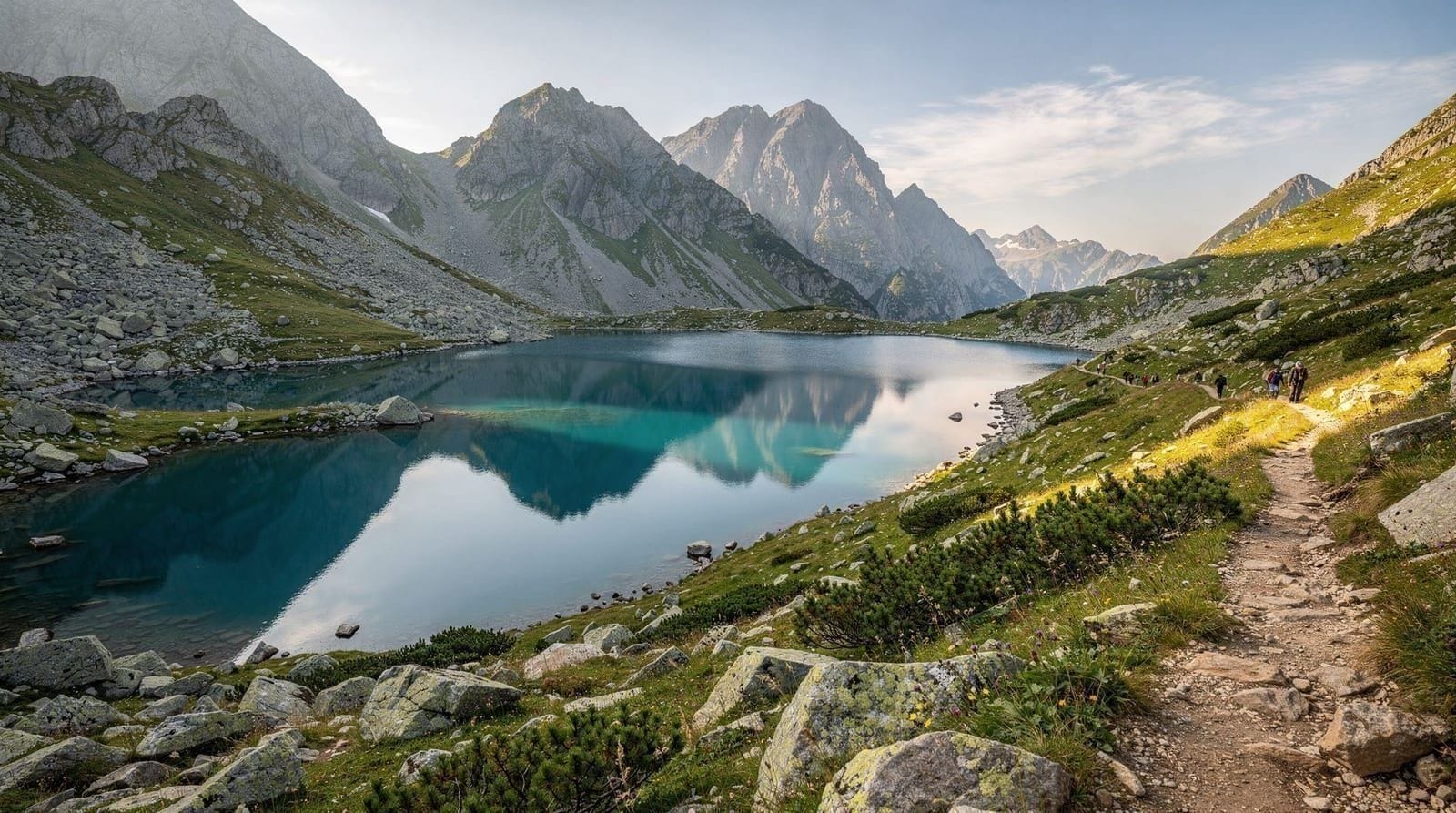
The Seven Rila Lakes sit at 2,100-2,500 m elevation in the Rila Mountains, roughly 120 km south of Sofia. The hike connects seven glacial lakes via a 3-4 hour circular route, with most of the walking done above the treeline and views covering the main ridge of the Rila range. This itinerary builds a 3-day trip around the lakes hike, with Rila Monastery added on Day 3 as a natural complement — the monastery is in the same mountain range, about 40 km from Panichishte (the village that serves as the base for the lakes).
This is the most accessible high-mountain hike near Sofia that doesn’t require prior technical experience, but “accessible” is relative. The trail is well-marked and there are no vertical drops or exposure sections, but you gain and lose around 400 m of elevation on the circuit, the terrain is rocky, and weather above 2,000 m changes fast. Appropriate footwear (trail shoes minimum, hiking boots preferable) and warm layers are not optional, even in July.
Bulgaria joined the eurozone on 1 January 2026; all prices here are in EUR.
| Where | Panichishte, around 120 km south of Sofia |
| Cost | Roughly €150–250/person for 3 days, budget approach |
| Time needed | 3 days (2 minimum if combining lakes and monastery) |
| Getting there | Organized tour, taxi, or bus to Samokov + taxi |
| Best time | Late June or early September |
What you need to know before planning
Season
The Seven Rila Lakes are accessible by gondola lift from approximately late June to mid-October. Outside this window, the upper section of the trail can have significant snow coverage and the gondola may not be operating. In early June, snow on the path between the upper lakes is common even when lower sections are clear. July and August offer the most reliable conditions but also the largest crowds — the trail on a Saturday in August can have 500+ hikers, which undermines the experience.
The best windows: late June (snow mostly cleared, small crowds) and mid-September to early October (lower temperatures, autumn colors on lower slopes, very few people). If you’re visiting in July or August, go on a weekday and take the first gondola up.
Getting to Panichishte
Panichishte is the village at the base of the gondola, at around 1,380 m elevation. It’s 120 km from Sofia — about 2 hours by car on the E79 motorway south to Samokov, then a secondary road through Borovets and into the mountains.
There is no scheduled public bus to Panichishte from Sofia. This is the main logistical constraint of this itinerary. Your options without a car:
-
Organized tour (most practical): Several operators run daily transfers from Sofia to the Seven Rila Lakes during the hiking season, including a guide. Cost: €30-60 per person. The Seven Rila Lakes full-day hiking tour departs Sofia in the morning and returns in the evening. The Seven Rila Lakes hike day tour is another option with a similar structure.
-
Taxi from Sofia or Samokov: A taxi from Sofia to Panichishte costs approximately €50-70 one-way. From Samokov (reachable by local bus from Sofia in 1-1.5 hours), a taxi to Panichishte is around €20-30. This works if you’re comfortable with logistics; you’ll need to arrange a pickup for the return.
-
Staying in Panichishte: If you stay overnight in the village (there are several small hotels and guesthouses, €25-50/night), you only need transport once in each direction, which makes private taxis more economical. This is the recommended approach for this 3-day itinerary.
The Seven Rila Lakes hike guide covers transport logistics in more detail. The Rila Mountains hiking guide gives broader context on the range.
The gondola lift
The gondola (chairlift) at Panichishte rises to around 2,100 m — the elevation of the lowest lake. Cost: approximately €12 return (check current prices at the station; they have increased annually). Operating hours during season: typically 08:00-17:00 with the last ascent around 15:00-16:00 and last descent around 17:00-18:00. These times change seasonally and the lift can close in high wind or during electrical storms — common in the afternoons between July and September.
You can also hike up from Panichishte to the lakes without using the gondola (about 1.5 hours of ascent on a marked trail), which is worth knowing if the gondola queue is long on peak days. Most visitors take the lift up and hike down, or take it both ways — hiking up and lift down is also sensible if you want the full elevation gain experience without rushing.
Day 1: Arrive in Sofia, gear check, orientation walk
Unless you’re already in Sofia, Day 1 is a travel and settling-in day. If you’re arriving by air, see the Sofia airport to city guide for transport options into the center (metro line 1, €1.60, 30 minutes).
What to do on Day 1
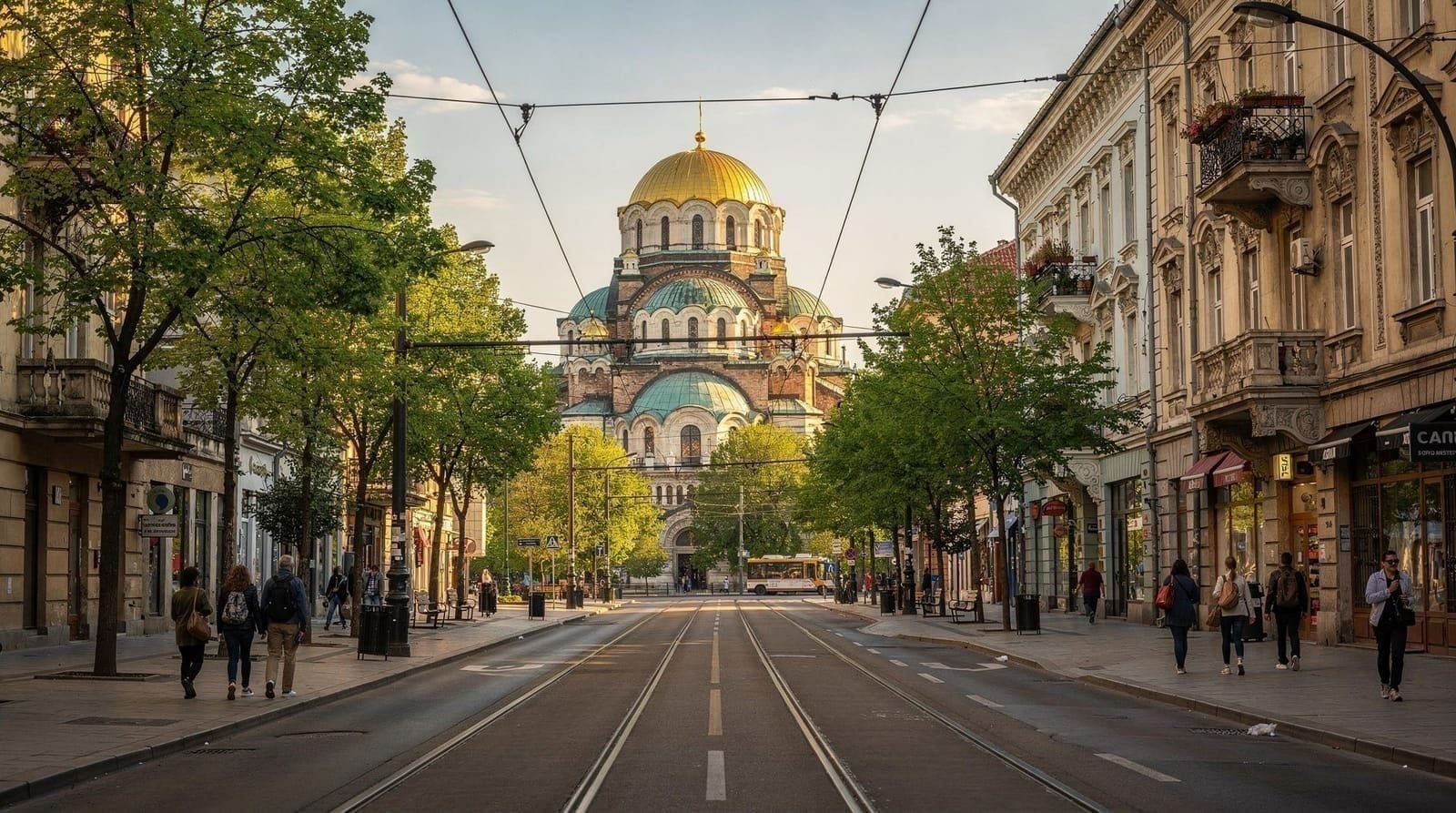
If you arrive with several hours to spare, a walk through the central area is the sensible use of time. The Sofia old town walk covers the main sights without requiring a full commitment: the Serdica ruins at the metro station, the Largo, Alexander Nevsky Cathedral, and the area around Vitosha Boulevard.
The Sofia travel guide gives an overview of the city for visitors with limited time in the capital.
Equipment check
If you haven’t hiked in a while or haven’t packed for mountain weather, Day 1 is the time to assess what you have. For the Seven Rila Lakes hike, you need:
- Footwear: Trail running shoes are the minimum; hiking boots are better. The path between the upper lakes is rocky and often wet. Standard walking shoes or sneakers are inadequate for the upper section.
- Layers: A fleece or down jacket, regardless of the forecast. At 2,400 m, temperatures can drop to 5-8°C even in August if cloud comes in. Afternoon thunderstorms are common; a waterproof layer is essential.
- Water: At least 1.5 liters. There is no reliable water source on the trail between the lakes.
- Food: There is a small cafe/kiosk near the lower gondola station at the lake level. It is not always open and the options are limited. Bring lunch.
- Sun protection: Above the treeline at high elevation, UV exposure is significantly higher than in the city. Sunscreen and sunglasses.
Outdoor gear can be purchased in Sofia at Decathlon (on Tsarigradsko Shose, accessible by bus) if you need equipment.
Where to sleep before Day 2
Options:
- Sleep in Sofia: Depart early on Day 2 by organized tour. Most tours pick up from central hotels at 07:00-08:00.
- Sleep in Panichishte: Take a taxi from Sofia the evening of Day 1 (€50-70) and stay overnight, giving you a very early start on Day 2. This is the better option if you want to be on the trail before crowds.
- Sleep in Samokov: A town 15 km from Panichishte with more hotel options and cheaper accommodation. Taxi from Samokov to Panichishte: €20-30.
Day 2: Seven Rila Lakes hike
This is the main day. The lake circuit is the reason for the trip.
The gondola and first lake
The gondola base station is in the center of Panichishte village, signed from the main road. Queue times in July-August can be 30-60 minutes on weekends — arrive before 09:00 if possible. The ascent takes about 10 minutes.
The gondola deposits you at the lower lake area (Dalnoto Ezero, “The Fish Lake”), the largest of the seven, at around 2,095 m. From here, a well-marked path leads upward through the remaining lakes. The path is marked with trail signs; the circuit is clear enough that navigation is not a significant challenge in good visibility.
The seven lakes
The lakes are named descriptively in Bulgarian, and the names help you understand what to expect at each:
Dalnoto (The Fish Lake) — 2,095 m, largest and lowest. Most visitors stop here if they’ve come up just to see the view. If the weather is deteriorating, this is your turnaround point.
Babreka (The Kidney) — 2,282 m. The deepest lake, named for its shape. Distinctive blue-green color in good light.
Okoto (The Eye) — 2,440 m, highest of the seven. Roughly circular, with steep rocky sides. This is the most demanding section of the ascent. The views from the ridge above Okoto cover the full width of the Rila range in clear weather.
Salzata (The Tear) — 2,416 m. The smallest lake, often with snow patches on the banks into July.
Bliznaka (The Twin) — 2,395 m. Named for its oblong shape suggesting two joined basins.
Trilistnika (The Trefoil) — 2,216 m. The descent begins here. The lake has a three-lobed shoreline that gives it its name.
Dalnoto (Lower Lake) — 2,189 m. The final lake before the descent back to the gondola or the path down to Panichishte.
Hike timing: The circuit from the gondola top station back to the same point takes 3-4 hours at a moderate pace with stops for photos and lunch. Allow more time if you want to sit at the lakes, photograph light changes, or ascend to the ridge above Okoto.
Descending: Take the gondola down if the legs are tired or if bad weather is moving in. Alternatively, the marked trail down to Panichishte village takes 1-1.5 hours and bypasses the gondola queue.
After the hike
Return to accommodation in Panichishte or Samokov. The village has a few restaurants serving Bulgarian food; a meal costs €8-15. Most hikers are back in Panichishte by 16:00-17:00.
If you booked an organized day tour from Sofia, the bus returns to the capital in the evening — you’ll be back in the city by 20:00-21:00.
For more detail on the trail and the lakes, see the dedicated seven Rila Lakes hike guide and the Seven Rila Lakes destination page.
Seven Rila Lakes mountain hiking tourA combined lakes and monastery tour on a single day is a long but feasible option for visitors who can only take one day excursion:
Seven Rila Lakes and Rila Monastery combined day tripDay 3: Rila Monastery
Rila Monastery is approximately 40 km from Panichishte on mountain roads — about 45-60 minutes by car or taxi. This makes it a natural addition to a Seven Lakes trip if you have a third day. If you are on a group tour, check whether the tour includes Rila on Day 3; many operators run a combined itinerary.
If you’re staying in Sofia, Day 3 can be run as a separate day trip following the same logistics described in the 3-day Sofia itinerary — bus from Ovcha Kupel terminal or an organized tour.
What to see at Rila Monastery
The monastery complex is open throughout the day; entry to the courtyard and main church is free.
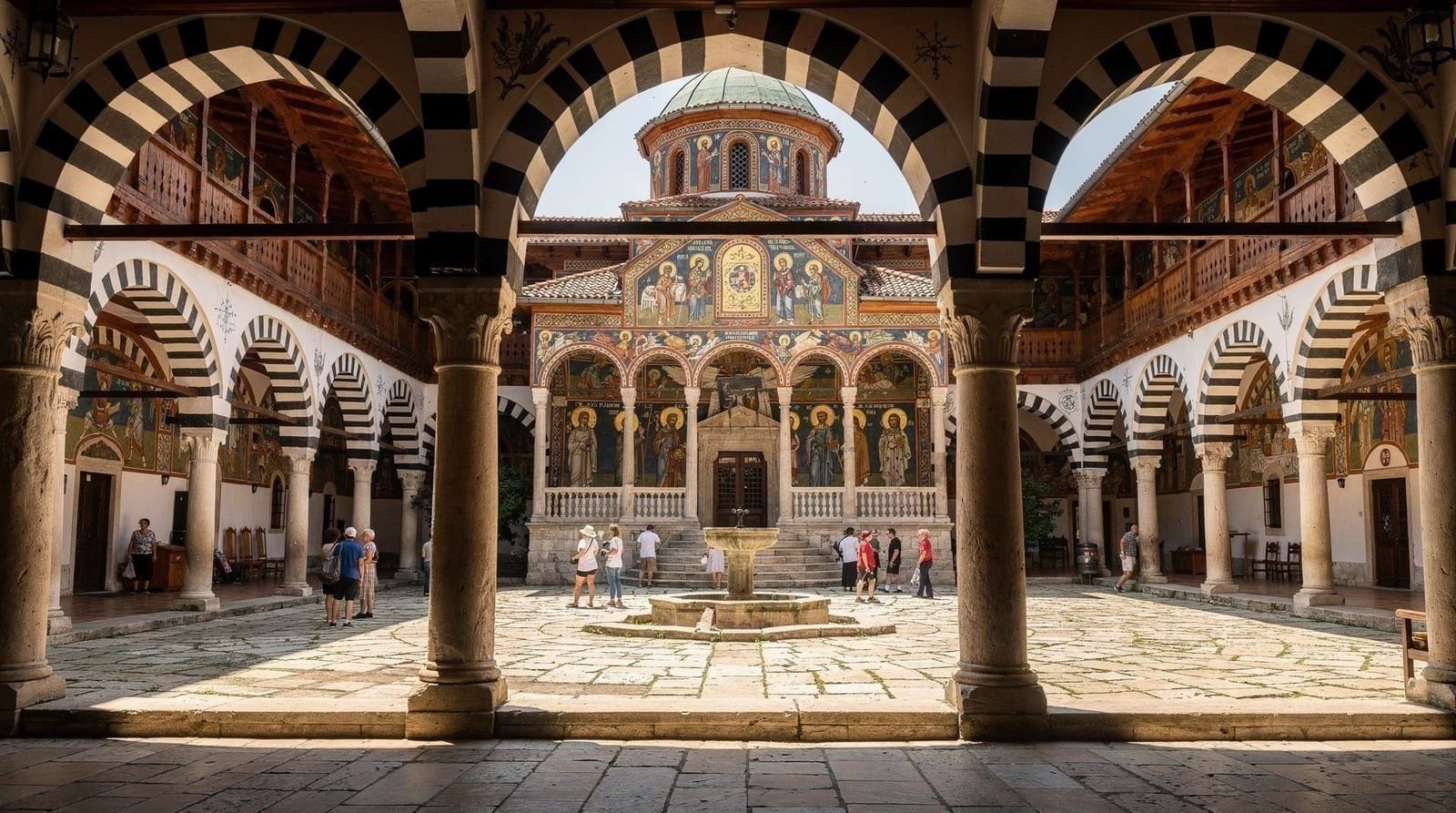
The church frescoes: The Church of the Nativity (1834-1837) is covered in approximately 1,200 square meters of frescoes by Bulgarian Revival masters. The outer portico frescoes — particularly the Last Judgment scene — are the most visited section. The church interior is dimly lit; photography rules vary by section.
The Hrelyo Tower: The oldest standing structure (14th century), costs around €2 to enter. The view from the top is the best way to understand the monastery’s layout.
The museum: Entry around €5. The centerpiece is Raphael’s Cross (1790-1802), carved with 1,500 miniature biblical scenes by a monk who worked for 12 years and went blind in the process. The surrounding collection — church manuscripts, liturgical objects, embroidery — is extensive and well-curated.
The cave of Ivan of Rila: About 5 km north of the monastery, a narrow cave in the rock face where the 10th-century hermit Ivan of Rila lived and where many pilgrims come specifically to pass through. It is a tight fit; there is a tradition of passing through the cave to have wishes granted, but the crawl is not suitable for everyone. The Rila Monastery and Ivan of Rila cave tour covers this addition specifically.
Practical timing: Arrive by 10:00 if possible. The main tour groups descend between 11:00 and 14:00; arriving early gives a materially better experience. Allow 3-4 hours for the full site including the museum and a walk to the Nevyastata Waterfall (2 km upstream along the Rila River).
Getting back to Sofia from Rila Monastery: If ending in Sofia, a taxi from the monastery to Sofia costs €50-70. The direct bus (from the monastery village) runs once or twice daily in season; check the schedule at the monastery gate on arrival. For more options, see the Sofia to Rila transport guide.
For the full monastery overview, the Rila Monastery guide covers history, art, and visiting logistics in depth.
Rila Monastery and Seven Lakes combined tourBest months for the lakes hike
| Month | Conditions | Crowds |
|---|---|---|
| June (early) | Snow patches likely above 2,300 m | Low |
| June (late) | Trail mostly clear, long daylight | Low–moderate |
| July–August | Reliable weather, warm | Very high, especially weekends |
| September | Cooler, clear, autumn colour on lower slopes | Low |
| Early October | Cold mornings, gondola may close mid-month | Very low |
| Mid-Oct–May | Gondola typically closed, serious snow | N/A |
Combining with Borovets or the mineral baths
If you have a spare half day either side of the lakes hike, Borovets is close enough to Panichishte to add on — it’s a developed ski resort with more restaurant choice than the villages nearer the lakes, useful if you want a proper dinner after two days of trail food. Going the other direction, Sapareva Banya sits east of the Rila range and has Bulgaria’s hottest mineral spring alongside genuine spa facilities, which makes a reasonable way to ease sore legs the evening after the lakes circuit if your route home passes near it. Neither is essential to this itinerary, but both fit naturally into the same corner of the Rila Mountains without adding a full extra day.
Extending onto the ridge for experienced hikers
For hikers with mountain experience who want more than the standard 3-4 hour circuit, the ridge above Okoto connects onward toward Malyovitsa peak and hut, a route used by more serious trekkers rather than day visitors. This is a different proposition from the lakes circuit: it involves sustained ridge walking above 2,400 m, no marked shortcuts back down, and weather exposure for several additional hours. It is not something to attempt without checking forecasts carefully and starting well before 08:00, and it is not appropriate for anyone doing the Seven Lakes as their first high-mountain hike. The Rila mountains hiking guide has more on the wider trail network if this kind of extension interests you; otherwise, the standard circuit described above is the right scope for a 3-day trip.
Photographing the lakes
Each of the seven lakes has a different character in photographs, and timing matters more than equipment. The lower lakes (Dalnoto, Trilistnika) catch morning light well and are calmer before the day’s crowds arrive — worth prioritising if you’re on the first gondola up. Babreka’s blue-green colour is most vivid in direct midday sun, the opposite of the golden-hour advice that applies to most landscape photography. Okoto, the highest and most dramatic, is best photographed from the ridge above it looking back down, which also gives the clearest sense of how the seven lakes sit relative to each other — a view that’s easy to miss if you only follow the path at lake level. A compact camera or phone handles the terrain better than a heavier SLR kit, since several sections require scrambling over loose rock with your hands free.
If the weather closes in
Afternoon storms are common enough in July and August that it’s worth having a plan rather than treating it as a remote possibility. If dark cloud builds over the ridge while you’re above Babreka or Okoto, the sensible response is to turn back toward the gondola immediately rather than pushing on to finish the circuit — the descent trail to Panichishte is a reasonable fallback if the gondola has already suspended service, and it’s clearly marked the whole way down.
Lightning above the treeline is a genuine hazard, not a theoretical one; there is no shelter on most of the route. If the gondola station closes while you’re still on the upper section, staff typically direct hikers toward the walking descent rather than leaving anyone stranded, but you should not rely on this — checking the forecast the night before and starting early enough to be off the ridge by early afternoon avoids the situation altogether.
Practical information for the 3-day lakes itinerary
Budget breakdown (per person):
- Accommodation in Sofia (1 night, budget hostel): €20-35
- Accommodation in Panichishte or Samokov (1 night): €25-50
- Transport to/from Panichishte (organized tour or taxi): €30-70 each way
- Gondola lift (return): €12
- Rila Monastery site fees (tower + museum): €7
- Food: €20-35/day on a budget
Total for 3 days excluding flights: approximately €150-250 per person on a budget approach.
What to book in advance:
- Organized tour places in July-August (tours fill early)
- Accommodation in Panichishte in peak season (limited options)
- Nothing else requires advance booking
Packing checklist:
- Hiking footwear (trail shoes or boots)
- Warm mid-layer (fleece)
- Waterproof jacket
- 1.5 L water minimum
- Lunch and snacks (limited food on trail)
- Sunscreen and sunglasses
- Camera (phone is fine; compact cameras easier than SLR on rocky terrain)
- Cash in EUR (gondola and some trail-side vendors may not accept cards)
Weather and mountain safety: Afternoon thunderstorms are common in the Rila range from June to September. If you see dark clouds building to the west in early afternoon, descend or take shelter. Lightning above the treeline is a real risk. The gondola will close in storms; plan to be off the upper section by 14:00 if the weather looks unstable. The Rila Mountains hiking guide covers mountain weather patterns and when to turn back.
Frequently asked questions about the Seven Rila Lakes escape
Is the Seven Rila Lakes hike difficult?
The circuit is rated moderate. You gain around 400 m in elevation on the ascent from the gondola top station to the highest lake (Okoto, 2,440 m). The terrain is rocky and uneven in sections. The main challenge is weather exposure — above the treeline for most of the route, there is no shelter. Fit walkers with no prior mountain experience can complete the circuit comfortably; poor footwear is the main risk factor.
Can I do the hike without the gondola?
Yes. The trail from Panichishte village to the lower lake takes about 1.5 hours at a moderate pace. It’s a worthwhile uphill walk through spruce forest with good views. Most visitors take the gondola at least one way to save time and legs; going up on foot and down on the gondola (or vice versa) is the most common hybrid approach.
Is there snow on the trail in June?
Often, yes — particularly between the upper lakes (above 2,300 m). In early June, snow patches can cover sections of the path between Okoto and Bliznaka. Microspikes or trekking poles help; at minimum, footwear with solid grip is required. The snow usually clears by late June. Check current conditions on Bulgarian hiking forums or ask at your accommodation in Panichishte before setting out.
When is the gondola open?
Approximately late June to mid-October, 08:00-17:00 in peak season. The exact dates vary by year and weather. The gondola closes in high winds and during storms. If the gondola is closed or the queue is very long, the foot trail is always an option.
Can I do this trip without a car?
Yes, but it requires either an organized tour or a combination of buses to Samokov and a taxi from there to Panichishte. There is no scheduled public bus to Panichishte. An organized tour is the simplest approach if you don’t want to coordinate private transport.
Is it worth combining the Seven Lakes and Rila Monastery in one day?
Combined tours do this and are a common option. The trade-off: each site gets 2-3 hours maximum rather than 4+, and the day is physically tiring (both involve significant walking). If you have 3 days, separating them (lakes Day 2, monastery Day 3) gives a more satisfying experience at both sites. If you only have 1 day available for mountain excursions, the combined tour is a reasonable choice.
Where can I stay near the Seven Rila Lakes?
Panichishte has the most convenient options — small hotels and guesthouses within walking distance of the gondola. Expect €25-50/night for a double room. Samokov (15 km away) has more accommodation variety and lower prices but requires a taxi or private transport to Panichishte each day. Borovets (a ski resort, 20 km from Panichishte) has hotels and a more developed tourist infrastructure; it’s larger but further from the lakes. The Borovets destination page covers accommodation there. For a broader look at mountain hot springs and spa options nearby, the Sapareva Banya page covers the thermal baths just east of the Rila range.
What is the best time of year for the Seven Rila Lakes hike?
Late June offers the best combination of clear trails, small crowds, and long daylight hours. Early September is excellent — the summer crowds are gone, temperatures are lower, and the trail conditions are good. July and August are crowded but reliable weather-wise. Avoid early June (snow risk) and after mid-October (gondola typically closes, cold). For a broader view of seasonal conditions across the region, see best time to visit Sofia.
Top experiences
Bookable activities with verified prices and instant confirmation on GetYourGuide.