Sofia with kids: family-friendly attractions, day trips, and practical advice
From Sofia: One-Day Tour of Vitosha Mountain
Duration: 8 hours
Is Sofia a good destination for families with children?
Sofia works well for families. The city centre is compact and walkable, the metro accepts pushchairs, major attractions are affordable, and Vitosha Mountain is close enough for a half-day outdoor trip. Safety is good — violent crime is rare and the main hazards are cobblestones in the old town and traffic on busy roads. Rila Monastery and Borovets are manageable day trips with children.
Sofia is rarely the first European capital that comes to mind for a family holiday, but it holds up well. The city is compact enough to explore on foot without exhausting children, the metro handles pushchairs without drama, major attractions charge a fraction of what you would pay in Prague or Vienna, and a forested mountain is accessible within 45 minutes. This guide covers what actually works for families — city attractions by age group, day trips worth the drive, eating with children, and the practical details that make a difference when you are travelling with kids.
| Best months | June, September |
| Top attraction | Sofia Zoo, around €5 adults / €3 children |
| Pushchair-friendly? | Metro yes; old town cobblestones no |
| Best day trip | Rila Monastery, ages 4+ |
| Family budget | around €200–250/day, family of four |
Day trips for families compared
| Day trip | Distance | Best age | Why |
|---|---|---|---|
| Rila Monastery | 120km, ~2h | 4+ | Colourful frescoes, vast courtyard |
| Vitosha / Zlatni Mostove | ~30 min | 5+ | Easy trails, gondola ride |
| Borovets | 73km, ~1.5h | 5+ (ski school) | Winter skiing or summer chairlift |
| Koprivshtitsa | 110km, ~1.5h | 6+ | History village, occasional horse riding |
Why Sofia works for families
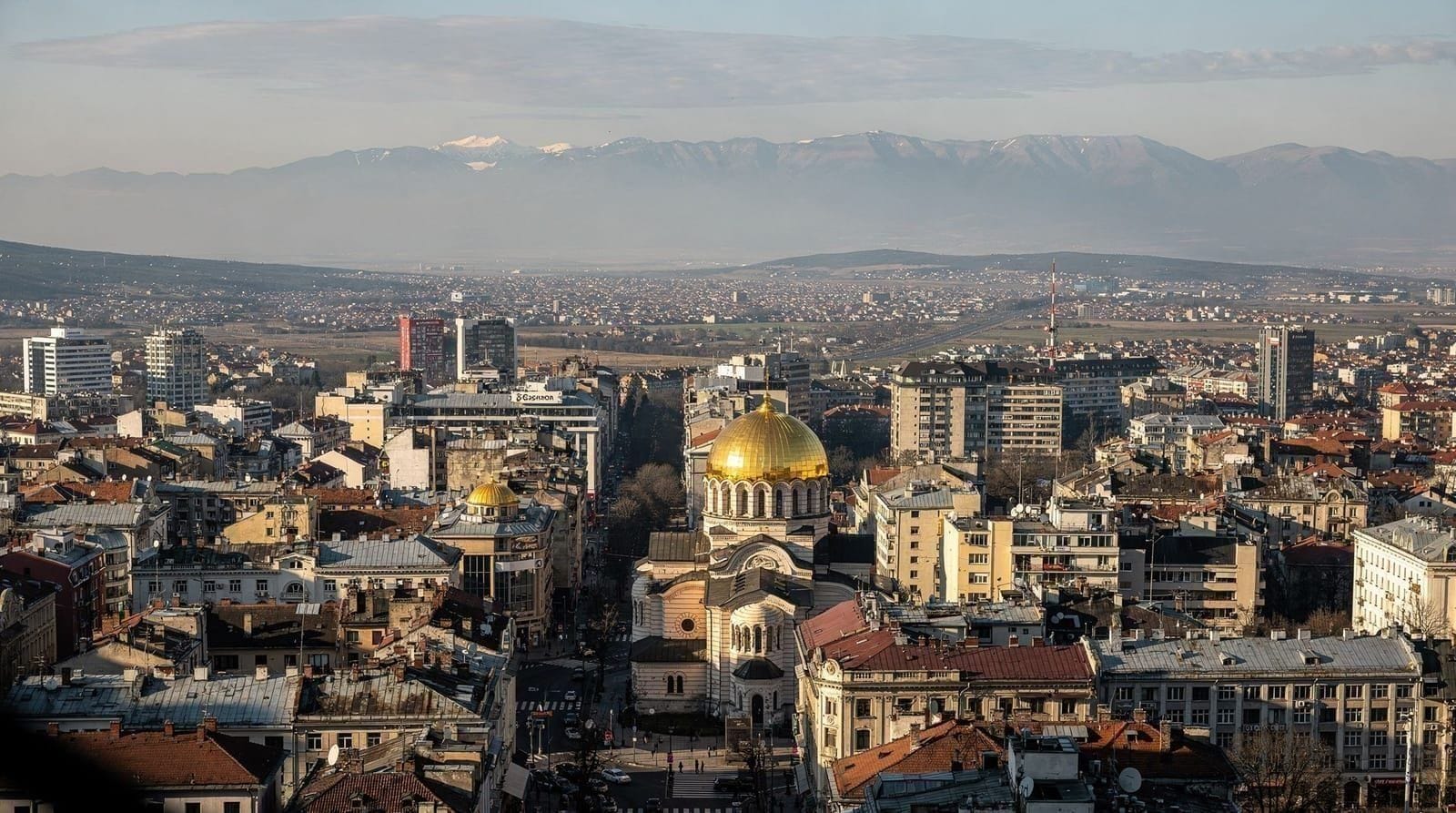
The centre of Sofia is contained. Walking from Vitosha Boulevard to the Serdica ruins, across to Alexander Nevsky Cathedral, and back through Borisova Gradina park takes a few hours without significant backtracking. That compactness matters when children’s patience and energy levels are finite.
Cost is another genuine advantage. An afternoon at Sofia Zoo, lunch at a central restaurant, and a metro ride across the city costs a family of four under €30. Museums charge €2–5 per adult. A taxi anywhere in the centre runs €3–6. The budget released by cheap local costs can go towards a day trip to Rila Monastery or an activity that would be luxurious in Western Europe but is affordable here.
Safety is rarely a concern in central Sofia. See the note below on traffic, but the city has a low violent crime rate and families are warmly received in most restaurants and public spaces.
Sofia also benefits from a genuinely mild summer climate compared to further south in the Balkans — while July and August can still be hot, the mountain-basin setting and Vitosha’s proximity mean relief is always close, unlike coastal or lowland cities where there’s nowhere cooler to retreat to for the afternoon.
What doesn’t work as well for families
Honesty matters here too. Sofia’s museums, with the exception of the Natural History Museum, skew toward adult interests — the National Archaeological Museum and National Gallery are rewarding for older children with some background interest but are unlikely to hold a toddler’s attention. Public transport beyond the metro (trams, buses) is less consistently accessible for pushchairs, so plan routes around metro stations where possible. Evening dining options with genuine children’s entertainment (play areas, dedicated kids’ menus) are limited compared to purpose-built family destinations; Sofia’s strength is affordability and outdoor space rather than curated family infrastructure. If your family specifically wants beach time, Sofia is landlocked — the nearest coast is a 5-6 hour drive to the Black Sea, well beyond day-trip range.
Top city attractions for children
Sofia Zoo
Located inside Borisova Gradina park, Sofia Zoo is the most reliable family attraction in the city. Tickets cost €5 for adults and €3 for children. The zoo covers a substantial area with a varied collection including big cats, primates, elephants, and a reptile house. Younger children respond well to the farmyard area with smaller animals. Allow two to three hours. The park surrounding the zoo has playgrounds, a rowing lake (boats for hire in summer), shaded walking paths, and open lawns — you can easily extend a zoo visit into a half-day in the park.
Getting there: tram 9 or 12 from the city centre, or a short taxi ride. The main zoo entrance is on Tsar Boris III Blvd.
Natural History Museum
The National Natural History Museum on Tsar Osvoboditel Blvd has a solid collection of fossils, taxidermy, minerals, and biological specimens spread across several floors. Children who enjoy dinosaurs and natural history tend to find it genuinely engaging. Entry is inexpensive (around €2–3 per person). The layout is a little old-fashioned in the best sense — dense, physical displays rather than interactive screens — which can hold older children’s attention better than expected. Budget 1.5–2 hours.
Borisova Gradina park
Even outside the zoo, Borisova Gradina is worth a half-day. The park has a rowing lake where you can hire pedalos and small boats in summer, several well-equipped playgrounds, shaded walking paths, and a large central fountain area popular with families on warm evenings. It is one of Sofia’s oldest parks — more than 120 years old — and its mature trees make it noticeably cooler than the surrounding streets in July and August.
NDK fountains
The National Palace of Culture (NDK) is ringed by a large paved square with interactive fountains that operate in summer. Children run through the water jets on warm afternoons and the square is pedestrianised, making it safe and relaxed. In the evenings, the area often has street food stalls and live music. It is a zero-cost activity and a good place to let young children expend energy before or after a sit-down meal nearby.
Vitosha cable car (Dragalevtsi gondola)
The gondola from Dragalevtsi village up to the Aleko plateau on Vitosha is a visual treat for children — a slow, smooth ride up a forested mountainside with city views opening below. Even if you do not hike at the top, the gondola ride itself is an activity. Check operating hours in advance (seasonal and irregular). The base station is reachable by taxi in about 30 minutes from central Sofia, or by public bus from Hladilnika metro. See the Vitosha Mountain destination page for details on the gondola schedule.
GetYourGuideFrom Sofia: One-Day Tour of Vitosha MountainCheck availability →Serdica Roman ruins
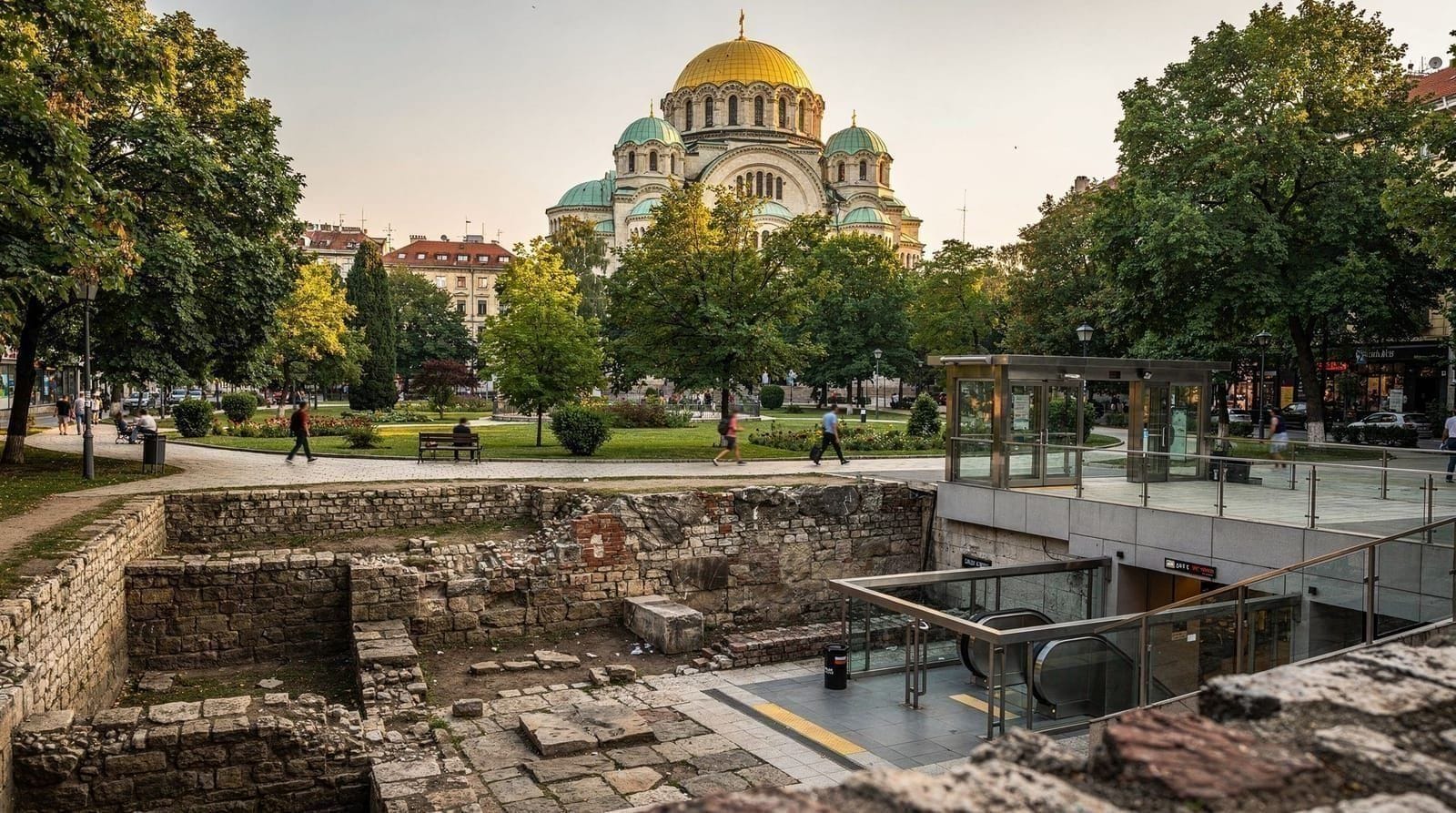
The Serdica ruins beneath the Serdika metro station are free to look at and surprisingly extensive — mosaic floors, column bases, and street sections visible from walkways above. Older children who have studied Roman history find it more interesting than expected; younger children enjoy the underground feel and the scale of the buried streets. You pass through this area naturally if you are walking between the city centre and Alexander Nevsky Cathedral.
Ice skating in winter
During the winter months (typically December through February), an outdoor ice rink operates in the Arena Armeec area of Sofia. This is the most accessible ice skating option for families — skate hire is available on site and the rink is large enough to be comfortable without being overwhelming. Check the current season’s dates when you plan your trip, as the rink’s operating schedule varies slightly each year.
Easy outdoor activities close to the city
Vitosha — Zlatni Mostove easy walk
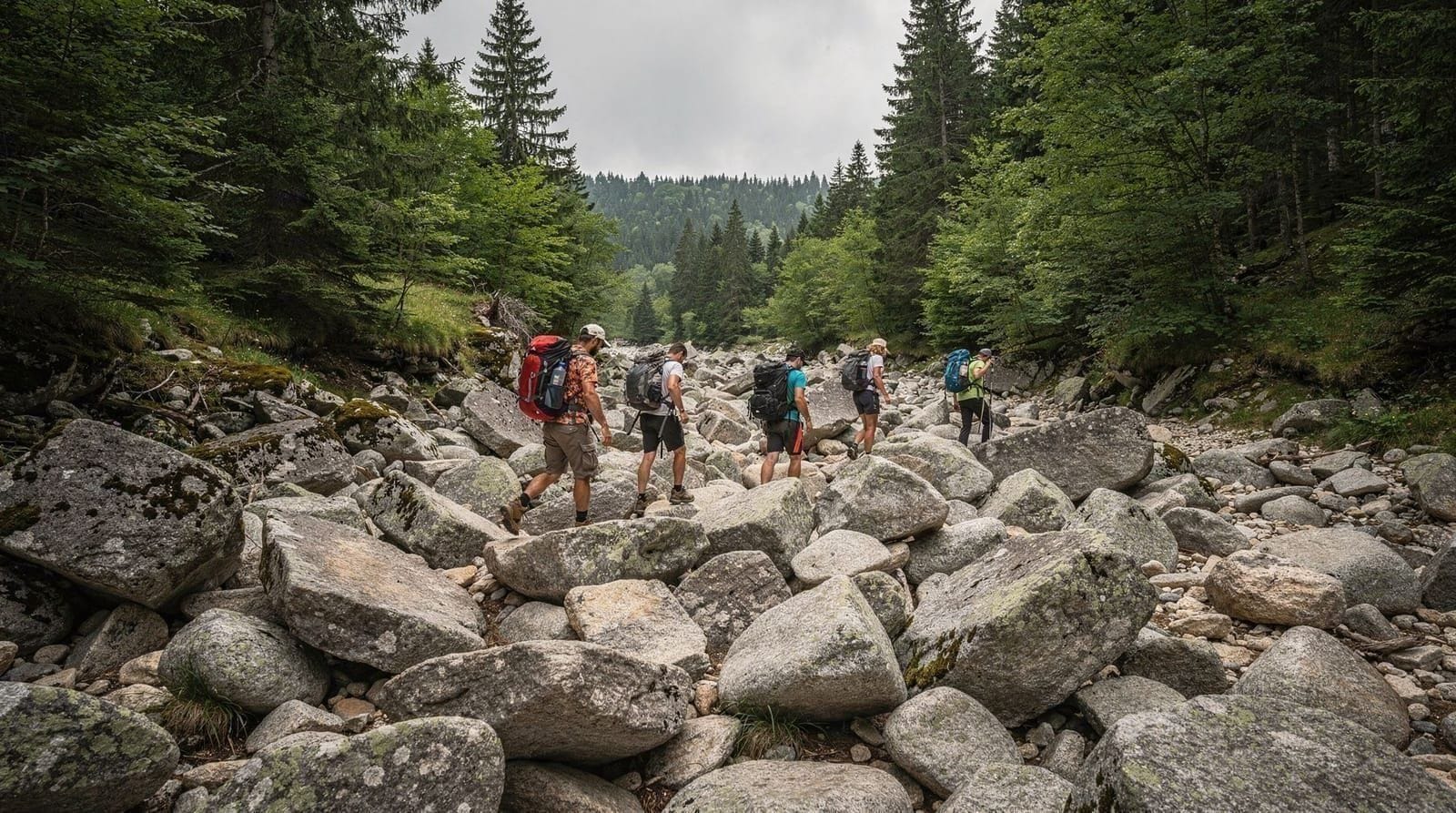
The Zlatni Mostove (Golden Bridges) area on Vitosha is the most accessible outdoor activity for families who want more than a city day. The Stone River — a wide field of rounded granite boulders left by ancient glacial action — is unusual enough to impress children, and the surrounding trails are wide, well-marked, and suitable for children aged 5 and up without special equipment.
Getting there by car or taxi to the Zlatni Mostove clearing takes around 30 minutes from central Sofia. From the car park, the Stone River is a 15-minute walk on a flat path. The surrounding trails extend as far as you want to go — a 2-hour loop back to the starting point is manageable for most families. The Vitosha hiking guide has trail details and elevation profiles.
Family cycling in the city
For families with older children comfortable on two wheels, Sofia’s flat centre and the paved paths through Borisova Gradina make for easy, low-stress cycling — a good alternative to a museum-heavy day when energy needs burning off outdoors. A guided family-friendly bike route through the parks and quieter streets avoids the busier traffic corridors.
Sofia family-friendly bike tour GetYourGuideSofia: Night Walking Tour with GuideCheck availability →Day trips from Sofia with children
Rila Monastery
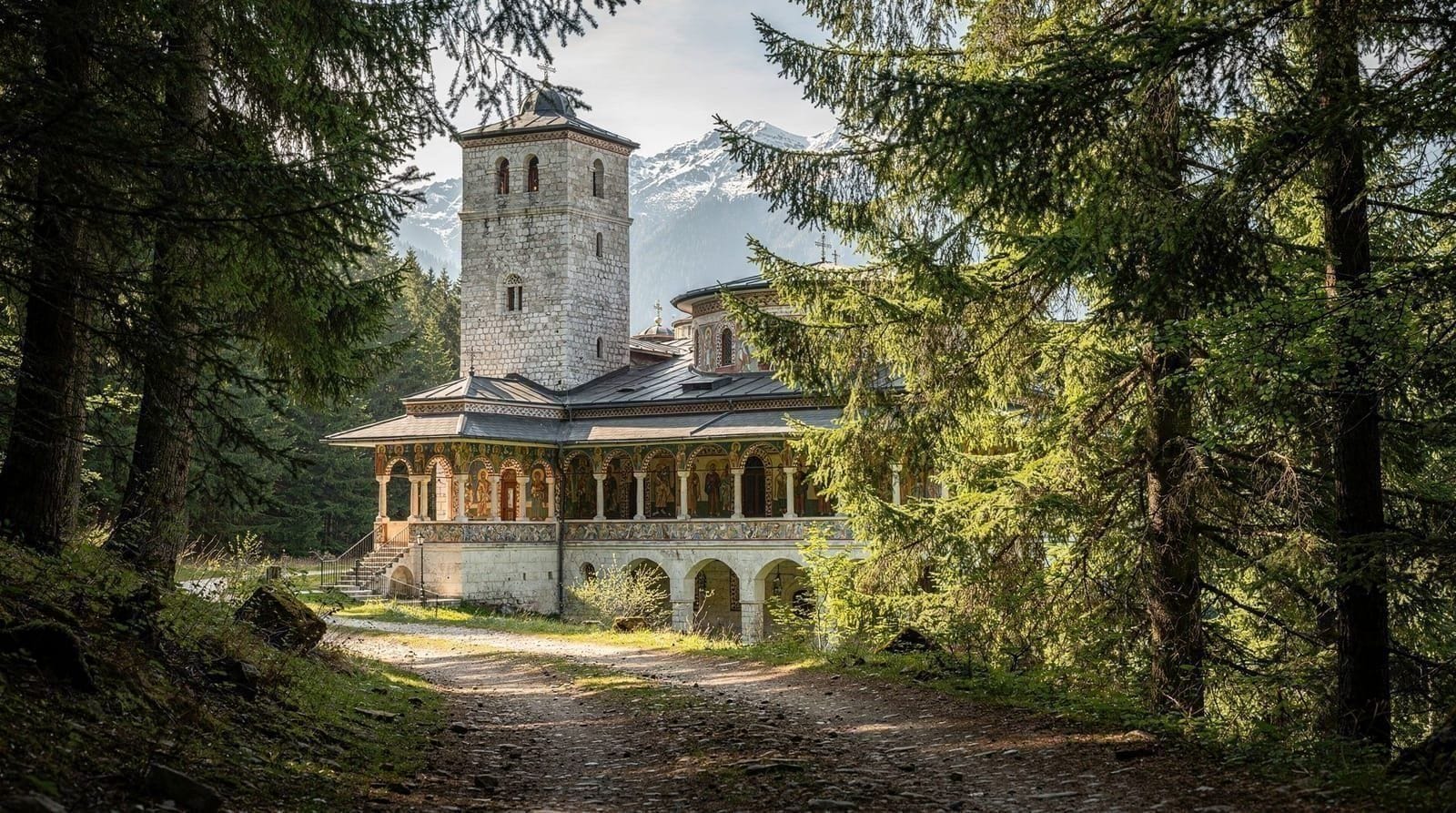
Rila Monastery is the single best day trip from Sofia for families with children old enough to walk (ages 4 and up). The monastery courtyard is vast, colourful, and covered in frescoes painted in vivid blues, reds, and greens — not what most children expect a church to look like. The surrounding forest valley is impressive, and the drive there passes through good mountain scenery.
Distance: 120km, about two hours each way. The road is straightforward and well-maintained. Organised group tours from Sofia include transport and a guide, which removes the driving stress if you prefer not to navigate independently. Allow three to four hours at the monastery itself — the interior church, museum, and ramparts all merit attention. Most children can sustain this comfortably.
GetYourGuideFrom Sofia: Full Day Trip to Rila MonasteryCheck availability →Borovets
Borovets has two distinct family uses depending on season. In winter (December–March), it is the closest proper ski resort to Sofia, with a good beginner area and ski school for children — see the skiing from Sofia guide for full details. In summer, the chairlift continues to operate for sightseeing, giving families a mountain-top view without the hike. The resort village is small and easy to navigate. Distance: 73km, 1.5 hours.
Koprivshtitsa
Koprivshtitsa is a well-preserved 19th-century Bulgarian Revival village about 110km from Sofia (around 1.5 hours by car). The colourful house-museums and cobbled streets are good for older children interested in history. Some local farms offer horse riding for children aged 6 and above — ask locally, as these are informal arrangements rather than formal tourist businesses. The village is small enough to walk completely in a morning, making it practical as part of a longer day. See the Koprivshtitsa day trip guide for what to include.
Eating with children in Sofia
Sofia’s restaurant culture is relaxed about children. Mehana restaurants — traditional Bulgarian taverns serving grilled meats, salads, and soups — usually have large tables, a comfortable noise level, and staff who are happy to see families. Most will adapt dishes for children if you ask. Pizza is available throughout the city and reliably popular with reluctant eaters.
To request a high chair, ask for “detsko stoliche” (детско столиче). High chairs are not universal but most family-oriented restaurants have at least one or two. If the restaurant does not have one, they will usually tell you quickly so you can make other arrangements.
Vitosha Boulevard, the pedestrianised central shopping street, has numerous ice cream shops and casual café terraces suitable for children. In summer this street is busy with pedestrians and feels safe for children to walk. On warm evenings, stopping here with an ice cream after dinner is something most children enjoy.
Children’s menus in the Western European sense (printed kids’ menus with smaller portions and child-specific dishes) are not standard in Sofia. The expectation is more that children eat adult dishes in smaller portions, or that the kitchen will prepare simple items on request — plain pasta, grilled chicken, bread. Most restaurants accommodate this without drama.
Budget guide for a family of four (mid-range): Expect to spend around €200–250 per day including two activities, a mid-range family hotel, all meals, and local transport. This is significantly less than equivalent spending in Prague, Vienna, or Budapest.
Practical information for families
Prams and pushchairs
The metro is fully accessible — lifts at every station, wide carriage doors, no need to fold the pushchair. Trams and buses are less consistent. In the old town (around Serdica, the Rotunda, and the central market area), cobblestone streets are genuine obstacles for lightweight strollers. A rugged all-terrain pram handles them better; otherwise, a carrier or front pack for the narrowest sections is practical. Vitosha Boulevard is pedestrianised and smooth. Borisova Gradina’s main paths are paved.
Pharmacies
The Devica and Chemax chains are paediatric-focused and have multiple branches throughout central Sofia. Both stock children’s medications, infant formula, nappies, and basic first-aid supplies. Staff at larger branches often speak some English. Normal pharmacy hours are 9am–8pm; most chains have at least one 24-hour branch in the city.
Medical emergencies
Pirogov Emergency Hospital (bul. Gen. Totleben 21) is Sofia’s main emergency facility and has English-speaking staff in the emergency department. For non-urgent paediatric queries, private clinics such as Tokuda Hospital and MHAT-Tokuda have paediatric departments with good English-language service. Travel insurance with medical coverage is strongly recommended for all family travel.
Getting around
Beyond the metro, taxis and rideshare apps (Bolt, Yandex) are the practical family transport option. Fares are low — a cross-city taxi in central Sofia rarely exceeds €5–8. Always use the meter or set the price via the app before getting in. See the getting around Sofia guide for a full comparison of transport modes.
Accommodation for families
Apartments booked through Airbnb or similar platforms are often the most practical option for families — a kitchen saves money on breakfasts and lunches, separate sleeping areas help with children’s sleep schedules, and space to spread out makes multi-night stays more comfortable.
Among hotels, Sense Hotel Sofia and Grand Hotel Sofia both have family rooms and professional service levels. The Sense Hotel is in a quieter residential area (Lozenets) that is walkable to Borisova Gradina. Grand Hotel Sofia is more central but the neighbourhood is busier.
For a breakdown of accommodation budgets and neighbourhoods, the Sofia on a budget guide covers options across price ranges.
Best season for a family visit
June and September are the most comfortable months for families. Both fall outside the peak Bulgarian school summer holiday (July–August), temperatures are warm but not punishing, parks and outdoor attractions are fully open, and the city is less crowded than midsummer. Children who are school-age in other European countries may find June works better as a pre-summer trip, while September suits those with more flexible school calendars.
July and August work if you plan your outdoor time for mornings and evenings — the middle of summer days can reach 35°C, which is tiring for young children. The NDK fountains and Borisova Gradina lake become essential cooling options in this period.
For a sample two-day itinerary that includes family-suitable pacing, see Sofia in 2 days and Sofia in 3 days — both include a day-trip option.
Packing notes for families
Comfortable, closed shoes matter more than usual given the cobblestones around the old town and the uneven ground at Zlatni Mostove. A light layer for evenings is worth packing even in summer, since temperatures drop noticeably after sunset in the mountain-basin setting. Sun protection is essential for the NDK fountains and Borisova Gradina, both largely unshaded in the middle of the day. If you’re planning the Vitosha gondola or a Rila Monastery day, bring a warmer layer regardless of season — both sit at meaningfully higher altitude than central Sofia and can be 5–10°C cooler.
Frequently asked questions about Sofia with kids
What are the best things to do in Sofia with young children?
Sofia Zoo in Borisova Gradina is the go-to attraction for younger children — it is large, well-maintained, and costs only €5 for adults and €3 for children. The Natural History Museum has a strong fossil and taxidermy collection that older children tend to find genuinely interesting. Borisova Gradina park has a playground, a rowing lake you can rent boats on, and plenty of space to run around. In summer, the fountains at NDK (the National Palace of Culture) are a reliable hit with young kids.Can you take a pushchair on Sofia's metro?
Yes. Sofia's metro has lifts at all stations on Lines 1 and 2, and carriages have wide doors that accommodate pushchairs without folding. The system is clean and modern. Cobblestones in the old town area and around Serdica are more of a challenge — a rugged all-terrain pram handles them better than a lightweight stroller, or use a baby carrier for those sections.Is Sofia safe for families?
Sofia has a low rate of violent crime by European standards. The main hazards for families are traffic (pedestrian crossings are not always observed by drivers — cross carefully) and uneven cobblestone pavements that create tripping risks and pushchair difficulties in the old town. Petty theft in tourist areas is possible but not prevalent. The city is generally safe to walk around during the day and in the evening in central areas.What is the best time of year to visit Sofia with children?
June and September are the best months for families. Both months avoid the peak summer heat (July and August can reach 35°C, which is uncomfortable for young children), have long daylight hours, and fall outside the busiest Bulgarian school holiday period. Spring (April–May) is also good — parks are green and outdoor attractions are open — but weather is more unpredictable. Winter (December–February) works if you plan to ski, but cold temperatures limit how long young children can be outdoors.Are there child-friendly restaurants in Sofia?
Yes, most restaurants in Sofia are relaxed about children and high chairs (ask for 'detsko stoliche'). Pizza is universally available and a reliable fallback. Mehana (traditional Bulgarian tavern) restaurants with grill menus and large shared tables are usually comfortable for families. Ice cream shops along Vitosha Boulevard are popular with children in warmer months. Children's menus are less common than in Western European cities but most kitchens will prepare simpler dishes on request.Where can I find a pharmacy for children in Sofia?
The Devica and Chemax pharmacy chains are the most common paediatric-focused pharmacies in Sofia. Both have multiple city-centre branches and stock a reasonable range of children's medications, infant formula, and nappies. Many pharmacists speak some English. For emergencies, Pirogov Emergency Hospital handles paediatric cases and has English-speaking staff.What are the best day trips from Sofia for families with children?
Rila Monastery is the most rewarding day trip for families — the large courtyard, colourful frescoes, and mountain setting hold children's attention well, and the 2-hour drive is manageable. Borovets works for a ski day in winter (beginners and children are well-catered for) or a summer half-day with chairlift rides. Koprivshtitsa is a pretty historic village that is easy to walk around; the cobbled streets are manageable without a pushchair, and some farms in the area offer horse riding for older children.Is Vitosha Mountain suitable for a family day trip?
Yes, and it's the easiest outdoor option from Sofia — around 30 minutes away with no long drive to plan around. The Zlatni Mostove Stone River area has wide, flat trails suitable for children aged 5 and up, and the Dragalevtsi gondola turns the ascent itself into part of the fun rather than a hike to endure.Do I need to book activities in advance for a family trip to Sofia?
Rarely. Sofia Zoo, the Natural History Museum, and the NDK fountains are all walk-up. The main exception is a guided day trip to Rila Monastery in peak summer weekends, which is worth booking a few days ahead to guarantee a seat and avoid coordinating independent transport with young children.
Top experiences
Bookable activities with verified prices and instant confirmation on GetYourGuide.