48 hours in Sofia: what to actually see, eat, and do
Forty-eight hours is genuinely enough to understand Sofia — not to exhaust it, but to leave with a real sense of the city rather than a blur of stone churches and metro stations. Sofia rewards people who walk slowly, eat where there are no English menus outside, and resist the urge to cram everything into a single sprint down Vitosha Boulevard.
This guide is built around two full days. It is not a minute-by-minute schedule. It is a framework you can adjust based on when your train or flight lands and how much coffee you need in the morning.
| Where to base yourself | Center (Vitosha Blvd/Serdica) or Oborishte |
| Cost | around €90-150/person for 2 days, mid-range |
| Time needed | 2 full days, arrival morning to departure evening |
| Getting around | Metro (€1/trip) + walking; bus for Boyana/Vitosha |
| Best time | May-June or September; book Boyana ahead year-round |
Day one: the ancient city beneath the modern one
Arrive and orient yourself on Vitosha Boulevard
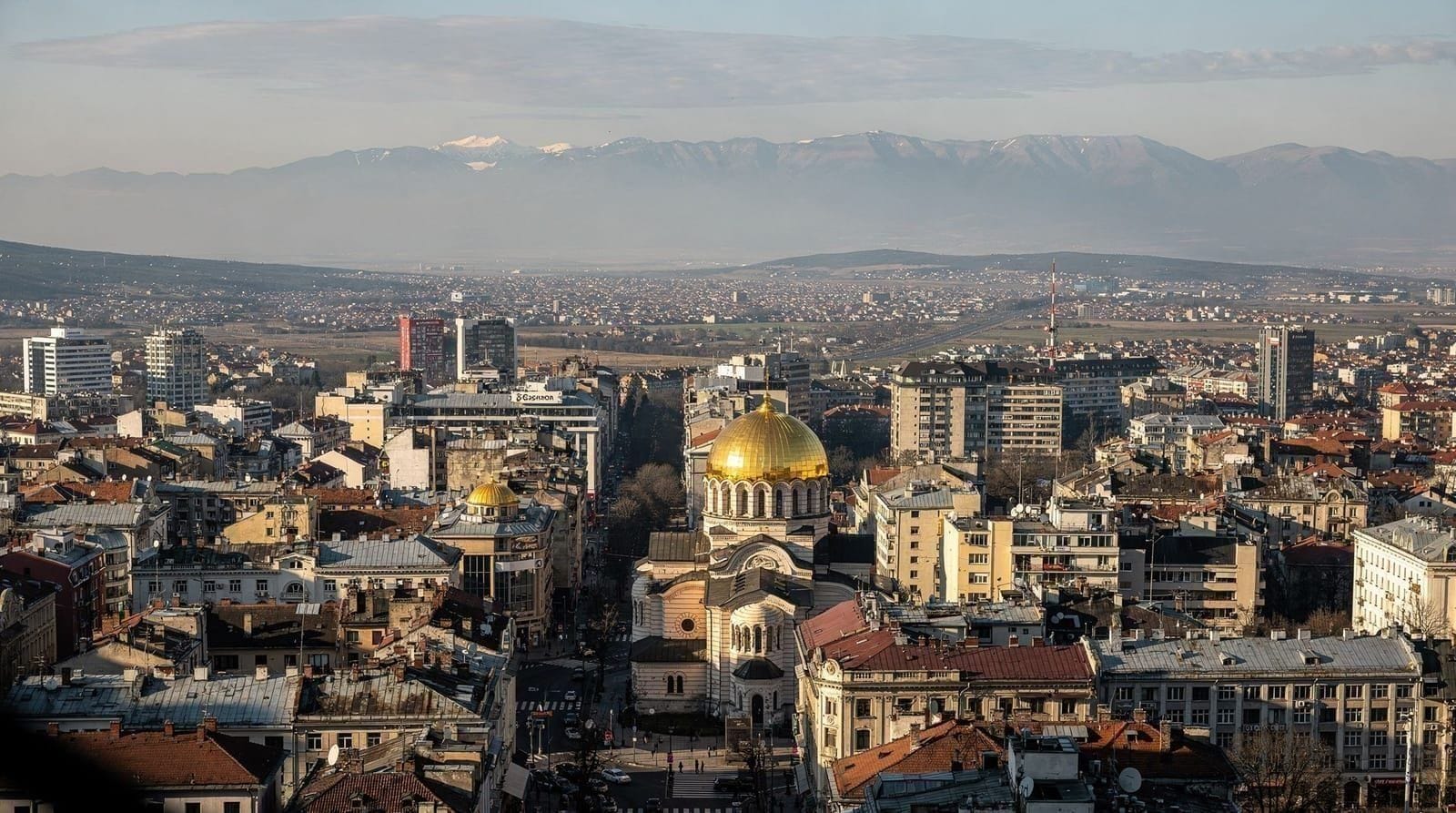
If you land at Sofia Airport, the metro line drops you at Serdika station in about 20 minutes — one of the most convenient airport connections in the Balkans. Take a moment on Vitosha Boulevard before doing anything else. This is the main pedestrian artery, lined with cafes, chain shops, and the mountain as a backdrop to the south. The mountain visible from almost everywhere in the city center is Vitosha, and you will go there tomorrow.
Vitosha Boulevard is fine for orientation, but it has a problem: the strip closest to the NDK (National Palace of Culture) is full of overpriced “traditional” restaurants targeting tourists. Menus with photos, staff standing outside to wave you in — avoid these. You will eat better and cheaper in the streets just east of here, around Oborishte.
The Serdica ruins under your feet
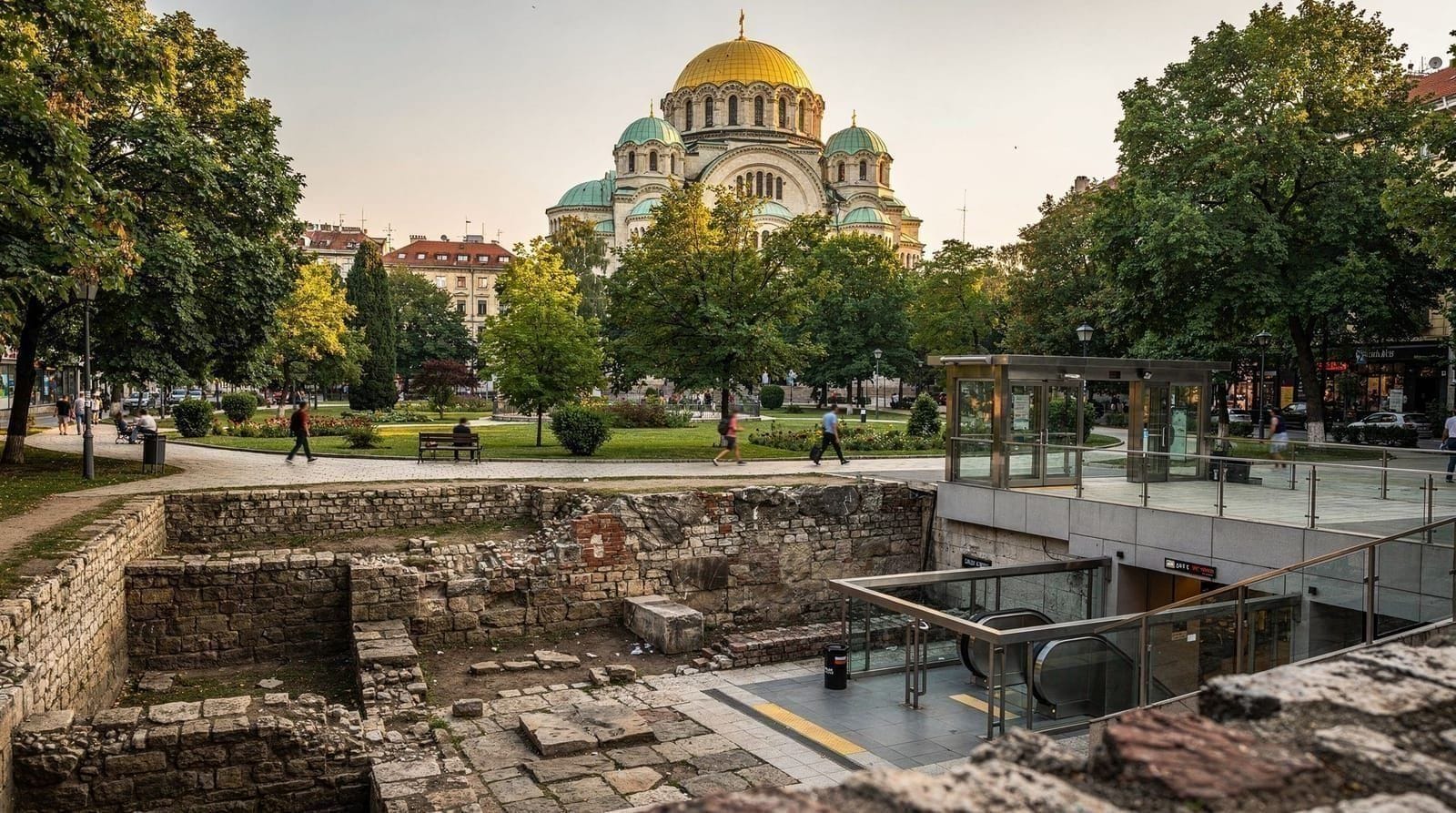
Do not leave Serdika metro station without walking through the underground passage that connects the two metro lines. Here, under a modern shopping gallery, you can see the excavated remains of Serdica — the Roman city that became Sofia. The ruins are visible through glass floors and behind barriers, free to observe while you transit. This is not a museum with explanations; it is simply the city’s foundation, exposed. The full Serdica Roman ruins are scattered across several sites, but this concentration in the metro underpass is the most accessible.
Come back to street level at Sveta Nedelya Square and walk east on Tsar Osvoboditel Boulevard.
Alexander Nevsky Cathedral
The Alexander Nevsky Cathedral is the defining image of Sofia — a Neo-Byzantine structure completed in 1912 to commemorate Russian soldiers who died in the Russo-Turkish War. Entry to the main cathedral is free, and you should go in. The scale is genuinely impressive: gilded dome, marble floors, and thousands of candles lit by worshippers throughout the day.
The photography ticket costs €2 and is worth getting if you have a decent camera. Photography is restricted in the main nave area without it, and the ticket is on the honor system — staff are not always present to check.
The crypt below the cathedral contains an icon museum with a collection that spans the 9th to 19th centuries. This is one of the best collections of Bulgarian Orthodox iconography in the country. Admission is around €3.
The square around the cathedral hosts a Sunday antique market with Soviet badges, old coins, icons, and various objects from the communist period. If you arrive on a Saturday afternoon, some vendors are already setting up.
For more on Sofia’s religious architecture, the Sofia churches guide covers the full range from the 4th-century Rotunda of Sveti Georgi to the Boyana Church outside the city.
National Palace of Culture park
Walk back toward the NDK. The park that stretches from Alexander Nevsky toward the NDK is pleasant and mostly local — parents with children, pensioners on benches, runners in the morning. The NDK itself was built in 1981 and is still the largest congress center in Southeast Europe. The building is worth looking at from the outside; it represents a particular kind of late-socialist architecture that believed in scale as a statement.
Near the NDK, look for the Monument of the Founders of the Bulgarian State. It is easy to miss if you are not looking for it — a slab installation that has weathered public debate about its meaning and upkeep.
Banitsa from a street bakery
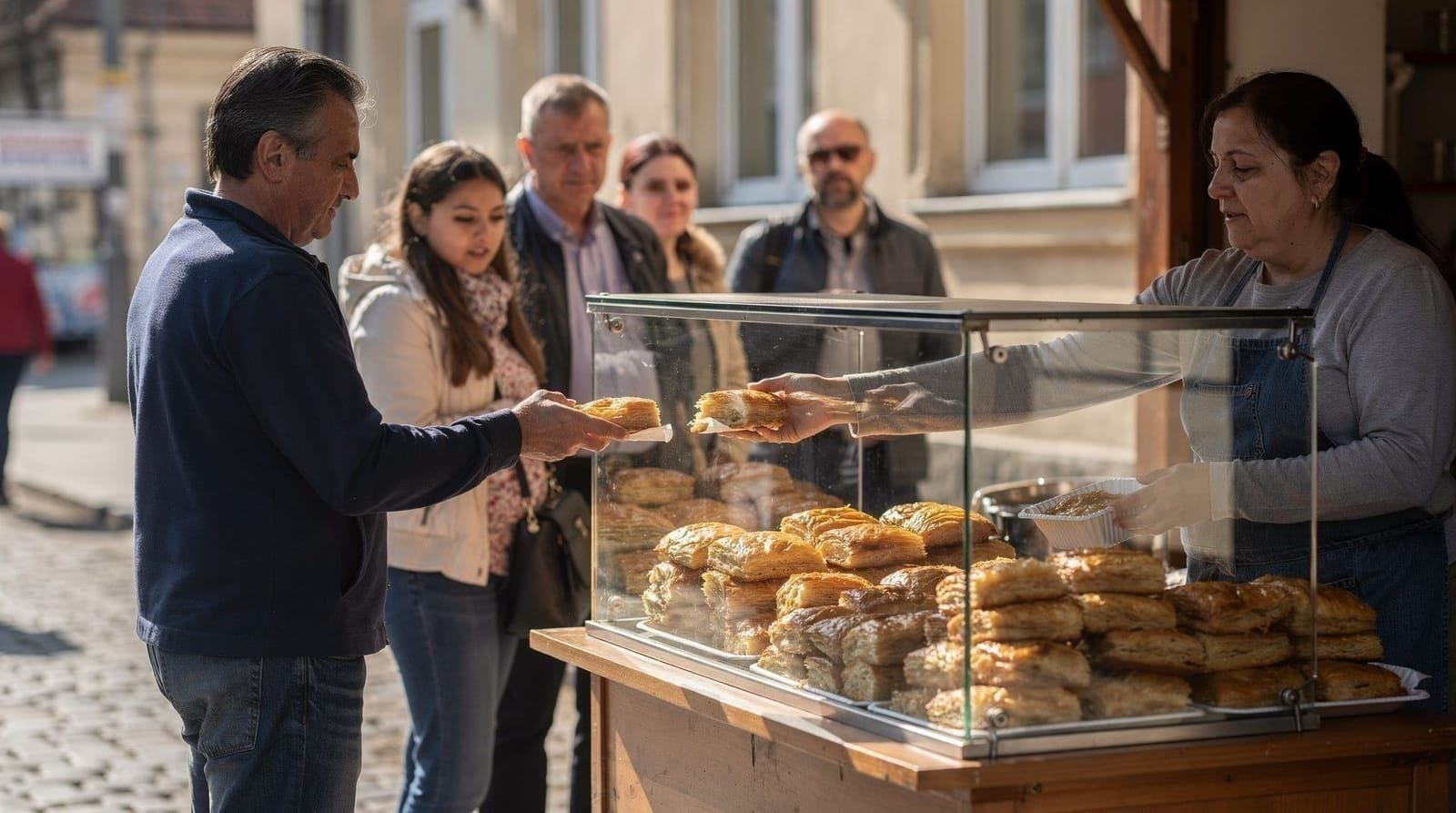
At some point in the afternoon, find a banitsa. This is not a recommendation — it is a practical instruction. Banitsa is a flaky pastry filled with white cheese and egg, sold at street kiosks and small bakeries throughout the city for €0.50 to €1. It is the correct breakfast, mid-morning snack, and afternoon pick-me-up in Sofia. The street food guide to banitsa and Sofia’s street food scene has more context, but the short version is: the kiosks with queues of locals before 9am are the right ones. The ones near tourist sites with photos of the pastry on the sign are not.
For more on Bulgarian food generally, the Bulgarian dishes to try guide covers everything from shopska salad to kavarma.
Dinner in Oborishte or the city center
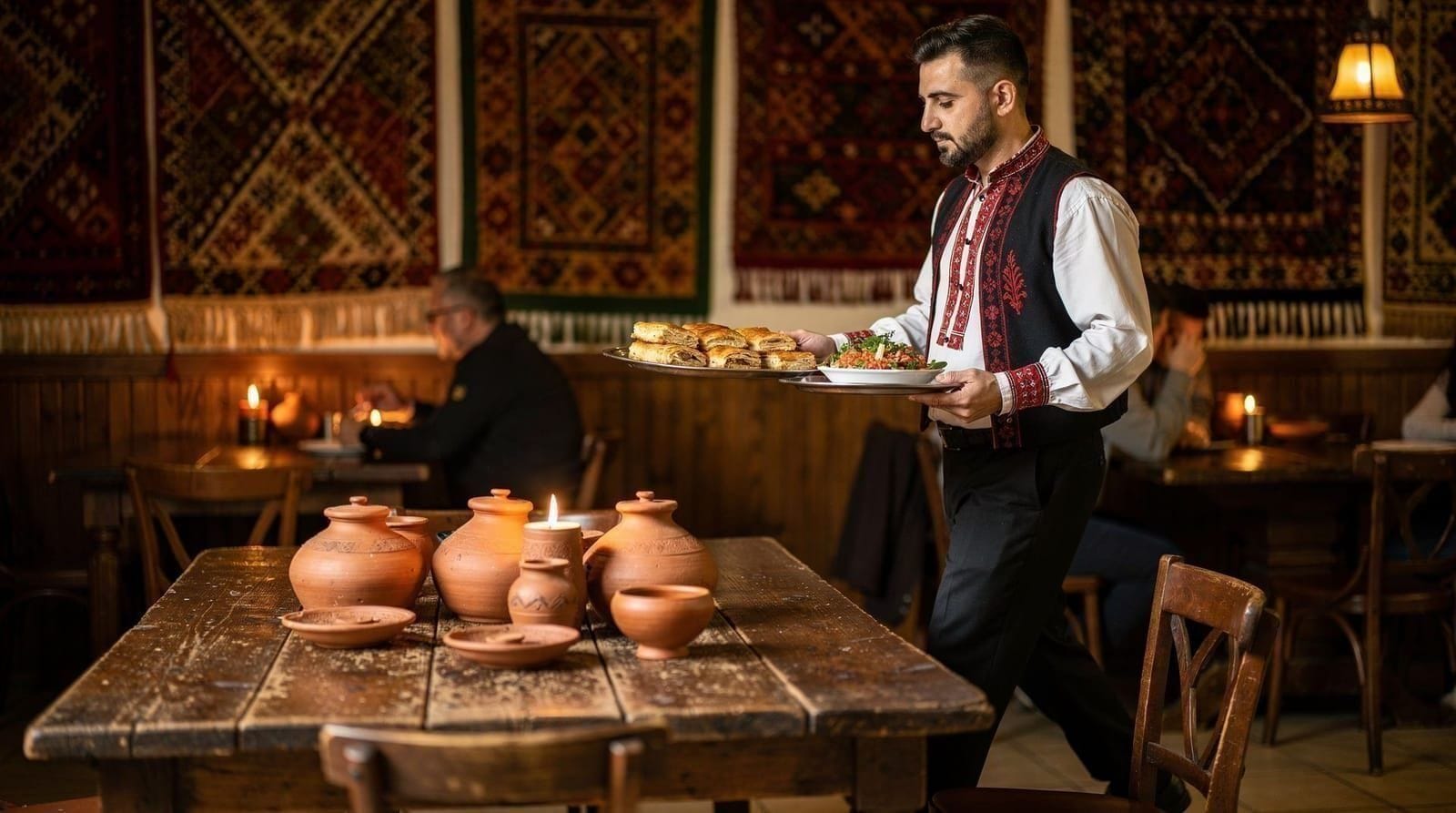
Oborishte is the neighborhood east of the main center — quieter, more residential, with restaurants that serve food because people live here and need to eat rather than because buses of tourists need feeding. The Sofia food guide has specific recommendations. Budget around €10-15 per person for a full meal with a beer or a glass of Bulgarian wine. Since Bulgaria joined the eurozone in January 2026, prices are now in euros throughout the country.
Day two: outside the center
Boyana Church — book before you go
Boyana Church sits at the foot of Vitosha, about 8 km from the city center. Getting there takes a taxi (around €5-7 from the center) or bus 64 from Eagle Bridge. The church itself is small — a three-part medieval structure — but contains frescoes from 1259 that art historians consider among the finest examples of medieval painting in the Balkans, predating similar Italian work by decades.
Entry costs €5, and visitor slots are strictly limited to protect the frescoes. There are set entry times and a cap on how many people can be inside simultaneously. Book in advance through the National History Museum website. If you arrive without a booking during peak season (May-September), you will likely be turned away or wait hours.
The church is on the UNESCO World Heritage List. Allow 45 minutes for the site itself, plus travel time.
Vitosha Mountain
After Boyana, you are already at the foot of Vitosha. The Vitosha hiking guide covers routes in detail, but for a 48-hour trip, two options make sense:
The first is the gondola from Simeonovo. Bus 122 from Hladilnika metro station reaches the gondola base. The lift takes you up to around 1,800 meters in about 15 minutes. From the top, the city is laid out below and the Rila mountains are visible to the south on clear days. The round trip costs around €10.
The second is to take bus 66 to Dragalevtsi and walk from there. The path through the beech forest to the area called Aleko (around 1,800 meters) takes about 2.5 hours at a moderate pace. This route passes through the Zlatni Mostove area — a river of stones left by a glacier, and the most photographed natural feature on the mountain.
Both options work for a half day. If you are short on time, the gondola is faster. If you want to actually feel the mountain, walk.
Zhenski Pazar market
The Zhenski Pazar (Women’s Market) is a permanent outdoor market on Ekzarh Yosif Street in the Serdika district. It runs every day and sells vegetables, fruit, herbs, spices, pickles, dried goods, and cheap textiles. This is not a tourist market. It is where a significant portion of Sofia buys its produce.
Coming here after Vitosha in the late afternoon gives you a contrast that explains the city better than any guidebook: the ancient mountain, the medieval church, then the chaotic street market where people are arguing about the price of tomatoes. Banitsa from one of the kiosks here is often better and cheaper than anywhere near the center.
The Sofia food guide and the sofia-coffee-culture guide both give context on where the market fits into daily Sofia life.
Coffee and the afternoon
Sofia has a real specialty coffee scene, concentrated in Oborishte and Lozenets. The sofia-coffee-culture guide has a full breakdown, but in brief: look for small cafes with single-origin beans, actual pour-over equipment, and no photos on the menu. Prices for specialty espresso drinks run €3-5. If you are outside in summer, every cafe has a terrace and you should use it.
A walking tour can be useful for connecting the dots on both days. The free tour model (tip-based) in Sofia is well-established, or there are paid options:
Sofia Must-See Attractions Walking TourWhat not to do with 48 hours
A few things that seem sensible but are not:
The day trip to Rila Monastery is 120 km each way. It is worth doing — the monastery is genuinely one of the most important cultural sites in the Balkans — but it takes a full day and is hard to combine with anything else. See the Rila Monastery day trip guide for how to structure it if you add a third day.
The Seven Rila Lakes require either a guided trip or careful planning of buses and lifts. Do not attempt this as a spontaneous 48-hour add-on.
Trying to cover both Plovdiv and Sofia in a 48-hour window is too compressed. Plovdiv deserves its own trip.
For a longer stay, the sofia-in-3-days itinerary adds the communist history circuit and a more relaxed pace through the old town.
Getting around
Sofia’s metro is clean, cheap (€1 per trip, day tickets available), and covers most of the center. For Boyana and Zhenski Pazar, buses are straightforward. Taxis are cheap by western European standards — a cross-city ride rarely exceeds €6-8 — but use Yellow Taxi or OK Supertrans with their apps rather than hailing from the street near tourist sites.
The getting around Sofia guide covers the metro map, bus routes to Vitosha, and how to avoid taxi overcharging.
Budget notes
Sofia is one of the more affordable EU capitals since joining the eurozone, though prices have adjusted upward since 2026. A realistic daily budget for accommodation, meals, transport, and entry fees runs €50-80 for a mid-range visitor. The sofia-on-a-budget guide has a full breakdown with specific price comparisons. The 48-hours on €50 post covers the minimum viable Sofia trip.
If it rains
Sofia in shoulder season gets its share of rain, and a wet 48 hours changes the priority order without ruining the trip. Alexander Nevsky Cathedral, the Serdica metro ruins, and Boyana Church are all indoor or covered, so the historical spine of the itinerary survives untouched. The Zhenski Pazar market has covered stalls along most of its length, and the National Gallery of Fine Arts (in the former Royal Palace near the cathedral) is an easy substitute for outdoor Vitosha time — admission runs around €3 and the Bulgarian Revival painting collection is genuinely strong.
Swap the Vitosha gondola day for the Museum of Socialist Art instead: the outdoor sculpture garden is bearable under an umbrella and the indoor galleries are dry, and it fits into the same half-day slot you had earmarked for the mountain. Cafes in Oborishte and Lozenets have proper indoor seating rather than just terraces, so the coffee break survives without adjustment. Save Vitosha for a return trip, or push it to the very end of day two and accept a shorter visit if the weather clears in the afternoon — mountain weather changes faster than city weather here.
Where to base yourself
For a 48-hour window, location matters more than for a longer stay because you cannot afford to lose 20 minutes each way to a scenic but distant neighborhood. The center around Vitosha Boulevard and Serdica puts you within walking distance of the cathedral, the ruins, and the NDK park, with the metro one block away in most directions for the Boyana and Vitosha legs. Oborishte, just east, is quieter at night and has the better restaurant density described above, at a 5-10 minute walk penalty to the main sights. Either works; what does not work well for a 48-hour trip is Lozenets, which is pleasant but adds 15-20 minutes to nearly every leg of this itinerary. The Sofia travel guide has a fuller neighborhood breakdown if you are also weighing a longer stay.
Sofia full-day city tour with BoyanaFrequently asked questions about 48 hours in Sofia
Is 48 hours enough time in Sofia?
Yes, for a first visit. You can see the main historical sites, eat well, and get a sense of the city’s neighborhoods in two full days. A third day allows you to add a day trip to Rila Monastery or slow down and explore Vitosha more thoroughly.
Do I need to book anything in advance for a 48-hour Sofia trip?
Book Boyana Church in advance — slots are genuinely limited and the booking system is the official route. If you want a guided walking tour, booking a day ahead is sensible in summer. Everything else — the cathedral, the metro ruins, the market — requires no advance booking.
What is the best neighborhood to stay in for a short visit?
The center (around Vitosha Boulevard and Serdika) or Oborishte are the most convenient for a 48-hour trip. You can walk to most of what you want to see and the cafes and restaurants are good. Lozenets is quieter and pleasant but adds 10-15 minutes to everything.
How do I get from Sofia Airport to the city center?
Metro Line 2 runs from Terminal 2 directly to Serdika station (the center) in about 20 minutes. Tickets cost €1. This is almost always the correct choice unless you have heavy luggage and a hotel far from a metro station. See the Sofia airport to city guide for full details.
Is Sofia safe for tourists?
Sofia is generally safe. The main practical risks are taxi overcharging near the airport and tourist-trap restaurants on the main boulevard. Petty theft exists in crowded areas as in any European city. The Sofia scams to avoid post covers the specific situations where tourists lose money unnecessarily.
What is the weather like in Sofia in summer?
Sofia in July and August is hot — regularly above 30°C during the day — and dry. The altitude (550 meters) means evenings cool down noticeably. Vitosha provides a natural escape from city heat; it is typically 8-10°C cooler at the top. See the best time to visit Sofia guide for season-by-season breakdown.
Can I do Sofia as a day trip from another Balkan city?
Technically yes from Plovdiv (2 hours by bus or train) or Skopje (3-4 hours). But Sofia rewards more than a day. If you have only one day from Plovdiv, the Sofia old town walk and the Alexander Nevsky area can fill it without feeling rushed.
What should I do if it rains during my 48 hours?
Shift toward indoor sites: Alexander Nevsky Cathedral and its crypt icon museum, the Serdica ruins under the metro underpass, Boyana Church, and the National Gallery of Fine Arts near the cathedral all work fine in bad weather. Swap the Vitosha gondola trip for the Museum of Socialist Art and save the mountain for a clear afternoon or a future visit.